What Is RF Radiation? Frequency, Risks and Exposure
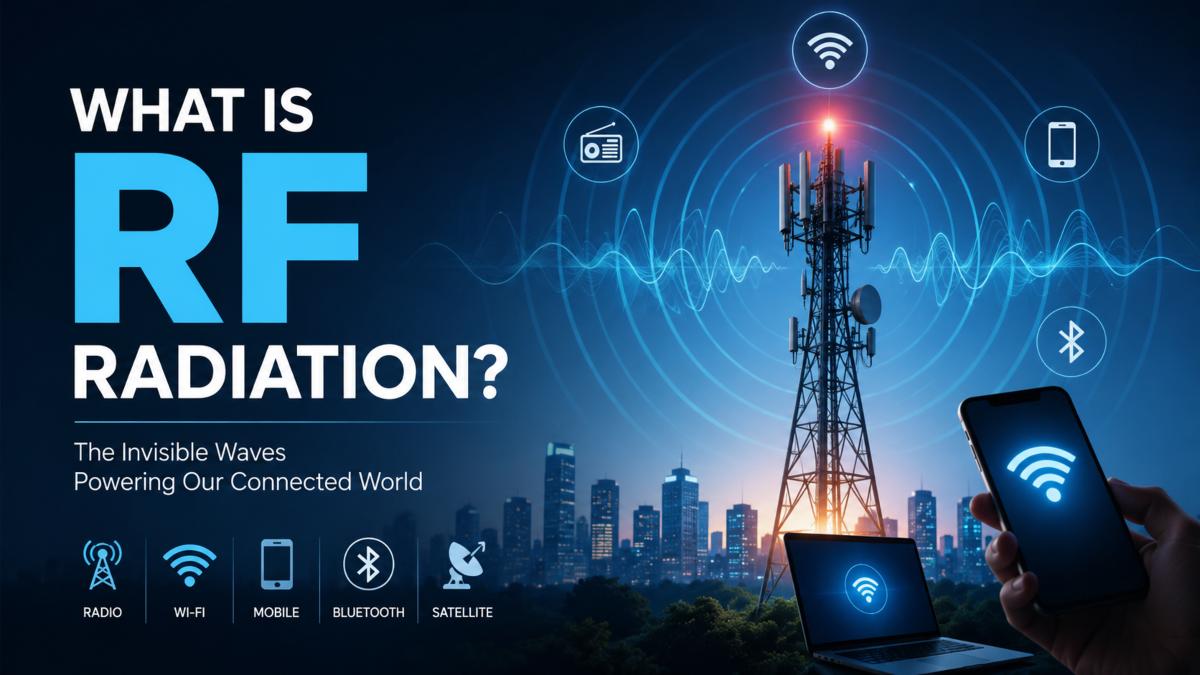
RF radiation is electromagnetic energy that travels in waves, spanning roughly 3 kilohertz to 300 gigahertz the band the FCC…
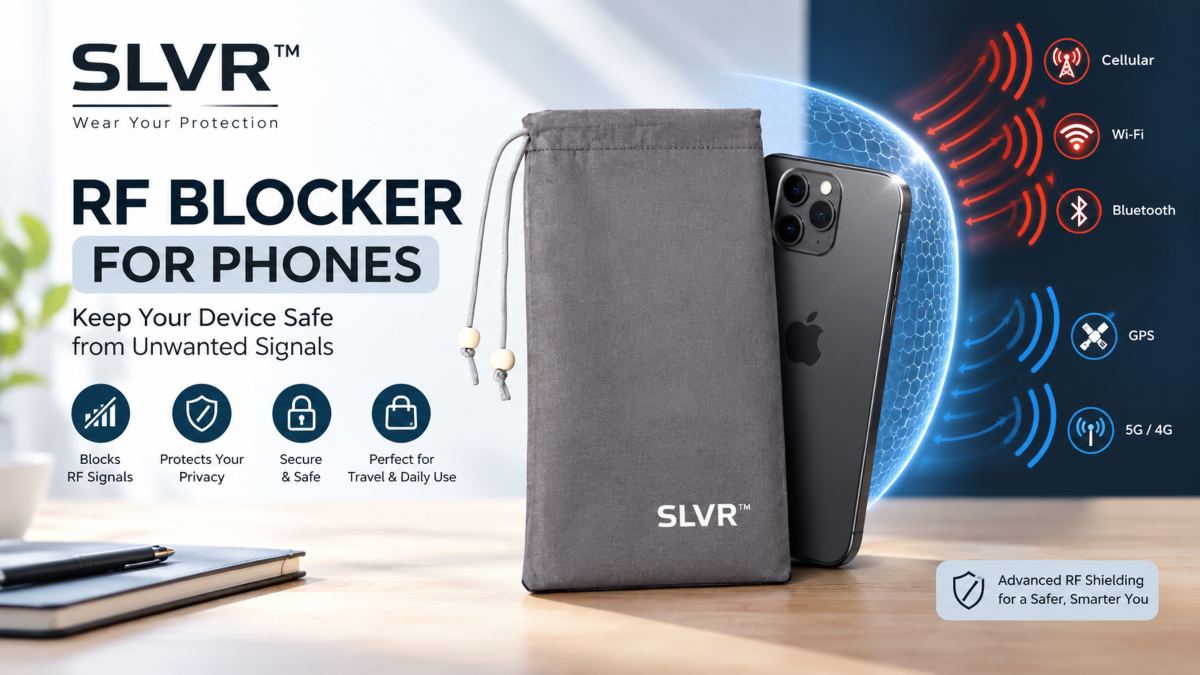
RF blockers for phones are products cases, pouches, cards, or rings designed to reduce the radiofrequency (RF) signals a phone emits or receives, and their effectiveness depends heavily on the type of product and how it’s used. Every phone emits RF energy to connect to cell towers, Wi-Fi, and Bluetooth.
The FCC sets a limit on this exposure, known as the Specific Absorption Rate (SAR), which is capped at 1.6 watts per kilogram for phones sold in the U.S. Whether an RF blocker effectively reduces your exposure below this limit depends on the material, design, and whether the blocker is intended to completely block the signal (like a Faraday pouch) or simply add a layer of shielding (like a case or sleeve). These two approaches are not interchangeable. Neither is a guarantee against all RF exposure.
This guide walks through what RF blockers for phones actually are, whether the science supports them, the main product types on the market, simple exposure-reduction habits that don’t require buying anything, and what to look for if you decide a blocking product is worth adding.
An RF blocker for phones is any product designed to interrupt, absorb, or reflect the radiofrequency signals a phone sends and receives reducing how much of that signal reaches your body, or in some cases, blocking it entirely so the phone can’t transmit at all. The category covers a range of formats, from cases and sleeves with conductive fibers woven into the fabric to fully enclosed pouches that cut a phone off from cell towers, Wi-Fi, and Bluetooth the moment it’s zipped shut.
Not all of these do the same job: a shielding case reduces exposure while the phone still functions normally, whereas a true Faraday-style pouch stops the connection altogether, meaning calls, texts, and notifications won’t come through until the phone is removed.
A phone emits RF energy whenever it’s actively communicating with a network, which, for most people, is almost constantly. Cellular signals typically operate in bands between roughly 600 MHz and 2.5 GHz, depending on the carrier and generation, while Wi-Fi and Bluetooth operate at 2.4 GHz and 5 GHz.
The phone’s radio ramps up power when it’s working harder to find a signal during a call in a low-coverage area, while streaming, or while searching for a network which is also when RF output is at its highest. This is why exposure isn’t constant or uniform; it rises and falls with what the phone is doing and how strong the connection is at that moment. For a closer look at this specific question, see do cell phones emit radiation.
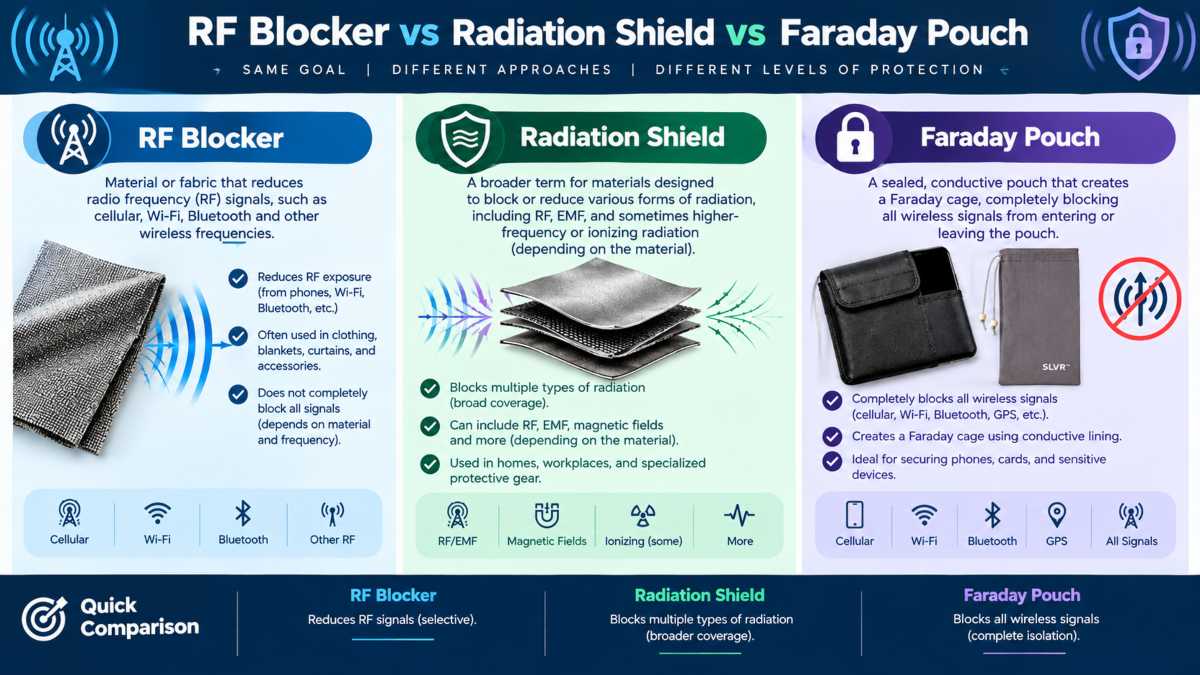
These three terms get used interchangeably online, but they describe different levels of blocking. “RF blocker” is the broadest term and can refer to any product that reduces signal exposure, either partially or completely. A “radiation shield” usually refers to a case or fabric layer that reduces RF reaching one side of the phone often the side facing the body without preventing the phone from working.
A “Faraday pouch” is the most complete version: built from a conductive material that fully encloses the phone, following the same principle as a Faraday cage. If you’re unfamiliar with how that material actually works, what is Faraday fabric breaks down the science behind it. Knowing which category a product falls into matters more than the marketing name on the package, since a shield and a pouch solve different problems.
 Do RF Blockers Actually Work?
RF blockers can work, but effectiveness depends entirely on the design and how it’s tested a well-built Faraday pouch can block signal almost completely. At the same time, a thin case liner may only reduce exposure on one side of the phone by a modest amount. This is the central point that gets lost in most marketing: “does it work” isn’t a yes-or-no question for the category as a whole, because a phone pouch and a phone case are solving different problems with very different levels of shielding.
Shielding effectiveness is measured in decibels (dB) of attenuation the higher the number, the more signal is blocked and this is the metric to look for when evaluating any RF blocking product, rather than vague claims of “blocks radiation.” A product tested and rated at a specific frequency range with a documented dB result gives you something concrete to compare; a product with no testing data attached doesn’t.
What independent testing generally can’t tell you is how a product performs in every real-world scenario, since signal strength, phone model, and network conditions all affect the result. A pouch that fully blocks signal in a lab test will still fully block it in daily use, because full enclosure is a binary outcome either the signal gets through or it doesn’t but a partial shield’s real-world performance will vary more than a lab number alone suggests.
The most common myth is that any product labeled as a blocker stops radiation entirely; in reality, only fully enclosed designs do that, and doing so also blocks calls and texts. A related myth is that household materials work just as well as purpose-built shielding does aluminum foil block EMF covers why that comparison falls apart in practice. A second myth is that a phone emits the same amount of RF at all times, which isn’t accurate output fluctuates with signal strength and network activity, so a blocker’s real-world impact shifts depending on when and where it’s used.
A third myth is that RF blocking products are interchangeable, when in practice a case, a card, and a pouch represent three different shielding approaches with three different trade-offs between blocking strength and normal phone use.
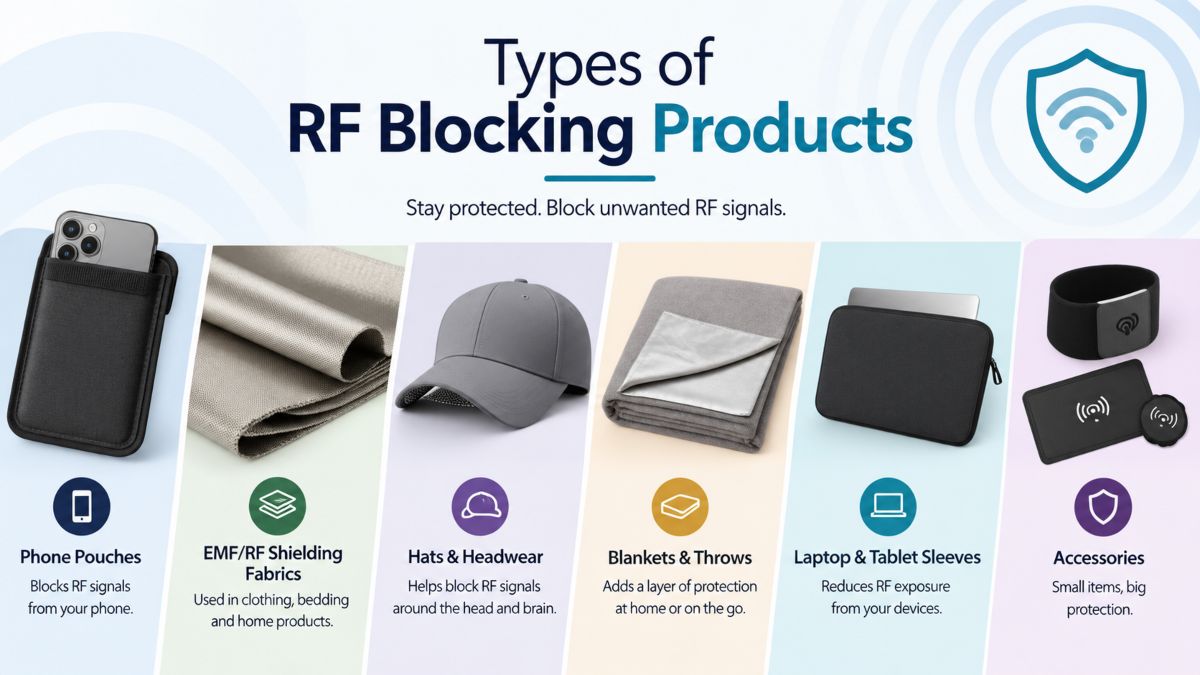
RF-blocking products for phones generally fall into four categories cases, pouches, cards, and rings each offering a different balance between how much signal they block and how usable the phone remains when worn or held. You can browse the full range of RF blockers SLVR Wear ™ carries if you want to compare formats side by side.
 RF-Blocking Phone Cases
A shielding case incorporates a conductive layer, often a metal mesh or metallized fabric, positioned to reduce the RF reaching one side of the phone typically the back panel that faces the body during a call or when carried in a pocket. Because the front of the phone stays open for the screen and signal reception, these cases don’t block RF in every direction; they reduce exposure on the side they cover while leaving the phone fully functional for calls, texts, and data. This makes them the most convenient format for daily use, since there’s no need to remove the phone from service to use it, but it also means the shielding is partial by design rather than total.
A pouch or box built on Faraday-cage principles encloses the phone in a conductive material on all sides, completely cutting off cellular, Wi-Fi, and Bluetooth signals while the phone is inside. This is the format that comes closest to fully stopping RF exposure. Still, the trade-off is direct: a phone inside a sealed pouch can’t send or receive anything, so it’s suited to specific windows of time overnight, during focused work, or while traveling rather than constant carry.
SLVR Wear ™ own Faraday Phone Pouch falls into this category, and some pouches are tested and rated for signal attenuation across specific frequency ranges, which is worth checking, since an untested pouch may still let some signal through depending on the material and seam construction.
Rings and cards marketed as RF blockers are typically small accessories meant to be worn or kept near the phone rather than covering it. These formats are harder to evaluate than cases or pouches because their small surface area limits how much shielding material they can contain, and independent test data for this category is far less consistent across brands than for cases and pouches. Anyone considering a ring or card should look specifically for documented attenuation results rather than assuming a small accessory offers meaningful shielding on its own.
Shielding products built specifically for iPhone models are typically cases or pouches cut to the exact dimensions of a given model, which matters because gaps or loose-fitting shielding material reduce how effectively it covers the phone. For iPhone owners specifically, iPhone radiation walks through how output varies by model, and how to turn off 5G on iPhone covers a software-level option worth knowing about alongside any physical shielding product. Beyond the fit, an iPhone-specific RF blocker follows the same case-versus-pouch distinction as any other phone: a fitted case shields one side while the phone stays connected, and a fitted pouch blocks signal entirely while it’s enclosed.
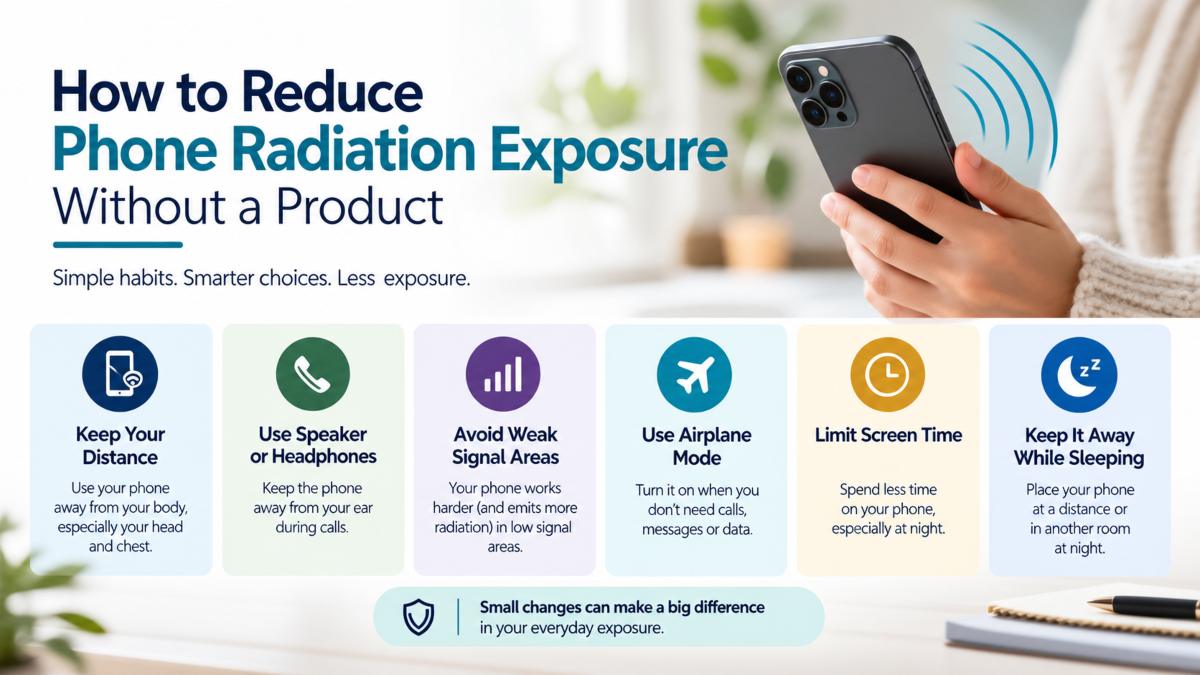
Reducing RF exposure from a phone doesn’t require buying anything simple changes to distance, timing, and how a call is taken can lower exposure on their own, since RF intensity drops off sharply the farther a phone is from the body. The FCC’s SAR testing itself is based on a phone held directly against the head or body, which is precisely the scenario these habits are designed to change. These same principles extend beyond the phone itself how to reduce EMF in your home covers the broader picture if you’re looking at exposure sources beyond just your device.
 Distance and Positioning Habits
RF signal strength follows the inverse-square law, meaning exposure decreases rapidly as distance increases moving a phone even a few inches away from the body reduces exposure far more than the distance alone might suggest. This is the same principle behind guidance on safe distance from power lines, just applied at a much smaller scale. In practice, this means keeping a phone in a bag or on a table rather than a front pocket, and avoiding sleeping with it directly under a pillow or on a nightstand inches from your head, meaningfully reduces close-range exposure without changing how the phone is used.
Distance habits like these come up often in questions about EMF exposure during pregnancy as well, where minimizing close-range contact is a common starting point.
A phone in airplane mode stops transmitting and receiving cellular signals entirely, eliminating RF output from that source until it’s turned off. This is most useful during specific windows rather than as a constant setting overnight, during a flight, or during long stretches where calls and texts aren’t needed since it also disables the phone’s core functions while active. For a deeper breakdown of what this setting does and doesn’t change, see does airplane mode reduce EMF. Phones also emit more RF when actively searching for a weak signal, so switching to airplane mode in low-coverage areas, rather than letting the phone repeatedly search, avoids that spike in output.
Holding a phone directly against the ear during a call puts it at its closest possible distance to the body, which is also when RF exposure is highest. Using speakerphone or wired headphones moves the phone away from the head while keeping the call connected, applying the same distance principle in a way that fits naturally into how most calls are already made. Wired headphones carry the audio signal rather than relying on the phone’s RF transmission, making them a more direct reduction than Bluetooth headphones, which emit a separate, much lower-power RF signal.
Choosing an RF-blocking product comes down to matching the shielding format to how the phone is actually used a case makes sense for someone who wants to stay reachable, while a pouch makes sense for someone who wants defined periods of no signal at all. There’s no single “best” format across the board; the right choice depends on whether staying connected matters more than maximizing how much signal is blocked.
The most reliable indicator of an RF blocking product’s performance is documented attenuation data how many decibels of signal reduction it achieves and the frequency range over which it was tested. A product listing that states a specific testing standard and frequency range gives a concrete basis for comparison; one that only claims to “block radiation” without a number attached doesn’t.
Material composition is the second thing worth checking, since shielding effectiveness comes from conductive fibers or metal content woven into or layered within the product RF blocking material breaks down the common options, and “Does copper block EMF?” is worth a read if you’re comparing metal types.
Third-party certifications on the underlying fabric or materials confirming they’re tested and free of harmful substances are also worth checking, particularly for anything worn against the skin for extended periods.
A full-block product, such as a Faraday pouch, offers the most complete reduction in RF exposure. Still, it does so by cutting off the phone’s connection entirely, meaning calls, texts, and notifications won’t arrive until the phone is removed. A partial shield, like a case with a conductive back panel, keeps the phone fully connected and usable while reducing exposure on the side it covers smaller reduction, but one that doesn’t interrupt daily use. Neither option is universally better; the trade-off is between how much exposure reduction is needed and how much connectivity can be given up to get it, and that answer depends on the situation rather than the product alone.
A fully enclosed pouch is the only format in this guide that completely blocks the signal rather than partially, which is a trade-off worth understanding before choosing one. That level of blocking is useful specifically during defined windows sleep, focused work, travel through unfamiliar networks when going fully offline is the goal rather than an inconvenience.
For anyone who’s decided a full-block option fits how they want to use it, SLVR Wear ™ Faraday Phone Pouch is built from a silver-fiber shielding fabric designed to enclose the phone and block cellular, Wi-Fi, and Bluetooth signals while it’s inside. It’s one option among the methods covered here, not a replacement for the habit-based approaches above someone who mainly wants to reduce close-range exposure during calls may get more day-to-day value from a shielding case or simply using speakerphone. In contrast, someone who wants a clean, complete break from connectivity for a set period is better served by a pouch.
The same silver-fiber shielding fabric extends across the rest of the SLVR Wear ™ line for people looking at exposure beyond just their phone the signal-shielding large blanket, X-large blanket, and baby blanket apply the same principle at a larger scale, while the signal-shielding beanie and hat work similarly for close-range head exposure. For a different category entirely, the medical scrubs guide covers how the same fabric is used in a workwear context, and laptop EMF protection is worth a look if phones aren’t the only device you’re thinking about.
The practical takeaway is that “RF blocker for phones” isn’t a single product category with a single answer it’s a spectrum, from free habits like distance and airplane mode to partial shields that keep a phone usable to full-block pouches that trade connectivity for a complete signal cutoff. The right choice depends on what you’re actually trying to solve: lower everyday exposure without changing how you use your phone, or create defined windows where it’s fully offline.
For more on how phone-specific exposure fits into the bigger picture, see “do cell phones emit radiation?” For a broader look at reducing exposure throughout your home and other devices,” how to reduce EMF in your home” covers the same principles that apply beyond just phones.
Yes, but effectiveness depends on the design a fully enclosed pouch can block signal almost completely, while a case with a shielding layer only reduces exposure on the side it covers. The most reliable way to judge a specific product is to check whether it has documented attenuation data (measured in decibels), rather than relying on general “blocks radiation” claims.
A shielding case reduces RF exposure on one side of the phone, typically the back panel, while the phone stays fully connected and usable for calls, texts, and data. A Faraday pouch fully encloses the phone on all sides, cutting off signal completely, which also means the phone can’t send or receive anything while it’s inside.
RF exposure decreases sharply with distance from the phone, following the inverse-square law, so even a few extra inches meaningfully reduce exposure compared to holding a phone directly against the head or body. There’s no single official “safe distance” figure. Still, the FCC’s own SAR testing is based on direct-contact use, which is why distance-based habits like using speakerphone or keeping a phone out of a front pocket make a measurable difference.
Yes, airplane mode stops a phone from transmitting or receiving cellular signal, which eliminates RF output from that source for as long as it’s active. It also disables calls, texts, and data, so it works best as a defined window (overnight, during travel) rather than a constant setting.
They’re harder to evaluate than cases or pouches because their small size limits how much shielding material they can contain, and consistent independent testing data is far less common for this category. Anyone considering one should look for a specific attenuation result rather than assuming a small accessory provides meaningful shielding on its own.