What Is RF Radiation? Frequency, Risks and Exposure
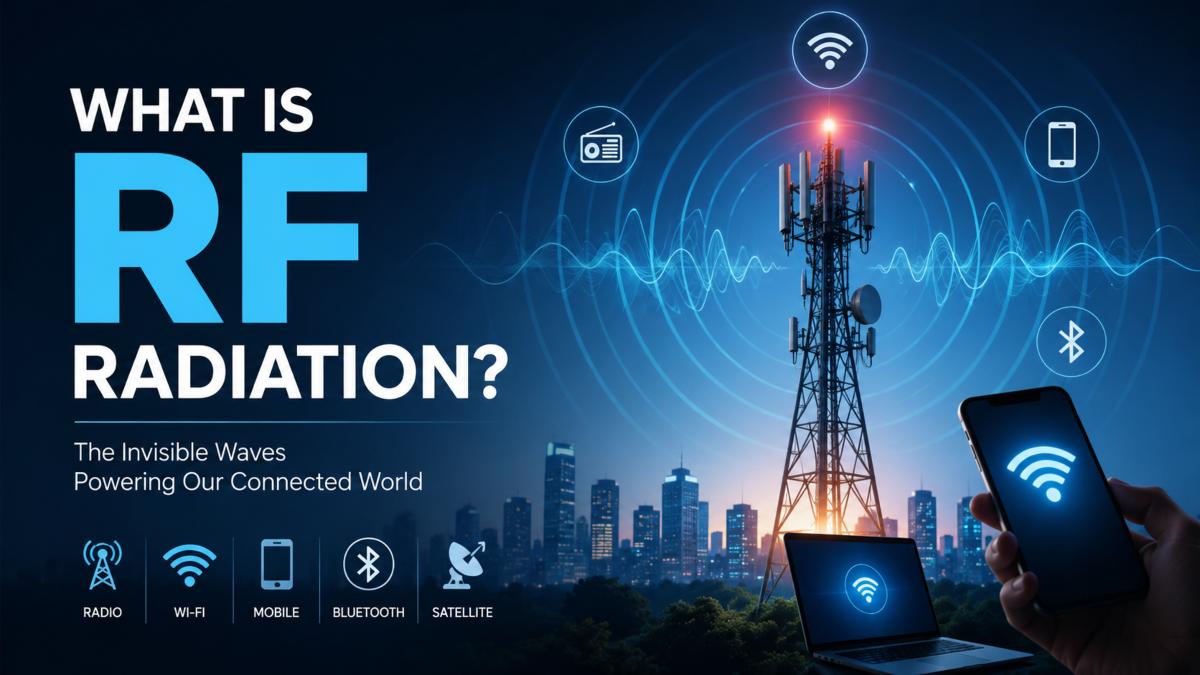
RF radiation is electromagnetic energy that travels in waves, spanning roughly 3 kilohertz to 300 gigahertz the band the FCC…
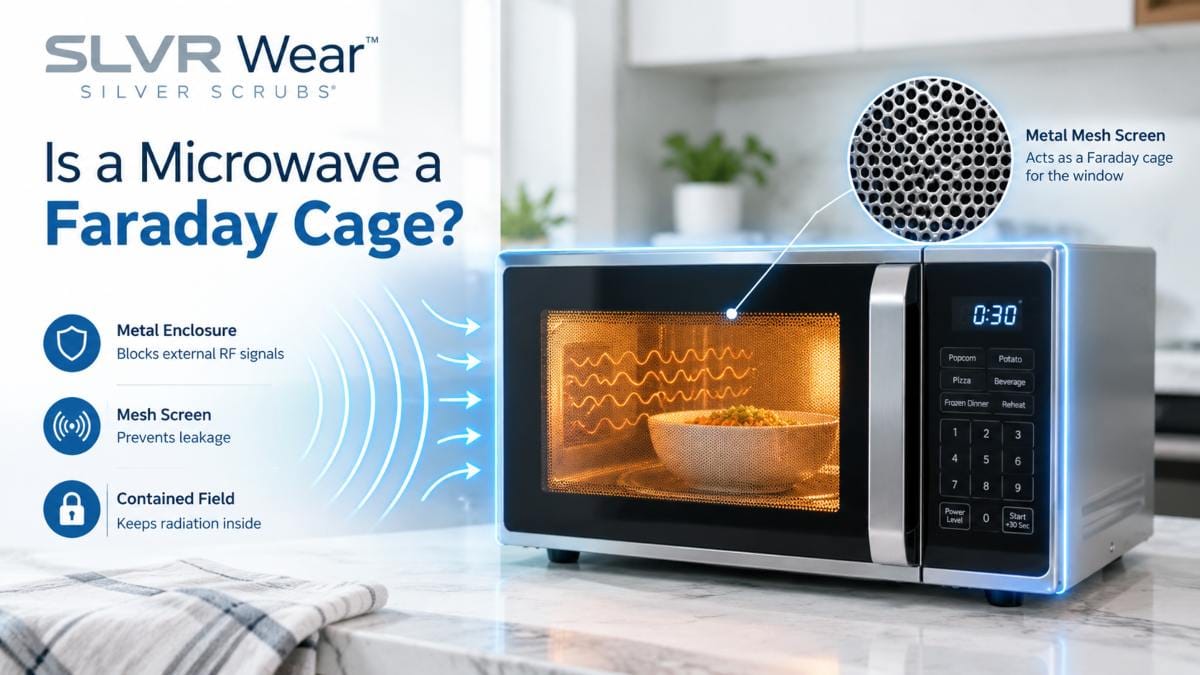
A microwave oven acts like a Faraday cage for its own radiation, because its metal walls and door mesh keep 2.45 GHz energy inside the cooking cavity. It is not a dependable Faraday cage for storing phones or other electronics, since it was built to contain one frequency, not to block every RF signal.
That difference is easy to miss. A federal standard caps how much radiation can leak from a microwave oven at 5 milliwatts per square centimeter, measured about 2 inches from the oven surface. The limit sets a design goal: keep cooking energy in and leakage low. It says nothing about how well the oven blocks cell, Wi-Fi, or other signals coming from outside.
Below, you’ll see how the door mesh works, why the phone-in-the-microwave test gives mixed results, whether using a microwave as a Faraday cage makes sense for EMP storage, and which materials provide real RF shielding.
A microwave oven works like a Faraday cage for its own 2.45 GHz radiation, keeping it inside the cooking cavity. It isn’t built or verified as a general-purpose RF shield, so you can’t trust it to block cell, Wi-Fi, or other outside signals.
The reasoning is simple. A Faraday cage is a conductive enclosure that blocks RF energy, and a microwave oven does have one: a metal cavity, a metal door frame, and a perforated screen in the door. But the design goal is narrow. The oven only has to keep one frequency from leaking out at levels that meet safety rules. Nobody tests how well it blocks signals arriving from the outside across a wide range of frequencies.
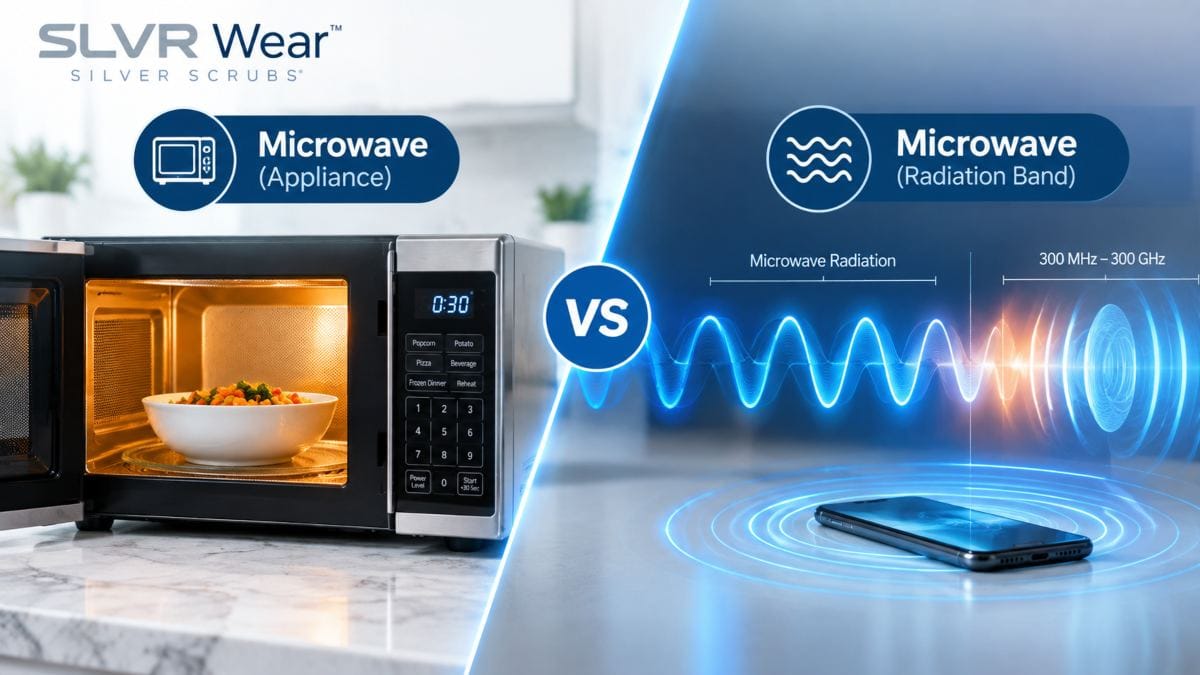
The word “microwave” refers to two different things, and most confusion comes from mixing them up. A microwave oven is the kitchen appliance. Microwaves, as a band of radiation, are the part of the spectrum from roughly 300 MHz to 300 GHz. That band includes the 2.45 GHz energy a microwave oven uses to heat food, but it also covers Wi-Fi, Bluetooth, and many cellular signals. Typical home ovens run at 2.45 GHz, the frequency used throughout this article, though the federal standard covers a wider set of heating bands. For a plain-language primer on the wider topic, see what is RF radiation.
The two ideas answer different questions. Asking whether a microwave oven contains its own radiation is a question about one appliance and one frequency. Asking what blocks microwaves is a question about RF shielding across the whole band, and the materials, gap sizes, and construction that make it work.
The door screen shows the difference well. According to UL’s description of the inner mesh screen on a microwave door, the holes are about 1 mm across. A 2.45 GHz signal has a wavelength of about 12 cm, so the holes are far too small for it to pass. That is a good match for one frequency, but it says little about how the same box handles other signals, seams, or gaps.
 How a Microwave Oven Contains Its Own Radiation
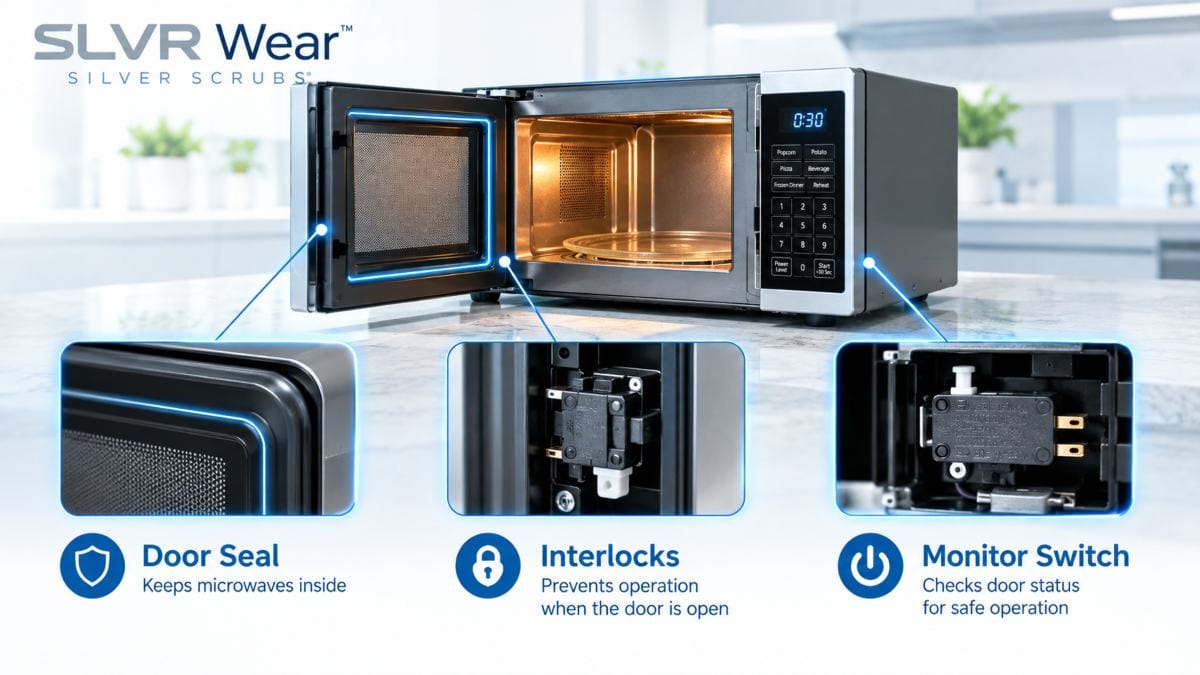
A microwave oven contains its radiation with a sealed metal cavity, a perforated metal screen in the door, and safety switches that cut power the moment the door opens. Each layer handles a different job, and together they keep leakage below the federal limit.
The cooking cavity is a metal box. Metal reflects microwaves instead of absorbing them, so the energy bounces around inside until food absorbs it. The door needs a way to let you see in without letting that energy out, and it uses a metal screen full of small holes.
UL describes the inner mesh-like screen as having holes about 1 mm across that keep radiation in the cavity. A 2.45 GHz microwave has a wavelength of about 12 cm, so each hole is roughly one-hundredth of that length. A hole that small looks like solid metal to the wave, and it reflects instead of passing through. This is the same principle behind any Faraday cage: gaps must be much smaller than the wavelength you want to block.
You can see through the door because visible light has a far shorter wavelength than microwaves. Visible light measures roughly 400 to 700 nanometers, while the holes in the screen are about 1 millimeter, or 1,000,000 nanometers, wide. Light passes through the holes easily, but the 12 cm microwave wavelength cannot.
This is why the screen can be both see-through and shielding. It works for the specific wavelength the oven produces, and it says nothing about signals at other frequencies.
The door seal and safety switches prevent two problems: radiation leaking around the door edge, and the oven running while the door is open. The seal is built into the door frame to close the gap between the door and the cavity.
Federal rules require the switches. According to the FDA, every oven must have two independent interlock systems that stop microwave production the moment the latch is released or the door is opened. A monitoring system also shuts the oven down if one or both interlocks fail.
One common worry is the noise many ovens make after the door opens. That sound is usually the fan, not the microwave source. Once microwave production stops, no radiation remains in the cavity.
 Heat Shield or RF Shield?
A microwave oven doesn’t use a heat shield to contain radiation. The confusion comes from parts that look protective but do a different job. Some ovens have a thin panel covering the opening where microwaves enter the cavity, and it keeps food splatter and grease out of the waveguide. Microwaves pass through that panel, so it does no shielding at all.
The RF shielding comes from the metal cavity, the perforated door screen, and the door seal. Heat protection, where an oven has it, is a separate matter of keeping the outer casing from overheating. If someone asks what part of a microwave prevents radiation from escaping, they should look at the door screen and seal first, not any panel inside.
A microwave oven is built to keep one frequency inside a box while it heats food. A Faraday cage is built to keep outside signals away from whatever sits inside. Both use a conductive enclosure, but their goals, tolerances, and testing differ, which is why a microwave oven is a poor stand-in when you need a Faraday cage for electronics.
| Feature | Microwave Oven | Purpose-Built Faraday Cage |
|---|---|---|
| Purpose | Heat food and contain its own 2.45 GHz energy | Block or redirect outside RF energy around its contents |
| Frequency It’s Designed For | One frequency, 2.45 GHz | A defined range, set by the design and its testing |
| Seams and Vents | Has a door seam and ventilation openings, sized for 2.45 GHz | Continuous conductive shell, with seams overlapped or gasketed and openings small compared to the shortest wavelength to be blocked |
| Grounding | Grounded through the power cord for electrical safety, not as a shielding feature | Depends on the design; not always required for basic RF shielding |
| Door Seal | Built to contain 2.45 GHz leakage at the door edge | Conductive closure or gasket intended for the frequencies you care about |
| Who Verifies It | FDA performance standard, with leakage limits and interlock requirements | No single consumer standard; look for lab test data on the specific product |
| Safe to Store Electronics | No, it is not intended for storage | Yes, that is the purpose when properly built |
| Accidental-Start Risk | Real: a stray press of Start or a timer can run the oven with a device inside | None |
The most important row is verification. The federal leakage limit exists to keep the oven’s own energy in, and FDA tests ovens in its own laboratory and reviews manufacturers’ quality-control programs. That is strong proof the oven keeps its own energy in. Nothing in that program measures how well the oven blocks outside signals, so no one has verified the microwave oven as an RF shield for stored gear.
The vents and the power cord also matter for storage. The vents are sized to keep 2.45 GHz from leaking, and that says little about signals at other frequencies. The power cord is a long conductor attached to the cavity, which can let outside signals in or out. A dedicated Faraday enclosure is designed around those weak points, and it shouldn’t have a plug.
A microwave oven may block some cell and Wi-Fi signals, but it does so inconsistently. The result depends on the oven, the phone, and the frequency being tested, so you can’t count on a microwave to block a signal.
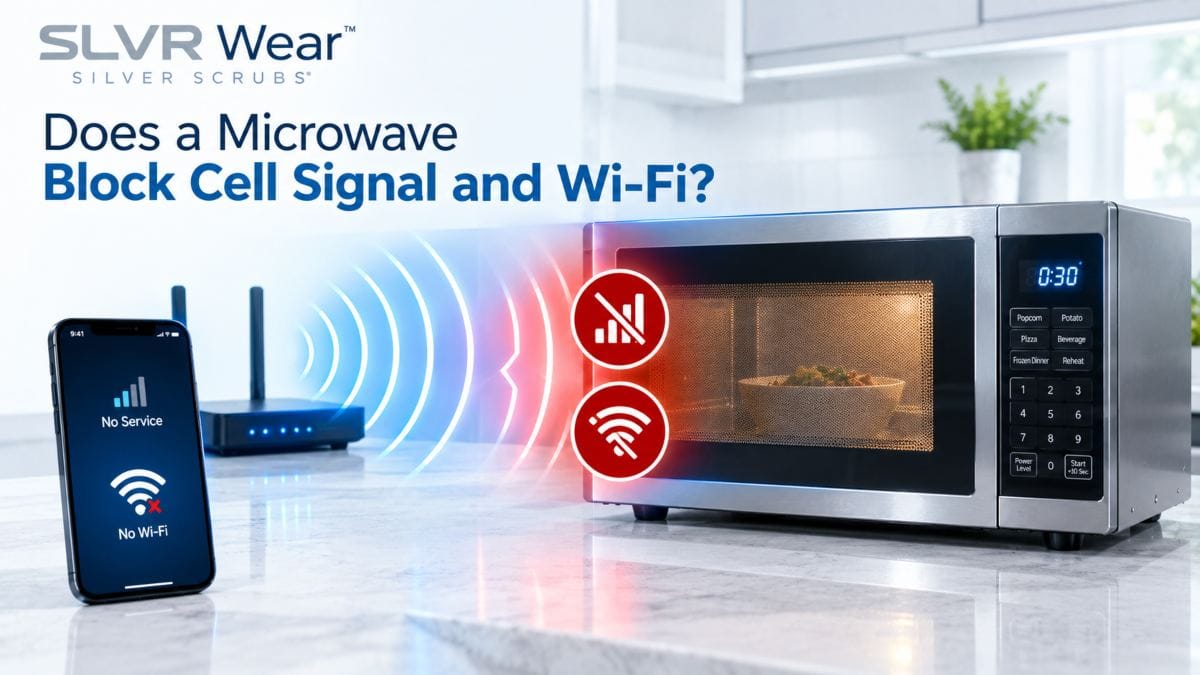
This test quickly checks whether a metal enclosure blocks a phone’s signal. You place a phone inside the oven, close the door, and call it from another phone. If the phone doesn’t ring, the enclosure blocked the signal. If it rings, the signal got through. The test works because phones constantly send and receive radio signals, as explained in the section on how cell phones emit radiation.
The test is popular because a microwave oven looks like a natural Faraday cage: a closed metal box with a door screen made of holes about 1 mm across. The same test works for Wi-Fi: use a phone on a wireless network and see whether it can still reach the internet.
Results vary because the oven is designed to block one frequency, and a phone uses many. A microwave oven contains 2.45 GHz energy, which has a wavelength of about 12 cm. Cell signals span a wide range of frequencies, from roughly 700 MHz to several GHz, with wavelengths from around 40 cm down to a few centimeters. The door screen and seal are tuned to keep 2.45 GHz in, so signals at other frequencies can behave differently at the door seam or the vents.
Wi-Fi is a good example. The 2.4 GHz Wi-Fi band sits right next to the oven’s own frequency, so an oven may block it better than it blocks a cellular signal or a 5 GHz connection. That is a reason to expect variation, not a guarantee.
Outcomes also differ by oven and by phone. Door seals wear, seams sit differently from model to model, and phones switch between bands and signal strengths. Two people running the same test can get opposite answers. Treat any single result as a fact about that oven, that phone, and that moment.
Keep the oven off and unplugged for the whole test. Nothing about the test requires power, and a phone inside a running microwave can be destroyed and can also start a fire.
Never press Start with a phone inside, even for a second.
A phone test tells you whether one signal reached one phone. It does not measure how much radiation escapes from the oven. A calibrated meter measures leakage and compares it to the federal leakage limit.
The reverse also holds. A phone that rings inside the oven doesn’t mean the oven is leaking, because it may simply be passing a frequency the door was never built to stop. If you’re worried an oven is leaking, don’t rely on a phone. Have a qualified repair service check it, or replace it.
A microwave oven is not a reliable Faraday cage for EMP protection. Its shielding is built around one frequency, and no authoritative test has shown it protecting stored electronics from an electromagnetic pulse. If you want to protect devices from an EMP, use an enclosure designed and tested for that job.
 What Real Enclosure Shielding Requires
A shielding enclosure needs a continuous conductive shell, gaps small enough to block the frequencies it must block, and a closure that stays conductive when shut. Any break in the shell, whether a seam, a vent, or a poorly fitting lid, lets energy in. A mesh can work in place of solid metal, but only if the holes are much smaller than the shortest wavelength you need to stop.
Mesh is also not a perfect substitute for solid metal. A Physics World report on new research into mesh shielding notes that a microwave oven door isn’t a perfect Faraday cage, because a phone placed inside and called has a good chance of ringing. The same article quotes a Berkeley engineer who says engineers have long known that applications needing full shielding call for solid metal cages.
A microwave oven falls short on five counts.
As of this writing, no government or independent laboratory test has shown that a microwave oven protects electronics from an EMP. Searches turned up opinion. A preparedness blog says a microwave may partly protect devices but that an EMP is broadband and the oven is designed only for 2.45 GHz. A Gizmodo piece argues that the door’s 1 mm holes mean the oven should block most of the pulse. Both rely on oven design, and neither reports a test under EMP conditions.
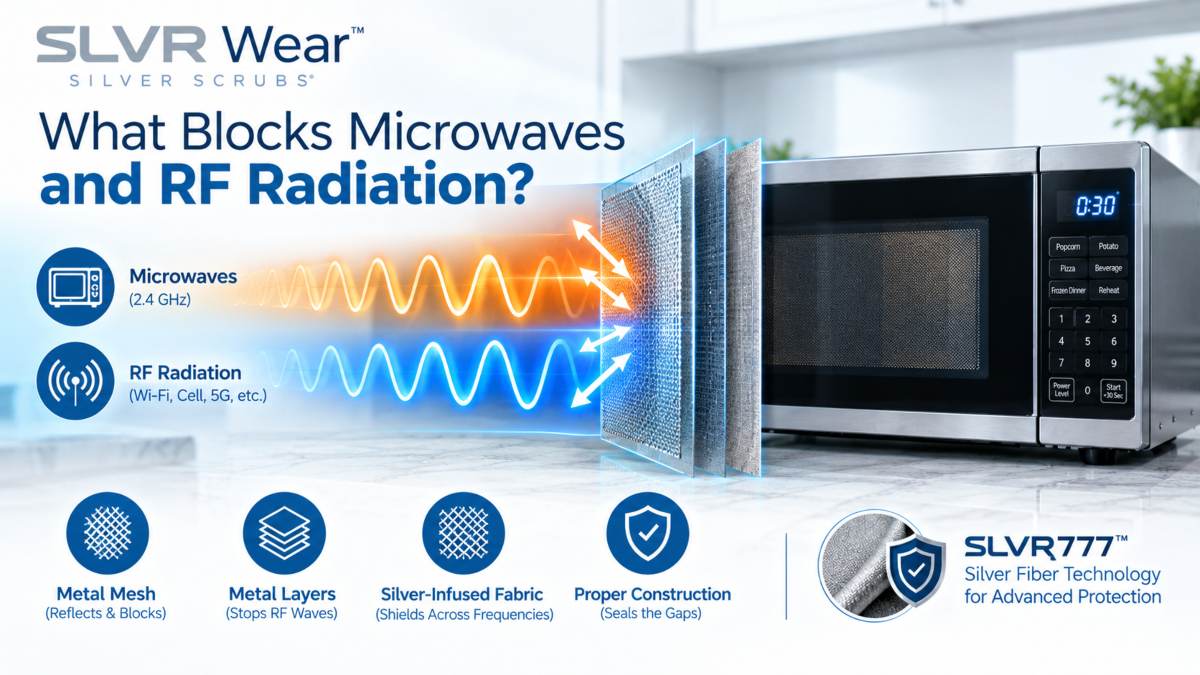
Conductive materials block microwaves and other RF radiation. Copper, aluminum, steel, and fine metal mesh reflect the energy, and conductive fabrics do the same job in flexible form. Insulating materials such as glass, plastic, and wood let microwaves pass through almost untouched. For a wider look beyond microwave frequencies, see this guide to RF blocking materials.
 Conductive Metals and Mesh
Copper, aluminum, and steel all provide RF shielding because free electrons in the metal respond to an incoming wave and reflect it. A solid sheet of any of them blocks microwaves well, and how copper blocks RF signals is covered in its own guide. Thickness is rarely the limit. At 2.45 GHz, copper’s skin depth is only about 1.3 micrometers (calculated from the standard skin-depth formula), so the current a microwave induces stays in a layer far thinner than foil.
Gaps are the real weak point. Mesh and screening work as RF protection only when the openings are much smaller than the wavelength you want to stop. A common engineering rule of thumb is about one-twentieth of the wavelength. At 2.45 GHz the wavelength is about 12 cm, which puts the target near 6 mm, and the 1 mm holes in a microwave door screen sit well under it. Wider openings, or seams that open a slot in the shell, let energy leak even if every panel is solid metal.
Lead stops microwaves because it conducts electricity, not because of anything special about lead. It conducts less well than copper or aluminum, it is heavy, and it needs careful handling, so it is a poor choice for RF blocking. Its reputation comes from a different job: absorbing X-rays and gamma rays, which are ionizing radiation at far higher energies. Microwaves and radio waves are non-ionizing, and the same conductive metals that work for them are cheaper, lighter, and easier to shape.
Tin doesn’t insulate against microwaves because shielding and insulation are different. Insulation slows the flow of heat or electricity. Shielding reflects or absorbs RF energy, depending on conductivity, which is the opposite property. Tin is a conductor, so a continuous layer of it does reflect microwaves. What people call “tin foil” today is usually aluminum, which is covered in does aluminum foil block RF shielding, and a tin can is typically steel with a thin tin coating. In both cases, the steel or aluminum underneath does the blocking.
Conductive fabrics block RF signals by weaving or coating conductive fibers into a textile. Silver, copper, and nickel are common choices, and silver is used in shielding fabrics because it conducts electricity so well. Faraday fabric can be cut, sewn, and folded into pouches, liners, and wraps, which solid metal can’t do.
Fabric has its own limits. Seams, zippers, and closures can open gaps. Washing, stretching, and wear can change how well the fibers touch, and blocking level depends on both frequency and weave. Check that any fabric claim comes with lab test data that names the frequency range tested. SLVR Wear™ publishes its lab results for that reason.
Glass, most plastics, wood, paper, ceramic, and drywall let microwaves pass with little effect, which is why microwave-safe dishes work. Water-containing materials, including food, absorb microwave energy instead of reflecting it, and that absorption is how the oven heats a meal. Ordinary window glass does not shield either, though glass with a conductive coating can. That coating is how some microwave doors provide a see-through panel.
| Material | RF Blocking Behavior | Practical Limitation |
|---|---|---|
| Copper | Reflects RF strongly | Costly; tarnishes over time |
| Aluminum | Reflects RF strongly | Seams need overlap or conductive tape |
| Steel | Reflects RF well | Heavy; can rust |
| Metal Mesh or Screen | Blocks when holes are far smaller than the wavelength | Fails if openings are too wide |
| Lead | Conducts, so it blocks | Heavy, and no better than lighter metals |
| Tin-Coated Steel | Steel layer does the blocking | Lid seams and coatings vary |
| Conductive Fabric | Blocks when fibers stay in contact | Seams, closures, and wear reduce performance |
| Glass, Plastic, Wood | Passes microwaves | Not a shield |
A microwave oven in good condition should not leak meaningful radiation, and you can’t confirm a leak by feel, by sound, or with a phone. Look for physical damage to the door, and if you find any, stop using the oven and have it repaired or replaced. Do not try to fix it by adding metal.
 The Federal Leakage Limit
The federal standard caps leakage from a microwave oven at 5 milliwatts per square centimeter, measured about 2 inches from the oven surface, for the appliance’s lifetime. The limit covers the oven’s entire lifetime, not just the day it leaves the factory.
Distance cuts the exposure sharply. A measurement taken 20 inches from an oven is approximately one one-hundredth of the value at 2 inches, which is why standing at arm’s length while the oven runs matters more than any add-on. The standard also requires two independent door interlocks and a monitoring system, so a new oven in normal condition is built to stay inside these limits.
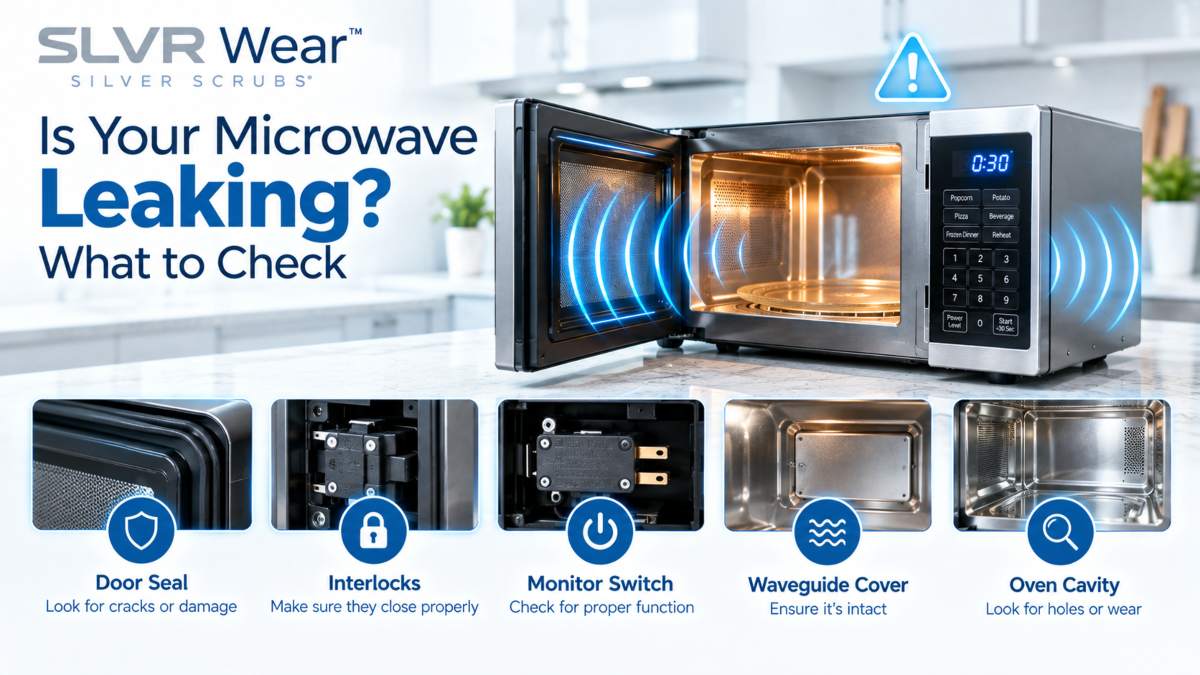
Leakage usually follows physical damage, so inspect the door. The parts that keep radiation in are the door screen, the seal around the edge, the latch, and the hinges. Damaged or modified ovens can allow microwaves to leak, according to the American Cancer Society, so a visual check is a practical first step.
Signs of trouble include a door that no longer closes flush with the frame, a bent or loose hinge, a latch that catches unevenly, and a seal that is cracked, torn, or caked with burnt residue. A warped, dented, or torn door screen is another red flag, as is a door that has been pried or slammed until it sits crooked. Sparks, arcing, or a burning smell during normal use also mean you should unplug the oven and check it. If any of these show up, stop using the oven. Don’t test it by running it.
None of these signs proves leakage, and you can’t clear an oven by eye either. Only a calibrated meter measures leakage, which is why a phone test doesn’t answer the question.
Adding foil, tape, or extra metal to a microwave oven does not make it safer, and it can make it worse. The door screen, seal, and interlocks are engineered as one system, and nothing you attach has been tested against that design. Extra metal near the seal can also stop the door from closing fully.
Metal is a problem inside the oven too. Foil and metal objects can spark and arc when the oven runs, which can start a fire and damage the cavity. You can’t check anything you add outside without a meter either, so you would be guessing whether it helped.
If you suspect a leak, the answer is repair or replacement, not more shielding. A damaged door is a defect in the oven’s existing shielding, and the fix is to restore it. Have a qualified repair service inspect it, or replace the oven if the repair costs more than the appliance is worth.
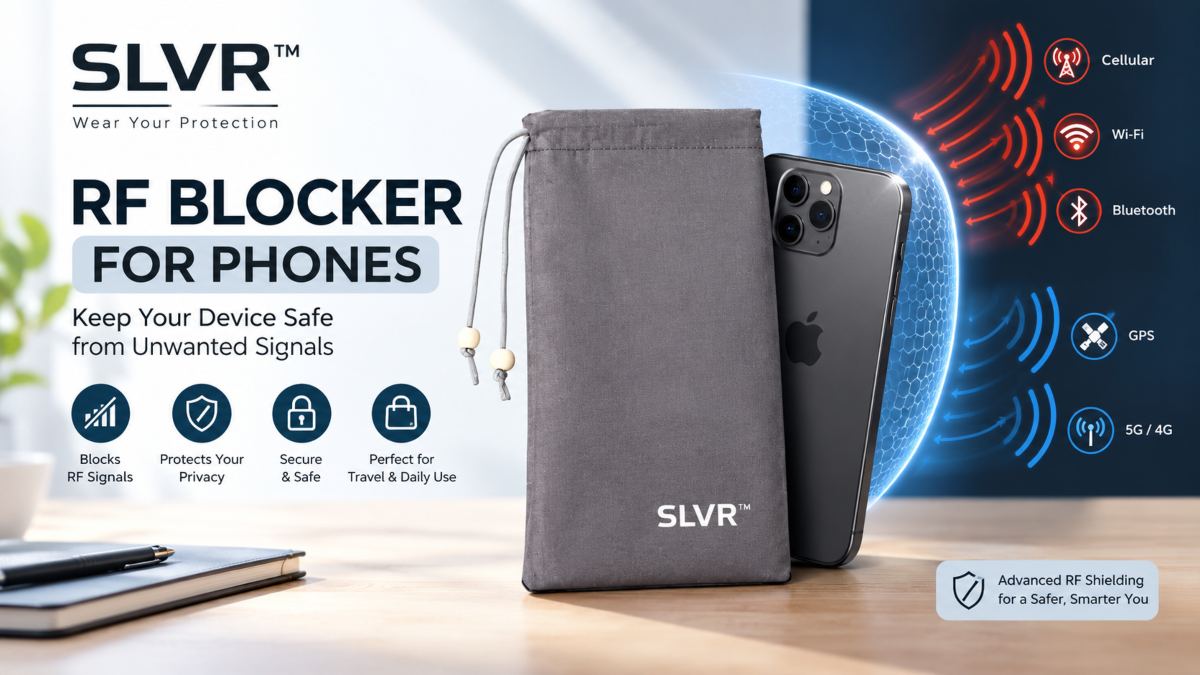
If you want to block cell, Wi-Fi, and other wireless signals from a phone, use a Faraday pouch case made for that job instead of a microwave oven. A purpose-built pouch is portable, has no start button, and is designed around signal blocking rather than food.
A microwave oven’s shielding was built to keep one frequency, 2.45 GHz, inside the cavity. As a result, its performance on other signals is inconsistent, and a phone placed inside and called can still ring. People usually look for signal blocking when they want a phone to stay quiet, such as during travel, in a meeting, or while keeping it out of reach. A microwave doesn’t fit any of those. You can’t carry it, and someone can start it with your phone inside. A pouch goes in a bag or pocket, and the phone stays in it until you take it out.
A Faraday pouch works on the same principle as any Faraday cage: a conductive layer surrounds the phone, and the closure keeps that layer continuous. When a pouch is made of conductive fabric, the closure and seams determine how well it works, and fit matters as much as material. Inside a sealed pouch, the phone cannot make or receive calls, texts, or data until you open it. For a broader view of the category, see these RF blockers.
The SLVR Wear™ Faraday Phone Pouch is one option if you want a pouch designed for signal blocking. It uses conductive fabric, holds a phone, and closes to keep the shield continuous. It is a choice, not the only one, so compare closure design, fit, and test data for any pouch you consider.
You can also check any pouch yourself. Put a phone inside, seal it, and call it from another phone. If you can, repeat the test with a second phone. A single passing result only proves that pouch and phone work together, and it is not a guarantee.
 Common Mistakes When Using a Microwave as a Cage
The most common mistake is treating a microwave oven as a tested shielding enclosure. It was built to contain its own radiation, not to protect what you put inside. Five errors come up again and again, and each one either weakens the shielding or puts your device at risk.
If any of these mistakes matter to you, the better fix is to swap the microwave for an enclosure designed and tested for the job.
This article relies on U.S. federal regulation and manufacturer-independent sources for its safety and leakage claims. The main one is 21 CFR 1030.10, the federal performance standard for microwave ovens, which applies to ovens manufactured after October 6, 1971.
No, not for general use. A microwave oven contains its own 2.45 GHz radiation well, but it hasn’t been verified as a shield against outside signals. Vents, seams, and accidental start-up make it unreliable for storing phones or other electronics.
Yes, if the oven is unplugged and stays off. Place the phone inside, close the door, and call it from another phone. Treat the result as one data point, because it varies by oven and phone, and never press Start.
Sometimes, but not reliably. The oven’s shielding is tuned to 2.45 GHz, close to the 2.4 GHz Wi-Fi band, so it may hold back some Wi-Fi. Results differ by oven and network band, and the door seam can let signals through.
No authoritative testing has shown that it will. An EMP spreads energy across many frequencies, while the oven is built around one. Vents, the door seam, the power cord, and accidental start-up add risk. Use an enclosure designed and tested for the purpose.
The metal cavity and door screen reflect them. The screen’s holes are about 1 mm wide, far smaller than the 12 cm wavelength, so the waves can’t pass. A door seal and two interlocks add protection, and federal rules cap leakage.
Yes, if it is a continuous conductive shell whose openings are much smaller than the wavelength. Metal sheet, fine mesh, and conductive fabric can all block microwaves. Gaps, seams, and poor closures are where a cage usually fails.
No. The door screen, seal, and interlocks work as one tested system, and added foil or metal can stop the door closing properly. If you suspect a leak, stop using the oven and have it repaired or replaced.