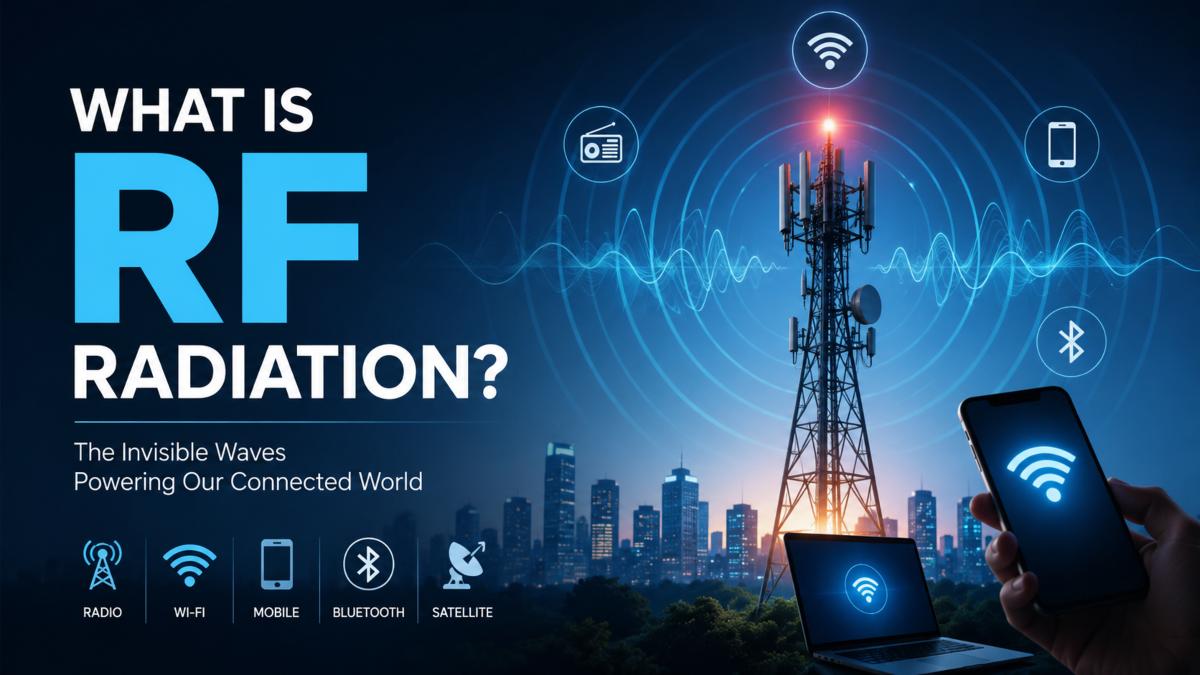
What Is RF Radiation? Frequency, Risks and Exposure
RF radiation is electromagnetic energy that travels in waves, spanning roughly 3 kilohertz to 300 gigahertz the band the FCC…
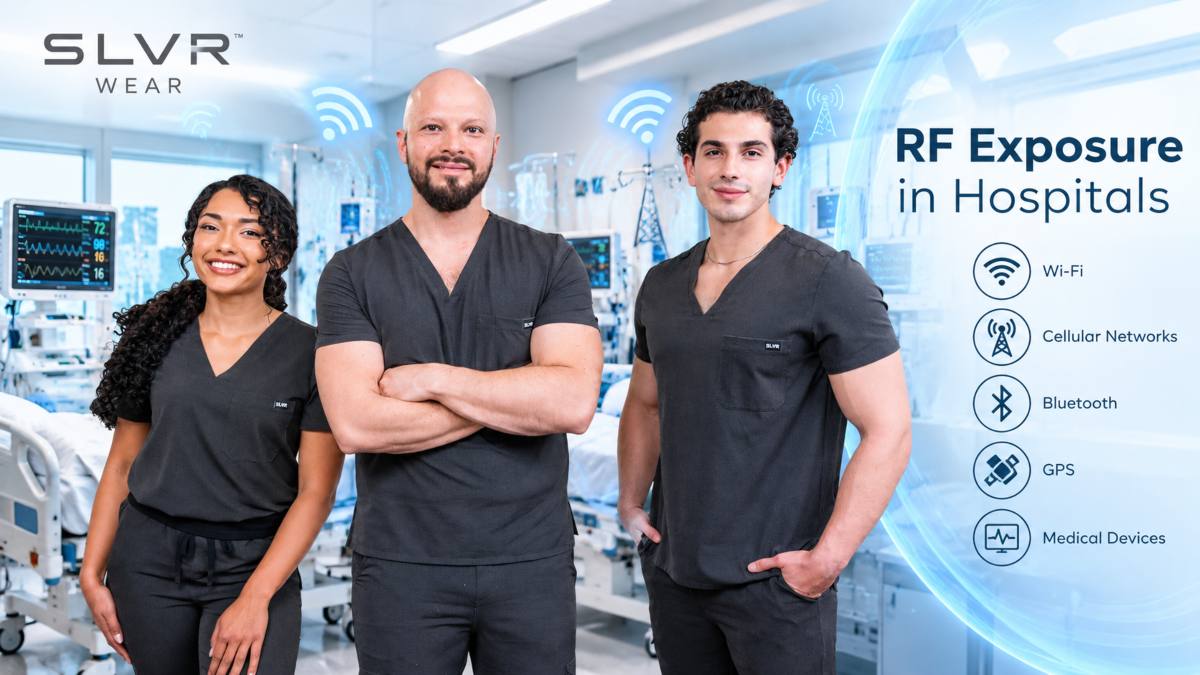
RF exposure in hospitals refers to the radio frequency energy patients, staff, and equipment are exposed to from sources like Wi-Fi networks, cellular signals, Bluetooth devices, and wireless medical telemetry. Hospitals have their own device policies, and some restrict cell phone use in certain areas because they worry sensitive medical equipment could be affected not because ambient RF levels in a hospital are unusually high.
In fact, measured Wi-Fi and cellular signal levels in hospital environments typically fall well below the exposure thresholds set by ICNIRP, the body whose guidelines the FCC and most international regulators rely on. The bigger operational concern for hospitals isn’t public exposure it’s interference: keeping wireless signals from disrupting telemetry, monitors, and other equipment that depends on a clean RF environment to function correctly.
This article breaks down where hospital RF exposure comes from, why device restrictions exist, how hospitals manage interference with medical equipment, and what the safety standards say.
RF exposure in a hospital is the radio frequency energy that patients, staff, and equipment absorb or encounter from wireless sources operating on-site Wi-Fi access points, cellular signals, Bluetooth-connected devices, wireless patient monitors, and radiology equipment that uses RF fields directly, such as MRI machines. It’s measured the same way RF exposure is measured anywhere else: against limits set by the FCC and international bodies like ICNIRP, which govern how much RF energy a person can safely absorb across the frequency spectrum.
The FCC’s own exposure limit for RF energy from personal wireless devices is a Specific Absorption Rate (SAR) of 1.6 watts per kilogram, averaged over one gram of tissue the same limit that applies to any cell phone legally sold in the U.S., whether it’s used in a hospital hallway or anywhere else, iPhones included. What makes a hospital environment distinct isn’t the exposure level itself; it’s the density and mix of RF sources operating in a confined space, and the fact that some of that equipment is life-critical and sensitive to interference from nearby signals.
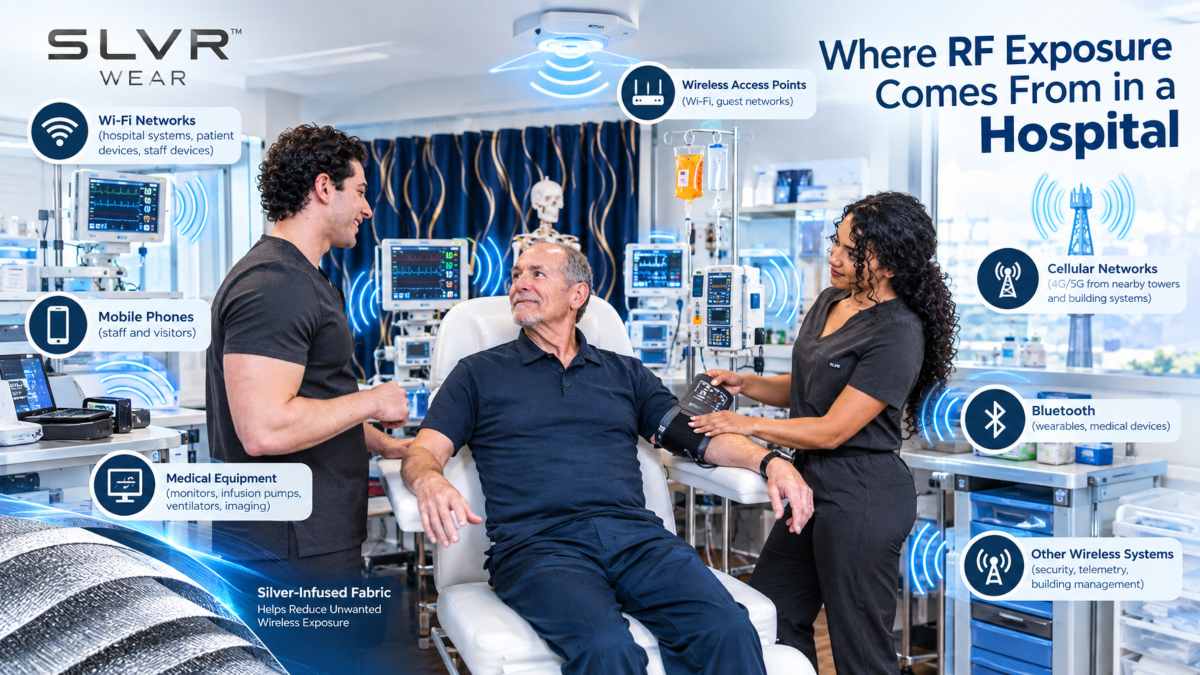
RF exposure in a hospital comes from four main categories of source: wireless network infrastructure (Wi-Fi, cellular, Bluetooth), personal devices carried by staff and visitors, wireless medical telemetry systems, and diagnostic equipment that generates RF fields as part of how it works, like MRI. The mix and density of these sources not any single device shape the RF environment in a given part of the hospital.
 ICU
ICUThe ICU runs one of the highest concentrations of wireless medical telemetry in a hospital, since patient monitors tracking heart rate, oxygen levels, and other vitals often transmit data wirelessly to central nursing stations. Many of these systems operate in the FCC’s Wireless Medical Telemetry Service (WMTS) band around 1.4 GHz a frequency range reserved specifically for patient monitoring so it doesn’t compete with Wi-Fi, cell signals, or other commercial traffic. That protected spectrum exists precisely because continuous, uninterrupted monitoring in the ICU has little tolerance for signal interference.
MRI machines are themselves a significant RF source the imaging process works by pulsing RF energy into the body and reading the signal that comes back, which is why MRI suites are built with RF shielding in their walls to contain that energy within the room, using the same conductive-shielding principle behind Faraday fabric and other EMF blocking materials. Outside the MRI itself, radiology departments also carry the usual mix of Wi-Fi and telemetry equipment found elsewhere in the hospital. Still, the shielded room construction largely confines RF exposure from imaging to the immediate procedure area rather than spreading it through the department.
Operating rooms combine a high density of electronic equipment with long procedure times and staff who often keep personal wireless devices nearby. A measurement study across 67 surgical procedures in two Spanish hospitals over 120 hours of continuous exposure data found that ambient RF levels from Wi-Fi and telecommunications antennas in operating rooms stayed well within internationally recommended limits throughout. The bigger operational concern in this setting isn’t exposure level but interference: keeping wireless signal activity from disrupting equipment like electrosurgical units or patient monitors during a procedure.
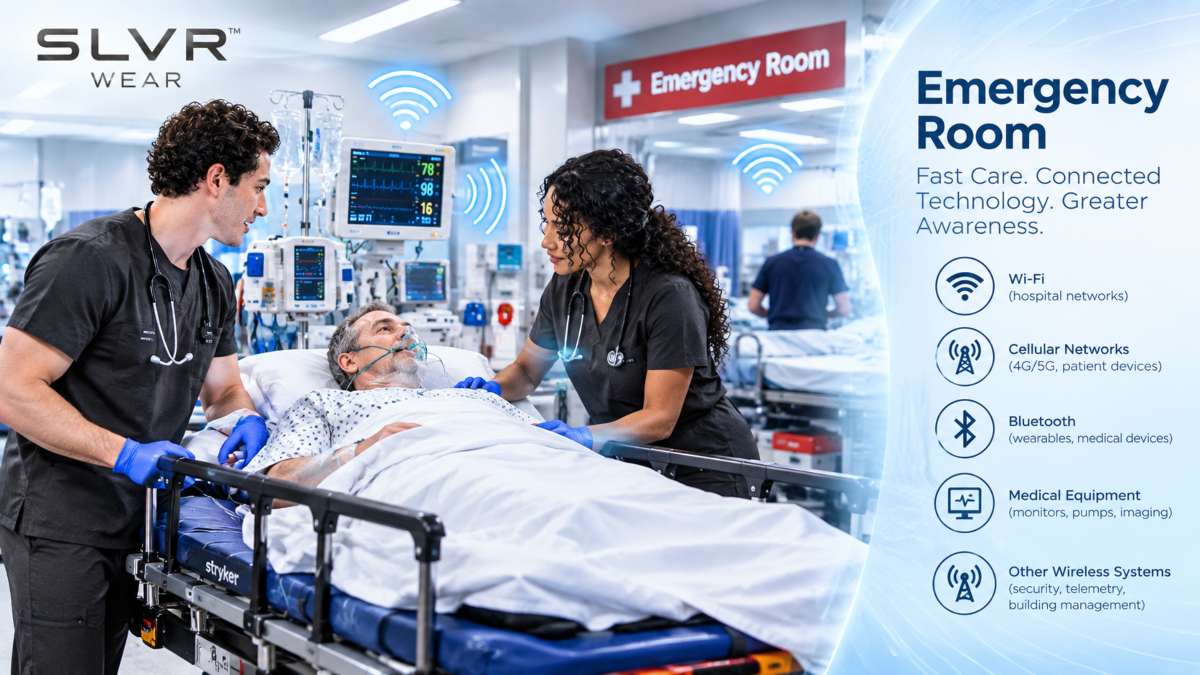
The ER typically has the highest turnover of personal devices of any hospital area, since patients, visitors, and incoming staff are constantly moving through with phones and other wireless electronics. Combined with the department’s own Wi-Fi network and telemetry equipment, this makes the ER one of the more variable RF environments in a hospital exposure levels shift throughout the day based on patient volume rather than staying constant, which is part of why device policies tend to be more actively enforced here than in lower-traffic departments.
 Why Hospitals Restrict Wifi and Cell Phone Use
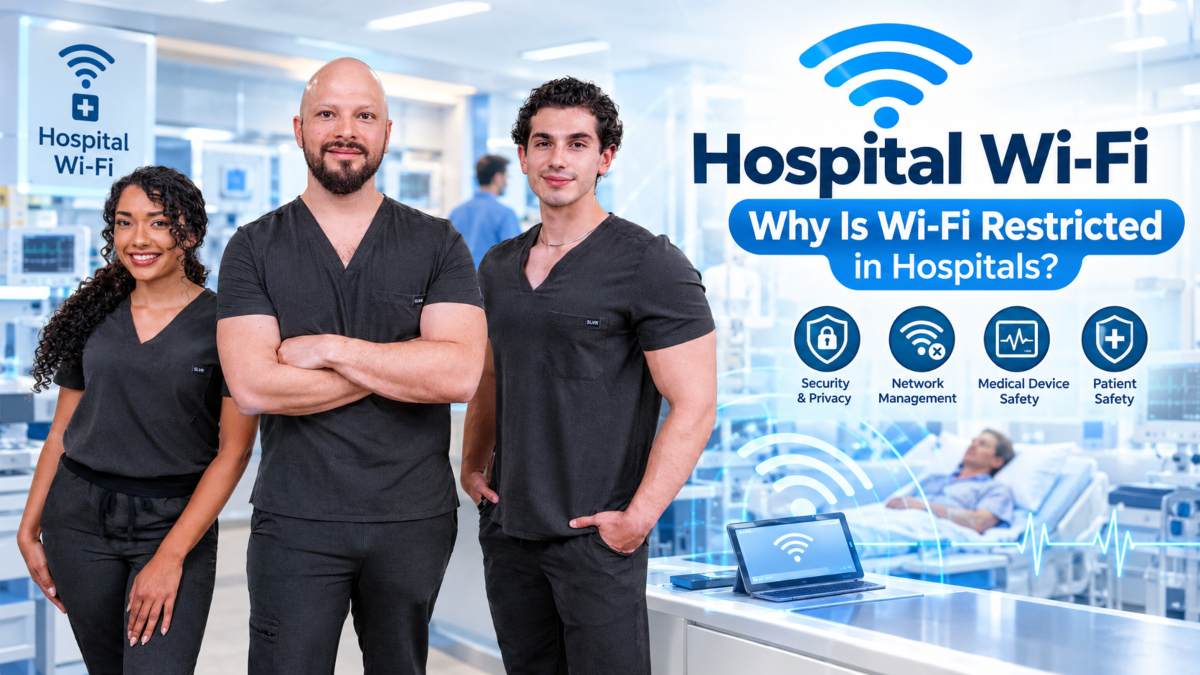
Hospitals restrict wifi and cell phone use primarily to prevent interference with sensitive medical equipment, not because of RF exposure risk to people. The FCC has stated that it does not typically investigate interference between RF transmitters and medical devices directly that jurisdiction sits with the FDA’s Center for Devices and Radiological Health but many hospitals maintain their own restrictions as a precaution, since certain monitoring and diagnostic equipment can be sensitive to nearby wireless signals. In restricted zones, some staff and visitors simply switch devices to airplane mode, turn off 5G, or carry phones in a Faraday phone pouch instead.
Hospital wifi policies typically segment the network by purpose: a clinical network reserved for medical devices and telemetry, and a separate guest or staff network for personal devices and general internet use. This separation keeps everyday wireless traffic browsing, messaging, streaming from sharing bandwidth or frequency space with equipment that needs a stable, low-interference connection to function correctly. Policies vary by facility, but the underlying goal is consistent: isolate patient-care wireless traffic from general-use wireless traffic.
Some areas ban phones outright rather than relying on network segmentation alone, usually because the equipment in that space is highly interference-sensitive or staff need to be certain no signal is present at all.
Pacemakers are a commonly cited example: research has shown that wireless devices can interfere with implanted cardiac pacemakers if used within about eight inches of the device a proximity concern in the same family as the safe distance from power lines given for other close-range RF sources which is part of why phone use is more tightly controlled in areas like cardiac units and procedure rooms.
Outright bans tend to concentrate in these higher-sensitivity spaces rather than applying uniformly across the whole hospital. Facilities that allow devices in these zones often rely on RF blockers as a middle ground rather than a blanket ban.
Wifi dead zones in hospitals usually come from the building itself, not policy decisions. MRI suites are built with RF-shielded walls to contain the imaging equipment’s RF field, and that same shielding blocks Wi-Fi and cell signal from passing through which is why dead zones cluster predictably around radiology and imaging departments.
Thick concrete, lead-lined walls near radiology, and dense equipment rooms all contribute the same way, making dead zones more a byproduct of hospital construction than an intentional network gap the same shielding logic behind whether aluminum foil can block EMF or whether copper blocks EMF: conductive materials interrupt RF signals the way a shielded wall does.
RF interference with medical equipment happens when a wireless signal from a phone, Wi-Fi network, or other RF source disrupts the normal operation of a device that relies on its own signal or sensor to function accurately. In a hospital, this matters most for equipment that transmits patient data wirelessly or uses sensitive internal electrical signals, since both can be susceptible to a nearby RF source overpowering or distorting the signal the equipment depends on.
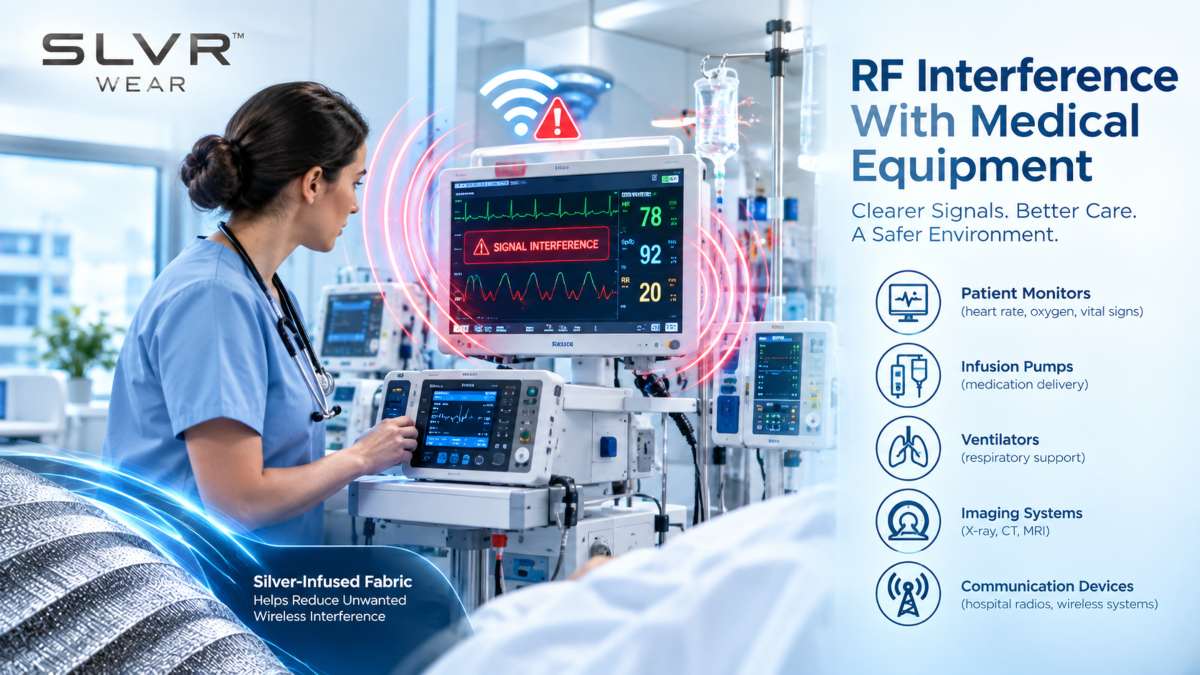 Equipment Most Sensitive to Interference
Wireless patient monitors, infusion pumps, and telemetry systems tend to be the most interference-sensitive equipment in a hospital, since they rely on a continuous, accurate signal to track things like heart rhythm, oxygen saturation, or medication dosing in real time. Implanted devices carried by patients pacemakers and cardiac defibrillators in particular are sensitive for a different reason: they’re designed to respond to small internal electrical signals, which makes them vulnerable to confusion from a strong external RF source at close range. This is why hospitals tend to concentrate their strictest device policies around the departments and patients where this equipment is in use.
Cell phones can interfere with pacemakers, but only under specific conditions. The FCC notes that while current research doesn’t indicate cell phones pose a significant health problem for pacemaker wearers generally, some studies have found that wireless devices can interfere with implanted pacemakers when used within about eight inches of the device. In practice, this means the interference risk depends on proximity, not general phone use a phone in a pocket several feet from someone else’s pacemaker isn’t the same risk profile as a phone held directly against a patient’s chest.
Electromagnetic compatibility, or EMC, refers to a device’s ability to operate correctly in its intended environment without being disrupted by or disrupting nearby electronic equipment. Medical devices undergo EMC testing before they reach the market to verify they can withstand realistic RF activity from Wi-Fi, cellular signals, and other equipment without malfunctioning.
EMC is the technical foundation behind most hospital RF policy: rather than banning wireless devices altogether, facilities can rely on EMC-tested equipment and manage the remaining risk through targeted restrictions in the areas and around the devices where sensitivity is highest.
RF exposure for healthcare workers follows the same physical principles as patient or visitor exposure, but staff spend far more cumulative time in RF-active areas of a hospital which is why occupational exposure is evaluated separately from general public exposure under FCC and ICNIRP guidelines. Regulatory limits for occupational, controlled environments differ from public limits, assuming workers are informed about RF sources and can manage their proximity to them.
Nurses and general hospital staff typically in medical scrubs for a full shift are exposed to the same baseline mix of Wi-Fi, cellular, and telemetry signals as patients, but with more consistent, longer-duration exposure across a full shift.
Measured ambient RF levels in hospital settings including in high-equipment areas like operating rooms have been found to stay well within internationally recommended limits even during extended monitoring periods, suggesting that duration of presence is a bigger variable for staff than the RF environment itself being unusually intense.
Some staff who spend long stretches at a nursing-station laptop also look into EMF laptop protection for that specific setup.
Radiologists and MRI technologists work in closer proximity to a genuinely distinct RF source: the MRI scanner itself, which generates RF energy as part of the imaging process alongside static and switched gradient magnetic fields.
Researchers estimate that around 100,000 workers across radiography, nursing, anesthesia, and engineering roles are regularly exposed to these combined electromagnetic fields at levels meaningfully above normal background which is part of why MRI suites are built with RF shielding and why staff in these roles typically follow scanner-specific safety protocols rather than the general hospital device policy alone.
Some technologists add a signal shielding beanie or signal-shielding hat as an extra personal layer during long shifts near the scanner.
Staff exposure is generally more sustained than patient exposure, but not necessarily more intense a patient’s single MRI scan or procedure is a short, contained exposure. At the same time, a technologist or nurse working near the same equipment daily accumulates exposure over years. That said, ambient measurements in equipment-dense areas like operating rooms have consistently shown levels staying within ICNIRP thresholds regardless of how long staff spend in the space, which is why hospital RF policy tends to focus more on interference prevention for equipment than on cumulative exposure tracking for staff.
RF exposure in hospitals is governed by the same core standards that apply everywhere else FCC rules in the U.S. and ICNIRP guidelines internationally with additional layers specific to medical equipment and spectrum protection. These standards set the ceiling for how much RF energy a person can be exposed to and, for medical device manufacturers, the testing requirements equipment must meet before it can be used in a clinical setting.
The FCC’s primary RF exposure limit for personal wireless devices is a Specific Absorption Rate (SAR) of 1.6 watts per kilogram, averaged over one gram of tissue a limit every cell phone sold legally in the U.S. must meet regardless of where it’s used.
Beyond general device limits, the FCC also maintains rules specific to healthcare environments: the Wireless Medical Telemetry Service (WMTS), created in the early 2000s, reserves protected spectrum around 1.4 GHz specifically for patient monitoring equipment, keeping it isolated from Wi-Fi, cellular, and other commercial traffic.
That protected band is now deployed at thousands of hospitals across the U.S., making it one of the more consequential if lesser-known pieces of hospital RF infrastructure.
ICNIRP, the International Commission on Non-Ionizing Radiation Protection, sets RF exposure limits across the frequency range from 100 kHz to 300 GHz, and most international regulator including, indirectly, the FCC build their own limits from its guidelines. ICNIRP’s standards are designed to prevent established effects like tissue heating, and they distinguish between general public exposure and occupational exposure in controlled settings, which is the framework hospitals use to evaluate staff exposure separately from patient or visitor exposure.
Hospitals generally don’t run continuous RF monitoring across every department; instead, they build compliance in earlier through equipment authorization and EMC testing requirements that medical devices must pass before installation.
Wireless medical devices operating in protected bands like WMTS must be authorized and coordinated through an FCC-designated frequency coordinator before use, which shifts most of the compliance burden to the equipment itself rather than ongoing facility-wide measurement.
Where hospitals actively manage the RF environment day to day, they typically do so through network segmentation and device policy the practical tools covered earlier rather than direct exposure monitoring.
No, measured ambient RF levels in hospital environments, including equipment-dense areas like operating rooms, have consistently been found well within ICNIRP exposure limits. What’s different about hospitals isn’t exposure intensity, but the density and mix of RF sources operating in a confined space.
Most hospitals don’t run continuous, facility-wide RF monitoring. Compliance is built in earlier through EMC testing and equipment authorization requirements medical devices must meet before installation, along with network segmentation and day-to-day device policies.
Wifi dead zones typically result from building construction, not intentional network gaps. RF-shielded walls around MRI suites built to contain the scanner’s own RF field also block Wi-Fi and cell signal, which is why dead zones cluster predictably around radiology and imaging departments.
Yes, but only under specific proximity conditions. Studies have found that wireless devices can interfere with implanted pacemakers when used within about eight inches of the device. However, the FCC notes current research doesn’t indicate general cell phone use poses a significant risk to pacemaker wearers.
In most areas, yes phone use is generally fine outside departments with specific restrictions. Hospitals that limit phone use in certain zones do so as a precaution against interference with sensitive equipment, not because of elevated RF exposure risk to the person using the phone. Patients who are pregnant sometimes ask about EMF exposure during pregnancy specifically, or look into general steps to reduce EMF at home once they’re discharged.