iPhone EMF Radiation Explained | SAR by Model and Guide
Every iPhone emits EMF radiation in the form of radiofrequency (RF) signals from its Wi-Fi, cellular, and Bluetooth antennas, and…
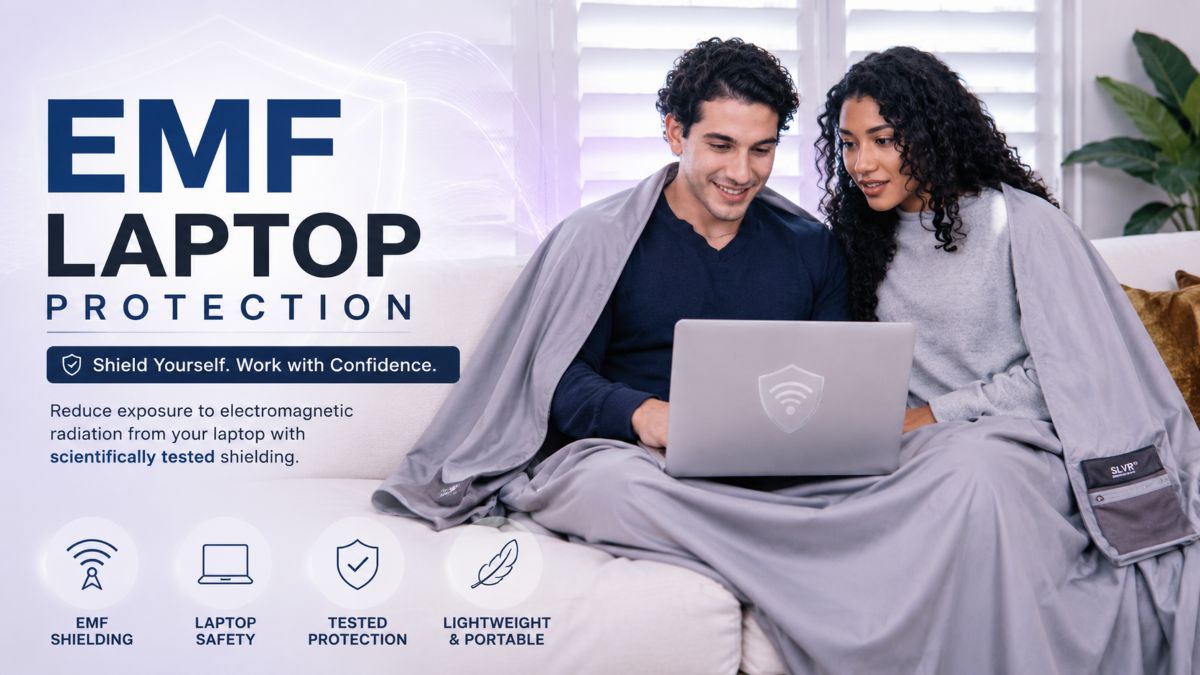
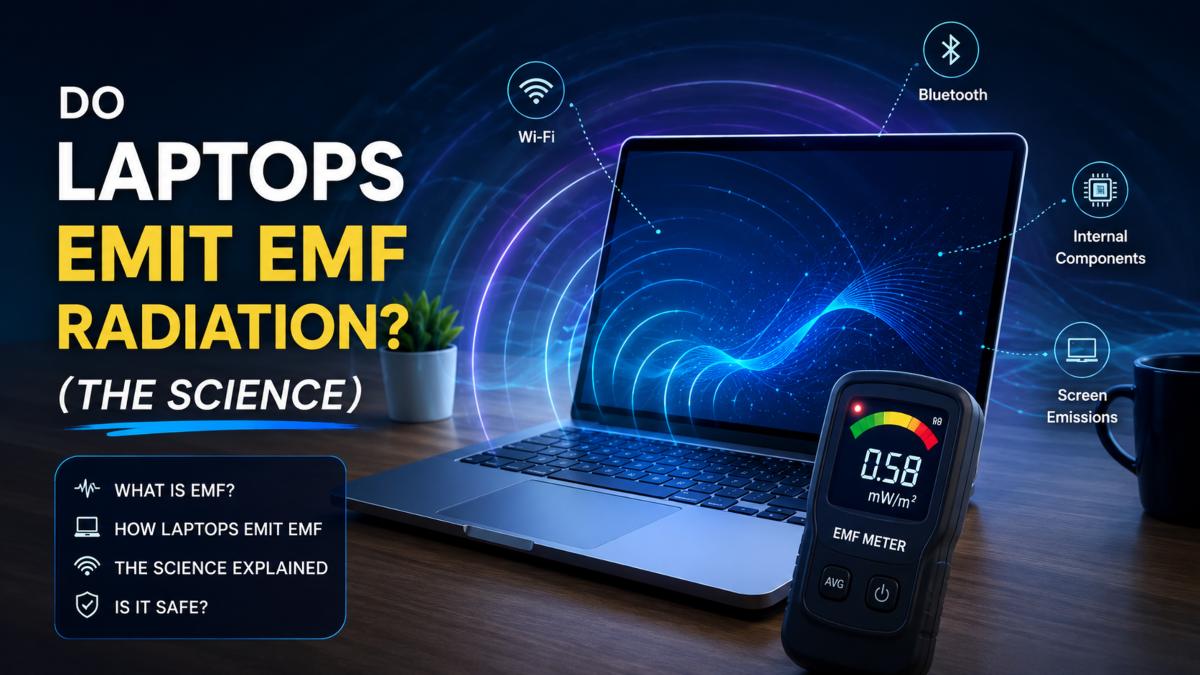
Yes, laptops with Wi-Fi or Bluetooth active emit radiofrequency EMF as a normal part of connecting wirelessly, and how much reaches you depends less on the laptop model than on one simple factor: distance.
That’s the part most people miss. It’s easy to picture a laptop as one fixed source of exposure, the same whether it’s on a desk three feet away or balanced directly on your lap during a long work session. It isn’t. The FCC’s own exposure standard draws its line specifically around devices used within 20 centimeters of the body which is exactly where a laptop sits during hours of lap-based work, video calls, or late-night homework, and exactly where a laptop on a desk doesn’t. Once you notice that distinction, “laptop RF signal attenuation” stops sounding like a niche worry and starts looking like a straightforward, physics-based question: how do you close that 20-centimeter gap?
That’s what this guide walks through what a laptop actually emits, why it isn’t the same story as a phone, and what shielding does and doesn’t change.
Laptops with Wi-Fi or Bluetooth active do emit radiofrequency electromagnetic fields (RF-EMF) it’s an unavoidable part of how wireless data gets sent and received, not a defect or a rare edge case. This puts laptops in the same general category as phones, routers, and Bluetooth headphones: non-ionizing radiation, meaning it doesn’t carry enough energy to break chemical bonds or damage DNA directly, unlike X-rays or gamma rays. Understanding laptop EMF radiation starts with that distinction, because it shapes what’s actually worth paying attention to.
 How Much EMF Does a Laptop Actually Emit?
There’s no single number that answers this, because emission depends on which radios are active and how close the device sits to your body but there is a real regulatory framework behind it. The FCC classifies any wireless transmitter used within 20 centimeters of the body as a “portable device,” and requires it to meet a Specific Absorption Rate (SAR) limit of 1.6 watts per kilogram, averaged over any one gram of tissue, before it can be sold to the public. That 20-centimeter threshold matters more than most people realize: it’s specifically the distance the FCC uses to decide which measurement standard applies, and it’s exactly the range a laptop occupies during lap-based use.
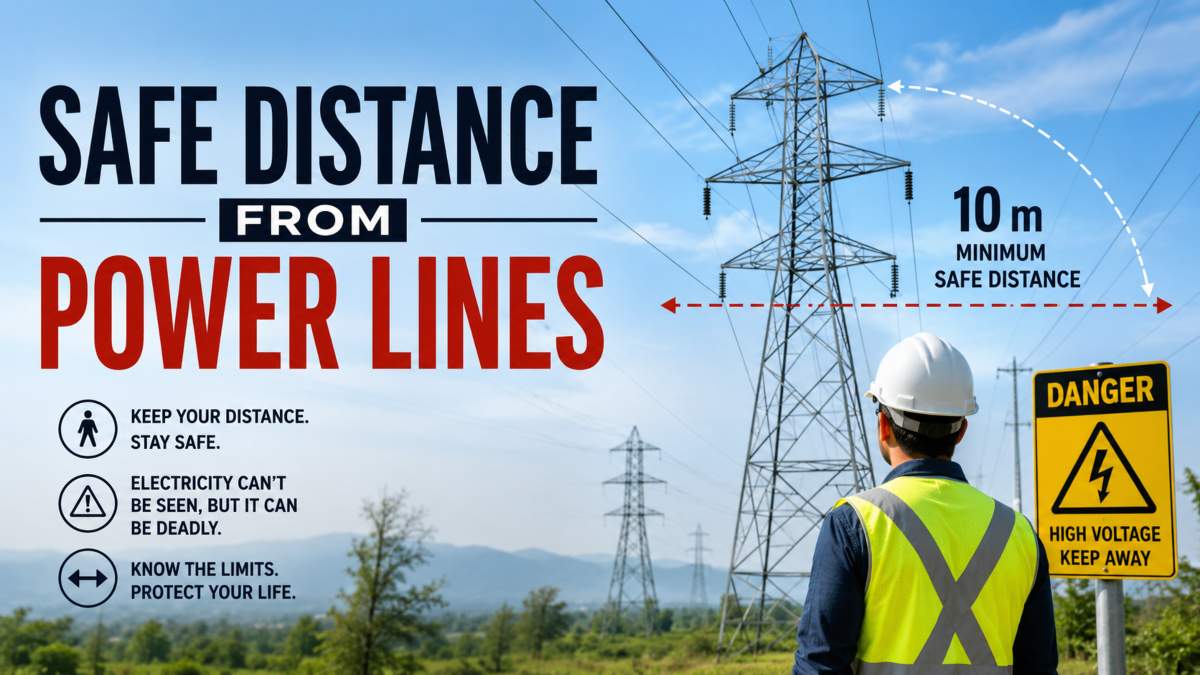
Every wireless-enabled laptop sold in the U.S. has already cleared this bar the open question isn’t whether it’s regulated, but how much distance you’re maintaining from it during actual use. Distance thresholds like this aren’t unique to laptops, either the same logic is why there’s an established safe distance from power lines: proximity, not the source itself, is usually the variable that matters.
Yes, directly. A laptop only emits RF-EMF while a wireless radio is actively transmitting, so a machine running Wi-Fi and Bluetooth simultaneously has more active emission sources than one running Wi-Fi alone and a laptop with all wireless radios switched off, connected instead by ethernet cable, emits essentially none. This is one of the few genuinely free, verifiable ways to reduce exposure: it doesn’t require a shielding product, just checking which radios are on. It’s the same principle behind most of the practical steps for how to reduce EMF in your home configuration changes first, products second.
A fully powered-off laptop with no active wireless radio isn’t transmitting RF-EMF. Sleep mode is less clear-cut many laptops keep Wi-Fi radios in a low-power background state to support features like wake-on-LAN or file sync, which can mean intermittent, low-level transmission continues even when the screen is off. If zero emission is the goal, the reliable combination is airplane mode plus a full shutdown, not sleep mode alone.
See how EMF shielding works in practice with the EMF Blocking Blanket built with the same silver-fiber shielding fabric for full coverage during long desk or lap sessions.
Laptop EMF exposure differs from phone exposure primarily because of distance, not because laptops emit fundamentally different radiation and that one variable changes which regulatory standard even applies.
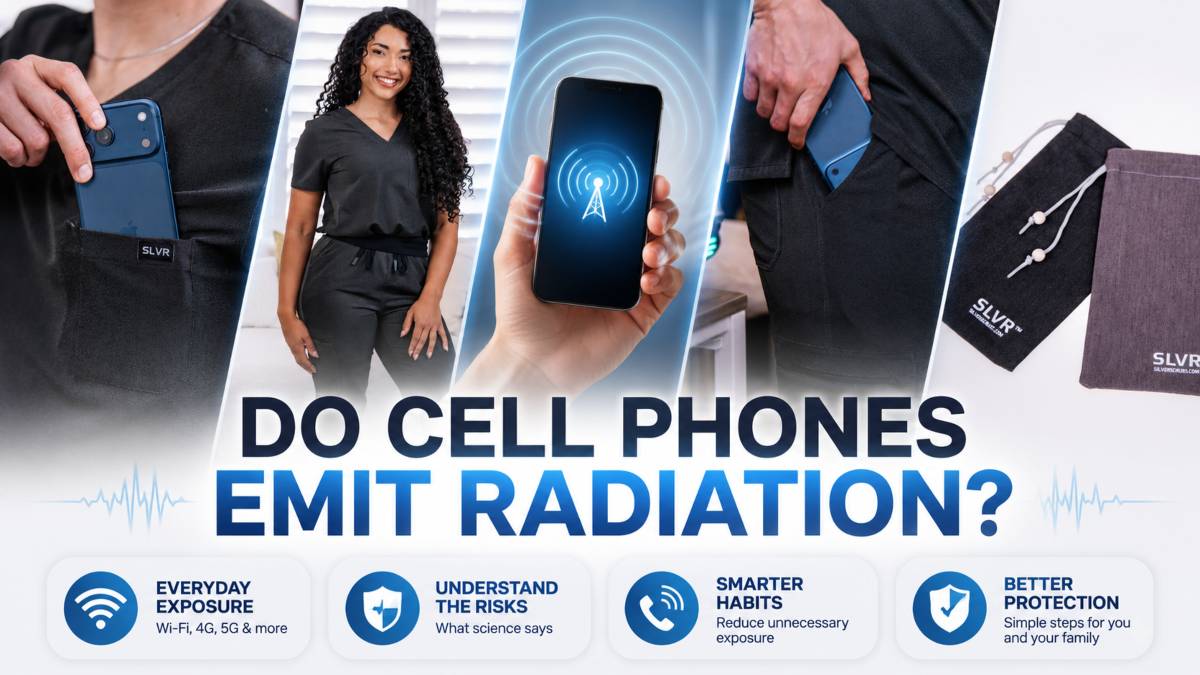
The FCC draws a hard line at 20 centimeters: any wireless device operated within that range of the body is evaluated as a “portable device” under Specific Absorption Rate (SAR) rules. In contrast, devices used farther away fall under a separate, less stringent measurement standard for fixed and mobile transmitters. A phone held to the ear sits well inside that 20-centimeter zone for the length of every call and yes, cell phones do emit radiation in exactly this way, which is why phone-specific exposure has its own body of research.
A laptop’s position, by contrast, isn’t fixed used on a desk, it typically sits 40–60 centimeters away, outside the SAR-governed range entirely; used on the lap, it sits directly against the body, squarely inside it, often for hours rather than minutes.
That’s the real difference worth acting on: it’s not that a laptop is inherently higher- or lower-emission than a phone, it’s that laptop use spans both sides of the distance threshold that determines which exposure standard applies, and duration compounds it a call lasts minutes, a work session can run for hours in that same close-contact position.
Remote and hybrid work has quietly extended how long a laptop stays in close, constant contact with the body, and that shift not the laptop itself is what’s actually new.
A decade ago, a laptop was mostly a desk tool: something used at a table, at a distance, for defined stretches of time. Remote work changed that pattern. Back-to-back video calls now routinely run for hours with the laptop balanced on the lap rather than set on a surface, and the same is increasingly true for kids doing schoolwork on tablets from the couch or bed.
None of this makes the device itself different a laptop emits the same RF-EMF whether it’s on a desk or a lap but the use pattern has shifted toward exactly the close-proximity, extended-duration scenario the FCC’s 20-centimeter SAR threshold was built around. It’s a change in habit, not a change in hardware, and that’s precisely why “laptop RF signal attenuation” has become a more relevant search than it was ten years ago the exposure variable people can actually control is proximity and duration, not the device.
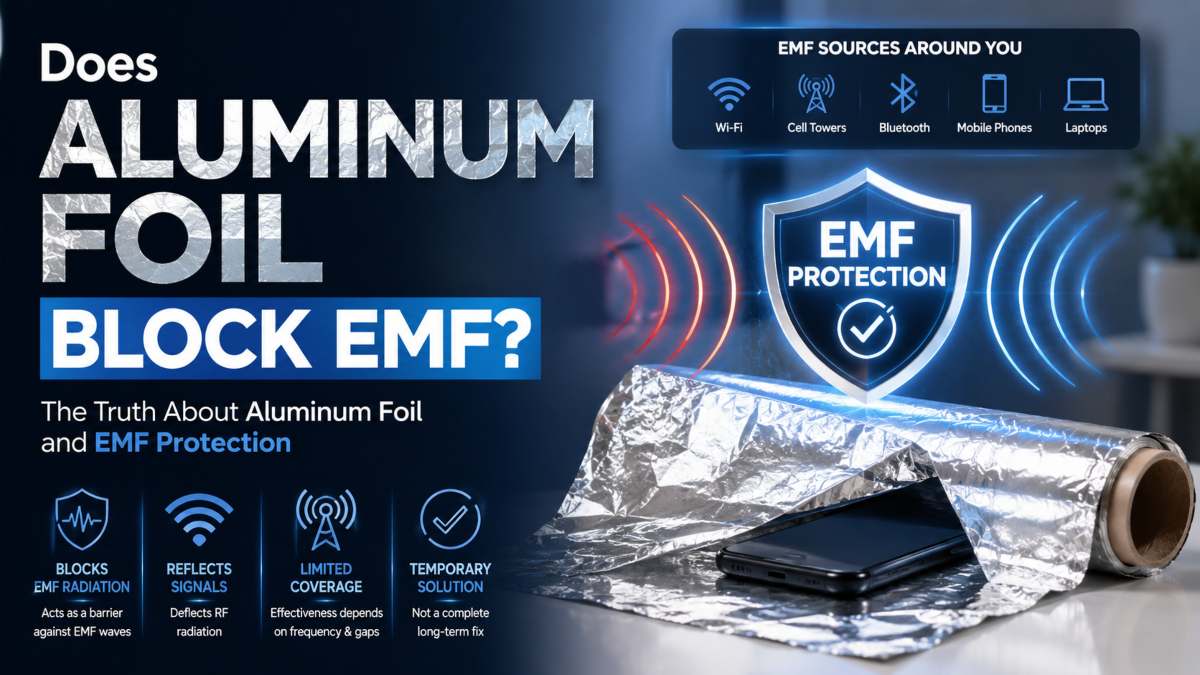
EMF laptop protection generally falls into three physical formats pads, sleeves, and bags each suited to a different part of how a laptop actually gets used.
A shielding pad sits between the base of the laptop and the body, using a conductive layer often a silver-fiber fabric to block RF energy before it reaches the skin. This format is built specifically for active use, which matters: a pad only helps during the exact scenario where exposure is highest, lap-based use within close range of the body, rather than during transport or storage.
A sleeve or case wraps shielding material around more of the laptop’s surface than a flat pad can cover, which makes it well suited to protecting a device in transit or storage. It’s a different use case from a pad, though, not a replacement for one a laptop inside a sleeve isn’t actively being used, so the sleeve addresses exposure while carrying the device rather than while working on it.
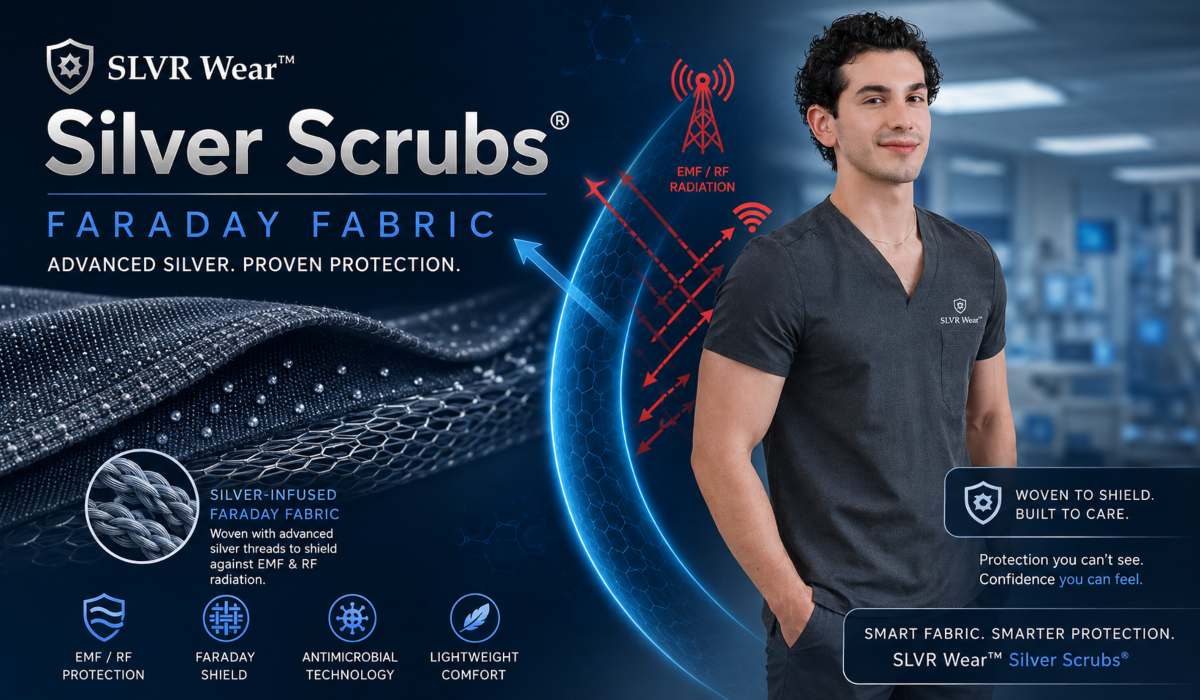
A shielding bag a laptop-sized carrier built with a conductive liner works the same way sleeves do: it protects during transport, not during use, since the laptop isn’t operating while zipped inside. Shielding fabric performance at this level is well established; independent lab testing on SLVR Wear™’s own shielding fabric used in similar carry products showed shielding effectiveness holding at 99.999% across frequencies from 300 MHz up to 20 GHz, dropping only slightly at the higher end of that range.
That’s a meaningful proof point for the fabric itself. Though worth noting it was tested on cell-phone-pouch material, like the one used in the Faraday phone pouch, not a laptop-specific product, so it speaks to what the shielding fabric family can do rather than to a laptop pad’s own confirmed numbers.
Effectiveness comes down to three things: what the shielding layer is made of, how well the pad manages the heat a laptop generates, and whether the shielding claim is actually backed by an independent lab report rather than just stated on the packaging.
Blocking RF energy requires a continuous conductive layer, and different materials achieve that in different ways. Silver-fiber fabric fiber woven with a silver strand rather than coated in a metallic film tends to hold up better over time than metallized coatings, which can crack or thin with repeated flexing and washing and lose shielding performance as a result. For a closer look at how different types of EMF blocking material compare on durability and effectiveness, it’s worth understanding the material itself before comparing products since that’s what determines whether a pad still performs the same way after months of use, not just on day one.
A shielding pad sits in direct, sustained contact between a heat-generating laptop and the body, which makes heat management a real, separate design factor independent of shielding performance. A pad that blocks RF effectively but traps heat against the legs isn’t solving the comfort problem it’s meant to solve; venting and material breathability matter just as much as the conductive layer underneath.
A shielding claim is only as credible as the report behind it. Until that figure is finalized, the honest claim to make is that the pad uses the same silver-fiber shielding fabric family independently tested elsewhere in the product line not a specific laptop-pad number that doesn’t exist yet.
Lab-tested shielding effectiveness only matters if the pad is something people actually keep using day to day which means comfort and everyday practicality carry as much weight as the shielding number itself.
A pad that blocks RF but turns hot or bulky within an hour of use tends to end up in a drawer, not on a lap. The goal for this section is a concrete, honest claim about thinness or airflow that’s true of the specific product, not a generic comfort statement.
A shielding pad only earns a permanent spot in someone’s setup if it doesn’t get in the way of how they actually use the laptop. This is a detail worth being specific about rather than vague, since “doesn’t interfere with your setup” is a claim people can immediately test for themselves.
Price differences between EMF laptop shields usually come down to three things: the shielding material used, whether performance claims are backed by independent testing, and how durable the construction is over repeated use not brand markup alone.
Silver-fiber fabric costs more to produce than metallized coatings. Still, it also holds its shielding performance through washing and flexing far better, which is where the price difference actually pays off over time. Independent lab testing adds cost too verifying a shielding claim with a third-party report isn’t free, and brands that skip it can price lower simply because they haven’t paid for verification.
Build quality factors in as well: stitching, venting design, and material weight all affect how long a pad performs as intended rather than degrading after a few months of regular use. None of this means the higher-priced option is automatically better it means the price gap usually maps to something specific. It’s worth knowing what that something is before comparing numbers.
A few direct questions cut through most of the ambiguity in this category. What frequency range was the shielding actually tested to, and is that range relevant to the wireless signals a laptop uses? Is the lab report published and viewable, or only referenced in marketing copy? What’s the exact material composition silver-fiber percentage, backing layer, blend rather than a vague “shielding fabric” description? And does the shielding layer hold up after washing, or is that untested? A shield that can’t answer these plainly is worth more scrutiny than one priced a few dollars higher with a report to back it up.
The EMF Blocking Blanket is available directly from SLVR Wear™ in two sizes, depending on whether you need lap-level coverage or full-body coverage: the Signal Shielding Baby Blanket (29.5″ × 36.2″, from $159.90) and the EMF Blocking X-Large Blanket (59.06″ × 79.92″, $499).
Both are built from the same SLVR777™ silver-fiber fabric discussed throughout this guide silver fiber woven directly into the textile rather than coated on top, so the shielding layer is designed to hold up through repeated washing rather than degrade after a few uses. That fabric family has been independently lab-verified to block 99.91% of EMF, tested up to 50 GHz, and the yarn carries OEKO-TEX® Standard 100 certification for harmful substances the kind of third-party proof point this guide recommends checking for before buying any shielding product.
Lap Blanket (29.5″ × 36.2″): Sized for exactly the close-contact, lap-based use case this guide focuses on laptop sessions, video calls, or a stroller and car seat drape. It’s the lighter, more portable option at .88 lbs. It comes with a triple-layer construction (soft cotton exterior, hidden shielding core, cotton underside) so the conductive layer never touches skin directly.
X-Large Blanket (59.06″ × 79.92″): Built for full-body or shared coverage stretched out on a couch, added to a bed, or used during long travel days rather than a single device sitting on your lap. Same triple-layer silver-fiber construction, scaled up for whole-room or whole-body use.
Not in a way that reduces to a single comparison it depends more on use pattern than on the device itself. A phone held to the ear sits within the FCC’s 20-centimeter close-proximity zone for the length of every call this is the same question people ask about iPhone EMF radiation specifically, since SAR values and use patterns get discussed model by model. A laptop moves in and out of that same zone depending on how it’s used: at a desk, it’s typically well outside it; on a lap, it’s directly inside it, often for much longer stretches than a phone call runs.
Between the base of the laptop and the body directly on the lap or thighs, wherever the device makes contact during use. A pad placed on a desk under a laptop that’s also sitting on a desk isn’t doing much, since the exposure it’s designed to reduce happens specifically during close-body contact.
Not as a standardized industry classification. Emission depends on which wireless radios are active and how continuously they’re transmitting, not on a fixed “low-EMF” spec that manufacturers certify to. A laptop with Wi-Fi and Bluetooth both switched off. It connected by ethernet will emit far less RF-EMF than the identical model with both radios active the variable is configuration, not model or brand.
Neither extreme holds up. In 2011, the World Health Organization’s International Agency for Research on Cancer reviewed the available epidemiological studies, cancer bioassays, and mechanistic research and classified radiofrequency electromagnetic fields as “possibly carcinogenic to humans” (IARC Group 2B), based on limited evidence of increased glioma and acoustic neuroma risk among heavy wireless phone users. That’s a real, official classification not a fringe claim.