iPhone EMF Radiation Explained | SAR by Model and Guide
Every iPhone emits EMF radiation in the form of radiofrequency (RF) signals from its Wi-Fi, cellular, and Bluetooth antennas, and…
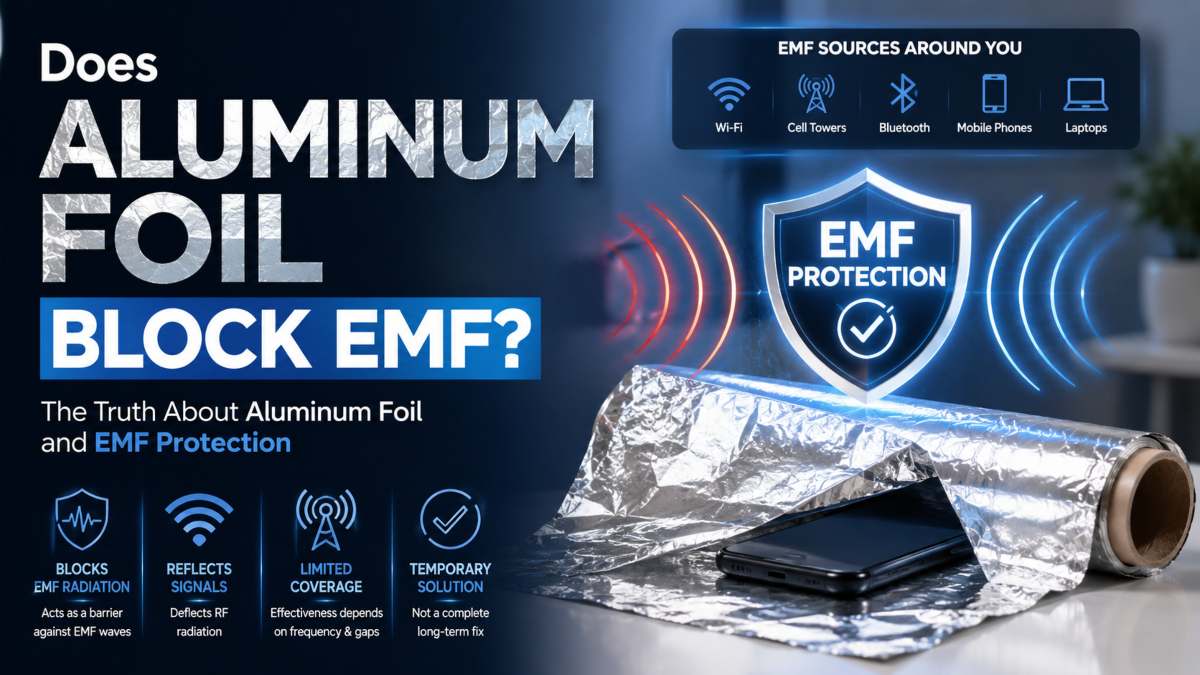
Yes, aluminum foil blocks EMF radiation to a degree but only partially and only under specific conditions. As a conductive metal, foil reflects and absorbs electromagnetic energy, which is the same basic principle behind professional EMF blocking materials. In lab testing, continuous sheets of metal can block a significant percentage of certain frequencies. Still, household foil is thin, prone to gaps, and rarely applied with the precision needed for consistent results.
The honest answer is: it works, but inconsistently. A single crumpled or overlapped sheet of foil creates seams and air gaps, and EMF radiation can leak through even small openings the way light escapes through a cracked door. That’s why foil is a useful demonstration of shielding physics, but not a reliable, repeatable solution on its own.
Yes, aluminum foil blocks EMF radiation to some extent, because it’s made of a conductive metal that reflects and absorbs electromagnetic energy. However, foil only works reliably when it forms a complete, unbroken barrier a single crumpled sheet with gaps or seams lets radiation leak through, similar to how light escapes through a cracked door. For everyday use, this makes foil an interesting demonstration of shielding physics, but an inconsistent real-world solution.
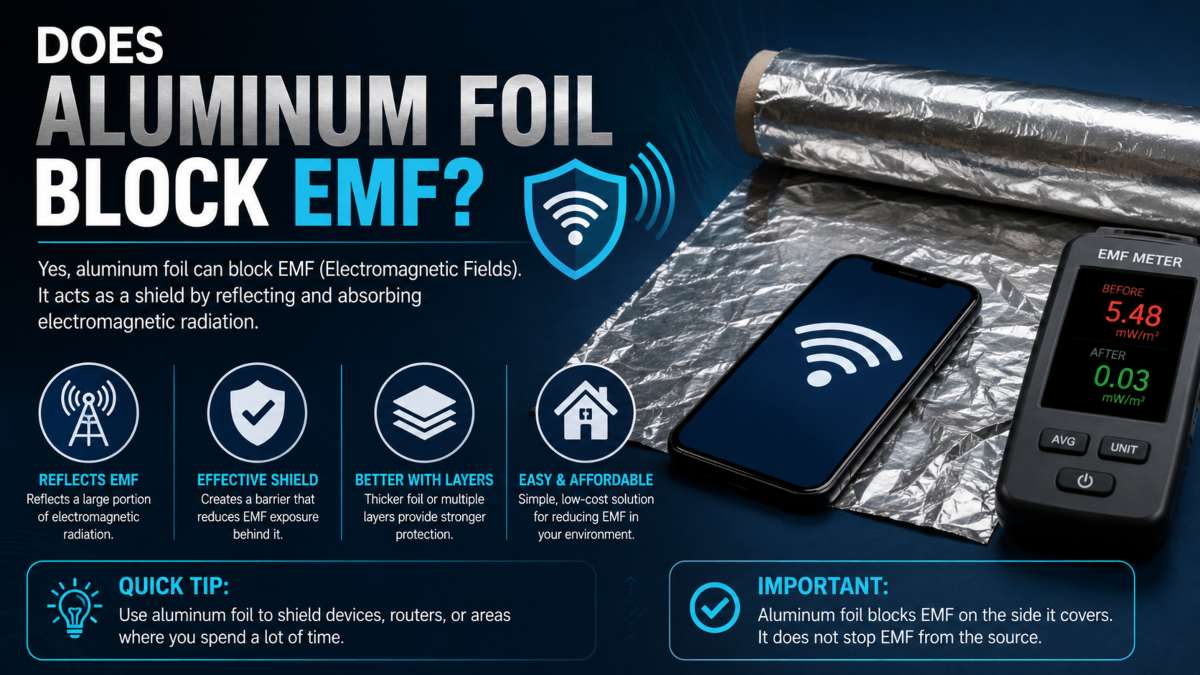 How Aluminum Foil Blocks EMF
Aluminum foil blocks EMF through a principle called electromagnetic shielding, where free-moving electrons in the metal react to incoming electromagnetic waves and reflect much of that energy away before it can pass through. This is the same underlying physics used in professional Faraday cages and woven shielding fabrics aluminum is simply one of the more accessible conductive materials available for a quick, informal demonstration of the effect.
Metals block EMF because they contain free electrons that respond almost instantly to an electromagnetic field. When a wave hits the metal’s surface, these electrons shift and generate an opposing field that cancels out much of the incoming radiation a process known as the “skin effect.” Aluminum, copper, and silver all share this conductive property, which is why they appear across shielding applications, from foil to wiring to woven fabrics. The strength of the effect depends heavily on the specific metal’s conductivity, with copper and silver generally outperforming aluminum at equivalent thickness.
A conductive material only blocks EMF effectively if it forms a continuous, unbroken barrier any gap, seam, or tear gives radiation a path through, regardless of how conductive the metal is. Household aluminum foil is typically around 0.016mm thick, thin enough to tear, wrinkle, and develop small gaps during normal handling, which is why its real-world shielding performance is far less consistent than its material properties alone would suggest. This is also why folded or overlapped foil performs worse than a single flat, sealed sheet every seam is a potential leak point.
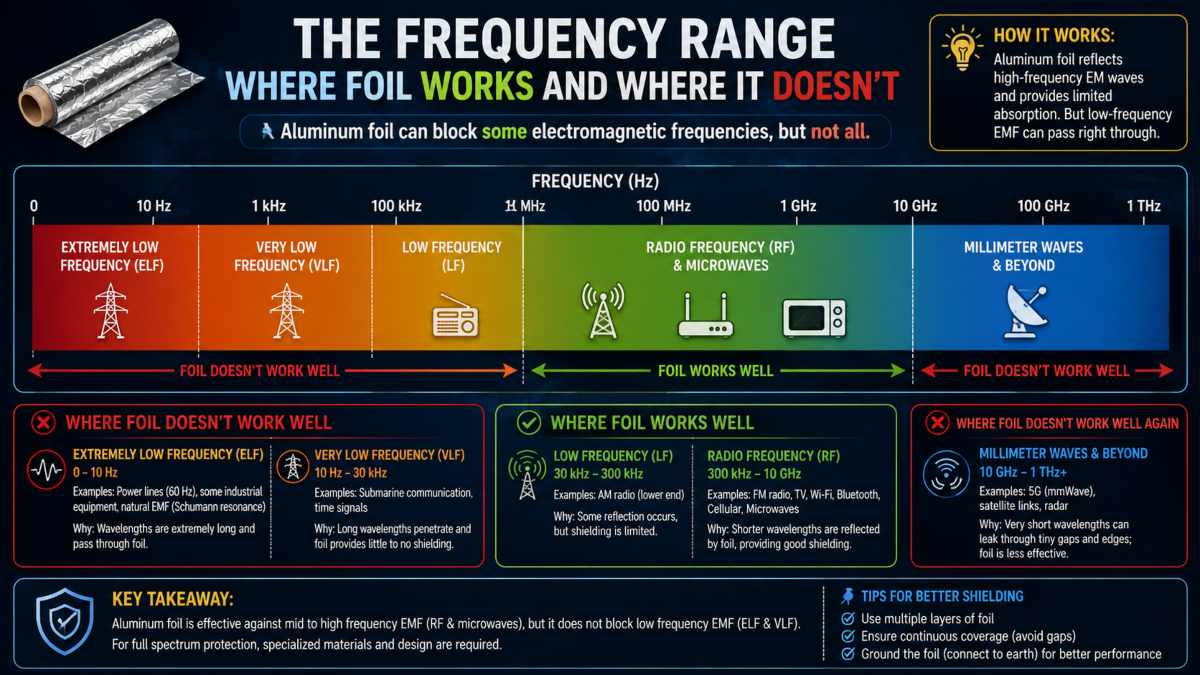
Aluminum foil doesn’t block EMF equally across the spectrum its effectiveness changes significantly depending on the frequency of the signal involved. It performs reasonably well against some wavelengths while struggling against others, which is one of the biggest reasons foil is treated as a limited demonstration tool rather than dependable everyday shielding.
 Low-Frequency vs High-Frequency Signals
In general, conductive metals like aluminum are more effective at blocking higher-frequency signals, such as those in the wifi and 5G range, because shorter wavelengths are easier for a thin conductive layer to reflect. Lower-frequency electromagnetic fields, like those from some electrical wiring and power line exposure, penetrate metal barriers more easily and require thicker or specially engineered materials to block effectively. This is why a single sheet of foil might noticeably dampen one type of signal while doing almost nothing against another frequency, not just material, determines the outcome. The same principle applies indoors, where sources of exposure add up throughout a house see our guide on how to reduce EMF in your home for a fuller picture.
Even within a frequency range where foil is theoretically effective, shorter wavelengths are also more sensitive to small gaps, meaning high-frequency signals can slip through openings that a lower-frequency wave might not. A gap as small as a few millimeters can be enough to let signal leak through if it’s close to the wavelength scale of the frequency being blocked. This is why wrapping a phone loosely in foil rarely produces a complete signal block the seams where the foil overlaps or folds are often exactly where leakage happens. The same gap-and-seam problem applies to laptops and other electronics; see our breakdown of EMF laptop protection for device-specific considerations.
Yes, there is real scientific basis behind aluminum foil’s ability to block EMF the shielding effect of conductive metals is well-established physics, not a myth. However, most of the supporting evidence comes from controlled lab testing of metals and shielding materials in general, rather than from formal studies conducted specifically on household aluminum foil in real-world conditions.
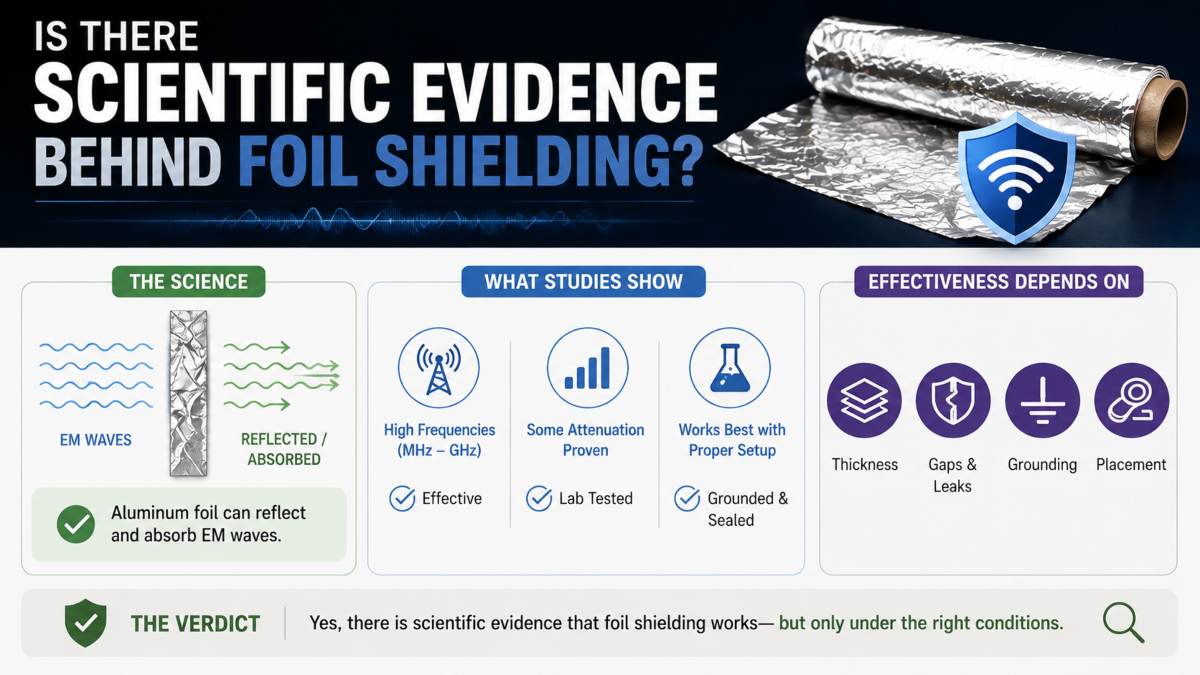 What Studies and Lab Testing Actually Show
Shielding effectiveness testing typically measures how much a material reduces signal strength across specific frequency bands, expressed in decibels of attenuation, and metals with high conductivity consistently perform well in these controlled settings. This is the same type of testing used to validate professional-grade shielding fabrics and enclosures. What the research doesn’t offer is a definitive, universal number for “how much foil blocks,” because results shift dramatically based on thickness, frequency, and how completely the material seals off a space variables that lab studies control for and everyday foil use does not.
There’s no widely recognized consumer-grade standard for testing household foil the way there is for certified shielding fabrics or enclosures, which is part of why claims about foil’s effectiveness vary so much online. Foil wasn’t designed or manufactured as a shielding product, so it isn’t held to the same testing protocols thickness, alloy composition, and even brand can all affect performance in ways that go unmeasured. This gap is exactly why purpose-built, lab-tested shielding materials exist: they’re manufactured and verified specifically for consistent EMF-blocking performance, something improvised foil setups can’t guarantee.
Aluminum foil is one of the most misunderstood materials in EMF discussions, with popular myths often overstating what a thin, imperfectly applied sheet of metal can actually do. Most of these myths come from oversimplifying real shielding physics foil does interact with EMF, but rarely in the complete, guaranteed way it’s often portrayed.
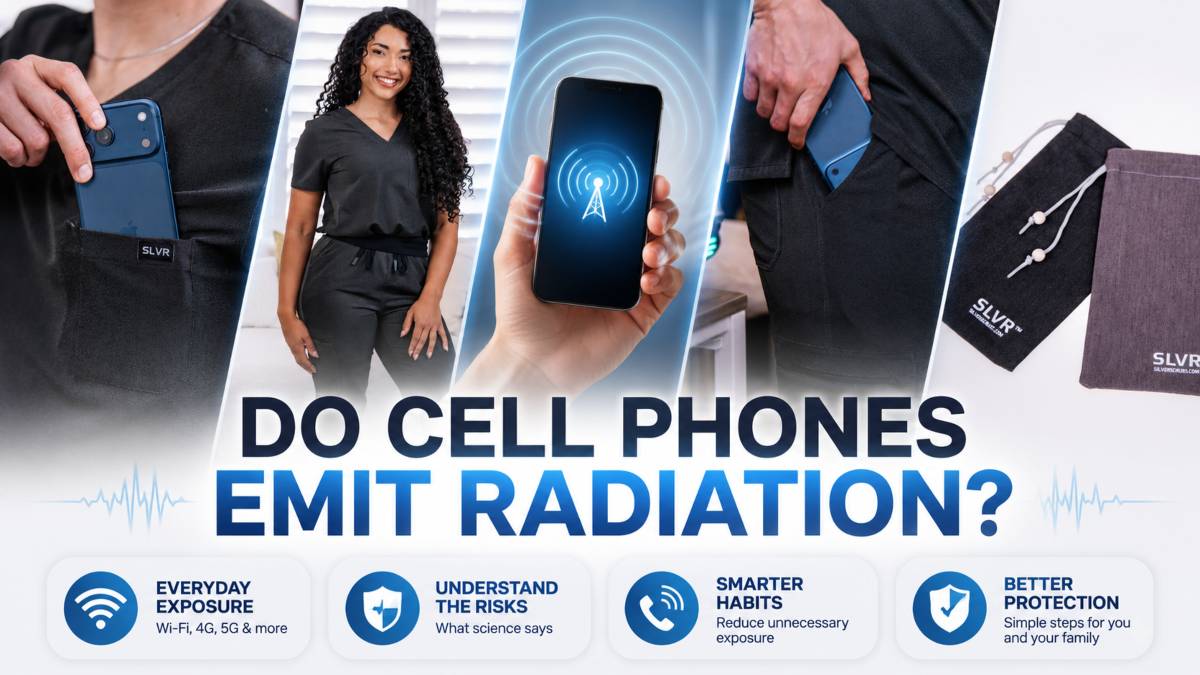
This is only partially true wrapping a phone in foil can noticeably weaken signal strength, but it rarely blocks it completely. Phones communicate across several frequency bands at once (cellular, wifi, Bluetooth, GPS), and a hand-wrapped sheet of foil rarely seals every seam tightly enough to stop all of them a limitation covered in more detail in our look at iPhone EMF radiation. Some people try airplane mode reduce emf as an alternative to foil-wrapping, though that approach comes with its own trade-offs. In practice, most foil-wrapped phones still show a weak signal or intermittent connectivity rather than a true dead zone, which is a good demonstration of shielding limitations rather than shielding success.
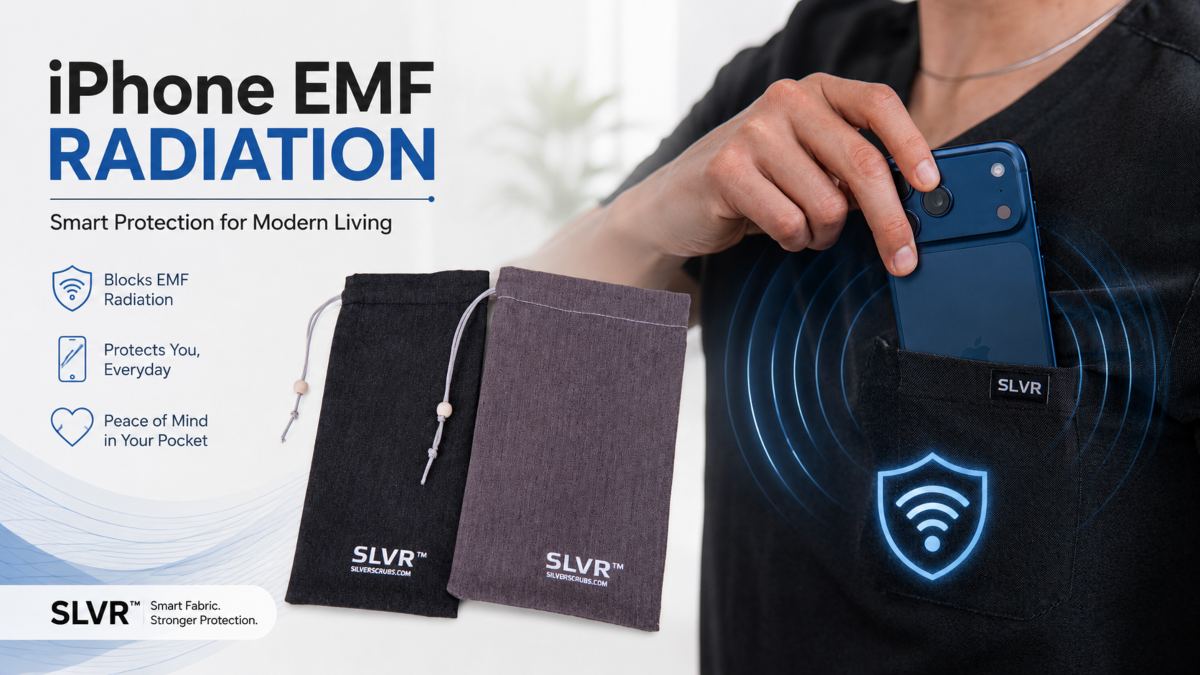
A purpose-built option like SLVR Wear™ Faraday Phone Pouch is designed to form the complete, sealed barrier that a hand-wrapped sheet of foil struggles to achieve.
As a shielding claim, this one is mechanically flawed rather than simply exaggerated: a hat-shaped piece of foil is open at the bottom, and EMF radiation can enter and exit through that opening the same way sound travels in and out of an open-topped box. Effective shielding requires a fully enclosed, continuous barrier something researchers actually demonstrated somewhat famously in a study where certain frequencies were found to be amplified rather than blocked by an open foil hat design, due to antenna-like resonance effects.
This makes foil hats one of the clearest examples of why shape and continuity matter as much as the material itself. Woven headwear built from continuous conductive fiber such as SLVR Wear™ Signal Shielding Beanie or Signal Shielding Hat avoids the open-seam problem that makes improvised foil hats unreliable.
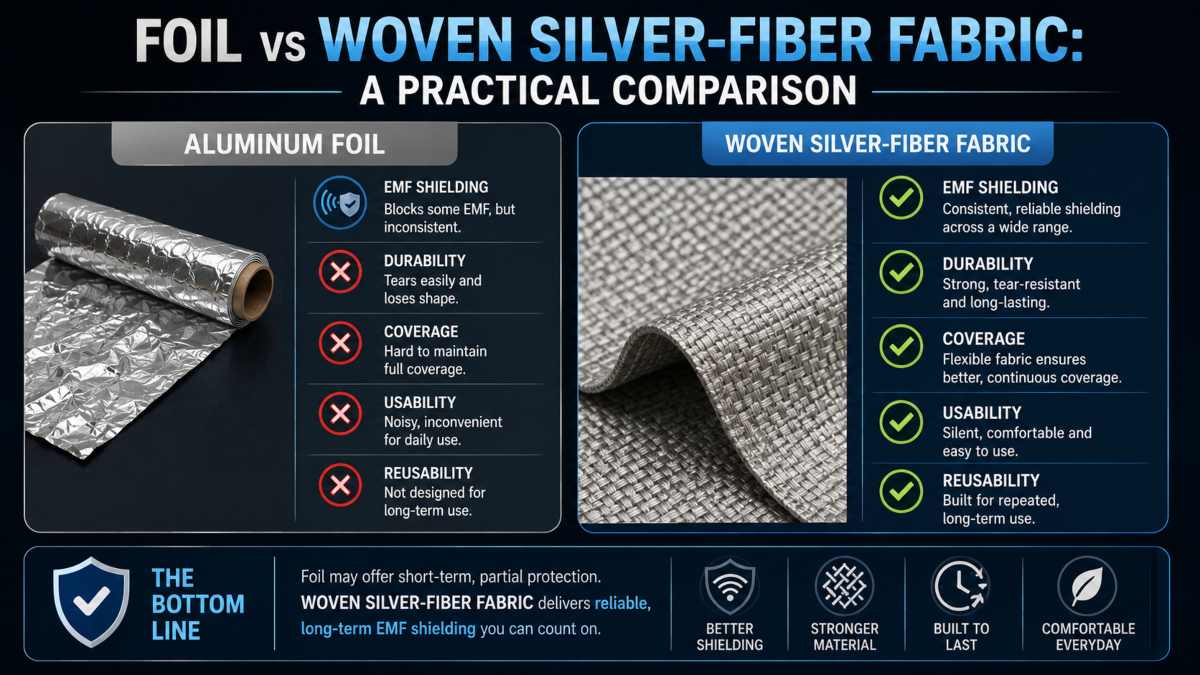
Compared to household aluminum foil, woven silver-fiber fabric offers a more consistent and durable approach to EMF shielding, largely because it’s engineered as a continuous textile rather than assembled by hand from a fragile sheet of metal. Where foil relies on getting the folds and seams right every single time, fabric is woven with conductive fiber integrated throughout, removing much of the guesswork.
 Durability and Everyday Wearability
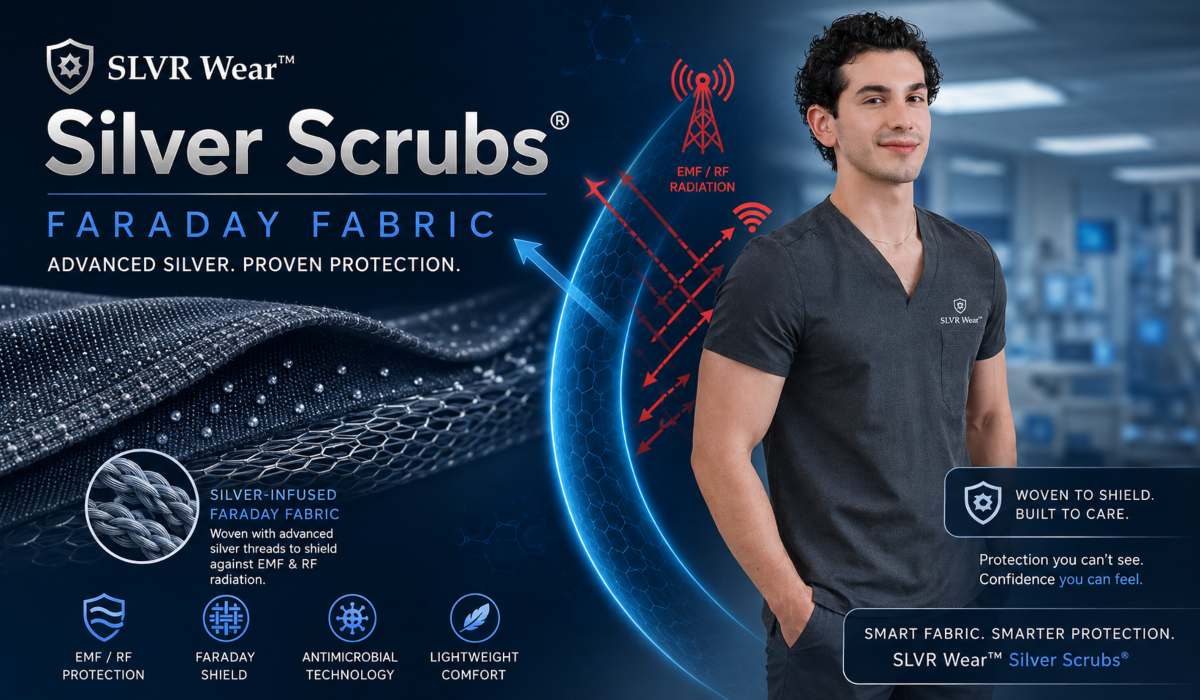
Foil tears, creases, and degrades with handling, which makes it impractical for anything beyond a one-time demonstration. Woven silver-fiber fabric, by contrast, is built to be worn, washed, and used repeatedly without losing its structural integrity SLVR Wear™ Silver Scrubs®, for example, use a fabric blend of 35% silver fiber, tested to 50 GHz and lab-verified to block up to 99.91% of EMF exposure (), designed to hold that performance through everyday wear rather than a single careful application.
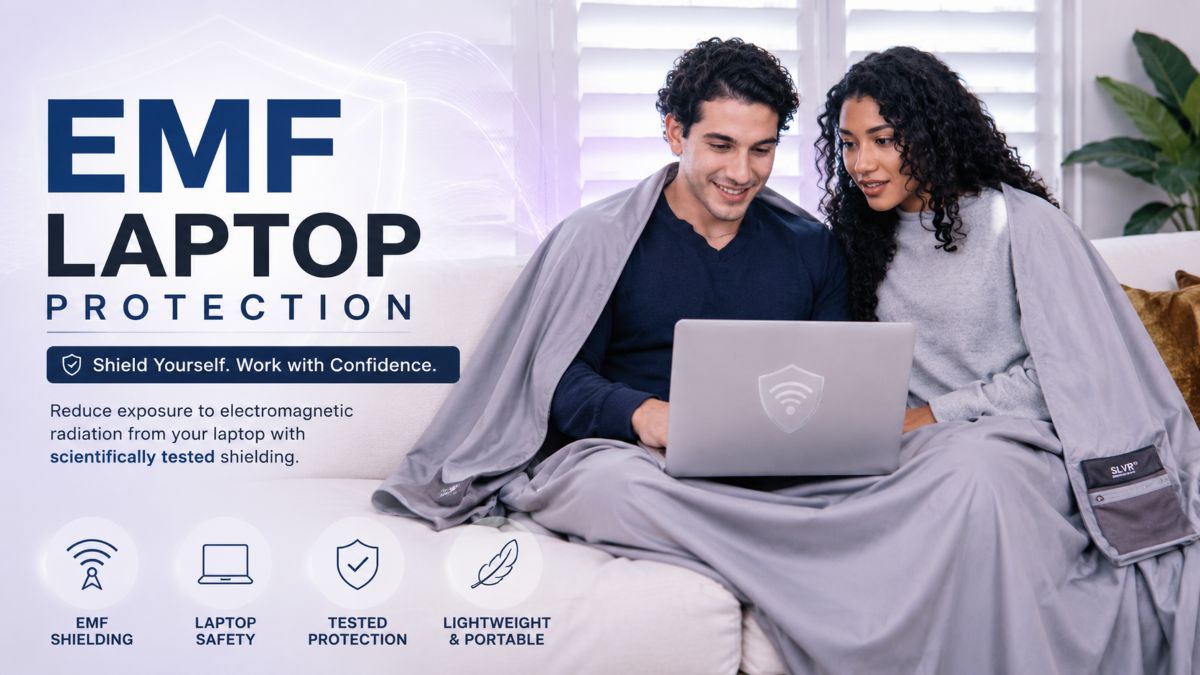
The same continuous-weave approach extends beyond apparel: SLVR Wear™ Signal Shielding baby blanket, large blanket, and X-Large blanket apply the same woven silver-fiber principle at a larger scale, offering a full, unbroken barrier rather than a hand-arranged sheet of foil.
Foil’s biggest limitation is coverage consistency a wrinkle or gap in one spot can undo the shielding effect in that area entirely, even if the rest of the sheet is intact. Fabric woven with conductive fiber avoids this problem because the shielding material is distributed evenly across the entire textile, rather than concentrated in a single thin layer that depends on careful folding. This structural difference is why purpose-built shielding fabric is generally treated as a more dependable option for consistent, ongoing reduction of exposure to wireless signals both for phones and other everyday sources than an improvised foil setup.
Yes, partially. Aluminum is conductive and reflects some electromagnetic energy, but household foil is thin and prone to gaps, so it rarely blocks signals completely or consistently.
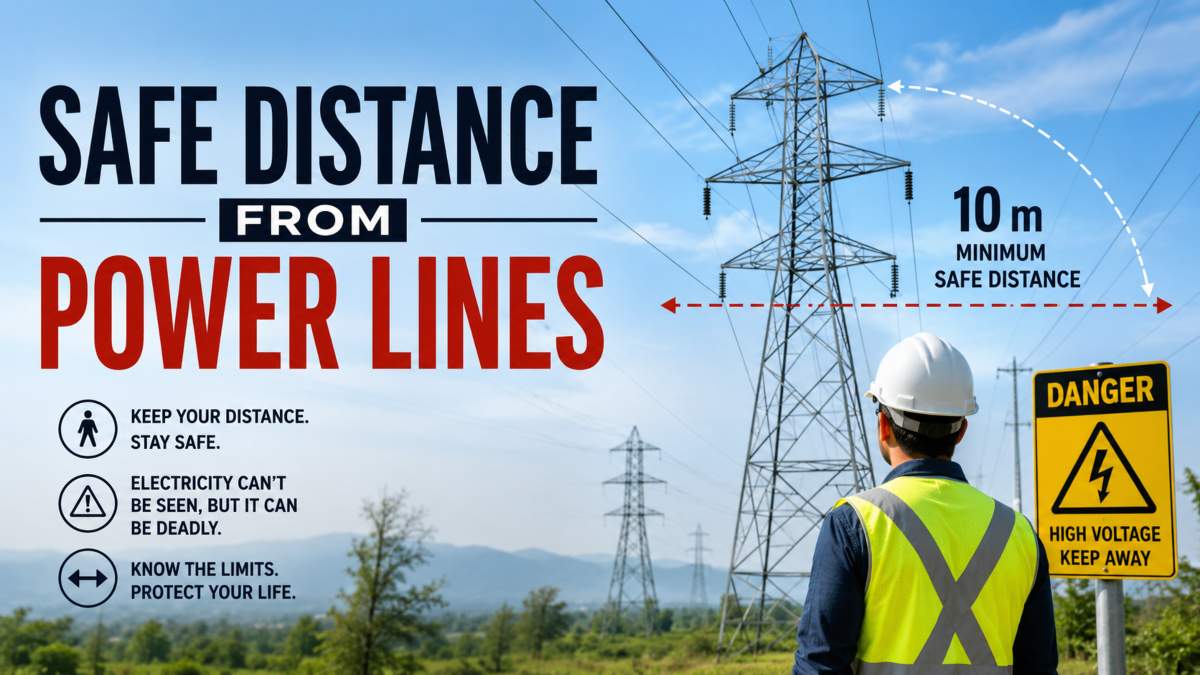
Foil tends to perform better against higher-frequency signals like wifi and 5G than against lower-frequency fields including those safe distance from power lines though small gaps can still let even high-frequency signals leak through.
Rarely. Phones use multiple frequency bands at once, and a hand-wrapped sheet rarely seals every seam, so most foil-wrapped phones still show a weak or intermittent signal.
Not effectively. An open-bottomed shape lets radiation in and out freely, and some studies have even found certain frequencies get amplified rather than blocked by foil hats.
Yes, the shielding effect of conductive metals is well-established physics. However, formal testing focuses on shielding materials generally, not household foil specifically in real-world conditions.
Not for consistent, ongoing use. Its effectiveness depends heavily on thickness, sealing, and frequency, which makes woven shielding fabrics a more dependable alternative for regular use.
Disclaimer: SLVR Wear™ products are not medical devices and are not intended to diagnose, treat, cure, or prevent any disease.