Silver Scrubs® Medical Clothing | EMF Blocking Scrubs
Every day, nurses, physicians, radiologists, and allied health professionals enter environments saturated with invisible electromagnetic fields from diagnostic equipment, wireless…
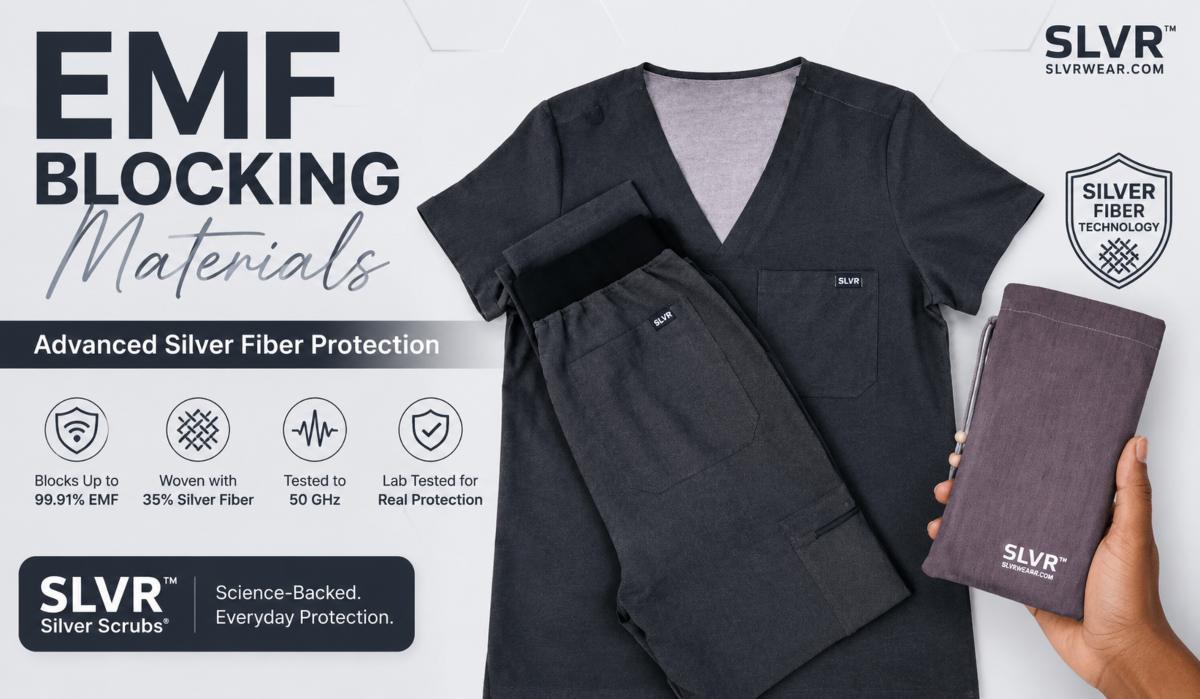
EMF blocking materials are fabrics or fibers woven with conductive metals most commonly silver, copper, or nickel that reflect and disperse wireless radiation before it reaches the body. These materials operate on the same principle as a Faraday cage: the metal fibers create a conductive barrier that blocks electromagnetic waves from sources such as Wi-Fi routers, cell towers, and 5G emf radiation. Not all EMF blocking materials perform equally factors like metal purity, fiber density, and how the material is constructed all affect how much radiation is actually blocked.
Silver fiber is widely regarded as one of the most effective options because of its high conductivity, and it’s woven directly into the fabric rather than applied as a surface coating, which helps the shielding properties hold up over repeated washing and wear. The sections below break down exactly how these materials work, the different types available, and what to look for when comparing them.
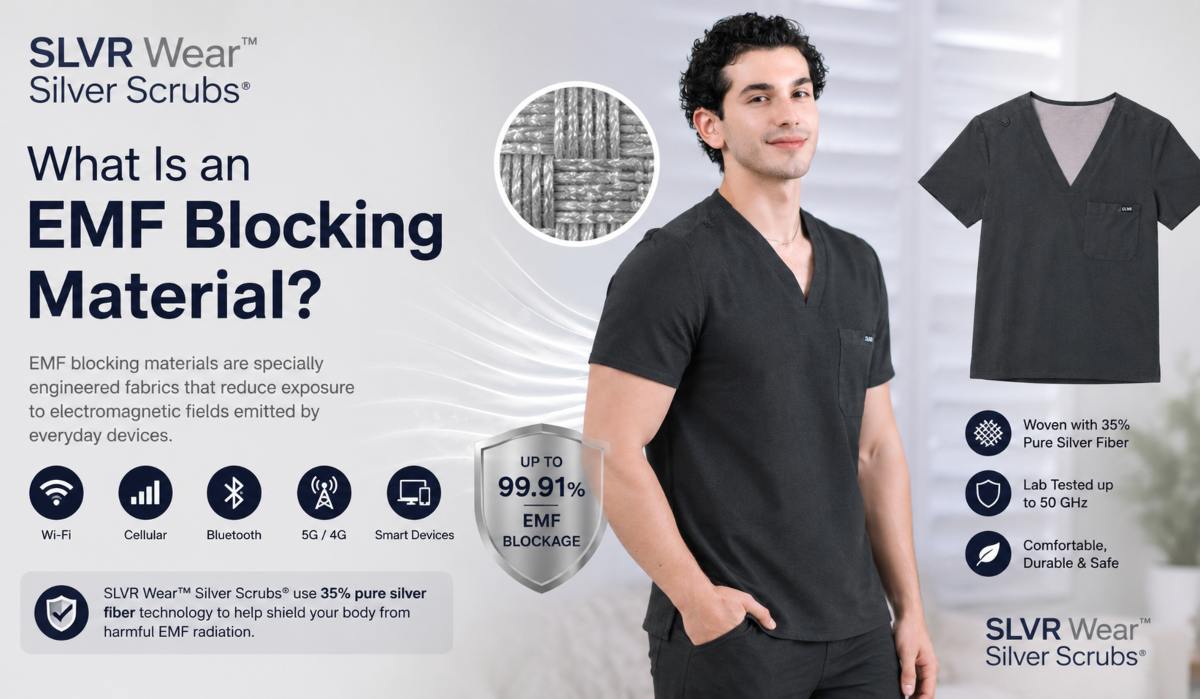
An EMF blocking material is any fabric, fiber, or mesh engineered with conductive properties strong enough to redirect or block electromagnetic radiation from reaching whatever it surrounds. Instead of trying to “cancel” radiation, these materials physically interrupt the electromagnetic wave’s path using conductive metal fibers typically silver, copper, or nickel woven directly into the textile.
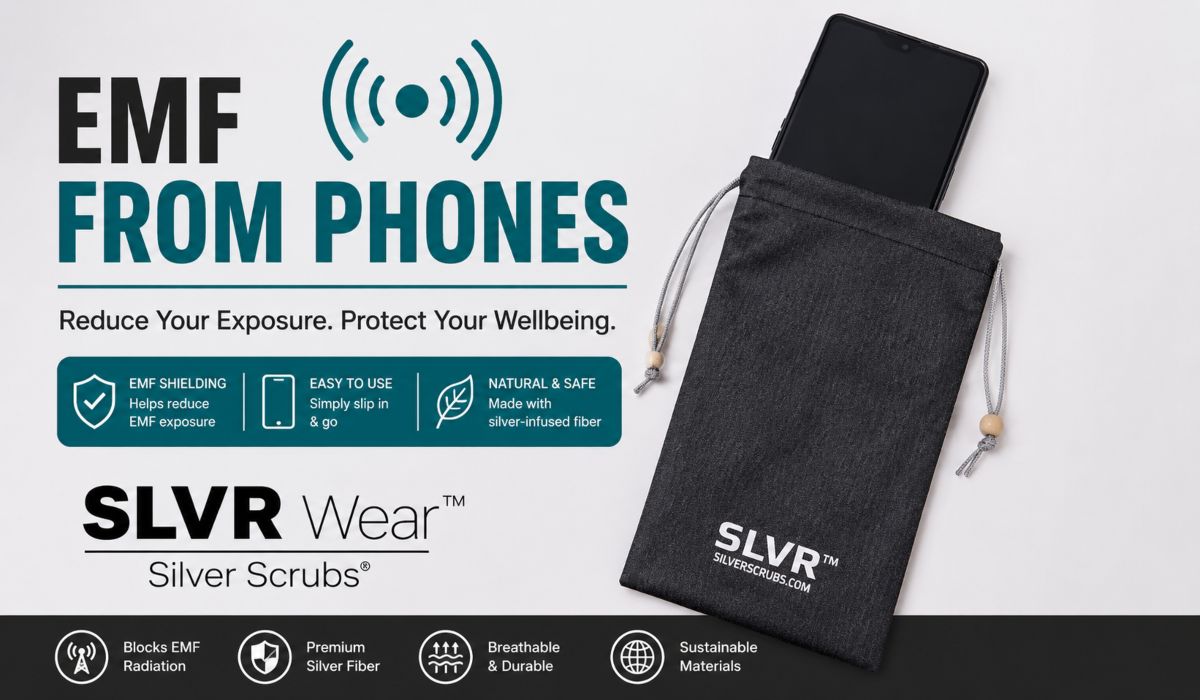
When wireless signals hit the material, the conductive fibers reflect and disperse the energy rather than letting it pass through, which is why shielding fabrics are used in everything from emf protective clothing to phone pouches to specialized enclosures. The effectiveness of a given material comes down to a few core factors: the type of metal used, how much of it is present in the fiber blend, and how tightly the fabric is woven.
 How Shielding Differs from Absorption
Shielding and absorption are often used interchangeably, but they describe two different mechanisms. Shielding materials, like silver-fiber fabric, work by reflecting electromagnetic waves away from the surface the conductive fibers act as a barrier, similar to a Faraday cage. Absorptive materials, by contrast, are designed to absorb the wave’s energy and convert it into a small amount of heat, typically using ferrite or carbon-based compounds. For wearable applications, shielding is the more practical mechanism, since it doesn’t rely on the material absorbing and dissipating energy over time it simply blocks the signal from passing through in the first place.
A common misconception is that any metallic-looking fabric offers meaningful protection shine or metallic thread alone doesn’t indicate real shielding capability. What matters is the type of metal, its conductivity, and how much of it is actually woven into the fiber, not just present as a surface decoration. Another misconception is that shielding materials block 100% of radiation across all frequencies; in reality, performance is typically measured and rated over a specific frequency range, so a material tested as effective at lower frequencies won’t necessarily perform the same at higher ones, such as 5G. This is why lab-verified testing across a defined frequency range matters more than marketing claims alone.
Curious what actually determines what blocks EMF radiation in the first place? Our full explainer breaks down the underlying science.
EMF shielding materials work by using conductive fibers to intercept electromagnetic waves and redirect their energy away from the surface they’re protecting. When a wireless signal from a phone, router, or cell tower hits a conductive material, the free electrons in the metal fibers respond to the electromagnetic field and effectively “cancel out” the wave’s ability to pass through. The result is a physical barrier that reflects and disperses radiation rather than absorbing or letting it through. This is the same underlying principle used in shielded cables, radiation-blocking enclosures, and conductive fabric the material itself does the work, with no batteries, electronics, or power source required.
The Faraday cage principle is the foundation of most EMF shielding materials: a continuous or tightly woven conductive layer distributes electromagnetic energy across its surface rather than allowing it to penetrate. Named after the concept of enclosing a space in conductive material so that external electric fields don’t reach the interior, this principle scales down effectively into wearable fabric a shirt or scrub woven with silver fiber behaves like a flexible, wearable version of that same conductive barrier. The tighter and more consistent the weave, the fewer gaps exist for radiation to slip through, which is why fiber density and weave construction matter as much as the metal type itself.
Conductivity is the property that determines how well a material can carry an electrical charge, and it’s the single biggest factor in how much signal attenuation or reduction in radiation strength a shielding material can achieve. Silver is one of the most conductive metals available, which is why it’s a preferred fiber for wearable shielding fabric.
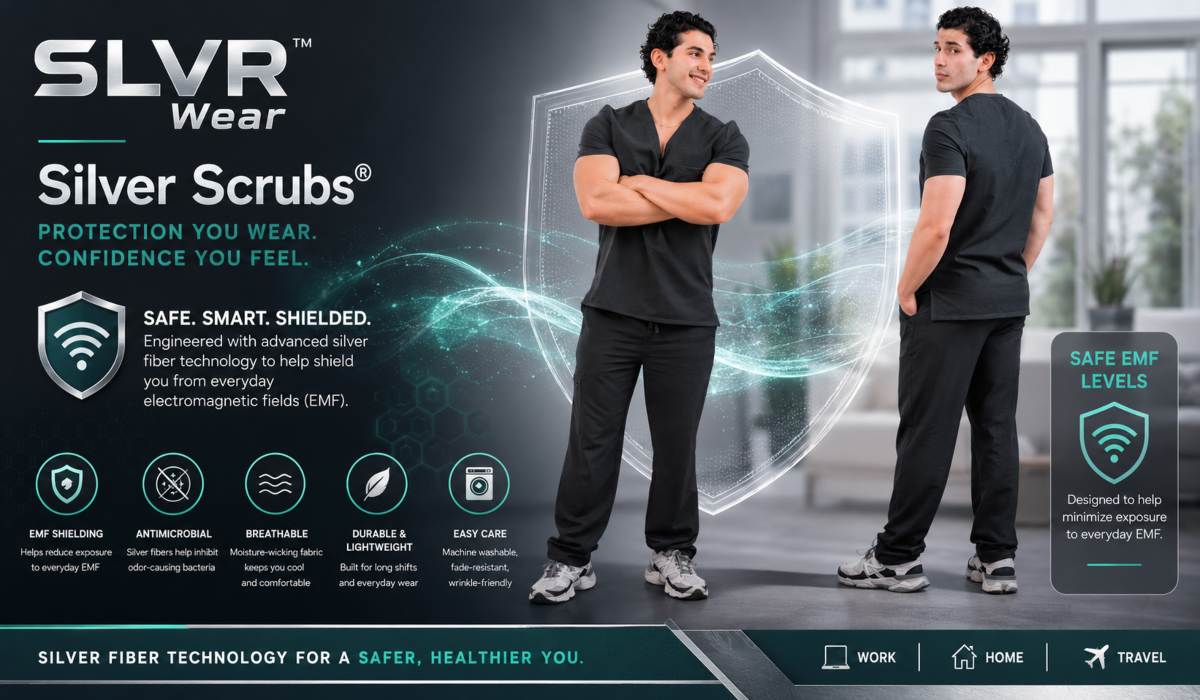
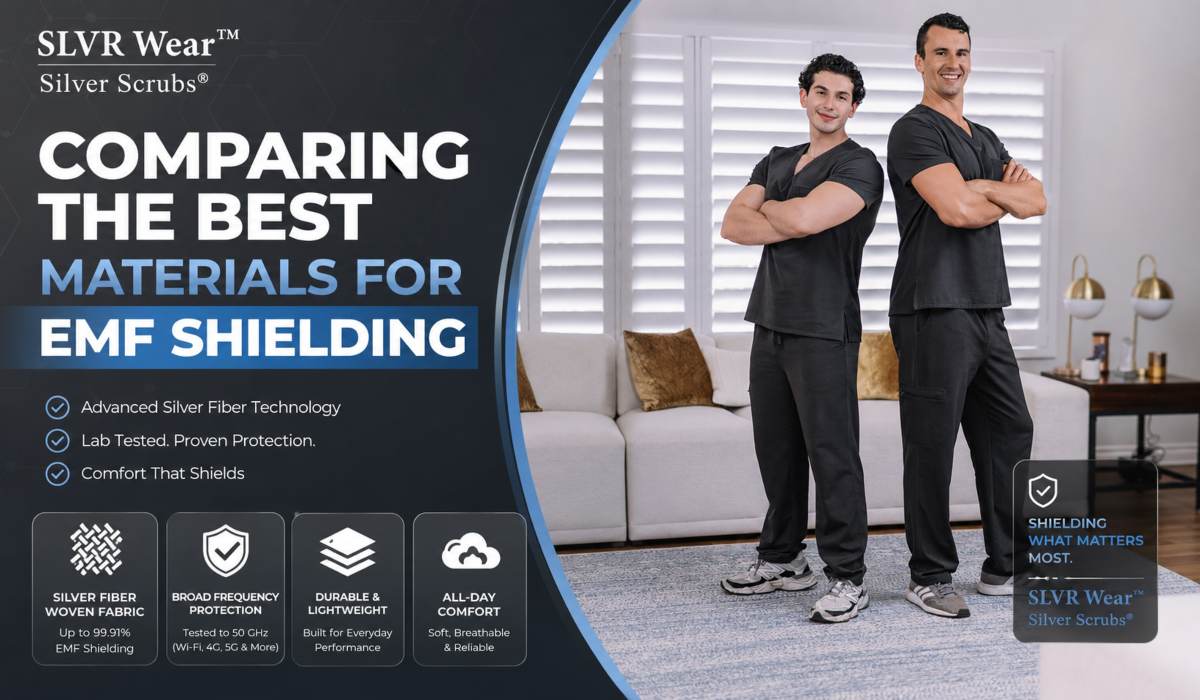
Attenuation is typically measured in decibels or as a percentage reduction across a tested frequency range, and lab-verified performance data rather than general claims is the most reliable way to compare materials. Understanding safe EMF levels can help put these attenuation numbers into real-world context. SLVR Wear™ Silver Scrubs® fabric, for example, has been lab-tested across frequencies up to 50 GHz, blocking up to 99.91% of signal in that range.
EMF-blocking materials generally fall into three categories: metal fibers woven into textiles, metallic mesh or foil, and engineered conductive fabrics that combine metal with traditional fibers such as polyester or cotton. Each type offers different levels of conductivity, flexibility, and practicality depending on the application a rigid mesh works well for enclosures or bags, while woven fiber blends are better suited for wearable clothing that needs to stretch, breathe, and withstand regular washing.
Metal fibers are the most common material used in wearable EMF shielding, with silver, copper, and nickel being the three most widely used options. Silver is generally considered the top performer for wearable applications because it has the highest conductivity of any metal, meaning it can carry and disperse electromagnetic energy more efficiently than copper or nickel. Copper is also highly conductive and less expensive, but it can oxidize over time, which gradually reduces its shielding performance.
Nickel is more durable and corrosion-resistant but has lower conductivity than either silver or copper, so it’s often blended with other metals rather than used alone. Metal fibers are typically blended with a small percentage of spandex or polyester in fabric form to maintain stretch and comfort while preserving the conductive layer.
Metallic mesh and foil are rigid or semi-rigid shielding materials commonly used in non-wearable applications like signal-blocking bags, equipment enclosures, and building materials. Because these materials are woven or layered metal without a fabric blend, they tend to offer very high conductivity and strong shielding performance. Still, they lack the flexibility, breathability, and comfort needed for clothing. Mesh and foil are effective where durability and consistent shielding matter more than wearability for example, in a Faraday pouch designed to fully block a phone’s signal when zipped closed. For strategies that go beyond wearable shielding, see our guide how to reduce EMF in your home.
Conductive fabrics and textiles are engineered to bring shielding capability into everyday, wearable materials by blending metal fiber with standard textile fibers during the weaving process. This is different from coating a fabric’s surface with a metallic layer coatings tend to wear off with washing and friction. At the same time, fibers woven directly into the textile structure maintain their conductive properties over repeated use.
A typical conductive shielding fabric blend might combine a percentage of silver fiber with polyester and spandex, giving it the stretch and breathability of normal clothing while retaining the metal’s shielding properties throughout the garment’s life. To see how EMF blocking fabric compares across different weaves and blends, check out our full fabric guide.
The best material for EMF shielding depends on the use case, but for wearable applications, silver fiber consistently outperforms other options on the combination of conductivity, comfort, and durability. Rigid materials like copper mesh or metallic foil can achieve high shielding values in controlled settings. Still, they trade away flexibility and washability two things that matter most when a material needs to be worn against the body every day.
 Silver Fiber vs Copper Mesh
Silver fiber and copper mesh represent two different approaches to the same goal. Silver fiber is woven into a soft, stretchable textile blend, making it suitable for clothing that needs to move, breathe, and withstand repeated washing. Copper mesh, on the other hand, is typically used in rigid or semi-rigid applications like bags and enclosures, where flexibility isn’t a priority. Copper is more prone to oxidation over time, which can gradually reduce its conductivity, while silver resists tarnishing better and maintains more consistent shielding performance across its usable lifespan. For anything worn on the body, silver fiber is generally the more practical and longer-lasting choice.
A shielding material’s real-world performance depends on more than its raw conductivity durability, breathability, and wearability all determine whether it actually holds up outside a lab setting. Materials that are woven rather than coated retain their conductive properties through repeated washing, since there’s no surface layer to wear off or flake away. Breathability matters for comfort in daily wear, which is why shielding fabrics are typically blended with a small percentage of spandex or polyester rather than made from pure metal fiber alone. A well-constructed shielding textile should feel and perform like ordinary clothing stretchable, machine washable, and color-stable while still maintaining its conductive barrier.
Lab testing over a defined frequency range is the only reliable way to know how well a shielding material actually performs, since real-world wireless signals span a wide spectrum, from Wi-Fi and Bluetooth through 5G. A material that hasn’t been tested at higher frequencies may perform very differently from one verified across the full range of the signals it occupies.
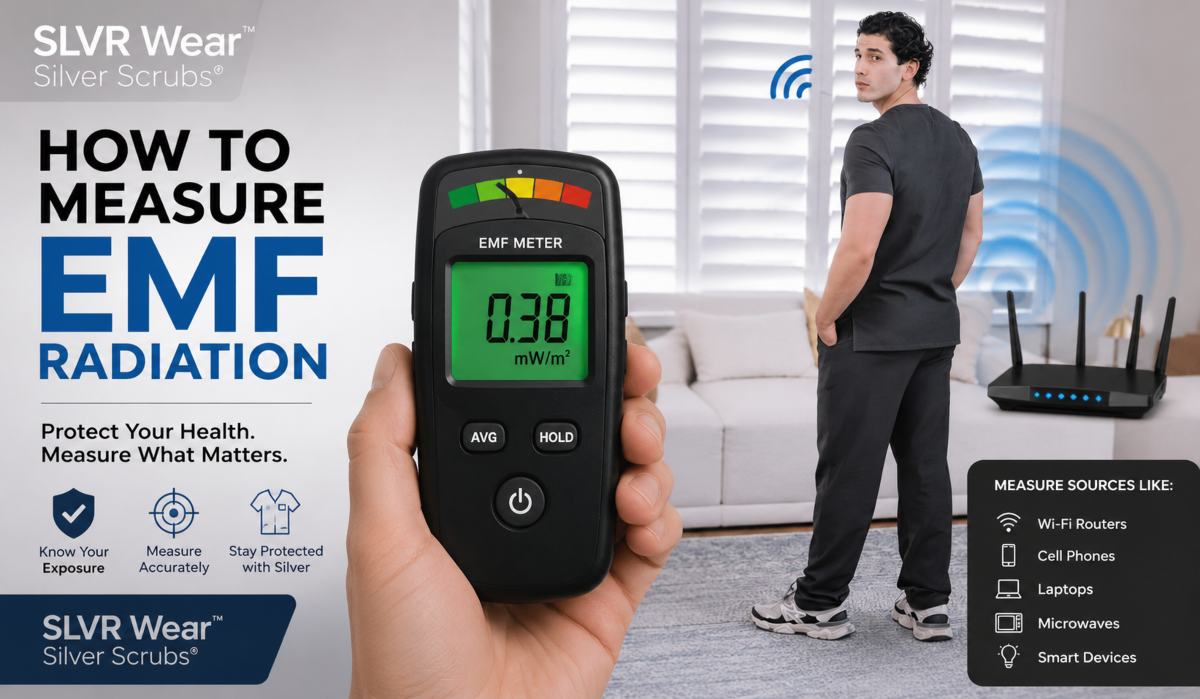
If you want to check exposure levels in your own space, our guide on how to measure EMF radiation at home walks through the process step by step. SLVR Wear™ Silver Scrubs® fabric has been lab-tested up to 50 GHz, blocking up to 99.91% of signal within that tested range a level of verification that general “EMF blocking” claims without supporting data can’t offer.
EMF-blocking materials are incorporated into clothing by weaving conductive metal fibers directly into the textile during manufacturing, rather than adding them as a surface treatment after the fabric is made. This construction method is what allows shielding garments to function like regular clothing stretching, breathing, and withstanding daily wear while still maintaining a conductive barrier throughout the fabric.
Silver fiber is woven into the fabric’s structure rather than coated onto the surface because woven construction holds up far better over time. A coated fabric relies on a thin metallic layer sitting on top of the textile, which tends to crack, flake, or wash away with repeated laundering and friction. Woven silver fiber, by contrast, is part of the fabric itself the conductive metal runs through the yarn, so the shielding properties don’t degrade the way a surface coating would. This is also why woven shielding fabric can be machine-washed and worn regularly without losing its effectiveness. In contrast, coated alternatives often require special care to avoid stripping the metallic layer.
EMF blocking fabric is tested by exposing it to electromagnetic signals across a defined frequency range and measuring how much of that signal is blocked or attenuated on the other side. This testing typically happens in a controlled lab environment using specialized equipment that can generate and measure signals at specific frequencies, from lower-range Wi-Fi bands up through higher 5G frequencies.
The results are usually expressed as a percentage of signal blocked within the tested range, which is why frequency range matters as much as the blocking percentage itself a fabric tested only at low frequencies doesn’t tell you how it performs against higher-frequency 5G signals. If you’re just getting oriented, our guide on how to block EMF covers the basics before diving into material specifics. SLVR Wear™ Silver Scrubs® fabric has been tested up to 50 GHz, with results showing up to 99.91% signal blockage within that range.
The most reliable EMF shielding materials share three traits: verified lab testing, third-party fabric certification, and clear documentation of the frequency range they’ve actually been tested against. Marketing language alone can’t confirm a material’s performance what matters is whether the claims are backed by data you can check.
Fabric certifications offer a way to verify that a shielding material meets independent safety and quality standards, separate from its EMF-blocking performance. OEKO-TEX® Standard 100 certification, for example, confirms that a textile has been tested free of harmful substances a useful baseline for any fabric worn against the skin regularly. While this type of certification doesn’t measure shielding performance itself, it does confirm that the yarn used to achieve that shielding meets a recognized safety standard, which matters for anyone choosing a fabric they’ll wear daily. SLVR Wear™ shielding fabric uses OEKO-TEX® Standard 100 certified yarn as part of its overall material specification.
A frequency range claim tells you the specific span of electromagnetic frequencies a material has actually been tested against and it’s one of the most important details to check before trusting a shielding claim. Because wireless signals span a wide spectrum, from lower-frequency Wi-Fi and Bluetooth to higher-frequency 5G bands, a material tested only at the lower end of that spectrum may not perform the same way at higher frequencies.
Look for materials that state both the tested frequency range and the corresponding blockage percentage within that range, ideally with a linked lab report for verification. SLVR Wear™ Silver Scrubs® fabric, for instance, is tested up to 50 GHz with results showing up to 99.91% signal blockage in that range the kind of specific, sourced figure that separates a verifiable claim from a general marketing statement.
Silver fiber is generally considered the most effective material for wearable EMF shielding because it offers the highest conductivity of any metal used in textiles, along with strong resistance to tarnishing. Copper and nickel are also used in shielding applications, but each has trade-offs copper can oxidize and lose conductivity. In contrast, nickel has lower conductivity on its own and is typically blended with other metals.
EMF-blocking fabric works by weaving conductive metal fibers into the textile to reflect and disperse electromagnetic signals, employing the same underlying principle as a Faraday cage. Performance varies by material and construction, which is why lab-verified testing across a specific frequency range rather than general claims is the most reliable way to confirm a fabric’s actual shielding capability. For a deeper dive into whether these blockers actually work, see our dedicated guide.
Shielding materials reflect and disperse electromagnetic waves away from the surface, while absorptive materials pull the wave’s energy in and convert it into a small amount of heat. For wearable applications such as clothing, shielding is the more practical approach since it doesn’t rely on the material dissipating energy over time.
Yes, particularly with materials that use a metallic coating rather than woven fiber coatings can crack or wear away with washing and friction, gradually reducing shielding performance. Woven fiber blends, where the conductive metal runs through the yarn itself, tend to hold their effectiveness much longer through normal washing and wear.
Silver fiber fabric can carry certifications such as OEKO-TEX® Standard 100, which confirms that the yarn has been tested for harmful substances a relevant safety baseline for any material worn daily. SLVR Wear™ shielding fabric contains OEKO-TEX® Standard 100-certified yarn.
Disclaimer: SLVR Wear™ products are not medical devices and are not intended to diagnose, treat, cure, or prevent any disease.