)
&description=&image=https://slvrwear.com/wp-content/uploads/2026/05/EMF-Protective-Clothing-1024x597.jpg)

Silver Scrubs Medical Clothing | EMF Blocking Scrubs
Every day, nurses, physicians, radiologists, and allied health professionals enter environments saturated with invisible electromagnetic fields from diagnostic equipment, wireless…
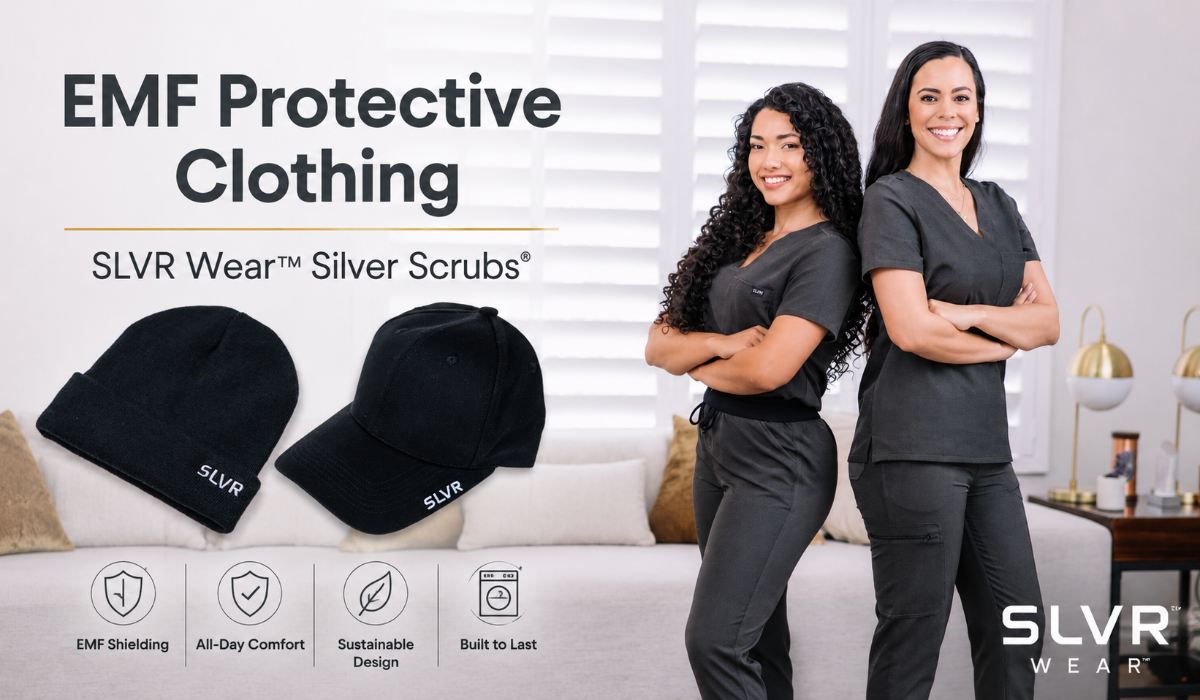
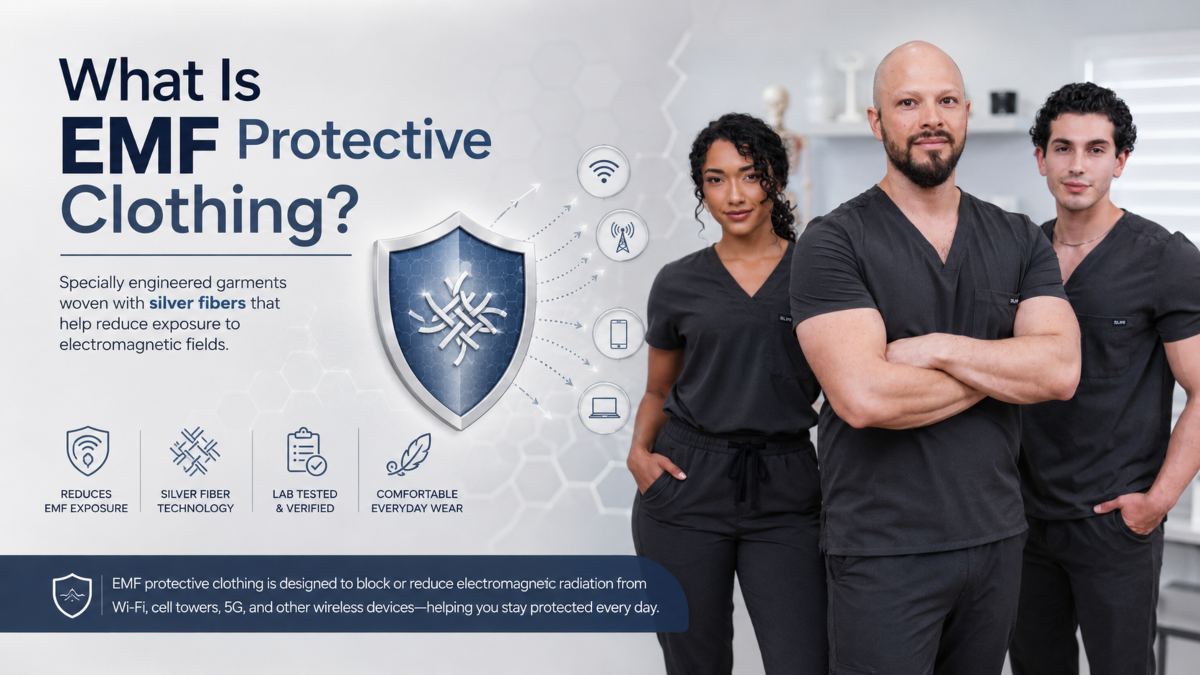
EMF radiation protective clothing is apparel woven with conductive material most often silver fiber that attenuates radiofrequency (RF) electromagnetic waves before they reach the body. It works on the same principle Michael Faraday demonstrated in 1836: a conductive mesh disrupts the passage of an electromagnetic field.
That principle matters more in 2026 than it did even a few years ago. Global 5G connections passed 2 billion this year, and the average U.S. household now runs more than 25 connected devices on its home network a wireless environment far denser than the one most of today’s fabrics were originally designed around. EMF protective clothing is one practical response: silver-fiber scrubs, beanies, phone pouches, and blankets that fold shielding into things people already wear or use every day, without changing their routine.
This guide breaks down what the fabric is made of, whether it actually works, who it’s for, and what to check before buying including the difference between products tested to 50 GHz and those tested to 40 GHz, a distinction most brands don’t explain clearly.
EMF protective clothing is any garment made with electrically conductive fiber usually silver, sometimes copper or stainless steel woven or knitted into the fabric to attenuate radiofrequency electromagnetic waves before they reach the skin. Unlike a coating or treatment, the conductive material is built into the weave itself, so the shielding is a property of the fabric, not something applied on top of it.
The category has moved well past niche or clinical use. Silver-fiber textiles are now soft, breathable, and machine-washable, indistinguishable from premium fabric at a glance. That’s what makes the category viable at scale in 2026: the same conductive mesh that attenuates RF energy can be sewn into scrubs, knitted into a beanie, lined into a phone pouch, or built into a baby blanket, all while keeping the comfort and durability people expect from everyday clothing.
 How Silver-Fiber Shielding Actually Works
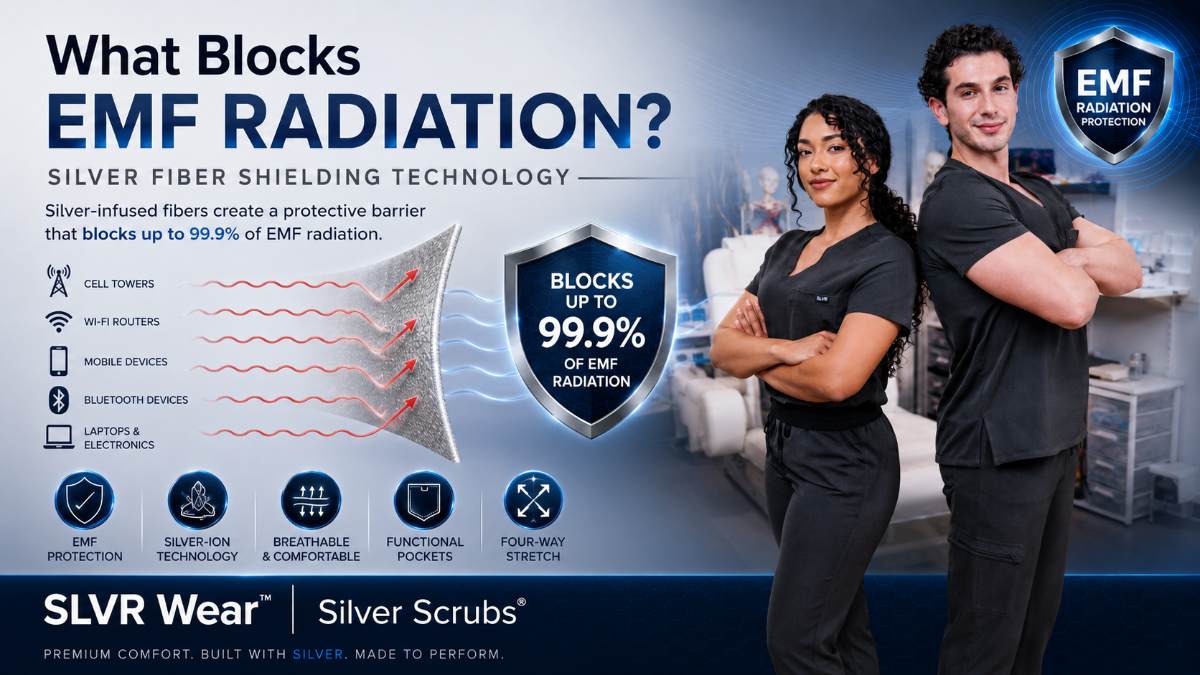
Silver-fiber shielding is one of the most effective methods for what blocks EMF radiation in wearable form it works by providing RF waves with a continuous conductive surface to interact with rather than open air. When ultra-fine silver threads are woven through a base fabric such as cotton, modal, or bamboo, they form an unbroken conductive network throughout the textile. An incoming radiofrequency wave either reflects off the network or is absorbed and dispersed as trace heat within the fibers either way, less of the signal reaches the body beneath.
How much attenuation a given garment delivers depends on three variables: thread density, weave construction, and the frequency of the signal it’s tested against. This is why two silver-fiber products can perform differently even when both use the same base metal construction quality, not just material choice, determines real-world shielding.
Most EMF blocking fabric on the market is built from one of three conductive fibers: silver, copper, or stainless steel, blended into a textile base. Silver is the most common choice because it offers the highest conductivity of the three, along with a soft hand-feel that holds up better to repeated washing than copper, which can oxidize, or stainless steel, which tends to feel stiffer against skin.
There’s also a construction distinction worth knowing before you buy. Some brands apply silver as a surface coating over conventional fabric, which wears thin with washing and loses conductivity over time. Others, including SLVR Wear™, use genuine EMF blocking material our proprietary fabric, SLVR777 woven directly into the fabric structure, so the conductive layer is integral to the garment rather than sitting on its surface.
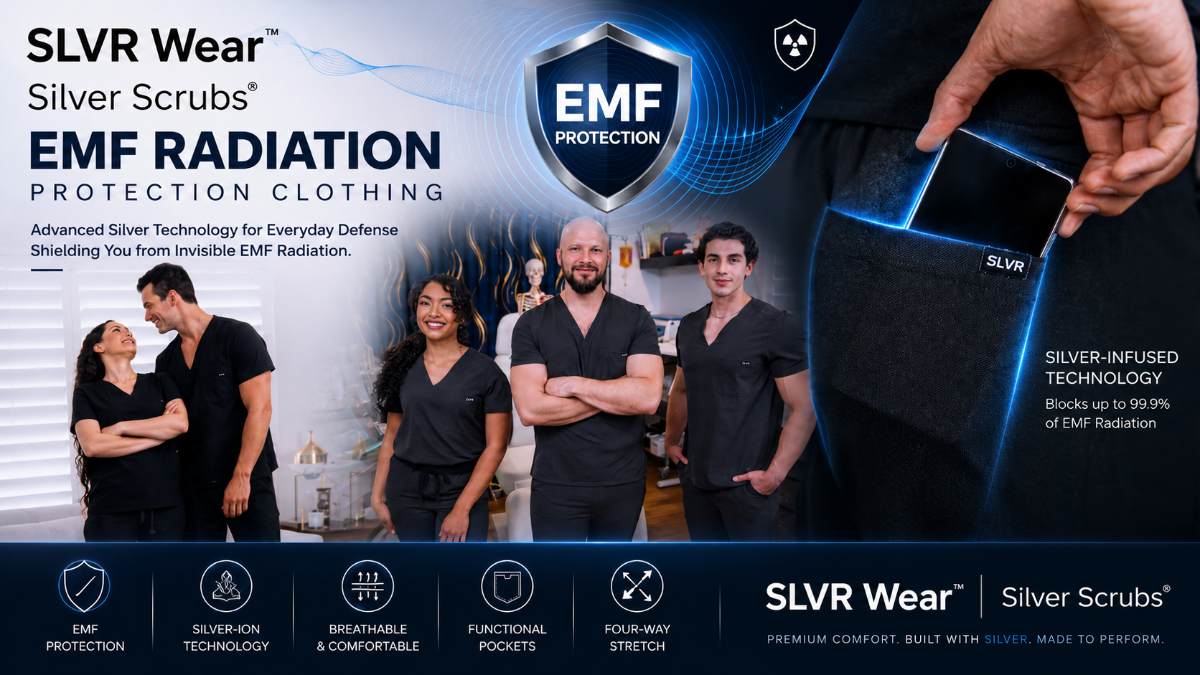
EMF protective clothing works by using a conductive fiber mesh to attenuate radiofrequency signals, a mechanism grounded in basic electromagnetic physics and confirmed repeatedly in lab testing of silver-fiber fabrics. SLVR Wear™ Silver Scrubs®, for example, are lab-tested to 50 GHz, with up to 99.91% EMF blockage measured in that range. What varies is real-world performance how much a specific garment reduces exposure in daily life depends on how much of the body it covers, what frequency it was tested against, and the conditions it’s used in.
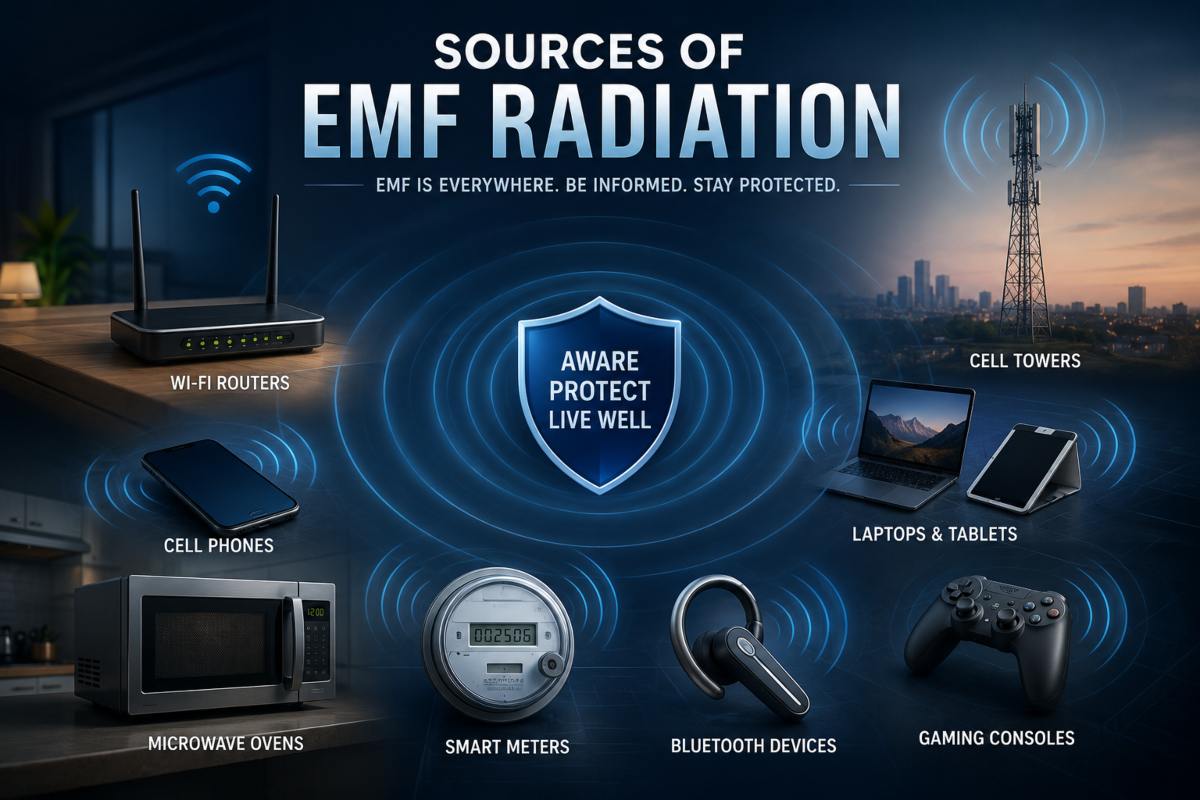
That variability is exactly why the precautionary principle drives most of the demand for this category. Regulators are still evaluating the long-term effects of everyday low-level RF exposure from common sources of EMF radiation, and taking reasonable protective steps ahead of a definitive answer is a rational choice for people spending long hours in wireless-dense environments hospital floors, data centers, open-plan offices even without a settled verdict on harm.
EMF clothing can attenuate 5G EMF radiation, but how well depends entirely on the frequency range the specific garment was tested against. 5G networks operate across a wider spectrum than earlier wireless generations, including higher millimeter-wave bands in some deployments, so a product tested only at lower frequencies shouldn’t be assumed to perform the same way against the full 5G range. The tested frequency not the marketing language is what tells you whether a garment actually covers 5G-relevant bands.
Yes, EMF protective clothing is safe for daily wear. Silver-fiber garments are built for everyday use, and silver itself has a long history in textiles with a well-documented safety profile. As with any apparel, individual sensitivities to specific materials can vary from person to person. These products are not medical devices and are not intended to diagnose, treat, cure, or prevent any disease.
Silver is the best fabric for blocking EMF radiation among the conductive fibers used in wearable textiles, because it offers the highest electrical conductivity of any metal used at scale in clothing copper and stainless steel are both effective, but neither matches silver’s shielding performance per thread.
Conductivity is only part of the comparison, though. Copper is an excellent conductor, but it oxidizes over time, which degrades performance and can lead to skin sensitivity in some individuals. Stainless steel is durable and chemically inert, but it’s noticeably stiffer against the skin, which limits its use in soft, next-to-skin garments like scrubs or beanies. Silver avoids both trade-offs: it maintains its conductivity through repeated washing when properly cared for, and it blends into soft textile yarns without the stiffness that steel introduces.
This is why SLVR Wear™ built its entire Silver Scrubs medical clothing around silver fiber rather than a cheaper alternative. A fabric that shields well but fails after a few wash cycles, or one that shields well but isn’t comfortable enough to wear for a 12-hour shift, doesn’t actually solve the problem it’s marketed to solve. Silver is the material that holds up on both fronts.
SLVR Wear™ Silver Scrubs® is a full silver-fiber wardrobe built around genuine conductive-fiber construction, covering scrubs, headwear, a phone pouch, and a baby blanket rather than a single standalone item. Each product uses the same woven silver-fiber approach. Still, the two fabric lines are tested and rated separately: the scrubs line is lab-tested to 50 GHz with up to 99.91% EMF blockage, while the beanie, hat, phone pouch, and baby blanket are built from a lighter fabric tested to 40 GHz.
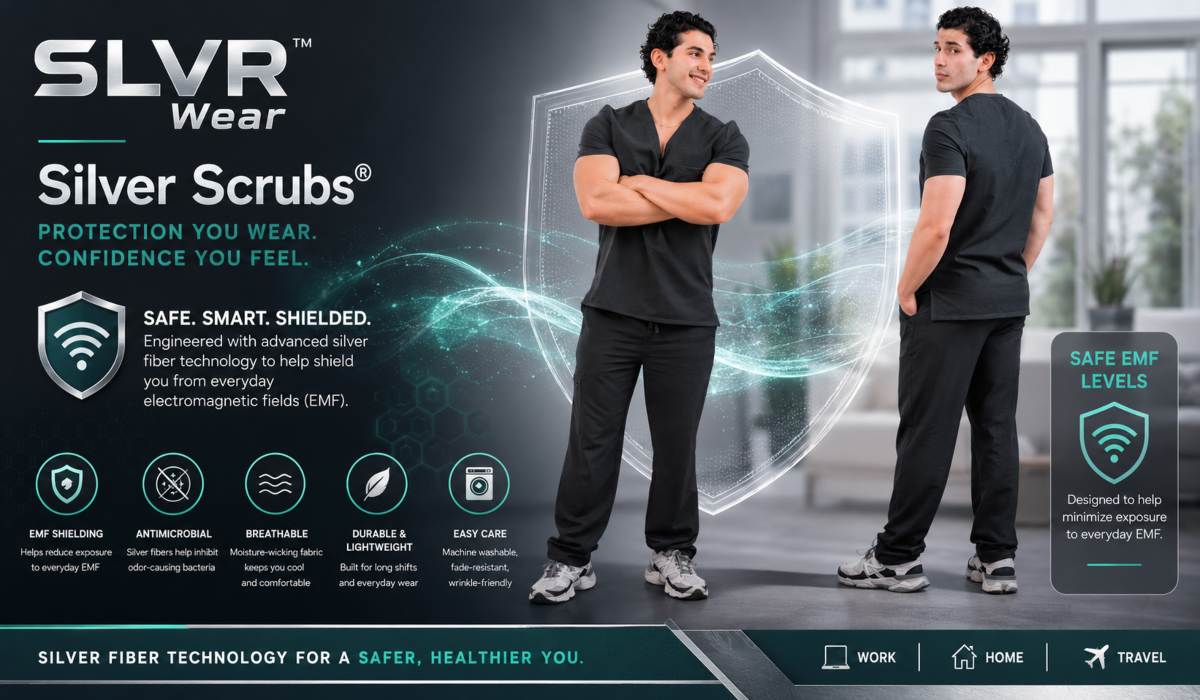
SLVR Wear™ Silver Scrubs® are built for the wireless density of a modern hospital floor, where 5G infrastructure, wireless patient monitoring, and dozens of staff devices create constant, layered RF exposure over an 8–12-hour shift. For anyone comparing options, our complete medical scrubs guide and roundup of the softest medical scrubs are good starting points.
The full set top and pants provides the largest surface-area coverage in the lineup. At the same time, the top-only and pants-only options let clinicians layer silver-fiber protection into an existing scrub rotation, including pairing them with our black scrub pants. Men’s and women’s collections use the same silver-fiber construction, tailored differently for fit see the women’s top and pant set, women’s top only, and women’s pants only.
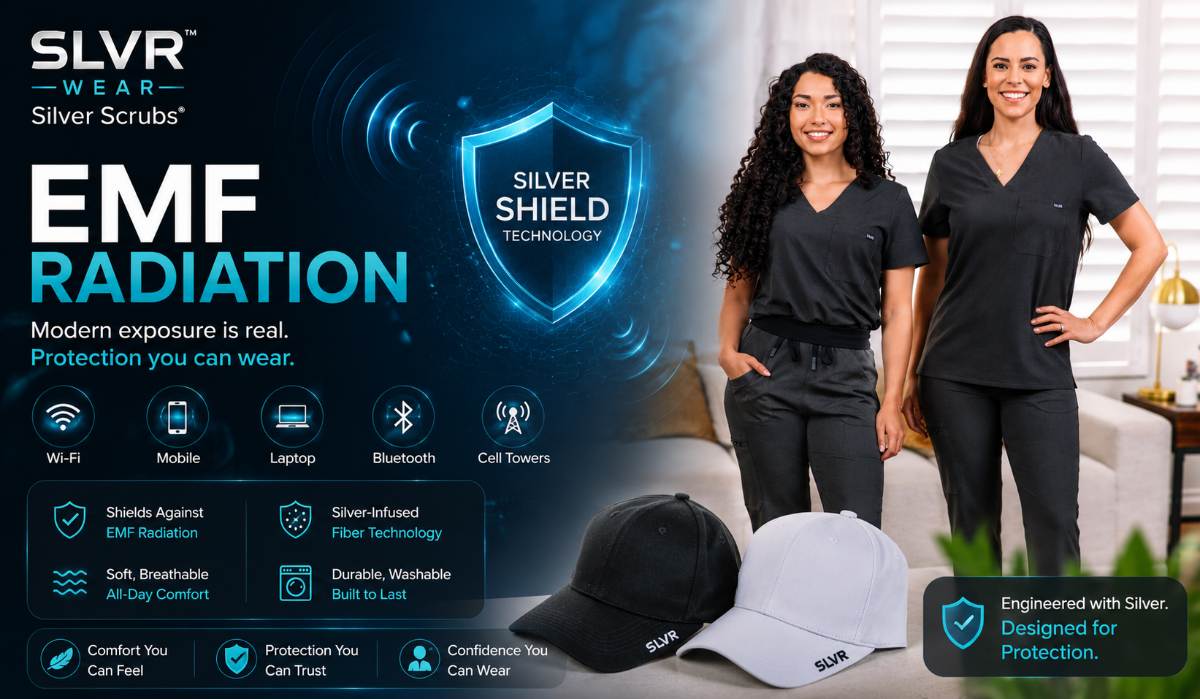
The head sits closer to RF-emitting devices than almost any other part of the body a phone held to the ear, wireless earbuds, cellular signal at head height which makes headwear a practical starting point for daily coverage. The Signal Shielding Beanie is a full-coverage knit built from silver-fiber yarn throughout, styled like an ordinary everyday beanie rather than technical gear. The Signal Shielding Hat delivers the same silver-fiber construction in a structured cap, for people who prefer that silhouette over a knit fit. Both are tested to 40 GHz.
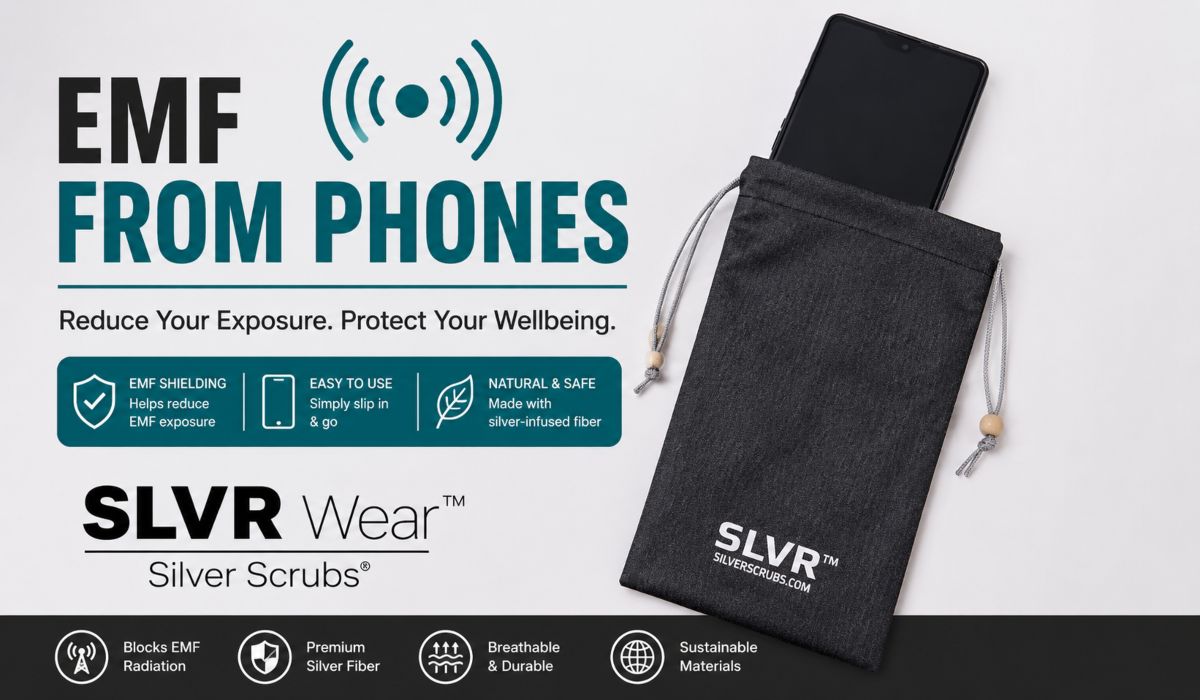
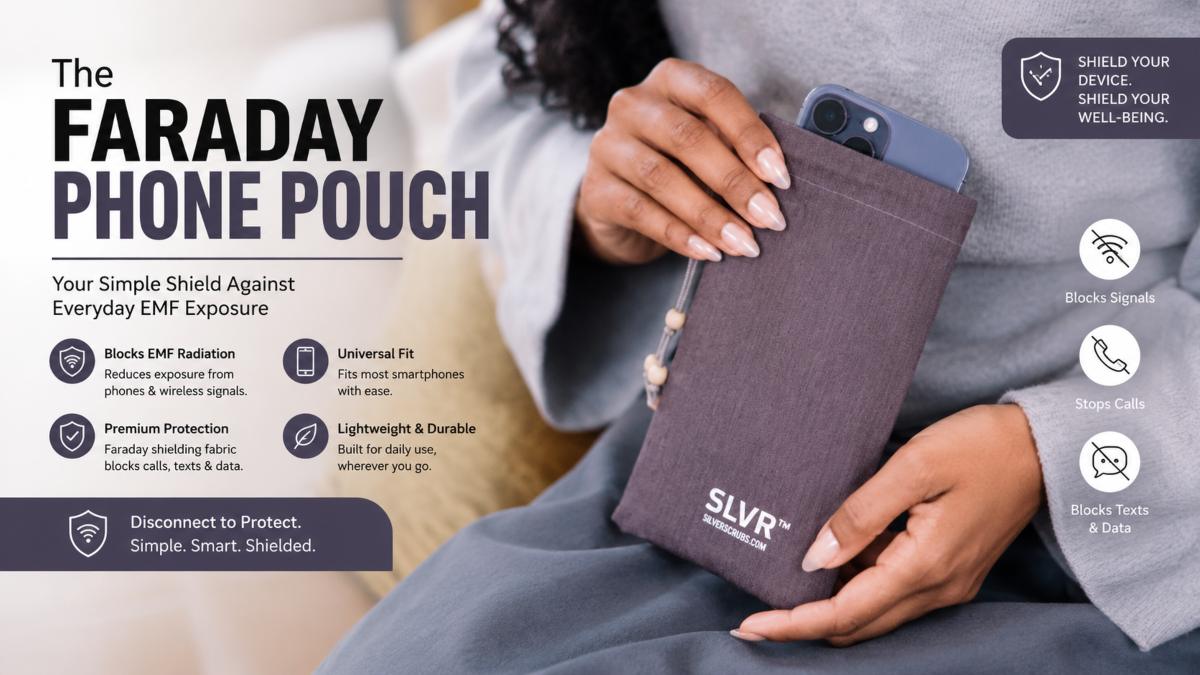
A phone is a point source of RF radiation that most people carry against their bodies for most of the day, making it one of the highest-proximity EMF sources in daily life. The Faraday Phone Pouch uses a conductive silver-fiber lining, tested to 40 GHz, to attenuate the RF signal a phone emits when it’s fully enclosed inside the same shielding principle behind does a Faraday cage block EMF. One practical trade-off: a phone inside the pouch will experience reduced or no signal, since the same shielding that attenuates outgoing signal also blocks the phone’s wireless connection.
 EMF Blocking Baby Blanket
Infants spend most of their day sleeping, which is when many parents aim to reduce ambient RF exposure in their environment. The Signal Shielding Baby Blanket combines a silver-fiber layer, tested to 40 GHz, with materials selected for gentleness against infant skin, for use in a crib, stroller, or nursing setup. As with any infant product, check with a pediatrician before use, particularly for newborns with sensitive skin. SLVR Wear™ products are not medical devices and are not intended to diagnose, treat, cure, or prevent any disease.
EMF protective clothing and EMF blocking blankets solve different exposure problems: clothing shields the body during an active day, while a blanket shields a fixed space during rest. Scrubs, a beanie, or a phone pouch move with you through a 12-hour shift, a commute, or a day of errands. A blanket stays in one place a crib, a stroller, a couch creating a stationary shielded zone around a sleeping infant or a seated adult. Beyond the baby blanket, SLVR Wear™ also offers a large blanket and an X-large blanket for full-body or shared coverage.
The distinction matters because coverage needs change across a day. A household with an infant, for instance, often uses both: a silver-fiber top or beanie for the parent during waking hours, and a blocking blanket specifically for the baby’s sleep periods, when exposure reduction matters most and the infant can’t choose to move away from a signal source. Neither product replaces the other a blanket won’t shield someone walking through a hospital floor, and clothing won’t create a contained zone around a sleeping child in a crib.
For most people building an EMF-conscious routine, the practical approach is matching the product to the hours it needs to cover: clothing for anywhere the body moves, a blanket for anywhere it stays still.
EMF protective clothing is most useful for anyone in a high-exposure environment who wants to reduce contact with wireless radiation without changing their daily habits this includes pregnant women, frequent travelers, people who sleep near routers or smart devices, and individuals who identify as electrosensitive. The fabric works by blocking or attenuating radiofrequency signals before they reach the body, so the people who benefit most are those already seeking a passive, wearable way to reduce exposure, rather than relying on distance or device limits alone.
Pregnant women are one of the largest groups seeking EMF protective clothing because fetal tissue is still developing and more sensitive to environmental stressors than adult tissue. A study involving 913 pregnant women revealed that those with higher exposure to magnetic fields had a 2.72 times greater risk of miscarriage compared to those with lower exposure, even after controlling for other factors. Research in this area remains mixed, with some large reviews finding no clear association. Still, the uncertainty itself is what drives many expectant mothers to choose shielding maternity wear as a low-effort precaution during pregnancy often alongside learning how to reduce EMF exposure at home.
Sleep is when the body repairs itself, and it’s also when people are typically closest to their EMF exposure sources for the longest uninterrupted stretch phones on nightstands, Wi-Fi routers in adjoining rooms, smart speakers left on overnight. EMF-protective bedding and sleepwear are designed to reduce constant low-level exposure during the seven-plus hours most people spend in bed each night, which is longer than almost any other single daily activity. For this reason, shielding canopies, blankets, and sleepwear are among the most-searched EMF protection categories, since sleep is the only exposure window people can control completely.
Air travel places the body closer to radar, cabin Wi-Fi, and cellular signal-hunting behavior than almost any other everyday activity, since phones and laptops work harder to maintain connection at altitude and in transit hubs. Frequent flyers and commuters use EMF-protective clothing scarves, hoodies, and travel wraps as a portable layer of protection during the specific hours they’re moving through airports, trains, and dense signal zones, without changing how they use their devices.
People who experience symptoms like headaches, fatigue, or difficulty concentrating around electronic devices often identify as electrosensitive, and this group represents a meaningful share of the population. The World Health Organization defines EHS by three criteria: a person’s perception of non-specific functional symptoms, the absence of clinical evidence explaining those symptoms, and the person’s own attribution of the symptoms to EMF exposure. Estimates suggest EHS affects between 3% and 5% of some national populations.
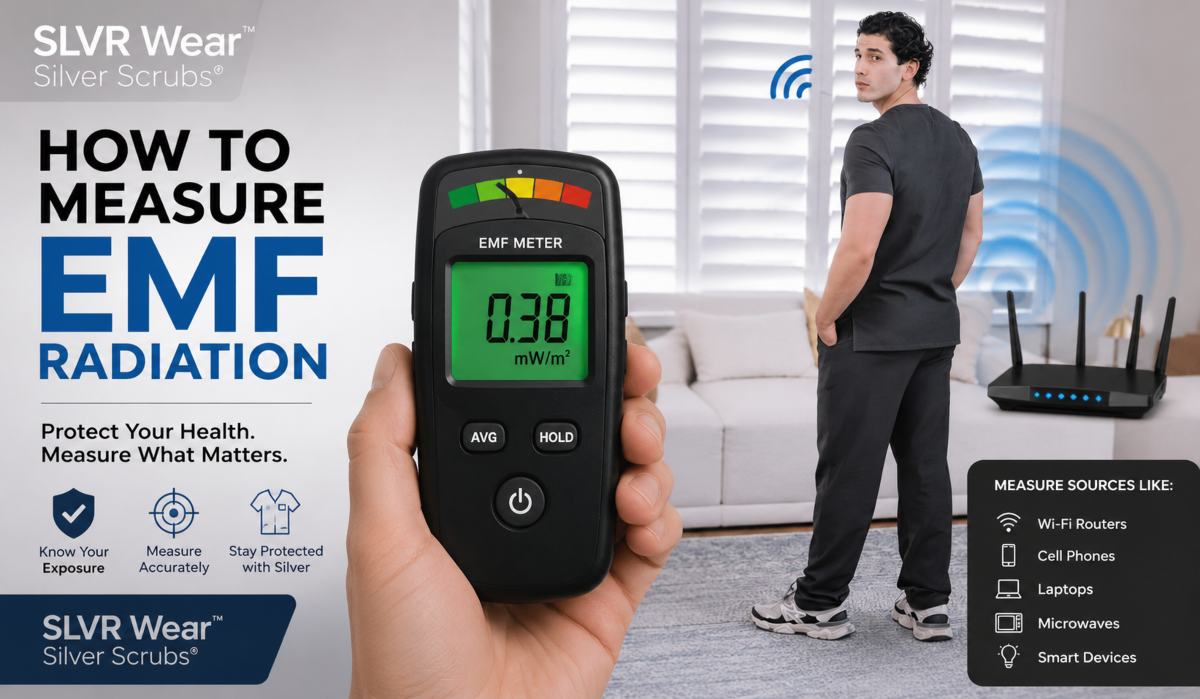
The WHO has also noted that current scientific evidence hasn’t established a direct causal link between EMF and these symptoms. Still, for people managing real, disruptive symptoms day-to-day, EMF-protective clothing offers a way to test exposure reduction without medication or major lifestyle changes. Some people also start by learning how to measure EMF radiation at home to see where their own exposure is highest.
EMF protective clothing isn’t gendered by function the shielding fabric works the same way regardless of who’s wearing it but the product categories differ based on daily exposure patterns. Men more often gravitate toward boxers and briefs designed to shield reproductive tissue during long hours of laptop or device use, while women more often start with maternity wear, bras, or sleepwear. Both groups are ultimately solving the same problem: reducing close, prolonged contact with EMF-emitting devices in the parts of daily life where exposure is hardest to avoid.
The best way to choose how to block EMF with a clothing brand is to compare shielding material and construction first, then check for disclosed dB attenuation ratings, since these two factors determine whether a garment actually works rather than just claiming to. Fabric quality varies more than people expect in this market, and a garment’s real performance comes down to a handful of measurable factors rather than marketing language.
Start with what the fabric is actually made of and how the conductive metal is applied. Silver is the most common shielding material because it’s highly conductive and comfortable against skin. Still, the method matters: silver that’s plated onto or spun into the fiber holds its shielding properties through repeated washing. In contrast, silver that’s simply coated onto the surface tends to wear off and lose effectiveness within months. A brand that discloses its construction method plated, spun, or woven silver thread versus a surface coating signals that the garment is built to last, not just to test well once.
From there, look at the dB attenuation rating, and ask whether it’s broken down by frequency, ideally against safe EMF levels benchmarks. A well-constructed silver fiber fabric typically attenuates 30 to 60 dB across the frequencies that matter most for daily exposure cell signal, Wi-Fi, and Bluetooth with 30 dB blocking around 99.9% of the incoming signal and 40 dB blocking more than 99.99%. Brands that publish specific numbers at specific frequencies (900 MHz, 2.4 GHz, 5 GHz) give buyers something they can actually verify, while brands that use vague terms like “blocks radiation” without a number usually haven’t tested the claim at all.
Beyond the fabric itself, coverage and fit decide how much real-world protection a garment delivers. A shielding fabric only blocks what it physically covers, so a hoodie with a low collar or an open-weave panel leaves gaps that undermine the rating printed on the label. The most reliable brands are specific about which body areas each product is designed to cover and are transparent about wash care, since shielding effectiveness degrades faster under harsh detergents or high heat. Comparing brands on these three points material and construction, tested dB ratings by frequency, and garment coverage gives a much clearer picture than comparing price or style alone.
When an EMF shielding fabric is lab-tested up to “40 GHz” or “50 GHz,” it means the fabric’s shielding effectiveness was measured across a frequency range that extends well past everyday Wi-Fi and cell signals into millimeter-wave 5G territory the upper number is simply the highest frequency the lab confirmed the fabric still blocks. It’s not a marketing figure; it’s the ceiling of what the test actually covered, and it tells you how future-proof the fabric is against newer wireless technology, an idea covered in more depth in our breakdown of EMF radiation.
Most everyday RF exposure Wi-Fi, Bluetooth, 4G, and sub-6 GHz 5G sits between roughly 700 MHz and 6 GHz, so a fabric only needs to be tested up to that range to cover the bulk of daily exposure. Testing up to 40 GHz or 50 GHz goes further, into the range used by mmWave 5G (roughly 24 to 39 GHz), which carriers are rolling out in dense urban deployments and stadiums. A fabric verified at these higher frequencies has effectively been tested against the hardest wireless signal to block, which is a stronger proof point than a fabric only tested up to 3 or 6 GHz.
Counterintuitively, higher frequencies are often easier for shielding fabric to block, not harder. Millimeter-wave signals have very short wavelengths, and short wavelengths are stopped by tighter, finer weaves the same way a fine mesh keeps out small insects while a wide mesh doesn’t. This is why a silver fiber fabric that performs well against low-frequency cell signals typically performs at least as well, if not better, against the mmWave frequencies tested at 40-50 GHz.
The number to focus on, alongside the frequency ceiling, is the dB attenuation rating within that range. Independent lab testing on silver-threaded fabrics has recorded attenuation as high as 56 dB across the 10 MHz to 40 GHz range, meaning the fabric blocked more than 99.99% of the RF signal directed at it over that entire span, not just at one convenient frequency. When a brand publishes both the frequency range tested and the dB attenuation achieved across that range, that combination is what separates a lab-verified shielding claim from an unverified one.
Silver-fiber EMF garments last longest when washed by hand in cold water with a mild, fragrance-free detergent and air-dried away from direct heat the two things that damage shielding fastest are hot water and bleach, both of which corrode the conductive silver coating faster than normal wear does. Getting the wash routine right isn’t just about fabric longevity; it’s what keeps the garment’s actual RF-blocking performance intact over time.
Silver is a reactive metal, which means it responds to heat, harsh chemicals, and friction the same way any other metal component would, even though it’s woven into something as soft as a t-shirt or a scarf. Hot water and machine agitation stress the silver threads and accelerate oxidation, while bleach and fabric softener leave a residue that coats the fibers and interferes with conductivity. Skipping the dryer matters just as much as skipping bleach tumble-drying’s heat and tumbling motion are among the fastest ways to fracture the fine silver threading over repeated cycles.
Frequency of washing also affects lifespan more than most people expect. Silver-fiber garments don’t need washing after every single wear the way cotton basics do, since silver has natural antimicrobial properties that resist odor buildup between washes. Spacing out washes and spot-cleaning when possible reduces the total number of wash cycles the fabric undergoes, which directly extends the time the shielding remains near its original rating.
When done properly, this care routine has a measurable payoff: independent testing of high-quality silver-fiber garments shows they retain more than 80% of their original shielding effectiveness after 30 or more wash cycles when hand-washed in cold water and air-dried. That’s the difference between a garment that quietly loses its protective value within a few months and one that performs close to its lab-tested rating for years. If a garment starts to visibly thin, develop tarnish spots, or loses its slight metallic sheen, that’s usually the first visual sign it’s time to retest or replace it, rather than something you have to guess about.
The safest place to buy EMF-protective clothing is directly from the brand’s website, since that’s the only channel where you can verify that the manufacturer’s lab testing, material sourcing, and return policy are actually tied to the product you’re receiving. Buying direct also matters more in this category than most because of how easily an EMF claim can be printed on a garment with no shielding fabric behind it at all.
Third-party marketplaces like Amazon and eBay carry real risk in this specific niche. Because EMF shielding performance can’t be seen or felt, it’s an easy category for counterfeit and mislabeled listings to slip through a seller can print “blocks 99% of radiation” on a garment made from ordinary fabric and most buyers have no way to catch it before purchase. Reviewers and consumer watchdogs covering this space consistently flag unauthorized third-party sellers as the highest-risk purchase channel, since counterfeit or unverified items are both more common there and harder to return or dispute than purchases made directly through a brand’s official checkout.
Specialty EMF retailers and distributors are a reasonable middle option if you’re comparing multiple brands in one place, as long as the retailer is an authorized distributor rather than an unverified reseller. The advantage of these sites is being able to compare dB ratings, tested frequency ranges, and fabric construction side by side; the risk is the same as any marketplace stock from unauthorized sources can end up listed there too, so it’s worth confirming the retailer is a named, authorized partner of the brand rather than a generic storefront.
Whichever channel you buy through, the single best filter is documentation, not price or platform. A legitimate EMF protective clothing brand will publish its dB attenuation rating, the frequency range it was tested over, and, ideally, a link to the lab or testing method behind those numbers directly on the product page. If a listing uses vague language like “blocks harmful radiation” without a number attached, that’s the clearest signal to buy elsewhere regardless of where the listing appears.
Yes, high-quality EMF-protective clothing made with conductive fibers such as silver can significantly reduce radiofrequency (RF) exposure. Its effectiveness depends on the fabric, independent lab testing, and how much of the body the garment covers.
EMF is a broad term that includes both low-frequency electric and magnetic fields and high-frequency radio waves. RF is the high-frequency portion of the EMF spectrum used by Wi-Fi, Bluetooth, and cellular networks.
Yes, high-quality silver-fiber fabrics can shield both sub-6 GHz and higher-frequency 5G signals when tested across those ranges. Always look for published lab results that specify the frequencies against which the fabric has been evaluated.
EMF protective clothing is generally considered safe to wear during pregnancy. Many people use it as a precaution, but current research is still evolving, so it should not be viewed as a guaranteed protective measure.
Wash silver-fiber garments only when needed to help preserve their shielding performance. Hand-washing with cold water, mild detergent, and air-drying is typically recommended to extend fabric life.