Silver Scrubs® Medical Clothing | EMF Blocking Scrubs
Every day, nurses, physicians, radiologists, and allied health professionals enter environments saturated with invisible electromagnetic fields from diagnostic equipment, wireless…
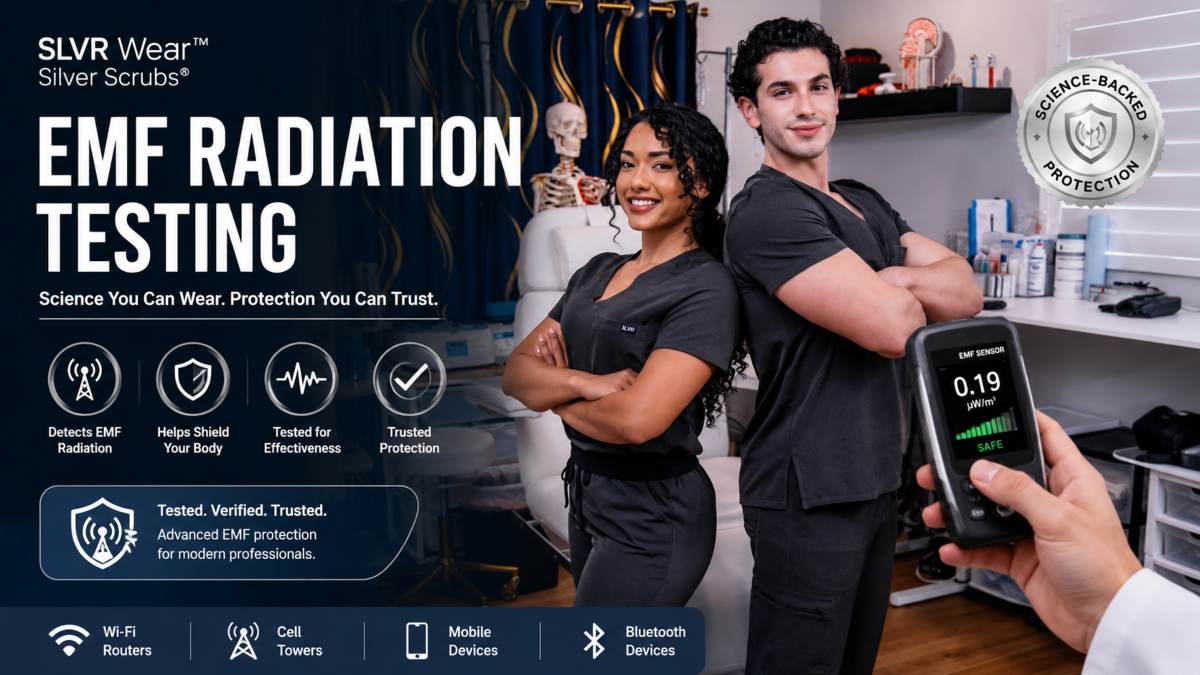
EMF radiation testing is the process of measuring electromagnetic field strength from devices, wiring, and wireless signals using a handheld meter, so you can see exactly how much exposure you’re getting in any given space. Most people walk past dozens of sources of EMF radiation every day routers, microwaves, laptops, smart meters without any sense of which ones actually produce meaningful field strength and which are negligible. Testing replaces that guesswork with a number.
The practice has moved from a niche concern among electricians and building inspectors into something far more mainstream, largely because the average home now holds more wireless-emitting devices than ever before. A modern household routinely runs Wi-Fi routers operating in the 2.4 GHz and 5 GHz bands alongside Bluetooth devices, smart appliances, and 5G-connected phones all transmitting simultaneously, often within a few feet of where people sleep or work. Knowing how to measure EMF radiation at home, interpret the resulting readings, and compare your numbers with a reliable EMF chart turns an abstract worry into something measurable and actionable.
This guide walks through exactly that: how EMF testing works, what the readings mean, which sources tend to register highest, and what steps actually reduce exposure once you’ve identified it.
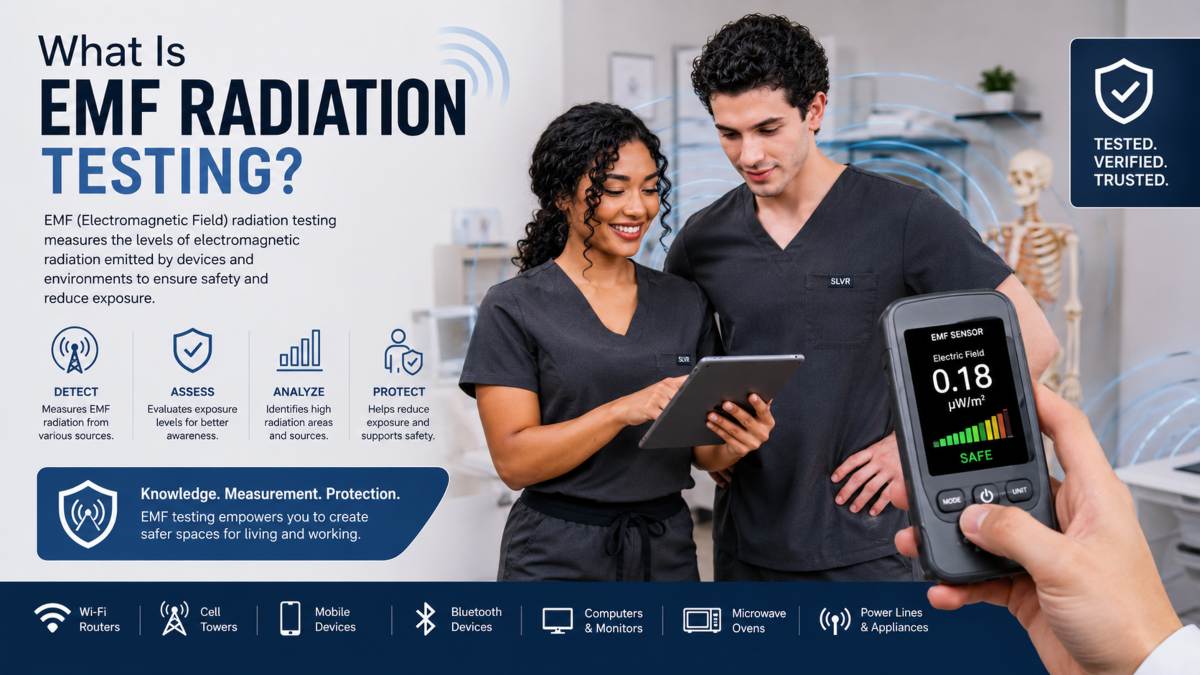
EMF radiation testing is the use of a specialized meter to detect and quantify electromagnetic fields given off by electronic devices, wiring, and wireless transmitters in a given space. For a deeper breakdown of what these fields actually are, see our guide to EMF radiation. Rather than relying on assumptions about which gadgets are “strong” or “weak” sources, a test gives you an actual reading typically expressed in milligauss (mG) for magnetic fields, volts per meter (V/m) for electric fields, or microwatts per square centimeter (µW/cm²) for radiofrequency (RF) radiation from wireless devices.
 How EMF Radiation Is Measured
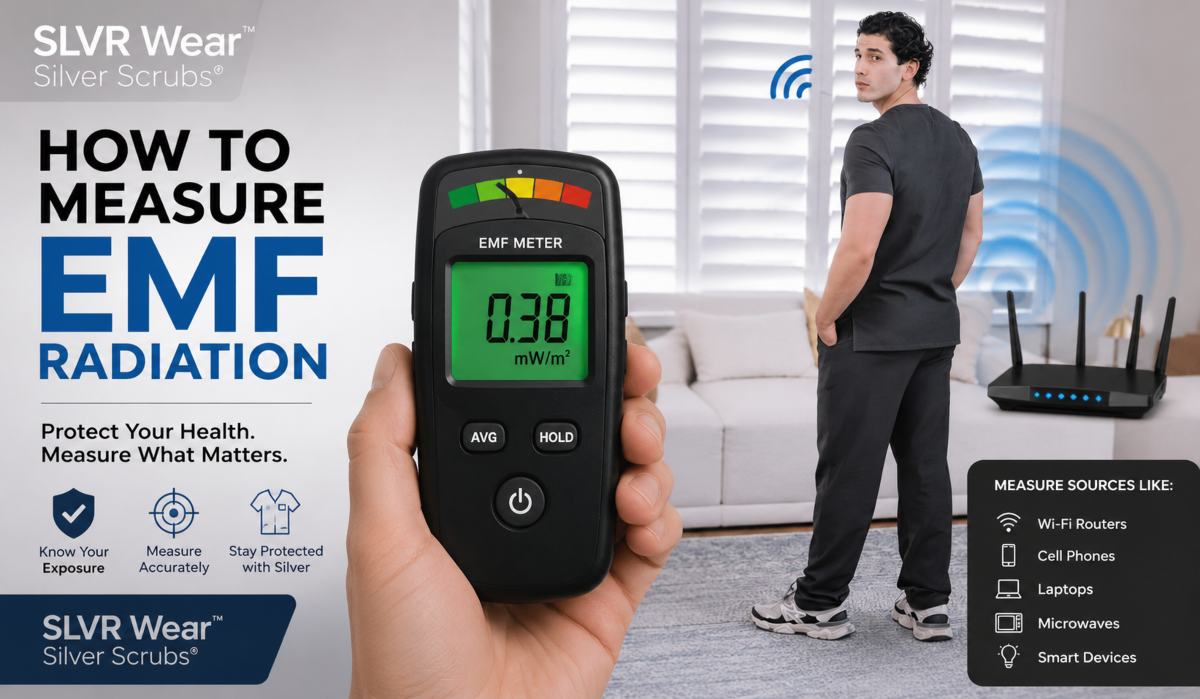
Measurement depends on the type of field being assessed, since EMF isn’t a single phenomenon but three related ones: electric, magnetic, and radiofrequency fields. A gaussmeter reads magnetic field strength near wiring or appliances, an RF meter captures wireless signal strength from routers, cell towers, and Bluetooth devices, and a combination meter does both. The reading is taken by holding the device near the suspected source an outlet, a router, a laptop charger and recording the number displayed, usually as a real-time numeric value or a moving needle. Most consumer-grade meters update continuously, which lets you walk through a room and watch the number rise or fall as you move closer to or farther from a source.
Testing matters because exposure is cumulative and largely invisible you can’t see, smell, or feel most EMF sources, so the only way to know your actual exposure level is to measure it directly. A bedroom with a Wi-Fi router on the nightstand, a smart speaker on the dresser, and a phone charging next to the pillow can register readings that are meaningfully higher than the same room with those devices relocated a few feet away. Testing turns an environment full of assumptions into one with actual data, which is the only reliable starting point for deciding whether any exposure-reduction steps including EMF radiation protection clothing are worth taking in that space.
The EMF radiation scale is the range of values a meter can display, from near-zero background levels to elevated readings near high-output sources like microwaves or cell towers. Reading the scale correctly means understanding that proximity changes everything field strength drops off sharply with distance, so a reading taken six inches from a router looks very different from the same meter six feet away.
Low EMF readings are typically found in spaces without active wireless transmitters or heavy electrical wiring nearby an interior room away from the electrical panel, for instance, or a space where devices are powered down. High readings cluster around active transmitters and high-current wiring: routers, microwave ovens while running, induction cooktops, and areas close to a home’s main electrical panel. Distance is the single biggest variable in any reading, which is why two tests taken in the same room at different positions can produce very different numbers.
There’s no single, universally agreed-upon “safe” number, since occupational and international exposure guidelines vary by country and organization, and most are based on avoiding short-term thermal effects rather than addressing long-term low-level exposure. For more on how these thresholds are defined, see our guide on safe EMF levels. What testing does provide is a consistent baseline: once you know your typical readings in the spaces where you spend the most time bedroom, desk, car you can track whether changes you make (relocating a router, adding shielding fabric, changing device placement) actually move the number.
SLVR Wear™ Silver Scrubs® are lab-tested to block up to 99.91% of EMF at 50 GHz, measured to the GJB 5792A-2021 military-grade shielding standard full results are available on the lab results page.
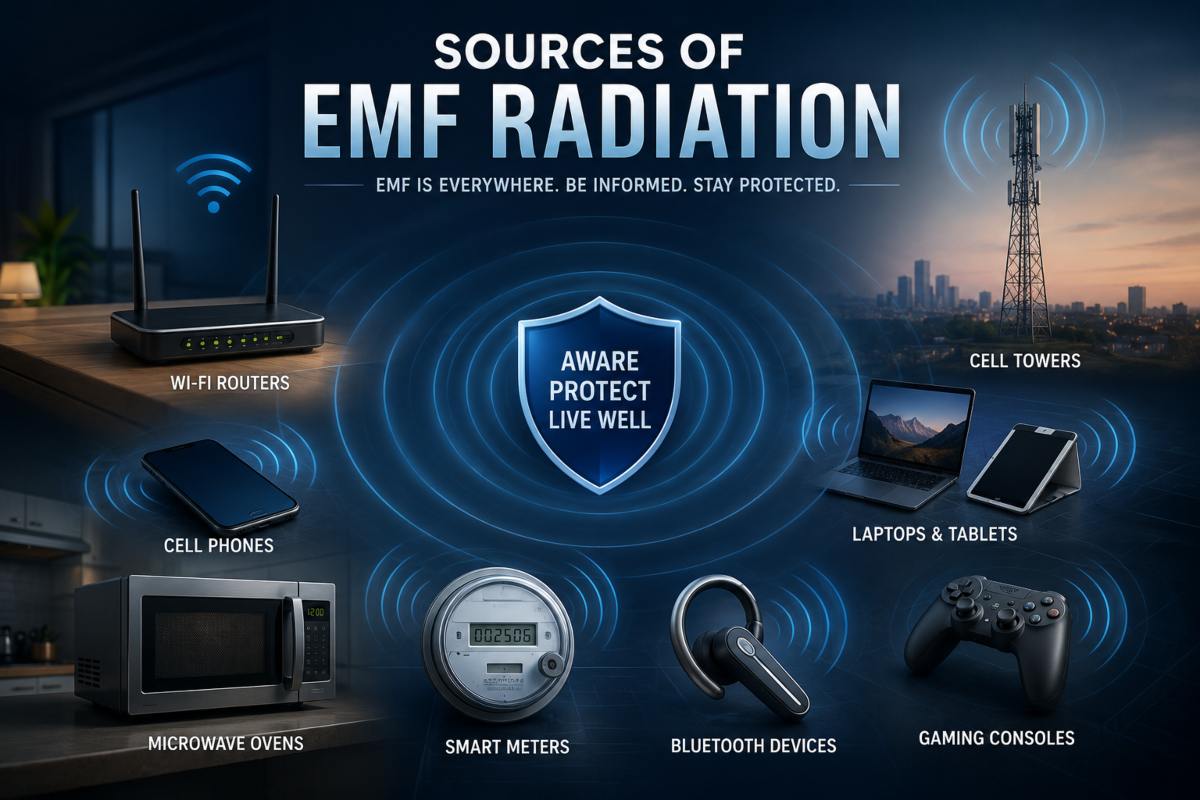
An EMF radiation chart maps common household, wireless, and workplace sources to their typical field strength and operating frequency, providing a reference for interpreting your own meter readings. Levels vary widely depending on the device, its power draw, and how close you’re standing to it a microwave in use can register far higher than a router sitting idle across the room.
Kitchen and utility appliances tend to produce some of the highest short-range readings in a home, simply because of the current they draw. Microwaves, induction cooktops, and hair dryers commonly register elevated magnetic field readings within a foot or two of operation, while the reading drops sharply once you step back. Wiring-related sources main electrical panels, dimmer switches, and older or ungrounded wiring can produce a steady background level even when no appliance is actively running, which is why testing near a panel often surprises people.
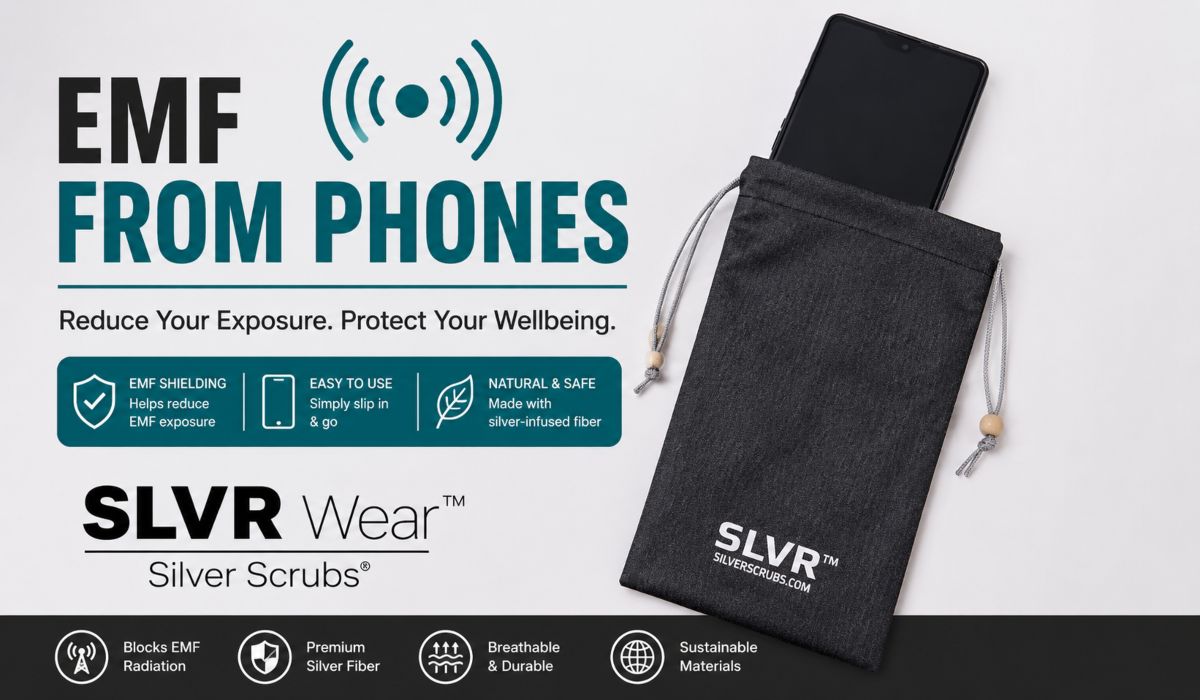
Wireless devices operate differently from wired appliances because they’re designed to transmit signal continuously, not just draw current. Wi-Fi routers, smart home hubs, Bluetooth speakers, and cell phones all emit radiofrequency radiation in bands ranging from roughly 2.4 GHz for standard Wi-Fi up to millimeter-wave 5G frequencies near 50 GHz. Phones held against the body or kept in a pocket while connected to a network are among the more consistent close-proximity RF sources most people carry daily see our breakdown of EMF from phones for more on this specific exposure type. For reducing exposure from a phone carried on the body, a Faraday Phone Pouch is a practical option when the device isn’t actively in use.
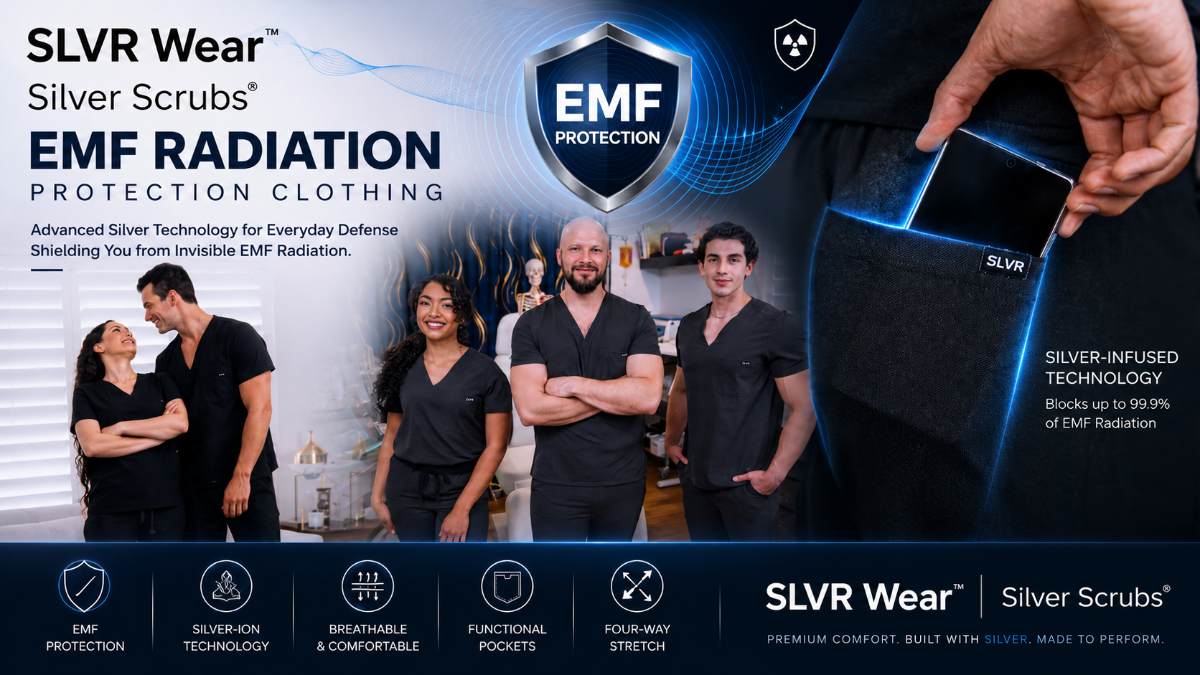
Offices and medical facilities introduce additional sources not typically found at home fluorescent and LED lighting ballasts, large HVAC systems, diagnostic equipment, and dense clusters of networked devices all transmitting or drawing power simultaneously. Hospitals and clinics in particular combine high device density with prolonged occupancy, which is part of why EMF blocking scrubs have become a practical option for healthcare professionals spending full shifts in those environments. For staff who prefer separates, our black scrubs pants offer the same shielding fabric in a standalone piece.
| Source | Typical EMF Level | Frequency Range |
|---|---|---|
| Wi-Fi router (close range) | Elevated RF reading within 1–3 ft | 2.4–5 GHz |
| Microwave oven (in use) | High magnetic field within 1–2 ft | ~2.45 GHz |
| Cell phone (active call/data) | Moderate to high RF near device | 600 MHz–6 GHz (up to ~50 GHz for mmWave 5G) |
| Smart speaker / hub | Low to moderate RF, continuous | 2.4 GHz |
| Induction cooktop | High magnetic field within 1 ft | Low-frequency magnetic field |
| Electrical panel / wiring | Low to moderate, constant background | Extremely low frequency (ELF) |
| Hospital diagnostic equipment | Variable, often elevated near device | Wide range depending on equipment |
| Bluetooth devices | Low RF, short range | 2.4 GHz |
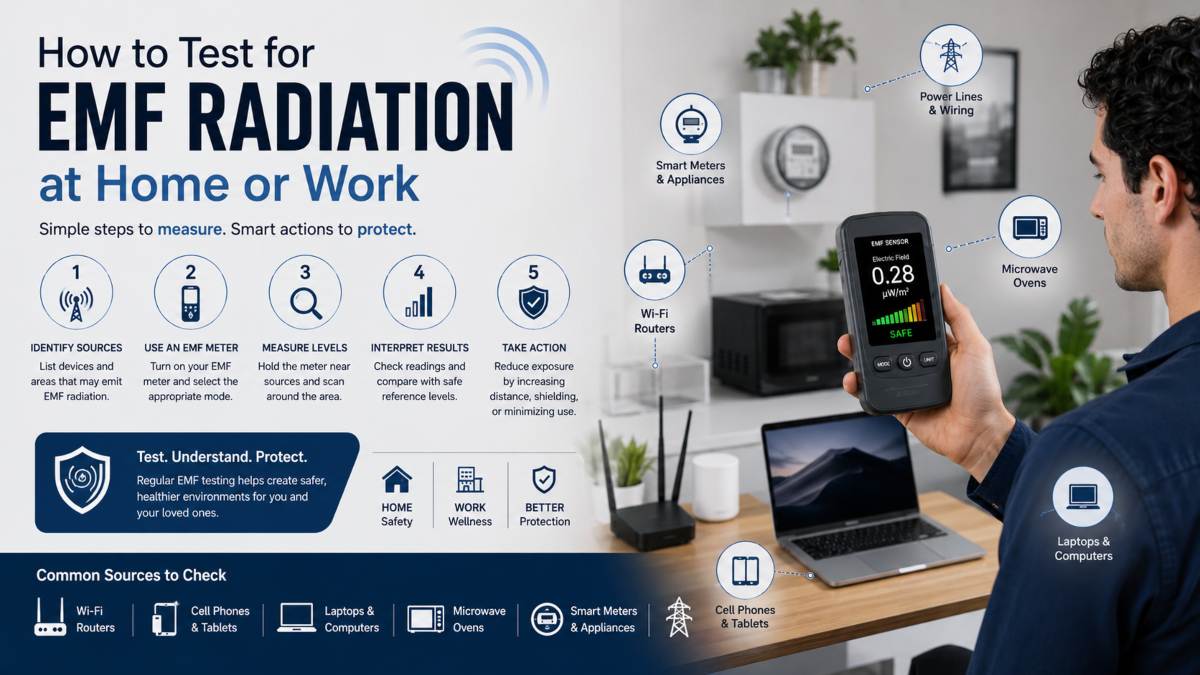
Testing for EMF radiation at home or work starts with selecting the right meter for the type of field you want to measure, then taking consistent readings across the spaces where you spend the most time. The process itself takes only a few minutes per room, but the value comes from doing it methodically rather than waving a meter around randomly. For a full walkthrough, see how to measure EMF radiation at home.
 Choosing an EMF Radiation Meter
The right meter depends on what you’re trying to measure. A gaussmeter is designed for magnetic fields from wiring and appliances; an RF meter targets wireless signals from routers, phones, and cell towers; and a combination meter reads both magnetic and RF fields in one device the more practical choice for a general home or office assessment. Consumer grade meters with a simple numeric or LED-bar display are usually sufficient for everyday testing; more sensitive lab grade equipment is typically unnecessary unless you’re doing professional building assessments.
Start by turning the meter on in a low-activity area of the room to get a sense of the baseline reading before approaching any specific source. From there, move to each suspected source one at a time router, microwave, electrical panel, phone holding the meter at a consistent distance (roughly 6 inches is a common standard) and noting the reading at that distance. Repeat the reading at a few different distances from the same source, since field strength drops off quickly as you move farther away, and record the results for each distance you test so you can compare rooms or track changes over time.
The most common error is taking a single reading at a single distance and treating it as definitive, when in reality the number can swing dramatically with even small position changes. Testing near other active electronics a laptop, a TV, a second phone without accounting for them as separate sources is another frequent mistake, since it muddies which device is actually responsible for an elevated reading. It also helps to test at a time that reflects normal usage: a router measured. In contrast, idle won’t reflect the same numbers it produces during heavy data transfer, and an appliance tested while off will obviously read near zero regardless of its potential output when running.
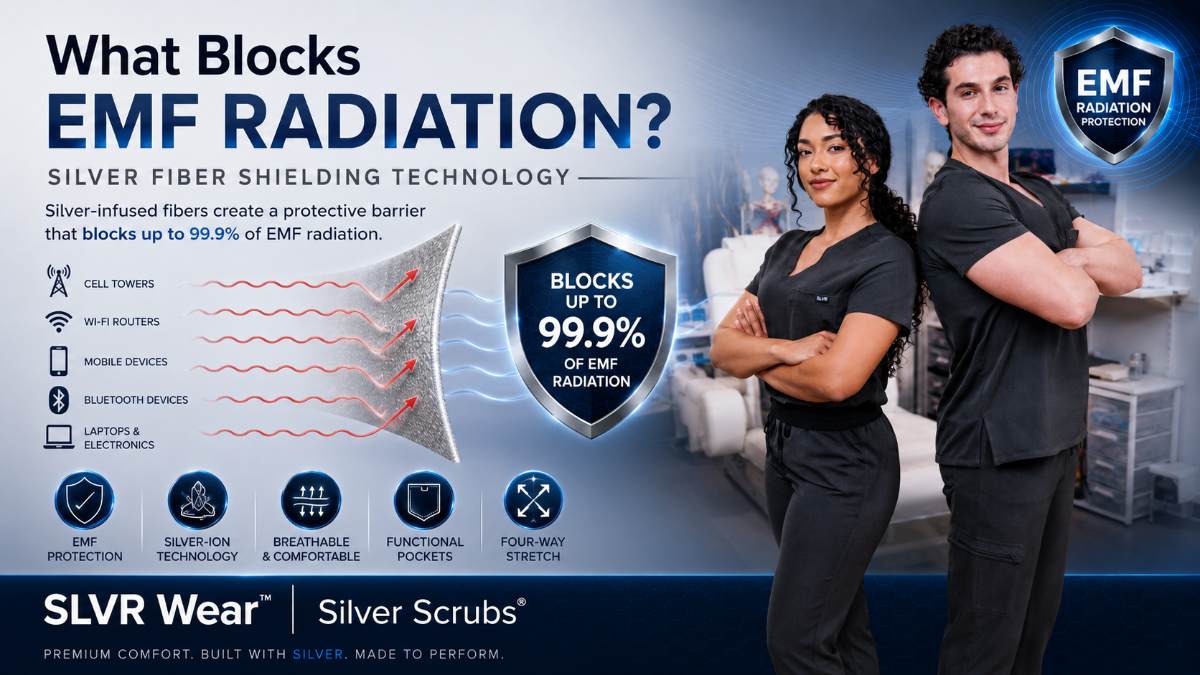
Once your EMF radiation testing identifies which spaces and devices produce the highest readings, the next step is to address those sources directly through distance, device placement, or shielding rather than retesting the same setup repeatedly. For a full overview of what actually blocks these fields, see what blocks EMF radiation. The readings are only useful insofar as they inform a change.
The simplest adjustments are also the most effective: increasing distance between yourself and a transmitting device, since field strength drops off sharply over even a few feet, and relocating high-output sources like routers and smart hubs away from beds, desks, and other spaces where you spend extended time. Charging phones across the room instead of on a nightstand, switching routers off overnight when they’re not in use, and keeping wired connections where practical instead of relying entirely on wireless all reduce cumulative exposure without requiring new equipment.
For a bedroom setup, an Signal Shielding large blanket can address nighttime exposure when device placement alone isn’t enough, and a baby blanket option is available for nurseries. Re-testing after making a change is the only way to confirm it actually moved the number in that specific space.
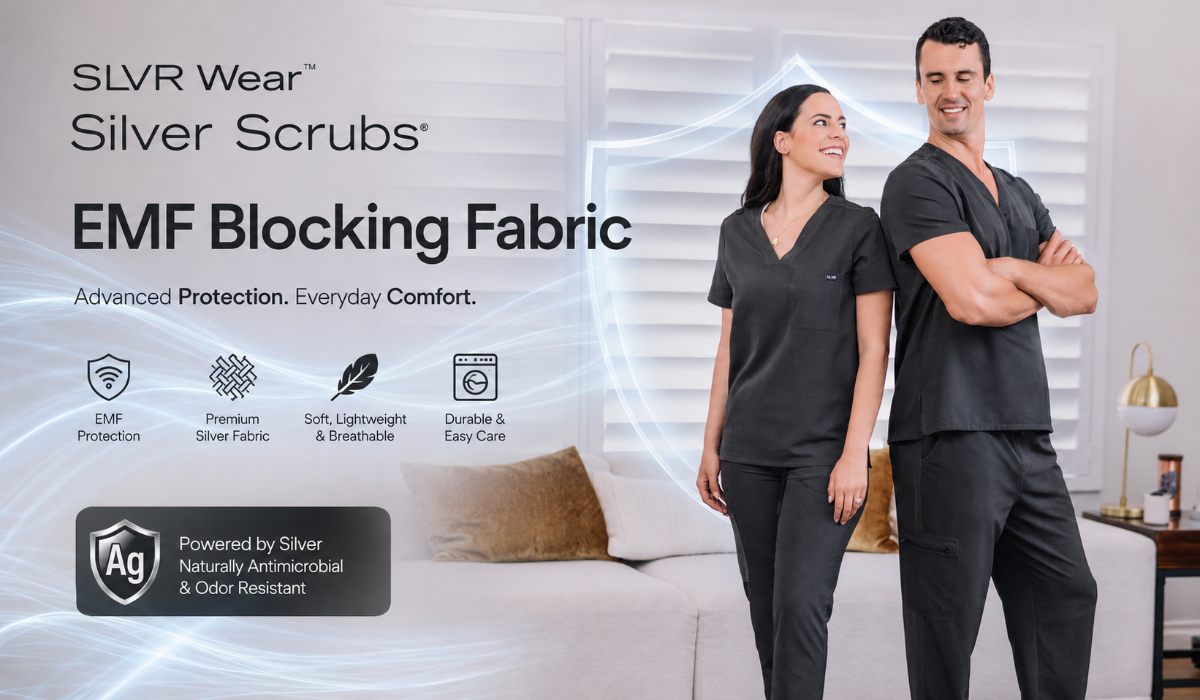
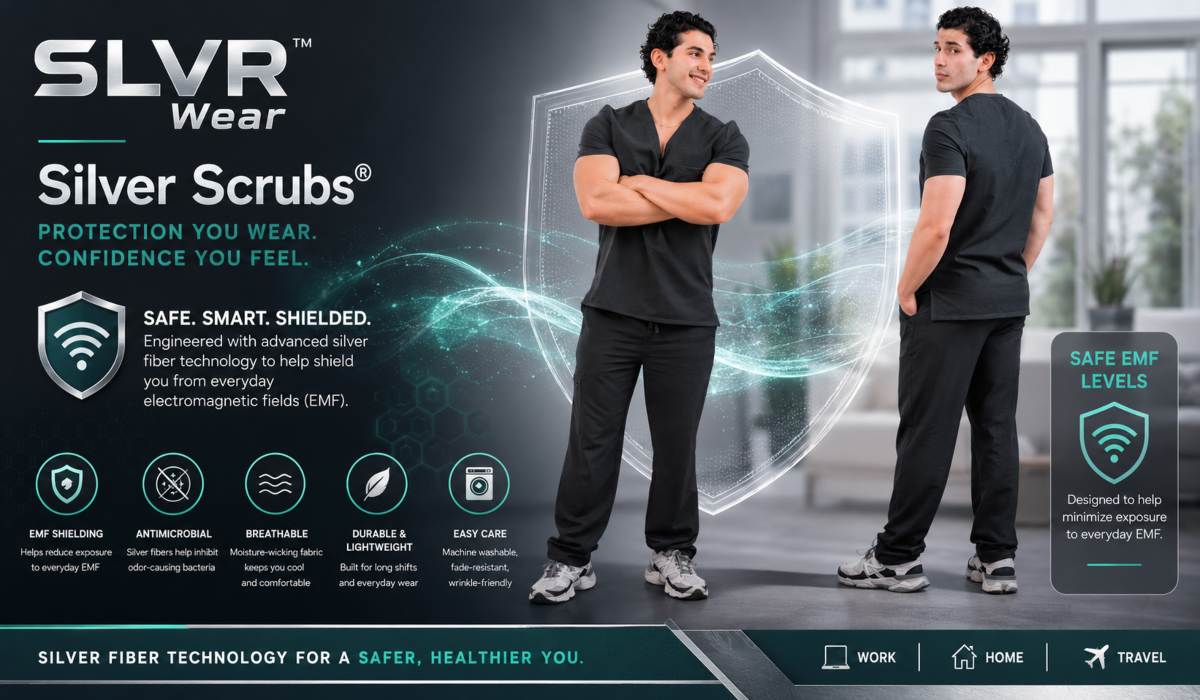
For environments where exposure can’t be reduced through distance or device changes a hospital floor, a shared office, a home with multiple connected devices running constantly shielding fabric offers a way to reduce exposure at the body itself rather than the room. SLVR Wear™ Silver Scrubs® are woven with 35% silver fiber, a highly conductive material that enables the fabric to block up to 99.91% of EMF at 50 GHz, tested to the military-grade GJB 5792A-2021 standard full lab results are linked on the EMF Education Center.
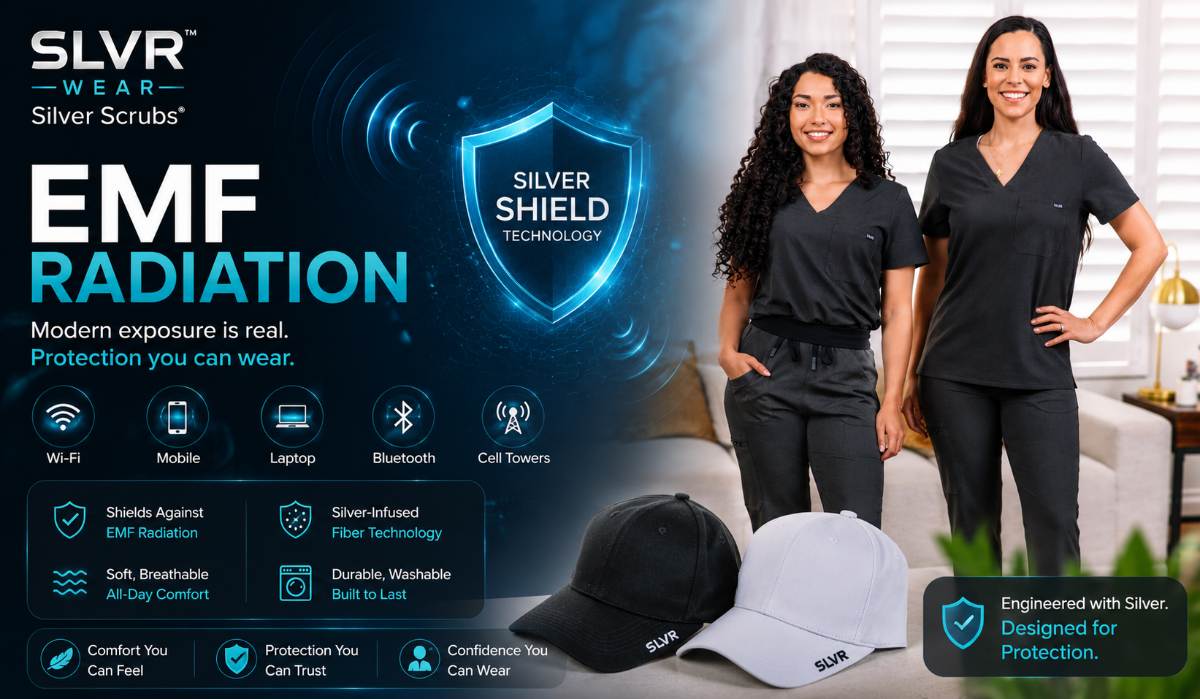
The fabric is woven thread-by-thread rather than coated or sprayed on, so the shielding properties hold up through regular washing. Our softest medical scrubs guide covers how that fabric feels in daily wear, and our medical scrubs complete guide covers fit and sizing. For exposure above the shoulders, the Signal Shielding beanie and Signal Shielding hat extend the same shielding fabric to head coverage. For healthcare professionals working full shifts surrounded by networked diagnostic equipment, wearable EMF protective clothing addresses exposure that can’t simply be relocated or switched off.
EMF radiation testing gives you a clear, measurable picture of your actual exposure instead of relying on guesswork about which devices in your home or workplace matter most. By understanding how meters measure electric, magnetic, and radiofrequency fields, where common sources like routers, microwaves, and wiring fall on the EMF radiation scale, and how distance changes every reading, you can make informed decisions about device placement, habits, and where exposure can’t simply be moved or switched off shielding fabric worn directly on the body. Testing isn’t a one-time task; revisiting it as you change devices, rooms, or routines keeps your understanding of exposure current rather than based on a single snapshot.
A “normal” EMF radiation level at home varies by room and proximity to sources. Still, background readings away from active devices and wiring are typically low, with levels rising noticeably near routers, microwaves, and electrical panels. There’s no single universal safety threshold, since exposure guidelines differ by country and organization, which is why tracking your own baseline readings over time is more useful than comparing them to a single fixed number.
An EMF meter (often a gaussmeter) measures magnetic fields from wiring and appliances. In contrast, an RF meter measures radiofrequency signals from wireless devices like routers, phones, and cell towers they detect different parts of the broader EMF spectrum. Combination meters that read both magnetic and RF fields are the most practical choice for general home or office testing, since most living spaces contain both types of sources.
Testing once to establish a baseline is a reasonable starting point, with follow-up tests whenever you rearrange a room, add new devices, or make changes specifically aimed at reducing exposure. There’s no fixed schedule required the goal is comparing readings before and after a change, not continuous monitoring.
Yes, RF meters capable of measuring higher frequency ranges can detect 5G EMF radiation, which operates across sub-6 GHz bands and millimeter-wave frequencies near 50 GHz. Not all consumer meters cover this full range, so checking a meter’s specified frequency range before purchase matters if 5G detection is a specific priority.
Standard clothing has no meaningful effect on EMF readings, but fabric woven with conductive material like silver fiber can measurably block a portion of EMF exposure at the body. SLVR Wear™ Silver Scrubs®, for example, are lab-tested to block up to 99.91% of EMF at 50 GHz under the GJB 5792A-2021 standard, which is the kind of difference a meter would register when comparing shielded versus unshielded fabric in the same test conditions.
Disclaimer: SLVR Wear™ products are not medical devices and are not intended to diagnose, treat, cure, or prevent any disease.