Silver Scrubs® Medical Clothing | EMF Blocking Scrubs
Every day, nurses, physicians, radiologists, and allied health professionals enter environments saturated with invisible electromagnetic fields from diagnostic equipment, wireless…
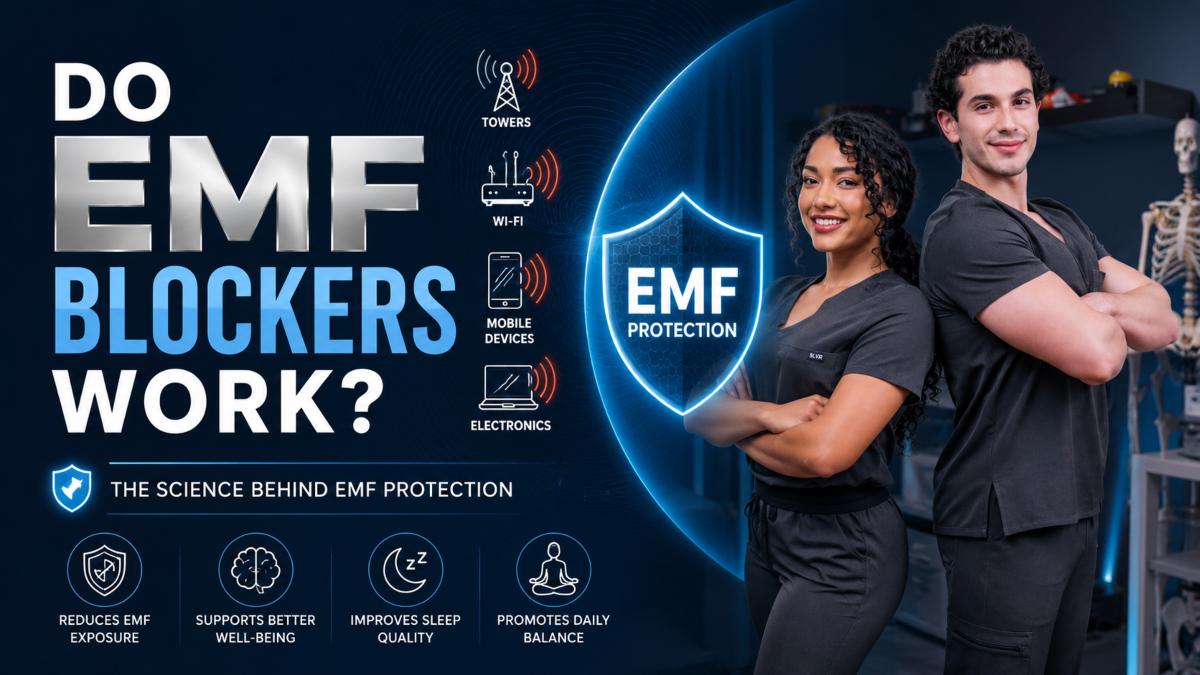
Yes, EMF blockers can work, but effectiveness depends entirely on the material, design, and what you’re trying to shield against. Properly constructed EMF Radiation protection clothing made from conductive materials like silver or copper fiber can reduce exposure to certain electromagnetic frequencies, while cheaply made or poorly designed products often provide little to no measurable shielding.
The technology itself isn’t fringe science. Conductive fabrics have been used in industries like aerospace and telecommunications for decades to manage electromagnetic interference, and shielding effectiveness is a measurable, testable property, not a marketing claim. What separates a legitimate EMF blocker from an overhyped one is whether that shielding effectiveness has actually been verified.
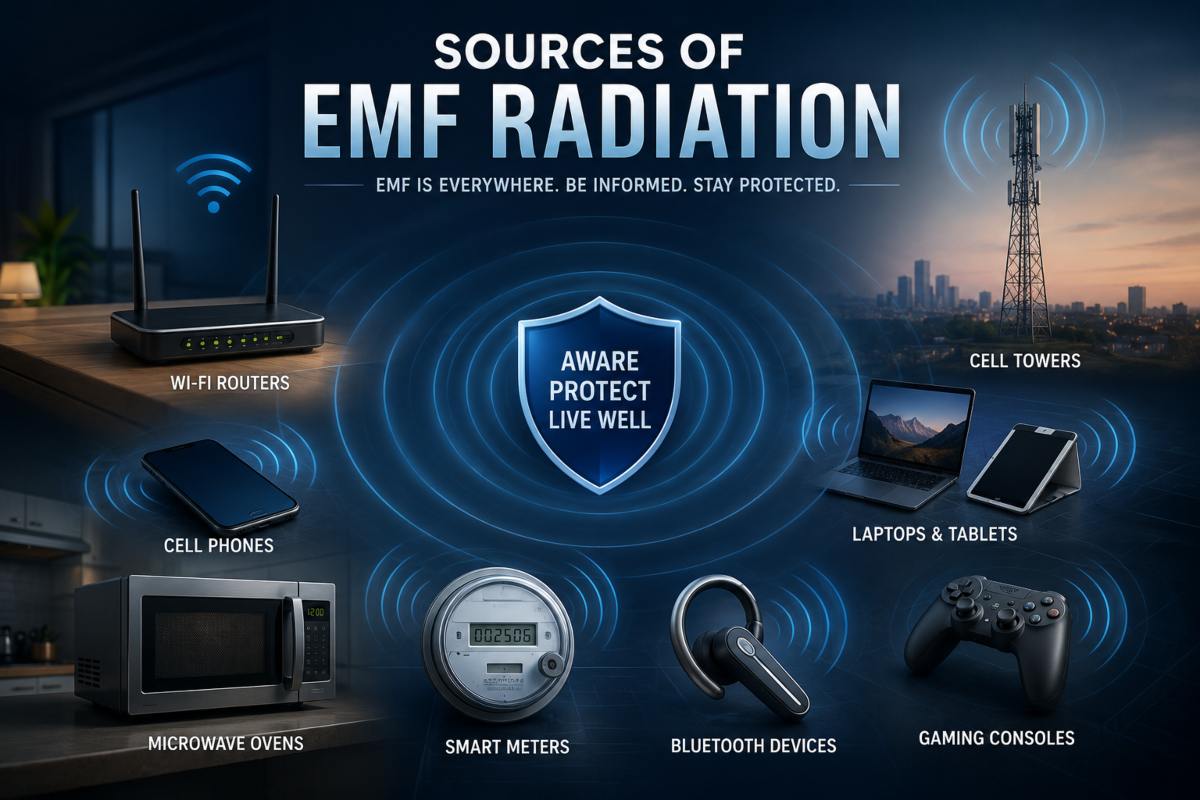
This guide breaks down Do EMF Blockers Work, where they hold up under testing, and where the claims outpace the science, so you can tell the difference before you buy. If you want the fundamentals first, see our full breakdown of what EMF radiation actually is and the everyday sources of EMF radiation you’re likely exposed to.
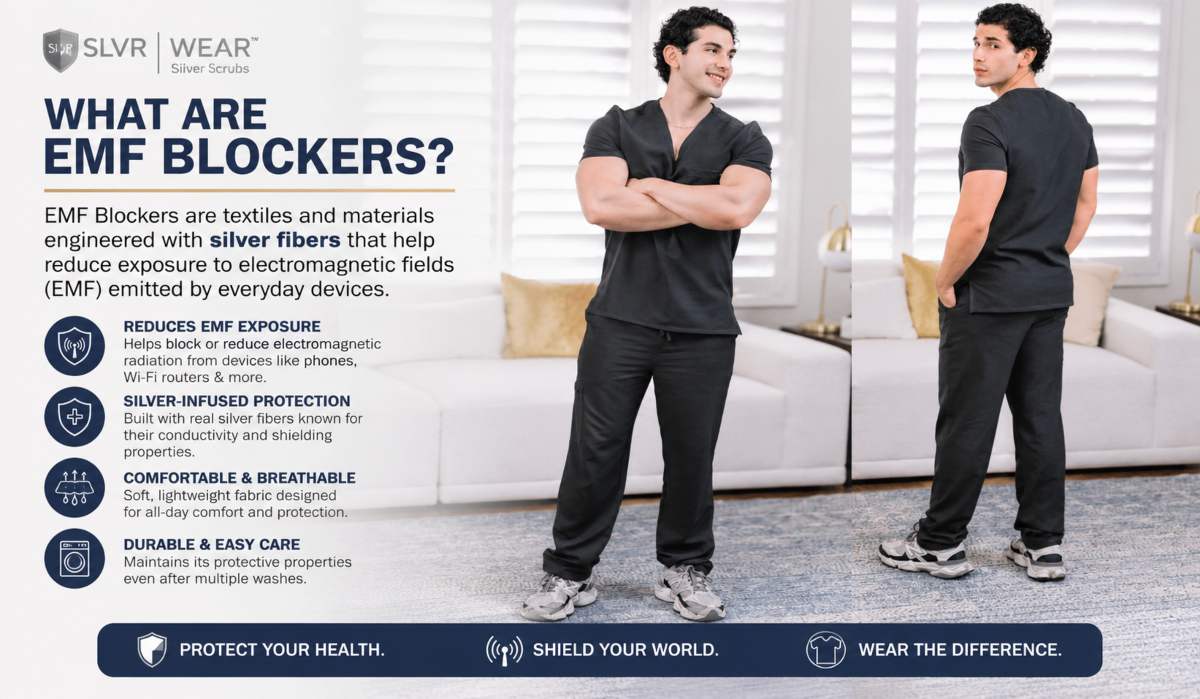
EMF blockers are materials or products designed to reduce exposure to electromagnetic fields by reflecting, absorbing, or redirecting electromagnetic energy before it reaches the body. They typically take the form of fabric, mesh, or coated fibers built into clothing, phone cases, blankets, or standalone shielding panels. For a deeper look at exactly what blocks EMF radiation at the material level, see our dedicated guide.
The core function of an EMF blocker isn’t to eliminate electromagnetic fields; that’s not realistically possible for most consumer products. Instead, well-designed blockers work by creating a conductive barrier that impedes the passage of electromagnetic waves, thereby reducing the intensity of exposure on the other side.
 How EMF Blockers Are Supposed to Work
EMF blockers rely on a principle called electromagnetic shielding, in which a conductive material creates a barrier that electromagnetic waves struggle to penetrate. When an electromagnetic wave hits a conductive surface, part of the energy is reflected away, and part is absorbed and dissipated as the material’s electrons respond to the field. This is the same underlying principle used in shielded cables, MRI rooms, and Faraday cages, just scaled down into wearable or portable form.
Shielding effectiveness is typically measured in decibels (dB), and even modest, well-tested EMF blocking fabric can reduce signal strength significantly. This makes shielding effectiveness a testable, quantifiable property rather than a vague promise, which is exactly what separates credible EMF blockers from unverified ones.
Not all shielding materials perform the same way, and the material used is often the biggest predictor of whether a product actually works.
Silver-coated fibers are among the most widely used materials in EMF-blocking fabric because silver has excellent electrical conductivity and holds up well against repeated washing and wear, making it common in clothing and wearables. Copper is another highly conductive option, often used in shielding panels, paints, and mesh layers, though it can be more prone to oxidation over time if not properly treated. Conductive mesh, whether silver, copper, or nickel-based, is frequently woven directly into fabric or embedded into flexible materials, allowing shielding to be built into everyday products without adding noticeable bulk or weight.
The tighter and more consistent the weave of the conductive material, the more effective the shielding tends to be, which is why material quality and construction matter more than marketing language when evaluating whether an EMF blocking fabric is likely to perform as claimed.
EMF blockers do actually work when they’re made from properly tested conductive materials, but many products on the market fall short of their marketing claims. The honest answer sits between the two extremes often found online: EMF blocking isn’t pseudoscience, but it also isn’t a guarantee that any product labeled “EMF blocker” will perform as advertised.
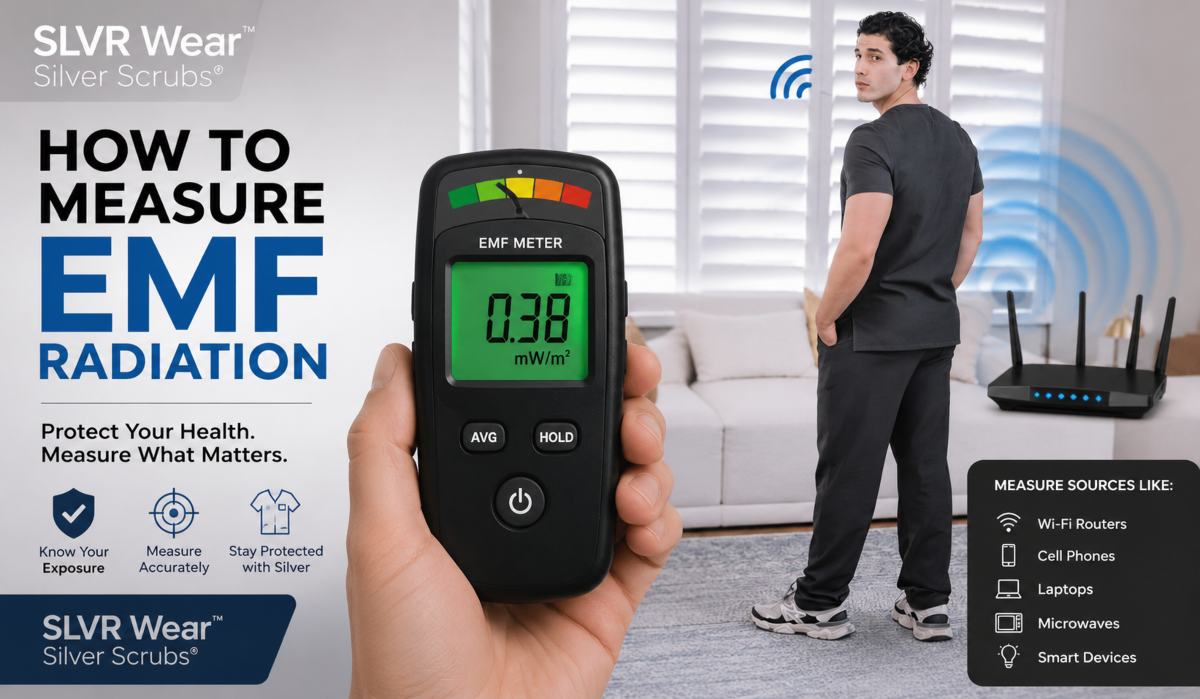
Independent testing is the clearest way to separate legitimate EMF blockers from ones that don’t hold up. When conductive fabrics are tested in controlled settings using an EMF meter or spectrum analyzer, well-constructed materials with tight, consistent conductive weaves can measurably reduce signal strength, sometimes by 20dB or more depending on frequency and material density. That level of reduction reflects a real, measurable drop in exposure, not a marginal or placebo-level effect. If you want to try this yourself, our guide how to measure EMF radiation at home walks you through the process.
The gap shows up in products that skip this kind of verification. Items with thin, inconsistent, or low-grade conductive material often show minimal shielding effectiveness when tested, even though they’re marketed using the same language as products that perform significantly better. This is why shielding effectiveness data, not brand claims, is the most reliable signal of whether an EMF blocker actually works. See our full explainer on EMF radiation testing for what proper verification looks like.
EMF blocking tends to be most effective in contained, close-range scenarios, such as fabric worn against the body or a shielding case placed directly around a device. In these situations, the conductive material sits close enough to the source to meaningfully interfere with the field before it reaches the body.
Where claims get overstated is in framing EMF blockers as a way to eliminate exposure or shield against all frequencies uniformly. Electromagnetic fields span a wide frequency range, and a material that shields effectively against one frequency band may perform very differently against another. Products that market themselves as blocking “all EMF” without specifying frequency ranges or shielding effectiveness data are making a claim the underlying material likely can’t fully support.
Two products marketed identically as EMF blockers can perform completely differently, and the reason almost always comes down to material and construction. Conductive fiber type, weave density, layer thickness, and how well the material maintains conductivity after washing or repeated use all directly affect real-world shielding performance.
Design matters just as much as material. A shielding fabric that fits loosely or leaves gaps reduces its own effectiveness, since electromagnetic fields can pass through unshielded areas even if the fabric itself is highly conductive. This is why shielding effectiveness should be evaluated at the product level, not just the material level, since how a material is engineered into a finished product directly affects whether it delivers meaningful protection.
RF signal attenuation can work on phones, but only in specific ways. It’s effective at reducing exposure when the phone isn’t actively transmitting, but far more limited when it is. This distinction is the single most important thing to understand before buying any phone-specific EMF blocker. For more on how phones generate exposure in the first place, see EMF from phones.
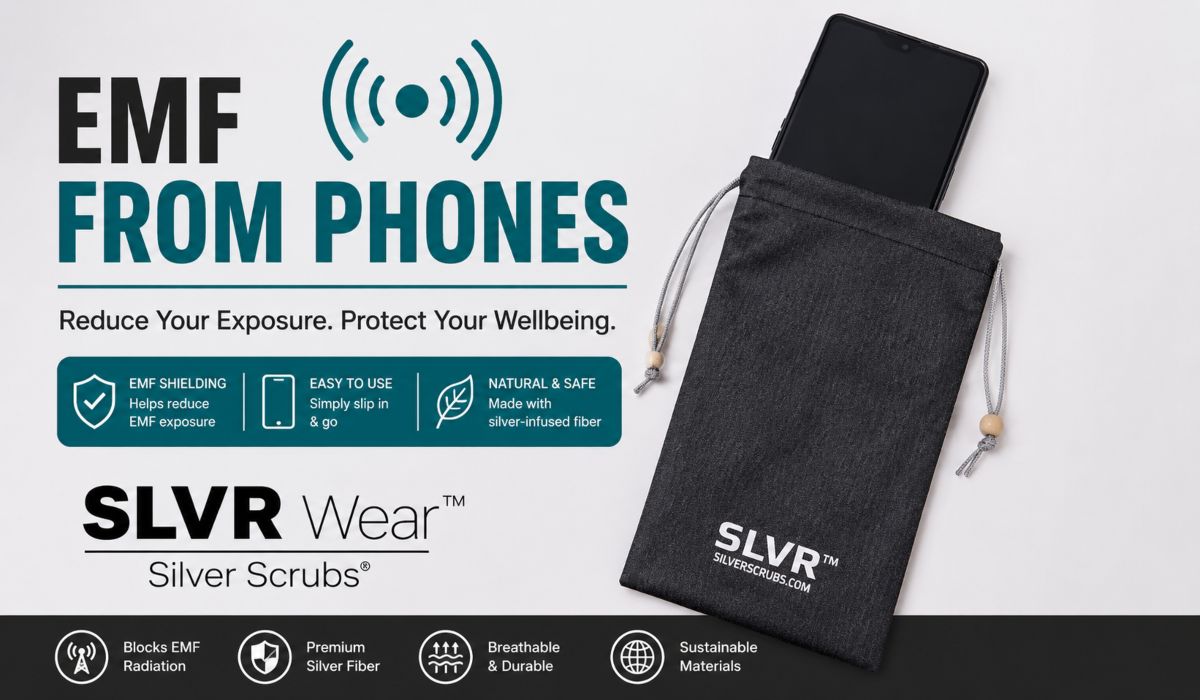
Shielded phone cases and pouches made from conductive material can meaningfully reduce exposure when a phone is idle, in a pocket, or not in active use. Since the shielding material surrounds the device, it can attenuate the electromagnetic field radiating outward, which is where these products tend to perform closest to their marketing claims. Some tested shielding pouches, like the SLVR Wear™ Faraday Phone Pouch, show signal attenuation of 30dB or more when fully enclosed, which represents a substantial reduction in exposure to whatever is inside.
Where these products still add value is in passive scenarios, carrying a phone against the body for extended periods, storing it in a bag, or reducing exposure during sleep if the phone stays nearby. In these lower-demand situations, a well-made shielding case or pouch is doing its job.
The physics work against EMF blockers the moment a phone is actively sending or receiving signal. A phone making a call, loading data, or maintaining a connection needs to communicate with a cell tower. If a shielding case fully blocked that signal, the phone would simply lose connection rather than transmit “protected.” Because of this, manufacturers can’t fully shield an actively used phone without breaking its core function.
This is why most legitimate shielding phone products are designed for partial coverage, shielding the back and sides while leaving the front or antenna area exposed, or shifting to shield mode only when the phone is stored rather than in use. Understanding this limitation is key to setting realistic expectations: RF signal attenuation on phones is most effective as a passive-exposure tool, not as a way to fully eliminate exposure during active use.
EMF blocking clothes do work when they’re made with properly woven conductive fibers, offering measurable reduction in exposure for the areas of the body they cover. Like other EMF protective clothing, effectiveness comes down to the quality of the conductive material and how it’s constructed into the finished garment, not the label on the tag.
EMF blocking clothing works by weaving conductive fibers, most commonly silver, directly into the fabric alongside conventional textile threads. This creates a garment that looks and feels like normal clothing but has an embedded conductive layer that reflects and absorbs electromagnetic energy before it reaches the skin.
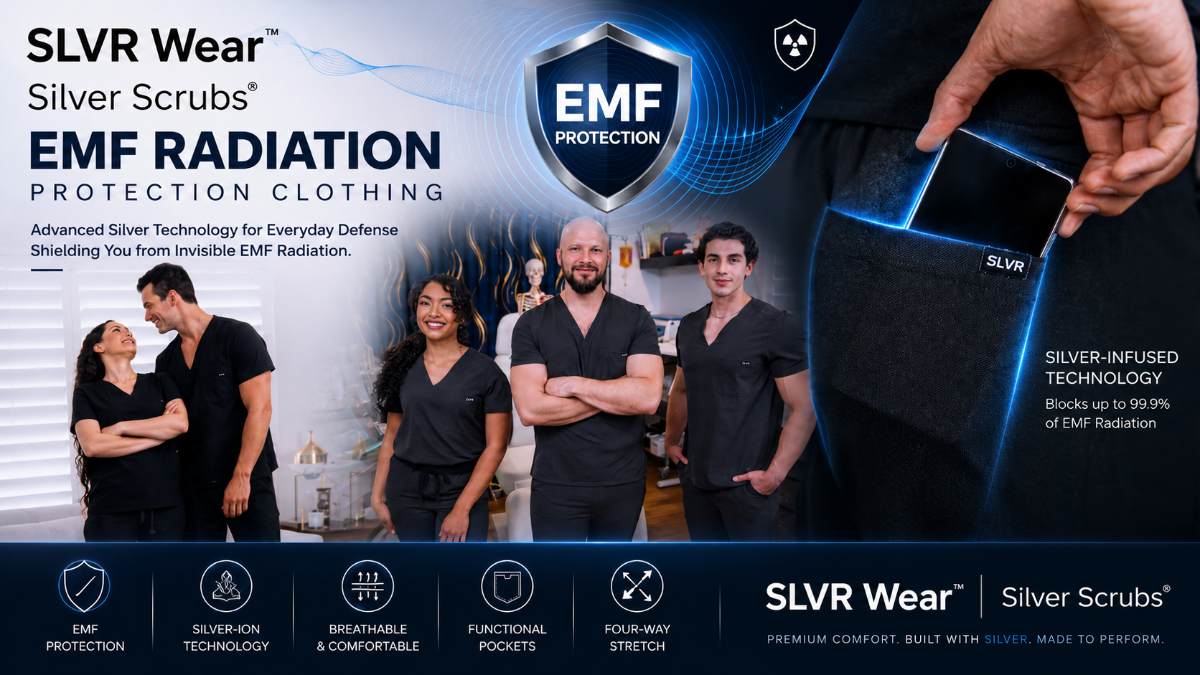
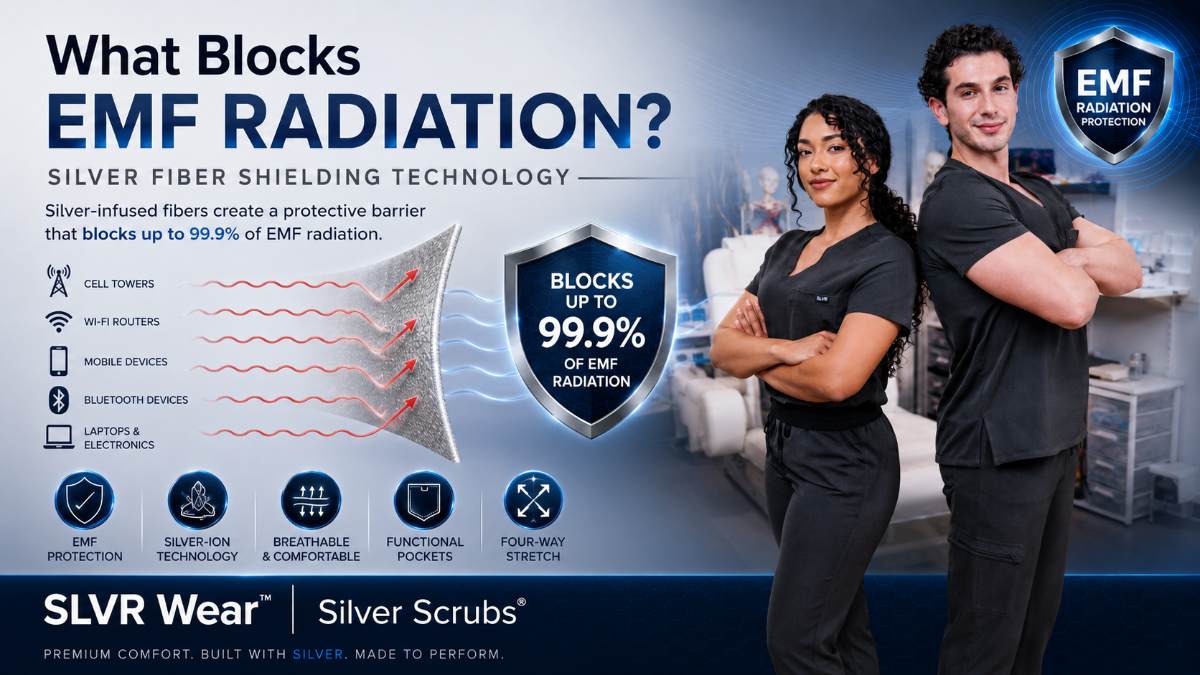
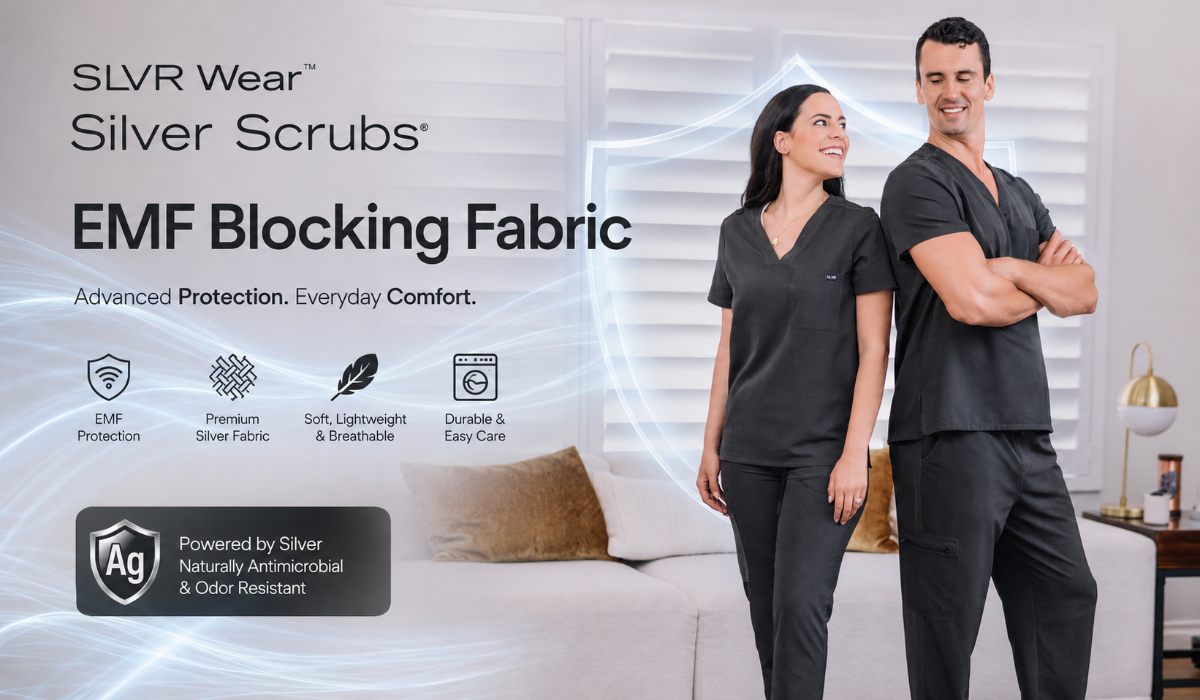
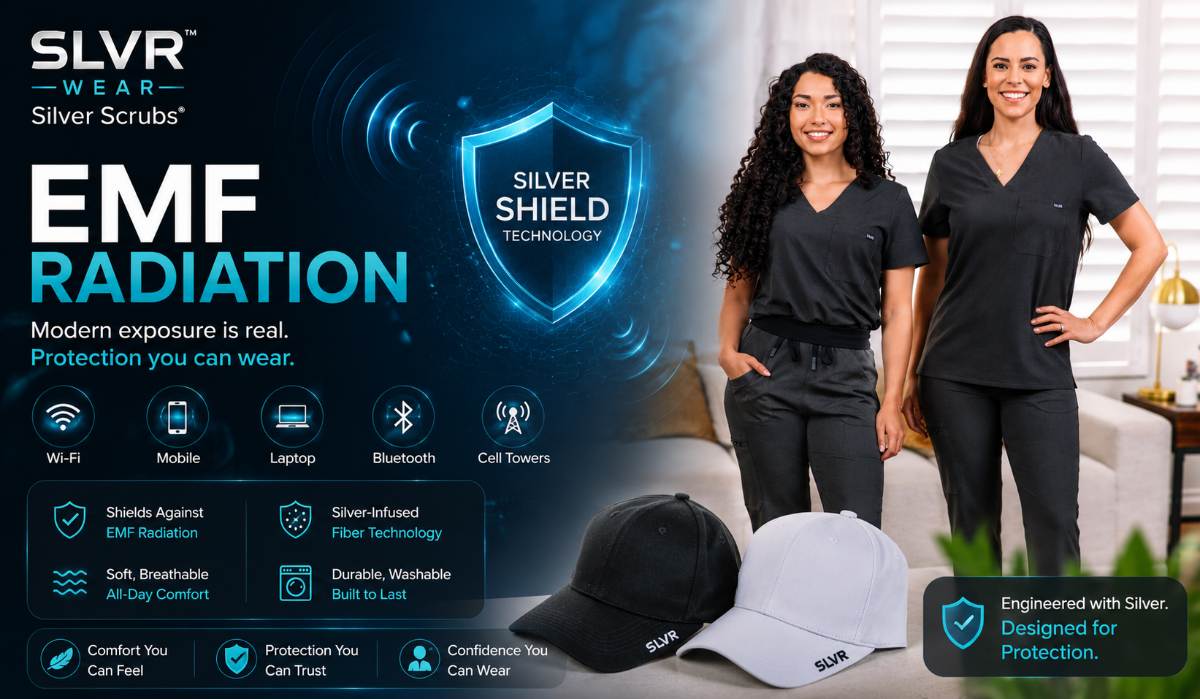
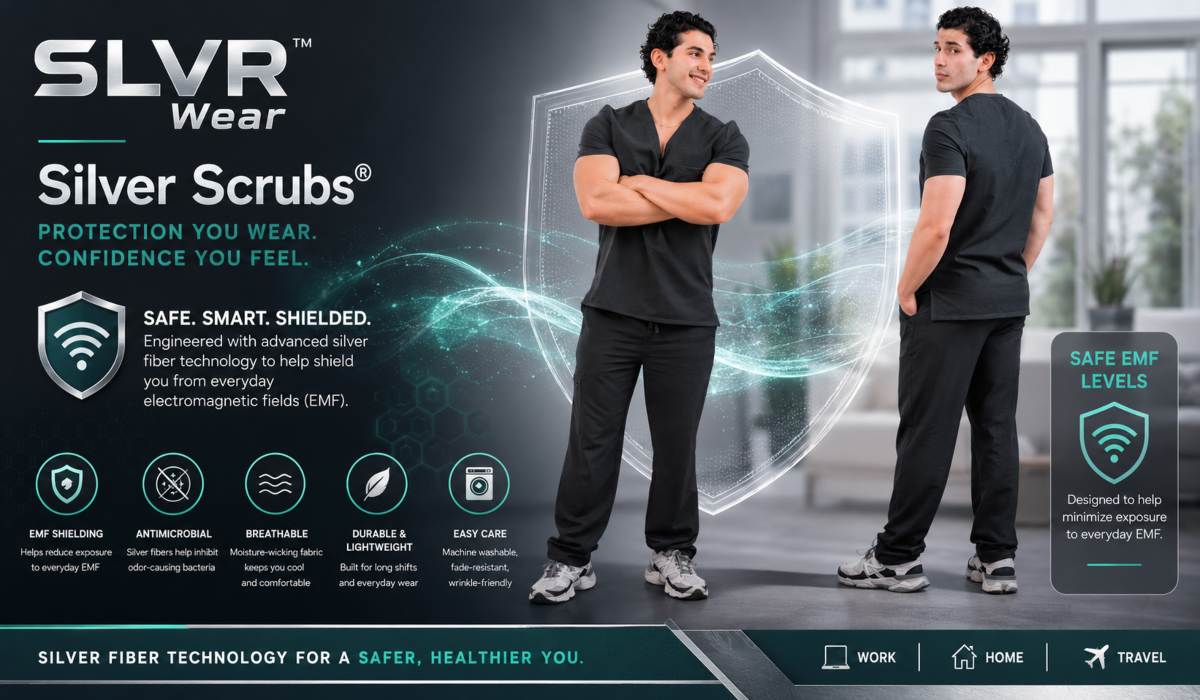
The shielding only works where the fabric makes contact. A well-constructed piece of EMF clothing can achieve shielding effectiveness of 30dB or higher when tested under controlled conditions, meaning it blocks a significant portion of the electromagnetic field in the area it covers. However, that protection is localized. A shielding shirt protects the torso, not the head, hands, or legs, which is an important distinction often left out of product marketing. This same principle applies to specialty garments, such as Silver Scrubs® and EMF-blocking medical clothing, where healthcare workers need coverage in specific high-exposure areas without sacrificing comfort during long shifts.
The clearest sign of legitimate EMF clothing is transparency about shielding effectiveness data and specific dB ratings tied to specific frequency ranges, rather than vague claims like “blocks harmful radiation.” Products that publish this kind of testing information are giving you something verifiable to evaluate, instead of asking you to take a marketing claim on faith.
Material composition matters just as much. Look for a clearly stated fiber content that includes silver, copper, or another conductive metal woven at a meaningful percentage, since trace amounts of conductive thread won’t deliver meaningful shielding. Construction quality also plays a role: tightly woven, seam-consistent garments maintain shielding integrity better than loosely knit ones, since gaps in the weave create gaps in the shielding itself.
Washing instructions are worth checking too, since conductive fibers like silver can degrade in effectiveness over time if not cared for properly, and legitimate brands will typically disclose that tradeoff rather than ignore it. If comfort and everyday wearability matter to you as much as shielding, our guide on the softest medical scrubs and our complete guide to medical scrubs cover what to look for beyond just shielding performance, including options like black scrubs pants built with the same conductive fiber approach.
EMF blockers work differently depending on the product type, since coverage area, material density, and intended use all shape how much exposure reduction you actually get. Beanies, blankets, hats, and shields all rely on the same shielding principle, but each one is suited to a different scenario.
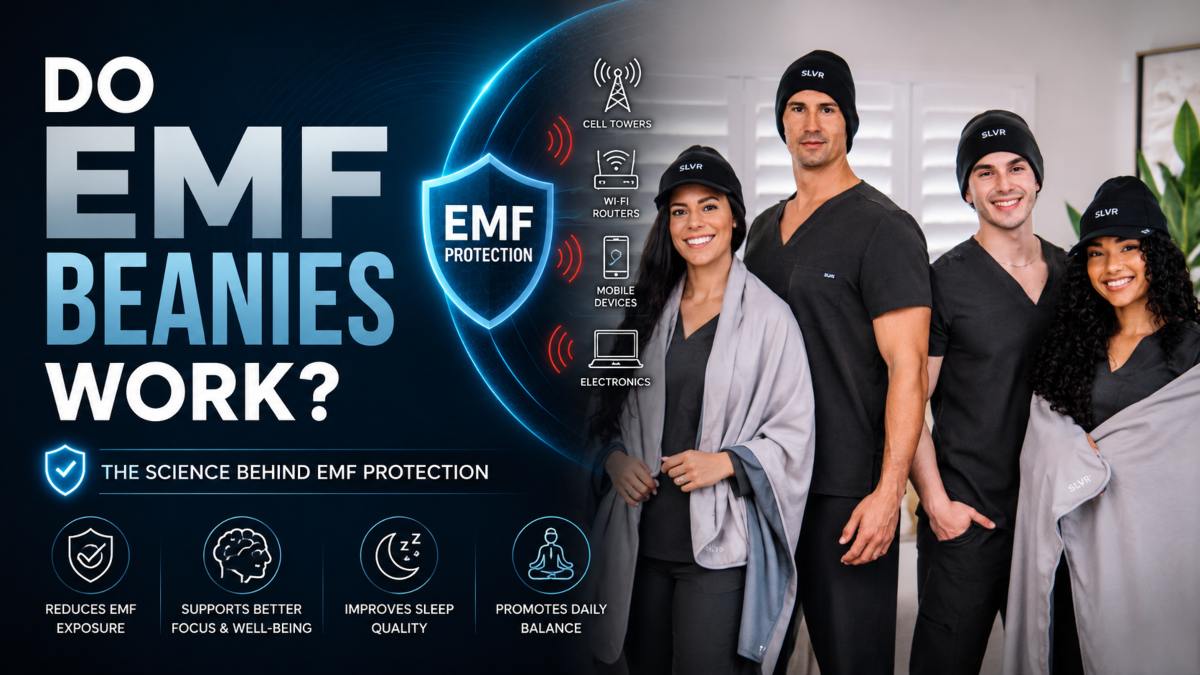
EMF beanies work for the specific area they cover, reducing exposure to the scalp and head when made with properly woven conductive fiber. Because they’re worn close to the head, a well-constructed Signal Shielding Beanie Black can offer meaningful shielding for that localized area, which matters given how often phones and other wireless devices are held near the head during calls.
The limitation is coverage, not effectiveness. A beanie shields the head, not the neck, face, or body, so its value depends entirely on whether the head is the primary area of concern for the wearer.
 Do EMF Blankets Work?
EMF blankets work by creating a broader shielding barrier, making them useful for reducing exposure during sleep or extended periods of rest. Because a blanket covers a much larger surface area than a beanie or hat, it can shield more of the body at once, provided the conductive material is woven consistently across the entire fabric rather than concentrated in patches. This is the idea behind products like the SLVR Wear™ Signal Shielding Large Blanket and the SLVR Wear™ Signal Shielding Baby Blanket, which are built for full, edge-to-edge coverage.
Effectiveness here depends heavily on full coverage. Gaps or edges left unshielded reduce the blanket’s overall performance, since electromagnetic fields can still reach the body through any uncovered area, even if the rest of the blanket shields well.
EMF hats function similarly to EMF beanies, providing localized head shielding using the same conductive fiber principles. The main difference is often material and fit rather than function. Structured hats, like the SLVR Wear™ Signal Shielding Hat, may use a stiffer conductive lining, while soft hats rely more on woven fabric; both are designed to reduce exposure in the same general area.
As with beanies, the honest limitation is scope. An EMF hat isn’t designed to reduce whole-body exposure; it only covers the area it physically covers, so it works best as a targeted solution rather than a comprehensive one.
EMF shields for phones and laptops work well in passive scenarios, when the device is idle, charging, or not actively transmitting data. A properly shielded case or sleeve made from conductive material, such as a Faraday phone pouch, can meaningfully reduce exposure by containing the electromagnetic field within the shielding layer rather than allowing it to radiate outward unchecked.
The same limitation that applies to phones applies here too: a device that’s actively connecting to Wi-Fi, Bluetooth, or cellular networks can’t be fully shielded without disrupting its function. Laptop shields, similarly, tend to be most effective when placed underneath the device to reduce exposure from the bottom during use, rather than fully enclosing it. Realistic expectations matter here: EMF shields reduce exposure in specific contexts, they don’t eliminate it in every scenario.
RF signal attenuation is real when it’s backed by tested, conductive materials and honest shielding effectiveness data, but a significant portion of the market relies on exaggerated or unverifiable claims. The technology behind RF signal attenuation is legitimate physics; the problem is that “RF signal attenuation” as a label gets applied to products that never demonstrate it works.
The clearest red flag is a product that claims to block “all EMF” or “100% of radiation” without citing frequency ranges or shielding effectiveness in dB. Since electromagnetic fields span a wide spectrum and shielding performance varies by frequency, any claim of total or universal protection is a sign that the product isn’t being evaluated or marketed based on real test data. This is especially relevant for 5G EMF radiation, where frequency ranges vary widely by deployment.
Vague health claims are another warning sign, particularly language suggesting a product will “cure,” “eliminate symptoms,” or “protect your health” without qualification. Legitimate EMF products describe what they do in physical terms, reducing exposure, attenuating signal, shielding a specific area, rather than promising health outcomes they can’t substantiate. A lack of third-party testing, published dB ratings, or transparent material composition is often the strongest indicator that a product’s claims exceed what the material can actually deliver. It also helps to understand what safe EMF levels actually look like before evaluating any protection claim against them.
Realistic RF signal attenuation reduces exposure in specific, definable contexts, it doesn’t eliminate electromagnetic fields or guarantee a particular health outcome. A well-made shielding product might reduce signal strength by 20-30dB or more in controlled testing, which is a genuinely meaningful reduction. Still, it’s a measurable engineering result, not a promise of being “EMF-free.”
Realistic expectations also account for coverage and use case. A shielding beanie protects the head, not the whole body; a phone pouch protects a device at rest, not one actively connecting to a network. Understanding RF signal attenuation this way, as a set of targeted, physics-based tools with specific strengths and specific limits, is what separates an informed buyer from one relying purely on marketing language.
Choosing an effective EMF blocker comes down to verifying shielding effectiveness data rather than trusting marketing language, since that data is the only reliable indicator of real-world performance. The right product for you also depends on matching coverage and material to the specific exposure you’re trying to reduce.
Shielding effectiveness, or SE, measures how much a material reduces electromagnetic field strength, expressed in decibels (dB). The higher the dB rating, the more signal the material blocks: a 10dB rating blocks roughly 90% of the field strength at a given frequency, while a 20dB rating blocks around 99%, and 30dB or higher pushes into the 99.9% range.
SE ratings are frequency-specific, meaning a material can perform very differently depending on whether it’s tested against low-frequency fields (such as those from power lines) or high-frequency RF signals (such as Wi-Fi or cellular). A product that lists a single dB value without specifying the frequency range it applies to gives you an incomplete picture, since strong shielding at one frequency doesn’t guarantee it at another. Our guide to EMF radiation testing breaks down how these ratings are actually measured.
Before buying an EMF blocker, it’s worth asking whether the seller publishes actual SE data, and at which frequencies it was tested. A brand that shares specific numbers tied to specific conditions is giving you something you can evaluate; one that only uses general language like “blocks harmful radiation” is not.
It also helps to ask what the product is actually designed to shield, low-frequency EMF, RF/wireless signals, or both, since these require different material properties and a product built for one may underperform against the other. Material composition should be confirmed directly: what percentage of the fabric or lining is conductive metal, and how does that percentage change with washing or wear over time?
Finally, it’s reasonable to ask whether the coverage area matches the actual exposure concern, since even a highly effective material won’t help much if it doesn’t cover the part of the body or device most exposed. Asking these questions upfront filters out products that rely on vague claims and points toward those built on verifiable shielding performance.
EMF blockers use conductive materials, such as silver or copper fiber, to reflect and absorb electromagnetic energy, reducing the intensity of the exposure that reaches the body or device on the other side. They don’t eliminate electromagnetic fields; they reduce exposure within the area covered by the material.
EMF blockers can reduce exposure to 5G EMF radiation, but effectiveness depends on the material and frequency range it’s tested against. 5G uses a wider range of frequencies than older wireless standards, including higher millimeter-wave bands in some deployments, so a shielding material effective against lower 5G frequencies may perform differently against higher ones. Checking whether a product’s SE rating covers the relevant frequency range is the only way to know for sure.
The underlying science, electromagnetic shielding, is well established and used across industries such as aerospace and telecommunications. Where marketing outpaces science is in specific consumer products that make broad claims without publishing shielding effectiveness data, so the honest answer is that both are true: the science is real, but not every product marketed as an “EMF blocker” has been tested to confirm it works.
Legitimate EMF blockers typically publish shielding effectiveness (SE) ratings in decibels, tied to specific frequency ranges, along with clear information about conductive material composition. Products that avoid specifics and instead rely on broad claims like “blocks all radiation” are the ones most likely to underperform their marketing.