iPhone EMF Radiation Explained | SAR by Model and Guide
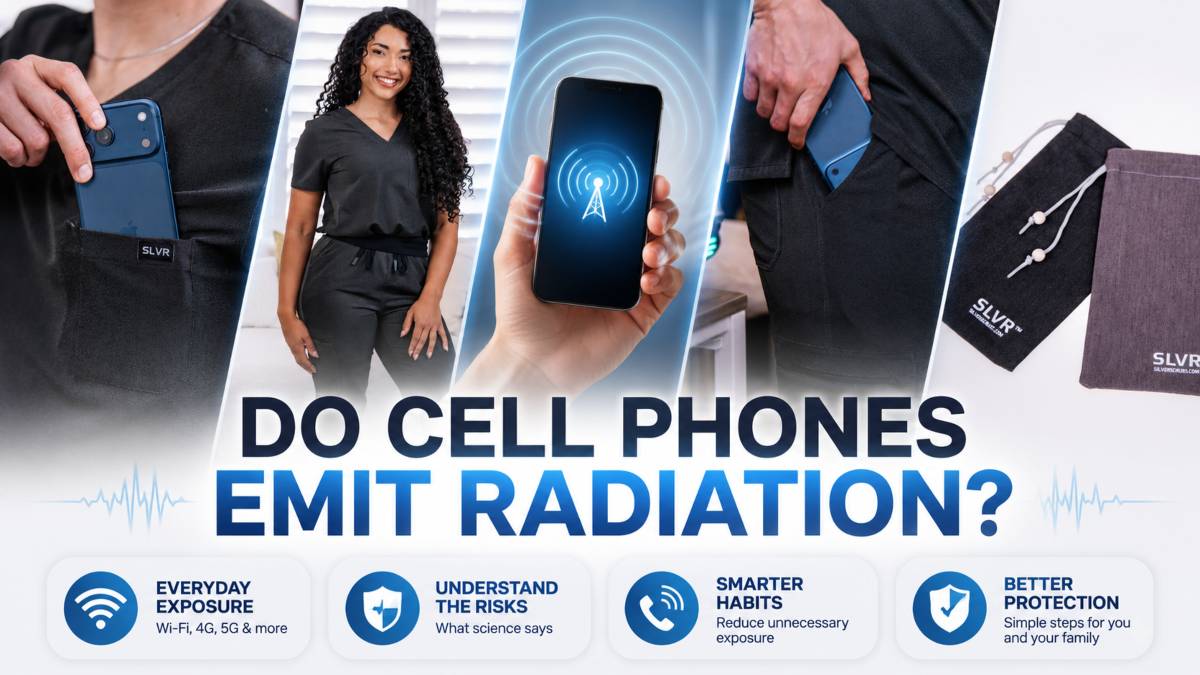
Every iPhone emits EMF radiation in the form of radiofrequency (RF) signals from its Wi-Fi, cellular, and Bluetooth antennas, and…
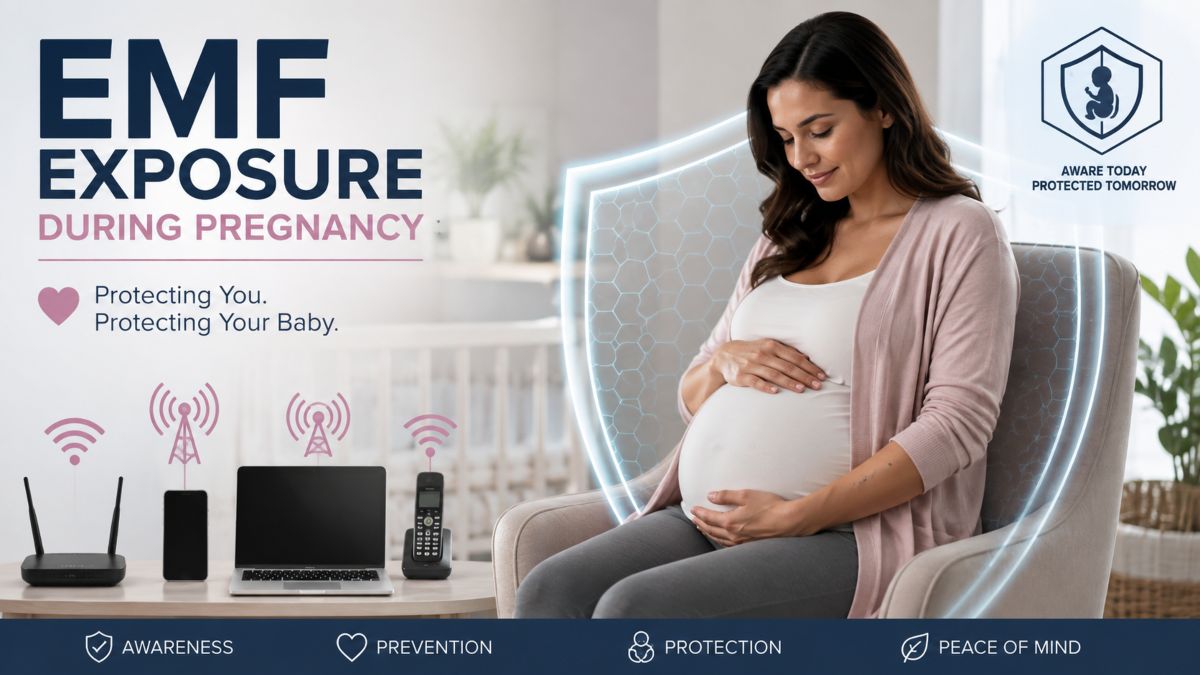
Electromagnetic fields (EMF) are a form of energy given off by devices like WiFi routers, cell phones, and laptops, and pregnant women often ask about them because pregnancy tends to prompt a closer look at everyday exposures that otherwise go unquestioned. The research on this is more settled than most search results suggest: a review of the evidence found no substantiated proof that maternal RF-EMF exposure, at levels below the public limits set by international guidelines, causes adverse pregnancy outcomes.
This article breaks down what the current research actually shows about EMF Exposure During Pregnancy, where the science is still developing, and what practical options exist for anyone who wants to reduce their exposure regardless.
Electromagnetic fields are invisible waves of energy that occur any time an electrical device transmits or receives a signal. Every wireless device in a home gives off some level of EMF, which is why the topic tends to surface once someone starts paying closer attention to their daily environment during pregnancy.
The most common sources in a typical household are WiFi routers, cell phones, laptops, and baby monitors. WiFi routers emit a continuous low-level signal as long as they’re powered on, while phones and laptops produce more concentrated bursts of energy when actively transmitting data, making a call, or streaming video. Baby monitors, especially the video and audio models that use wireless transmission, operate the same way and are often placed near where a baby sleeps. Other everyday sources include smart home devices, Bluetooth headphones, microwaves, and cordless phones. None of these devices are unique to a household with a baby on the way; what changes is that pregnancy often prompts people to notice and reconsider exposures they’d otherwise ignore.
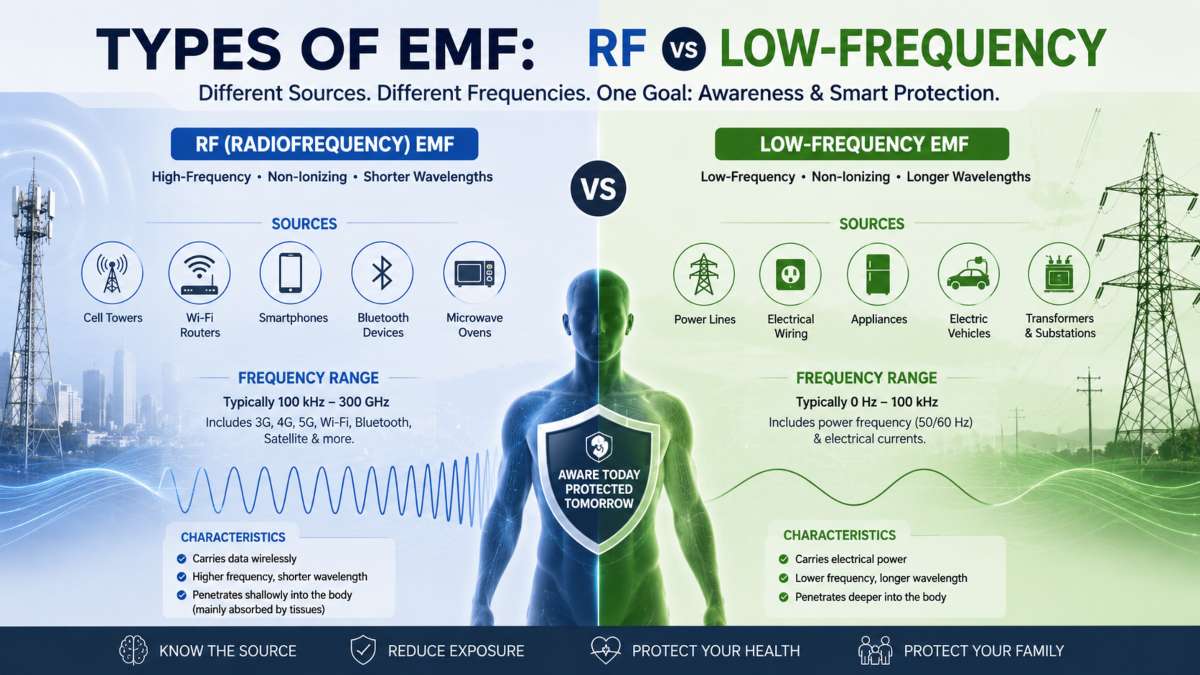
Not all EMF is the same, and the distinction matters for understanding what’s actually being measured. Radiofrequency (RF) EMF is the type produced by WiFi, cell networks, and Bluetooth it operates at higher frequencies and is what most guidelines and research on wireless exposure specifically address. Low-frequency EMF comes from a different source: household electrical wiring and appliances like hair dryers, microwaves, and safe distance from power lines, which operate at much lower frequencies than wireless devices.
International exposure guidelines, such as those published by the International Commission on Non-Ionizing Radiation Protection (ICNIRP), cover RF-EMF across a wide range, from 100 kHz up to 300 GHz meaning the guidance spans everything from cellular signals to 5G and WiFi. When people ask “is WiFi safe during pregnancy,” they’re really asking about RF-EMF specifically, not the low-frequency EMF given off by household wiring.
 Is WiFi Safe During Pregnancy? What Health Authorities Say
Current safety limits, set by international and U.S. regulatory bodies, are designed with a substantial safety margin, and the FCC has maintained its existing RF exposure standards rather than tightening them in response to newer research. This section lays out what those limits are and what the research behind them currently shows not a verdict on safety, but the actual state of the guidance.
The FCC sets a maximum Specific Absorption Rate (SAR) of 1.6 watts per kilogram, averaged over one gram of tissue, as the ceiling for RF energy absorption from wireless devices sold in the U.S. Internationally, the guidelines published by ICNIRP cover RF-EMF exposure across a broad frequency range, from 100 kHz to 300 GHz, and are built with safety factors well below the exposure levels associated with any known biological effect a 50-fold margin for the general public, according to ICNIRP’s own guidance.
These limits apply to WiFi routers, cell phones, laptops, and baby monitors alike, since all of them fall within the frequency ranges regulated by the guidelines. The FCC has periodically reviewed these standards and elected to keep them in place, rather than revise them upward or downward, each time it has reassessed the underlying science.
The research picture is more nuanced than a simple “safe” or “unsafe” label. In 2011, the International Agency for Research on Cancer (IARC), the cancer research arm of the WHO, classified radiofrequency electromagnetic fields as “possibly carcinogenic to humans” (Group 2B) a category reserved for exposures where the evidence is limited and suggestive, not proven, and one that also includes substances like pickled vegetables.
Separately, a review of pregnancy-specific research found no substantiated evidence that maternal RF-EMF exposure below the established public limits causes adverse pregnancy outcomes. However, the same review noted that the underlying studies have real limitations, including reliance on self-reported exposure data. In short: regulatory limits exist and are followed closely, direct evidence of harm at everyday exposure levels hasn’t been established, and researchers themselves describe the evidence as still developing rather than settled in either direction.
Even with regulatory limits in place and no confirmed evidence of harm at everyday exposure levels, some people still prefer to lower their EMF exposure during pregnancy as a personal precaution, much like others who filter their water or avoid certain foods despite a lack of definitive risk data. This is a personal decision rather than a medical necessity, and it’s one that people approach with varying levels of effort depending on their own comfort. For a broader look at practical steps, see our full guide on how to reduce EMF at home.
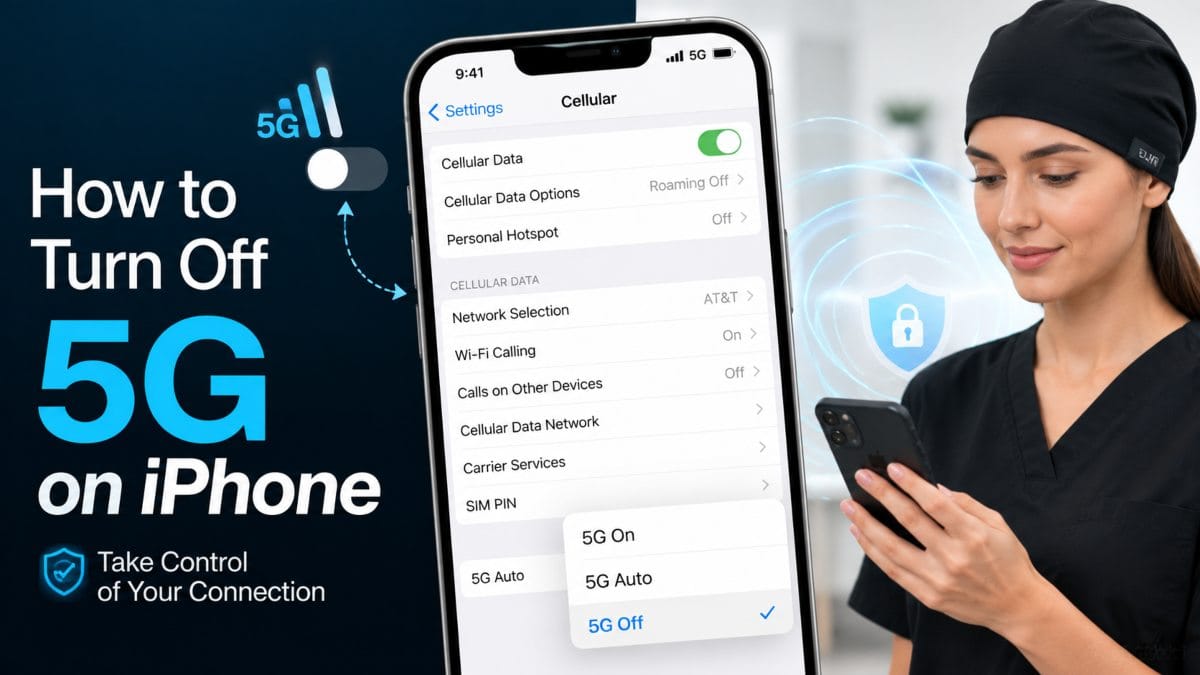
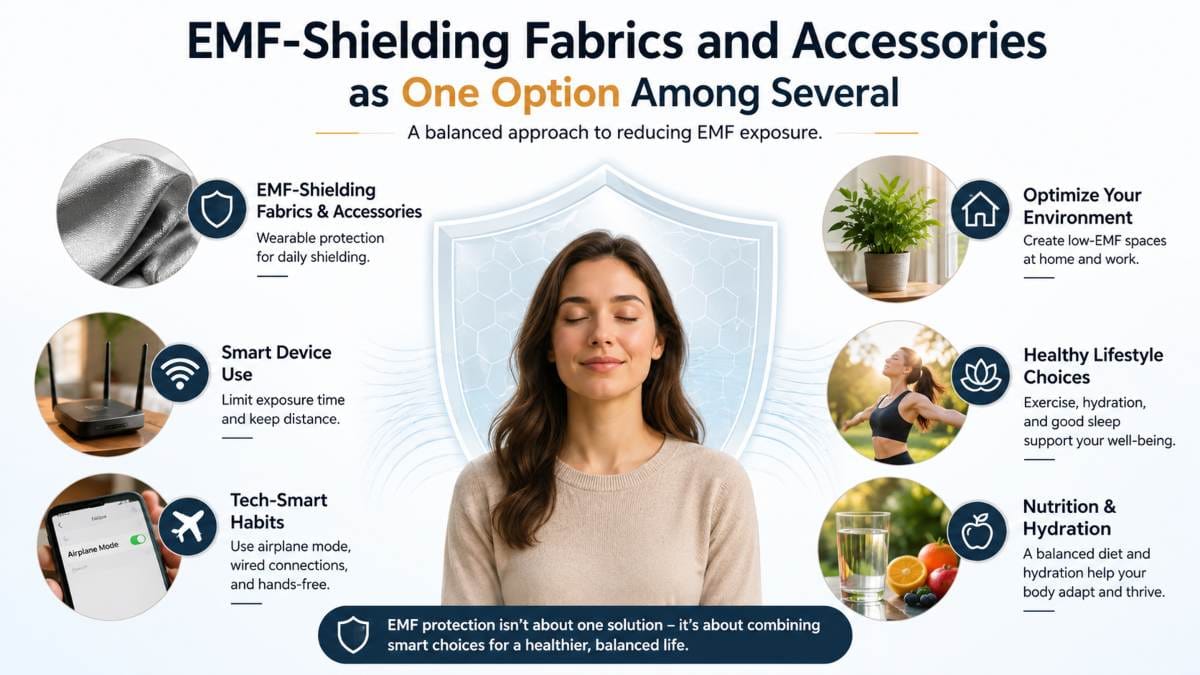
The simplest methods involve adjusting everyday habits around wireless devices. This includes keeping phones and laptops at a greater physical distance during use, since RF exposure decreases sharply as distance from source increases, switching devices to airplane mode when they’re not actively needed, turning off 5G on a phone when it isn’t needed, and using wired connections in place of WiFi where practical the same logic applies to reducing EMF exposure from a laptop during long work sessions.
Some people also set routers on timers so they power down overnight, or move baby monitors and other wireless devices a bit farther from where they sleep. None of these steps require special equipment, and they reflect the same distance-and-duration logic that regulatory exposure guidelines themselves are built around.
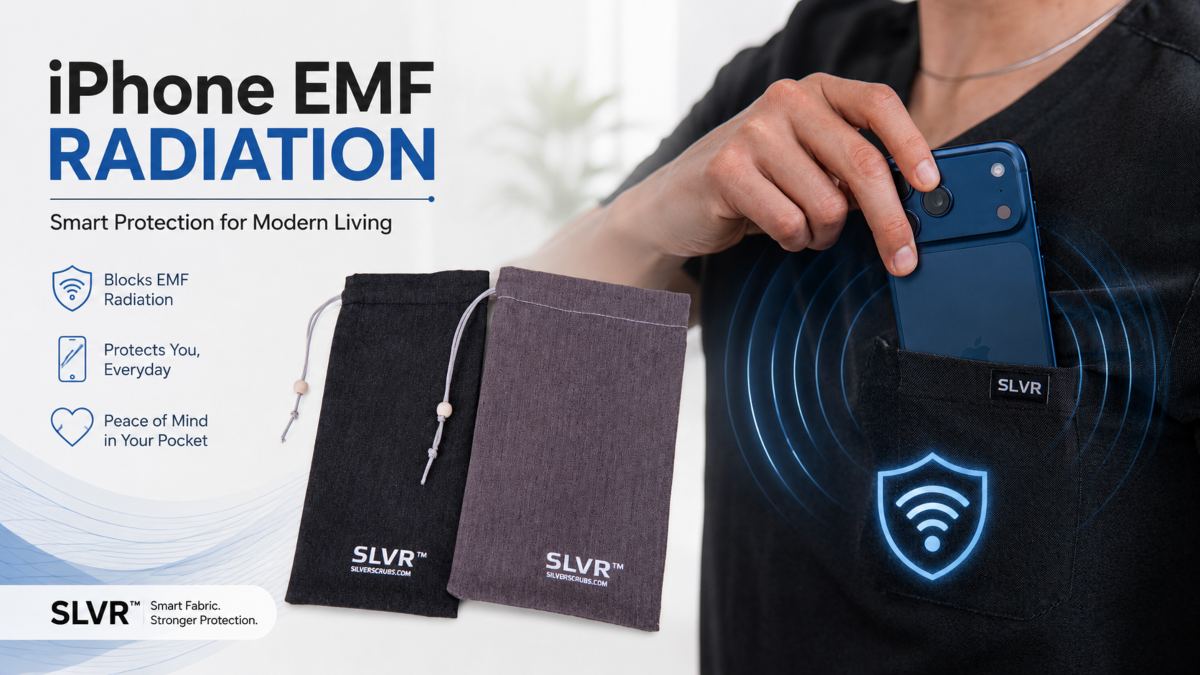
For those who want an additional layer beyond habit adjustments, EMF-shielding fabrics and accessories belly bands, blocking blankets, and similar wearable items, along with a Faraday phone pouch are options some people add to their routines. These products are built with conductive materials, most commonly silver fiber woven into the fabric, that are designed to shield against wireless EMF frequencies. They’re not a replacement for the habit-based approaches above, and they’re not positioned as a medical intervention; they function as a physical barrier a person can choose to use if they want additional exposure reduction beyond what device habits alone provide. The next section looks at how these products work and what to look for in one.
 RF Shielding Products: Belly Bands and Blankets
EMF-shielding belly bands and blankets are wearable, functional textile products made with conductive fiber to shield against wireless EMF frequencies, and the two are engineered differently depending on how and where they’re worn. A belly band works as a targeted layer, while a blanket is built for broader, everyday use the construction of each reflects that difference. Both fall under what’s more generally known as Faraday fabric, a category of textiles engineered specifically for signal shielding.
Belly bands are made with a silver-fiber shielding fabric, where the silver fiber is woven directly into the textile rather than applied as a coating or spray. This is what allows the fabric to block and shield against wireless EMF frequencies, including signals from WiFi, cellular networks, and Bluetooth devices. Because the band wraps directly around the body, the fiber is worked consistently throughout the fabric, providing the shielding layer with even coverage across the area it’s designed to protect.
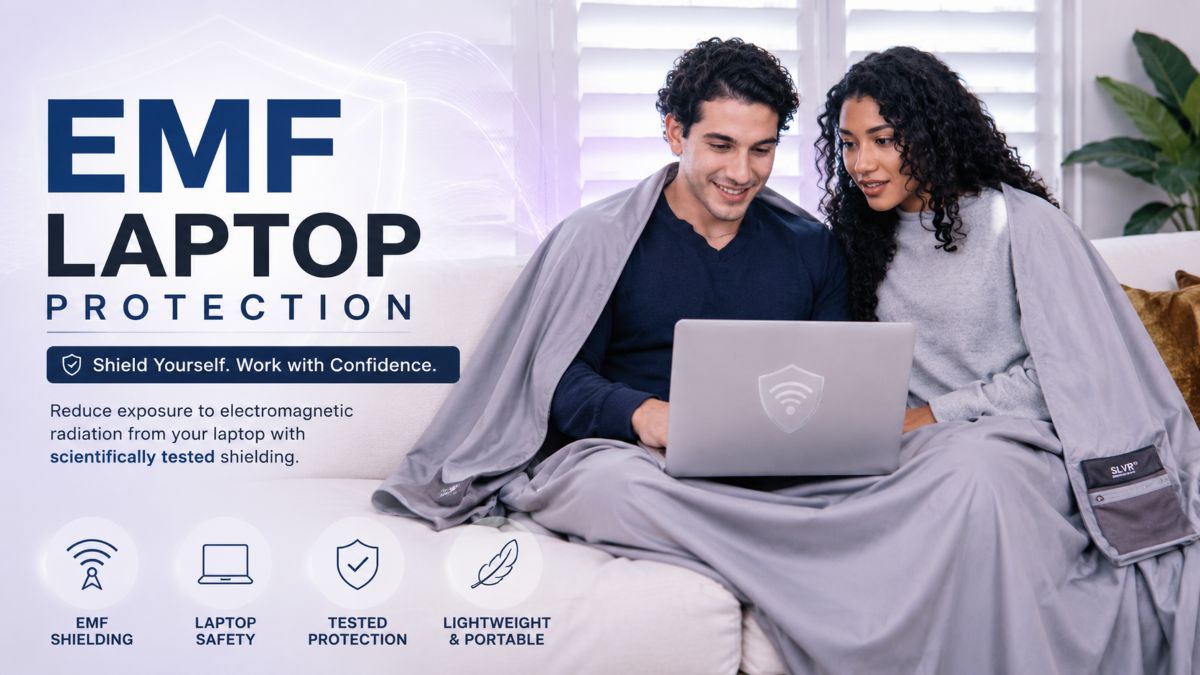
Blankets take a different construction approach. Rather than a single layer of silver-infused fabric, SLVR Wear blankets available as a signal shielding baby blanket, a large blanket, or an extra-large blanket use a three-layer design: soft, durable cotton on the outer layers, with the shielding technology concentrated in the center layer, where the center layer features a 50% silver-infused fabric blend.
This layered construction is intentional it keeps the outer-facing fabric soft against the skin while concentrating the conductive material where it does the shielding work. Because the silver is concentrated in that center layer rather than spread evenly across the entire blanket, a single overall percentage for the whole product isn’t a meaningful way to describe it; the 50% figure applies specifically to that center layer.
The same shielding fabric also appears in other formats, including a signal shielding beanie and shielding hat, for those who want coverage in a different form factor. Both products are woven, not coated, and both are built around the same underlying principle: silver fiber is highly conductive, and that conductivity is what enables the fabric to shield against electromagnetic frequencies.
EMF-shielding fabric works by weaving a conductive material, most commonly silver fiber, directly into the textile, so the fabric itself can interact with electromagnetic waves rather than simply block them physically, as a solid barrier would. The effectiveness of that shielding comes down to two things: the conductive properties of the material used, and how thoroughly it’s verified by independent testing. For a closer look at what qualifies as EMF blocking material in the first place, see our dedicated breakdown.
Silver is one of the most electrically conductive materials available, a property that makes it useful for EMF shielding. When silver fiber is woven thread-by-thread into a textile, rather than applied as a surface coating, it creates a conductive network across the fabric that can interact with and attenuate electromagnetic frequencies passing through it, including signals in the WiFi, cellular, and Bluetooth ranges. This is a physics-based function, not a biological one the fabric works because of how conductive fiber behaves in an electromagnetic field, not because of any interaction with the wearer’s body.
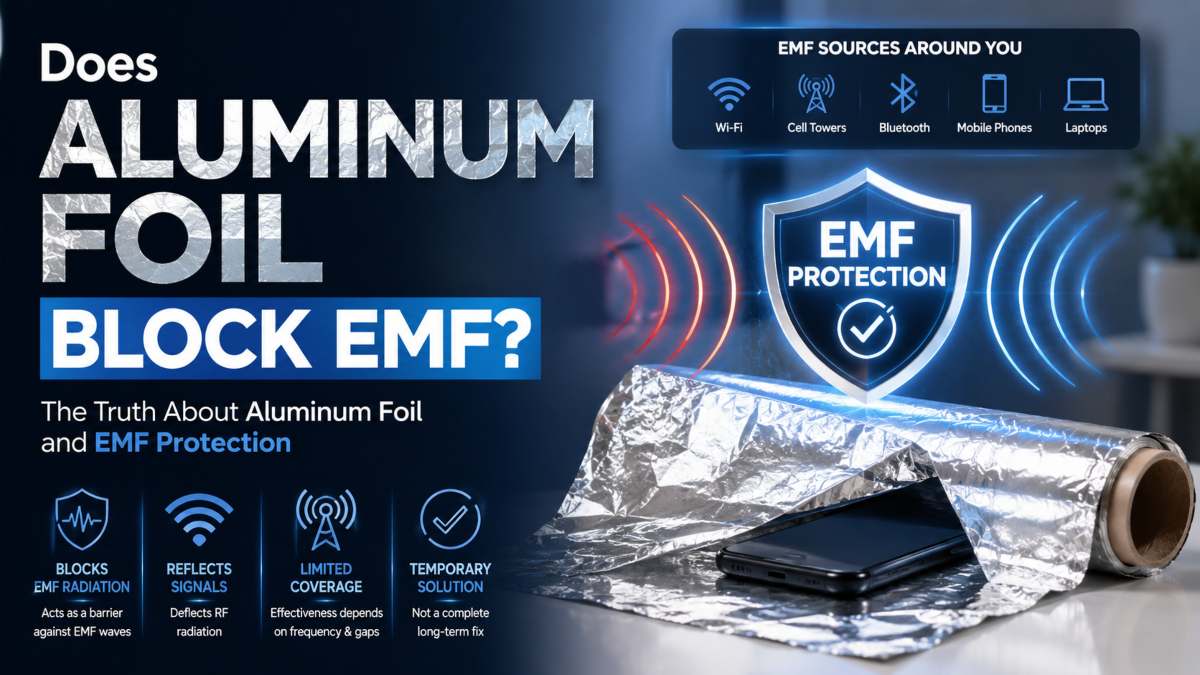
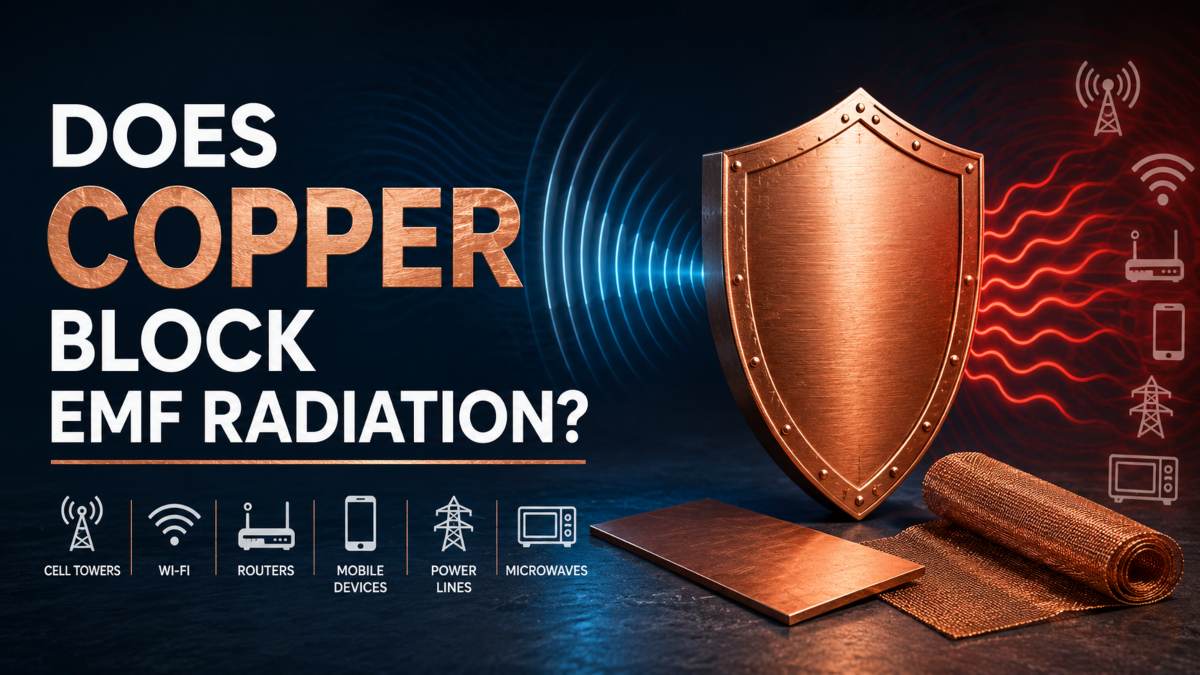
It’s the same underlying principle used in shielding applications outside of apparel, from electronics manufacturing to specialized industrial fabrics, wherever conductive fiber is used to manage electromagnetic interference. Silver isn’t the only conductive option either materials like copper and even household aluminum foil share similar shielding properties, though they differ in flexibility, durability, and practicality for wearable fabric.
Because shielding claims are easy to make and hard to verify by eye, independent lab certification is what separates a tested product from an unverified one. OEKO-TEX® Standard 100 certification confirms that the silver yarn used in a fabric has been tested for harmful substances, which speaks to material safety rather than shielding performance specifically. Shielding effectiveness itself is a separate measurement, and one benchmark used for it is GJB 5792A-2021, a military-grade standard for electromagnetic shielding materials.
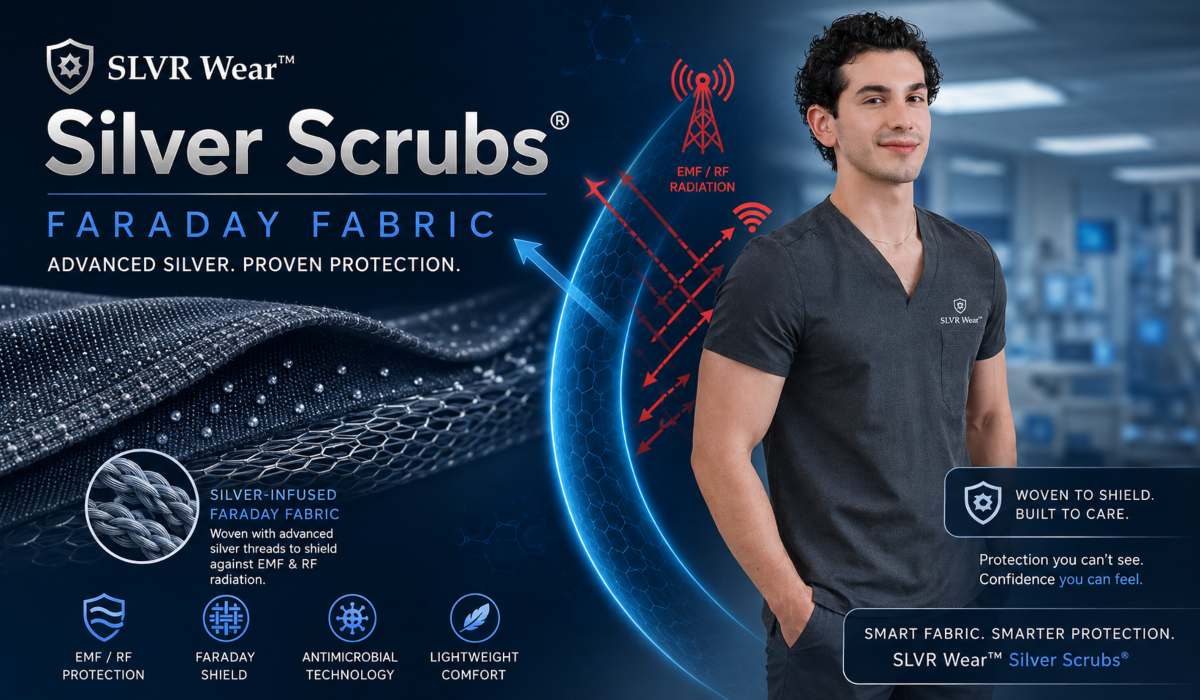
Testing against a standard like this gives a fabric’s shielding performance a documented, third-party reference point rather than relying on manufacturer claims alone this is the same lab-testing standard behind SLVR Wear’s signal-shielding medical scrubs, which carry their own dedicated lab data. For product-specific performance data, always check whether a lab report is published and linked on the same page making the claim a shielding number without a visible source isn’t verifiable.
The biggest mistake people make when choosing EMF-shielding clothing is assuming that the label “EMF-blocking” guarantees performance, when in reality, shielding effectiveness varies significantly between products and is only meaningful when backed by testing. Knowing what to check for makes the difference between a product that’s verified and one that’s simply marketed well.
Assuming all “EMF-blocking” products are lab-tested. Not every product marketed as EMF-blocking has been independently verified, and the term itself carries no built-in testing requirement. A product can be woven with conductive fiber and still have no published data on how much shielding it actually provides, at what frequencies, or under what conditions. Before trusting a shielding claim, check whether the brand publishes a lab report and links it on the same page as the claim if that documentation isn’t visible, the claim isn’t verifiable.
Confusing shielding claims with health claims. EMF-shielding fabric is designed to block or reduce exposure to wireless electromagnetic frequencies that’s a physical, measurable function. It is not designed to treat, prevent, or improve any health condition, and any product that implies otherwise is making a claim the fabric itself can’t support. A well-made shielding product will describe what it does in terms of the frequencies it blocks or its shielding performance, not in terms of symptoms relieved or health outcomes improved.
Overlooking material composition. Silver percentage and fiber type directly affect how a fabric performs, but composition isn’t always presented the same way across products, and it isn’t always comparable. A single-layer garment with silver fiber distributed throughout like SLVR Wear’s men’s and women signal shielding scrubs behaves differently from a multi-layer product in which the conductive material is concentrated in one internal layer, such as a blanket. In the latter case, an overall percentage for the whole item doesn’t accurately describe where the shielding technology actually sits. Reading the construction details, not just a headline percentage, is what tells you what you’re actually buying.
Whether or not you choose to actively reduce EMF exposure during pregnancy comes down to personal preference rather than medical necessity, since current research hasn’t established harm at everyday exposure levels below regulatory limits. If you’d rather take extra precautions anyway, simple habit changes more distance from devices, wired connections where practical, timers on routers cost nothing and address the same distance-and-duration factors the safety guidelines themselves are built around. EMF-shielding fabric, worn as a belly band or blanket, is one additional option for those who want a physical layer on top of those habits, not a substitute for them or a guarantee of any particular outcome.
Research reviews have found no substantiated evidence that maternal RF-EMF exposure below established public safety limits causes adverse pregnancy outcomes. At the same time, the WHO’s cancer research arm classifies RF-EMF as “possibly carcinogenic” (Group 2B), meaning the evidence is limited and considered still developing rather than settled.
Current regulatory limits, including the FCC’s SAR limit of 1.6 W/kg, apply to WiFi and other wireless devices and include a substantial safety margin. The FCC has maintained these standards through repeated reviews. No definitive evidence links typical WiFi exposure to pregnancy harm, though research is ongoing.
An EMF-blocking belly band is a wearable garment made with silver-fiber shielding fabric woven directly into the textile rather than coated on. The conductive silver fiber is designed to block and shield against wireless EMF signals, including WiFi, cellular, and Bluetooth.
Yes. Silver is one of the most electrically conductive materials available, and when woven into fabric, it creates a conductive network that can shield against electromagnetic frequencies. This is a physical, conductivity-based function not related to silver’s separate, unrelated antimicrobial properties.
Yes, EMF-shielding clothing is designed for regular wear, similar to standard apparel. It’s typically machine washable, breathable, and built for daily use. As with any wearable product, checking the specific care instructions and material composition for a given item is recommended.