iPhone EMF Radiation Explained | SAR by Model and Guide
Every iPhone emits EMF radiation in the form of radiofrequency (RF) signals from its Wi-Fi, cellular, and Bluetooth antennas, and…
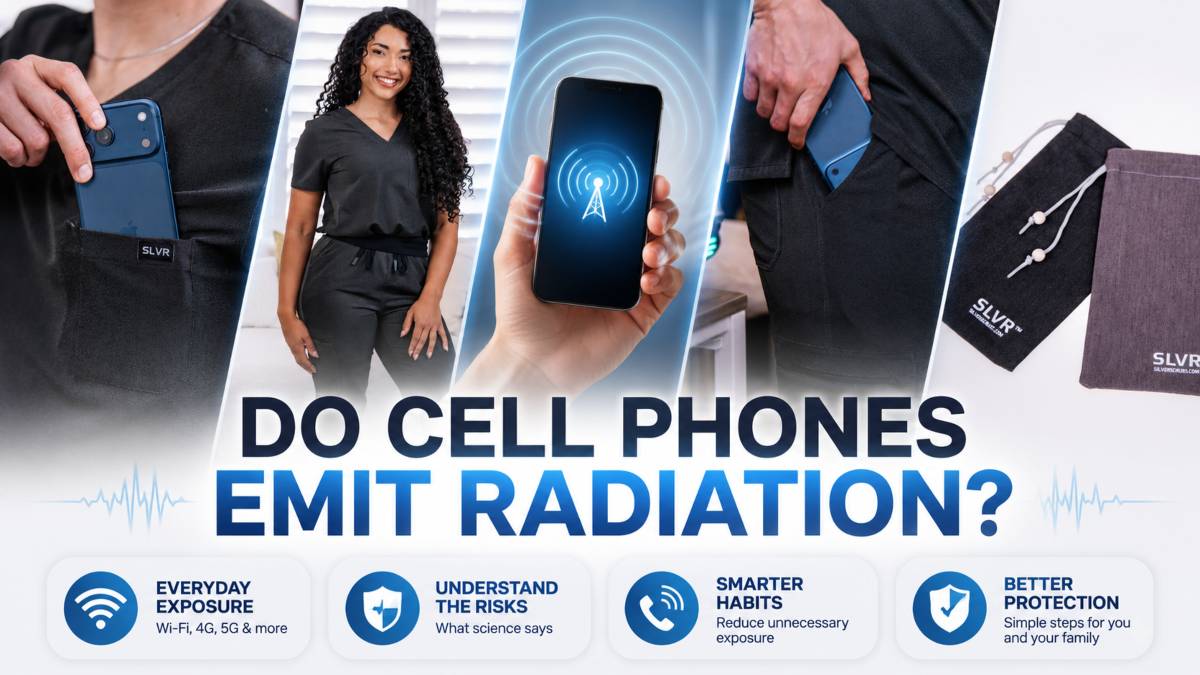
Yes, cell phones emit radiation in the form of radiofrequency (RF) energy a type of non-ionizing electromagnetic radiation used to send and receive signals from cell towers and Wi-Fi networks. This isn’t the same kind of radiation associated with X-rays or nuclear material; it’s a lower-energy form that phones have used since the earliest mobile networks were built.
Every call, text, and data request your phone sends relies on this RF signal, which is why the device needs to communicate wirelessly in the first place. The U.S. Federal Communications Commission (FCC) requires every phone sold in the country to meet a maximum Specific Absorption Rate (SAR) limit of 1.6 watts per kilogram, a standard designed to cap how much RF energy a device can emit near the body during normal use. For more on how these thresholds are set, see our guide to safe EMF levels.
Understanding when, how much, and under what conditions your phone emits this signal whether it’s charging, powered off, or sitting in airplane mode helps separate the real science from the myths circulating online. That’s exactly what this guide covers, section by section. For a broader look at where RF and EMF exposure comes from beyond your phone, see our guide to sources of EMF radiation.
Yes, cell phones emit radiation specifically radiofrequency (RF) energy, a form of non-ionizing electromagnetic radiation that phones use to communicate with cell towers, Wi-Fi routers, and Bluetooth devices. This happens continuously to some degree whenever your phone is powered on and connected to a network, not just while you’re actively making a call. For a deeper dive specifically on this topic, see our full breakdown of EMF from phones.
RF radiation is fundamentally different from ionizing radiation like X-rays or gamma rays, which carry enough energy to damage DNA directly. Non-ionizing RF energy doesn’t carry that same level of energy, which is why it’s classified and regulated differently by health and safety agencies. In the U.S., every phone sold must stay under a Specific Absorption Rate (SAR) limit of 1.6 watts per kilogram, set by the FCC to keep RF exposure within an established safety threshold.
So the short answer is: yes, your phone emits radiation, it’s a normal part of how wireless devices function, and it’s regulated well below the exposure limits set by federal safety standards.
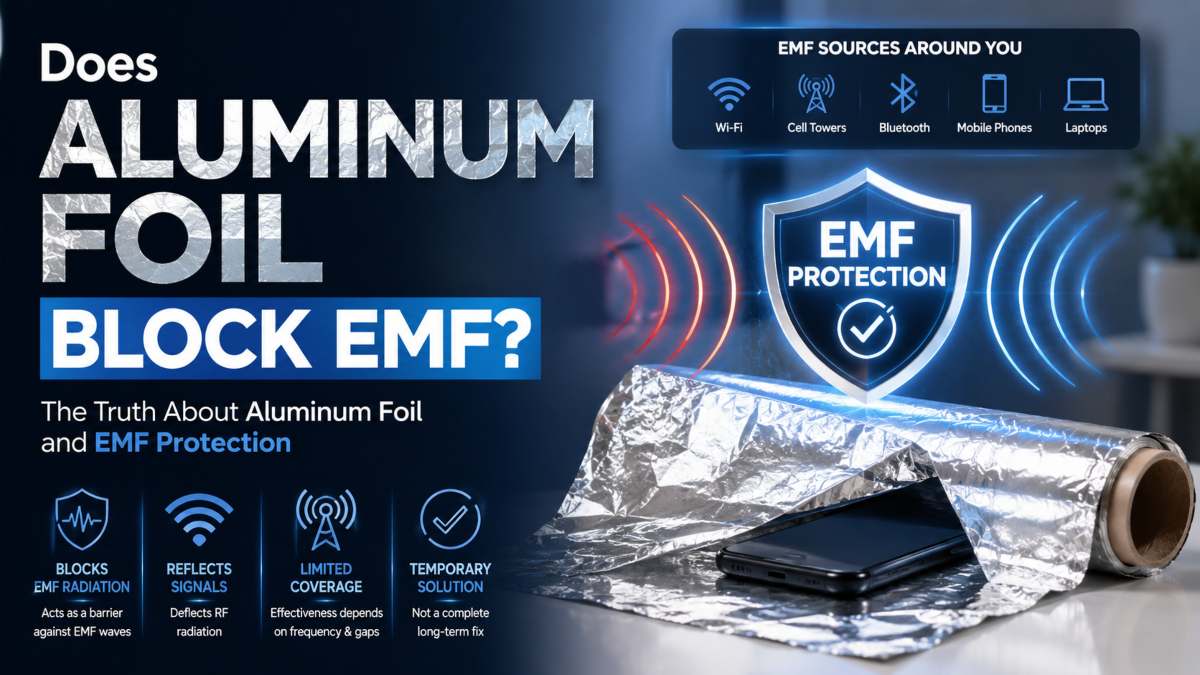
Phones emit radiofrequency (RF) radiation, a form of electromagnetic energy that sits on the lower-frequency end of the electromagnetic spectrum, far below visible light and X-rays. This is the same general category of energy used by radio broadcasts, Wi-Fi routers, and Bluetooth devices not the higher-energy radiation associated with medical imaging or nuclear sources. If you’re wondering more specifically what blocks EMF radiation, that guide breaks down the materials and methods that interrupt RF signals.
 Radiofrequency (RF) EMF Explained
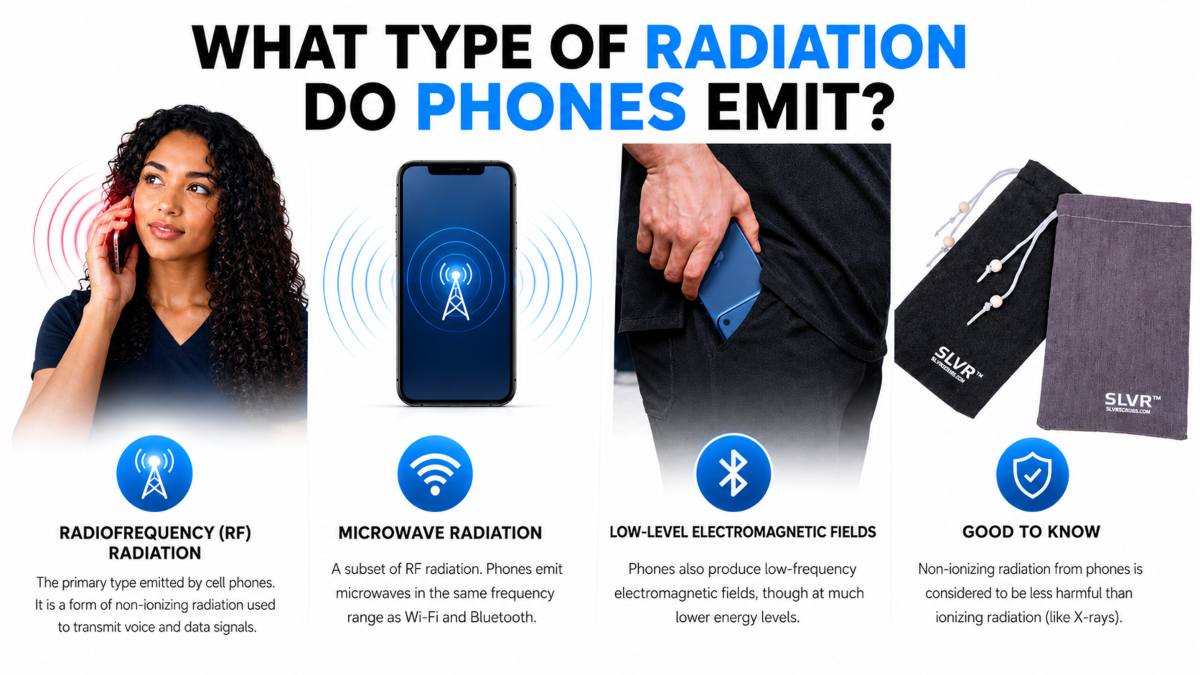
RF EMF is the specific type of radiation cell phones use to transmit voice, text, and data to nearby cell towers. It works by carrying information on radio waves, oscillating at frequencies typically between 700 MHz and several GHz depending on the network generation (4G, 5G, etc.) in use. The World Health Organization classifies RF EMF as a Group 2B agent, a category used for exposures considered “possibly carcinogenic,” a classification that also includes substances like pickled vegetables and aloe vera extract reflecting a low-certainty, precautionary designation rather than a confirmed causal link.
The key distinction in cell phone radiation comes down to energy level: ionizing radiation carries enough energy to strip electrons from atoms and damage DNA directly. In contrast, non-ionizing radiation the category phones fall into does not carry that level of energy. X-rays, gamma rays, and ultraviolet light are examples of ionizing radiation. Radio waves, microwaves, and the RF signals emitted by phones sit on the non-ionizing side of the spectrum, alongside visible light and infrared. This distinction is central to how regulatory agencies like the FCC set exposure limits, since non-ionizing and ionizing radiation are governed by different safety frameworks entirely.
The amount of radiation a phone emits is measured by its Specific Absorption Rate (SAR), which indicates how much RF energy the body absorbs during use. In the United States, the FCC caps this at 1.6 watts per kilogram of body tissue, and every phone sold legally in the country must be tested and certified to fall under that limit before it reaches the market. If you want to check your own exposure levels at home, our guide on how to measure EMF radiation at home walks through the process.
SAR is expressed in watts per kilogram (W/kg) and reflects the rate at which the body absorbs RF energy when a phone is held against the head or body during a call. Manufacturers are required to test each device model and publish its SAR value, which can typically be found in the phone’s settings, its user manual, or on the FCC’s public equipment database using the device’s FCC ID number. A lower SAR value means less RF energy is absorbed during typical use, though all certified phones regardless of their exact SAR number fall within the same federally regulated safety threshold.
RF exposure decreases sharply as distance from the phone increases, following the basic physics of how electromagnetic energy disperses over space. Holding a phone directly against the ear results in the highest exposure level, while using speakerphone, a wired headset, or simply increasing the distance between the device and the body reduces it substantially.
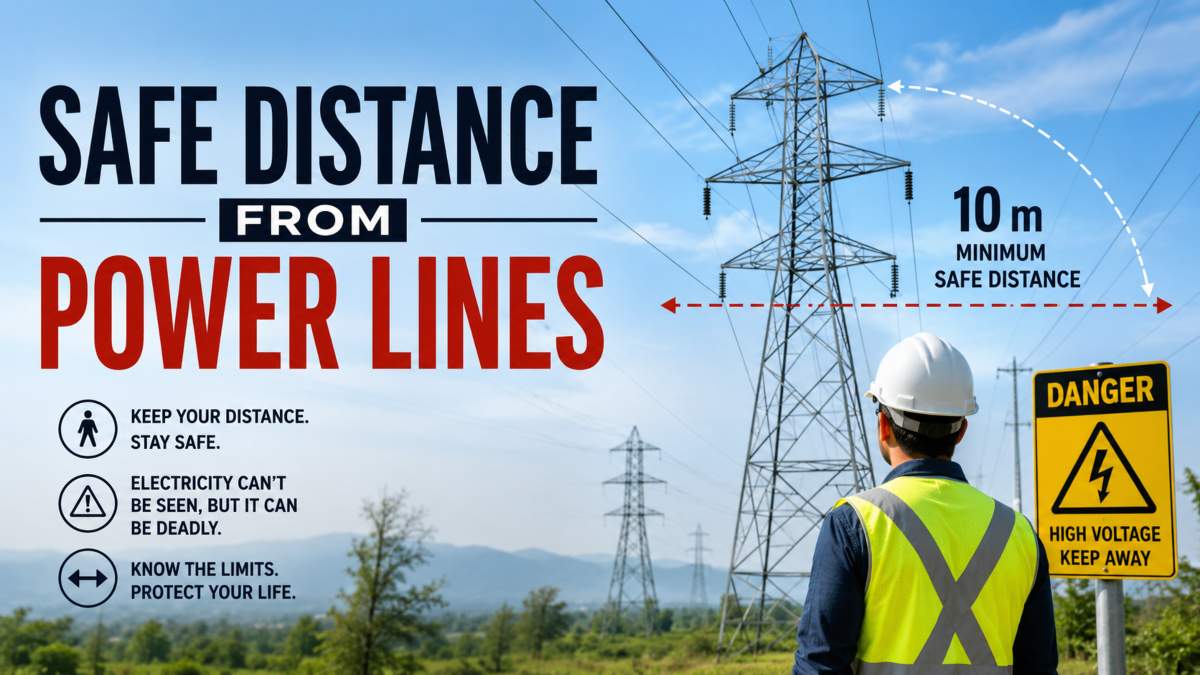
This is why exposure during a call is measurably different from exposure while a phone rests on a nearby table or in a bag proximity, not just usage, plays a direct role in how much RF energy actually reaches the body. This same distance principle applies outside the home too see our guide on keeping a safe distance from power lines for another common everyday exposure source.
No, a charging phone does not emit more RF radiation than usual charging affects the battery’s power intake, not the device’s wireless signal output. The idea that a phone becomes “dangerous” or emits spikes of radiation while plugged in is a persistent myth without support from how phones are actually engineered.
Charging is an electrical process that has nothing to do with a phone’s RF antenna system. While a phone charges, it draws electrical current from the wall adapter or USB source to replenish its battery, a process governed entirely by the device’s power management circuitry. The phone’s radio components, which handle RF transmission to cell towers and Wi-Fi, operate independently of the charging circuit and continue functioning at their normal, regulated output regardless of whether the device is plugged in.
The viral claim that charging phones emit dangerous radiation spikes has circulated online for years, often tied to old chain messages about phone explosions or “electrocution” risks stories that conflate rare battery malfunction incidents with normal RF emissions, two entirely unrelated issues. A phone’s SAR value, the standardized measurement of RF energy absorption set by the FCC, is tested and certified based on the device’s normal operating conditions and does not change based on charging status. In short: whether your phone is plugged in or running on battery, its RF output stays within the same federally regulated limit.
No, a phone that is completely powered off does not emit RF radiation, since its radio components require power to transmit or receive a signal. Once the device is off, there’s no active connection to a cell tower or network, which means no RF energy is being sent or received.
There’s an important distinction between a phone that’s fully powered off and one that’s simply in standby or idle mode with the screen locked. In standby mode, the phone remains connected to the cellular network so it can receive calls, texts, and notifications, which means it continues to emit and receive RF signals periodically even when it’s not actively in use. A fully powered-off device, by contrast, has no active connection at all its antenna is inactive, and no RF transmission occurs until the phone is turned back on.
A phone without a SIM card can still emit RF radiation if it’s powered on, since it can connect to Wi-Fi networks and attempt to communicate with nearby cell towers even without active cellular service. The SIM card identifies the device to a specific carrier network for calls and cellular data, but it isn’t required for the phone’s radio hardware to function or search for a signal. This means a SIM-less phone that’s turned on and has Wi-Fi or Bluetooth enabled is still emitting RF energy through those connections, even though it can’t make traditional cellular calls.
Airplane mode significantly reduces a phone’s RF radiation output by disabling its cellular, Wi-Fi, and Bluetooth radios, but it doesn’t always eliminate RF emissions. Whether the phone stops transmitting completely depends on which specific connections remain manually re-enabled after airplane mode is switched on. For a broader look at cutting off signal entirely, see how to block EMF.
Turning on airplane mode disables the phone’s cellular radio by default, cutting off its connection to nearby cell towers and stopping the continuous signal exchange used for calls, texts, and data. This is the primary source of RF emissions during normal use, so switching it off removes the bulk of the phone’s radio activity. Most phones also disable Wi-Fi and Bluetooth automatically when airplane mode is activated, though these can typically be turned back on independently while cellular service stays off.
If Wi-Fi or Bluetooth is manually re-enabled after airplane mode is turned on, as many phones allow for in-flight Wi-Fi or wireless headphones, the device will resume emitting RF signals through those specific connections. This means a phone in airplane mode with Wi-Fi switched back on is not fully RF-silent, even though its cellular radio remains off. For someone aiming to minimize RF emissions as much as possible, airplane mode with Wi-Fi and Bluetooth also disabled represents the lowest-emission state a phone can reach short of being fully powered off. A Faraday phone pouch is another option worth knowing about here, since it can fully contain a phone’s signal regardless of its settings more on that below.
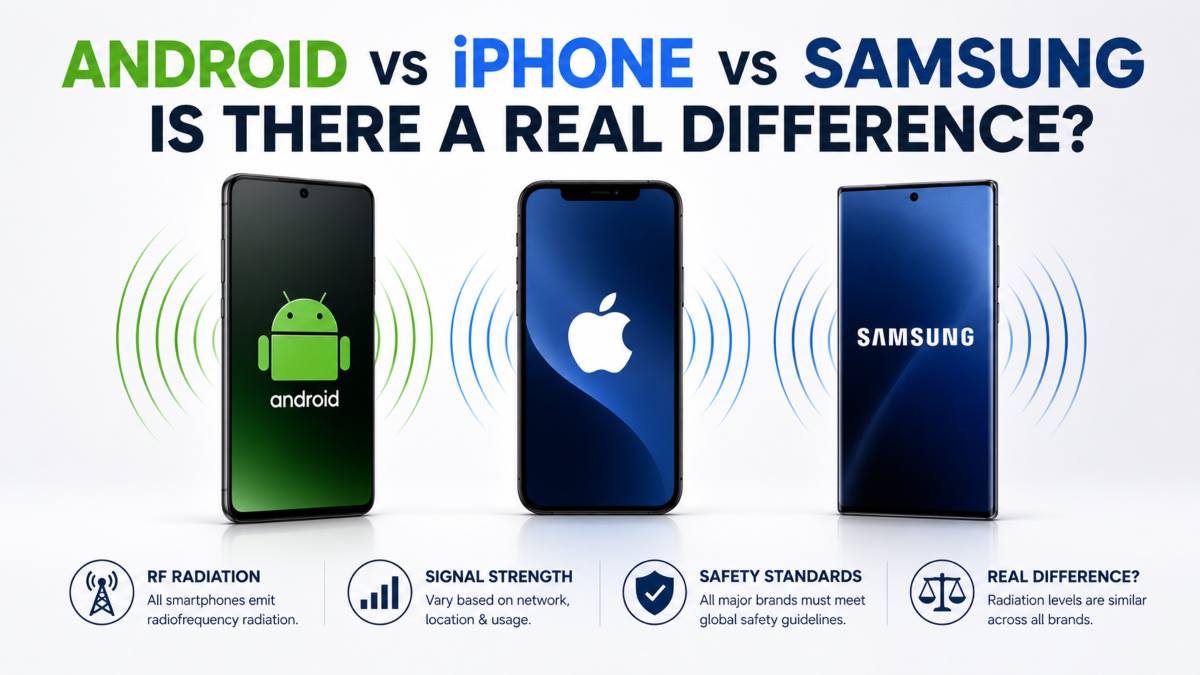
Every phone emits RF radiation within the same FCC-regulated safety limit. Still, individual SAR values vary by model based on antenna design, power output, and internal engineering meaning some phones do register measurably lower or higher SAR numbers than others. No major operating system or brand is inherently “safer,” since Android, iPhone, and Samsung devices are all held to the identical 1.6 W/kg SAR ceiling in the U.S.
SAR values differ from model to model rather than by operating system or brand as a whole, so an iPhone isn’t categorically higher or lower than an equivalent Android or Samsung device. Each phone model is tested separately by its manufacturer and assigned its own SAR rating, which is published and searchable through the FCC’s equipment authorization database using the device’s FCC ID. Anyone wanting to compare specific models should look up the exact SAR figures for those devices directly, since averages across an entire brand or OS aren’t meaningful the variation happens at the model level, not the platform level.
 Do 5G Phones Emit More Radiation?
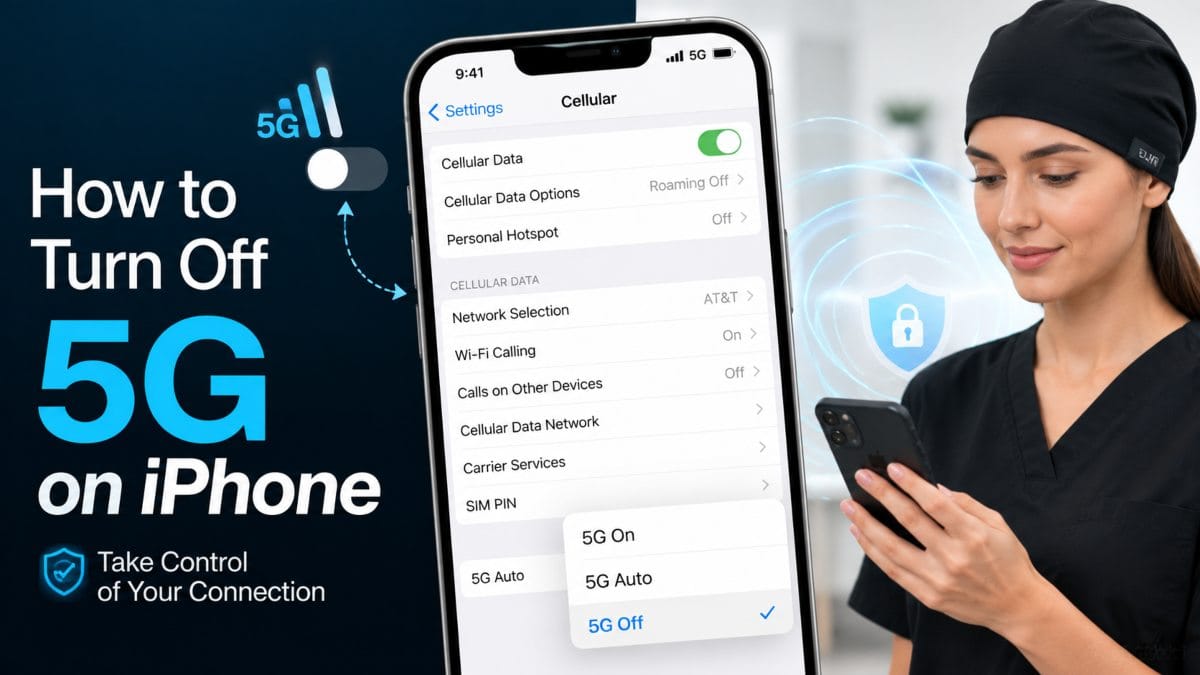
5G phones don’t inherently emit more radiation than 4G devices, though they do add additional radio bands to handle the newer network’s higher-frequency signals. Because 5G networks use a broader mix of frequencies, including higher-band “mmWave” spectrum in some regions, 5G-capable phones may transmit across more bands simultaneously. However, each is still bound by the same SAR limit as any other certified device. In practice, this means a 5G phone’s total RF output stays within the same regulatory ceiling as older models, even though its signal profile is technically more complex. For a closer look at this specific network generation, see our guide to 5G EMF radiation.
Flip phones and older devices are not automatically lower in RF emissions simply because they lack smartphone features; SAR depends on the specific radio hardware and antenna design of each model, not its age or form factor. Some older phones actually carry higher SAR values than modern smartphones, since antenna technology and power efficiency have generally improved over successive device generations. As with any phone, the only reliable way to compare a flip phone or older model to a current smartphone is to look up each device’s individually tested and published SAR rating.
Corded landlines emit essentially no RF radiation, while cordless phones and laptops do emit RF signals through their wireless components, though typically at lower power levels than cell phones. The amount of RF energy depends entirely on whether the device uses a wireless connection and how that connection is engineered.
A traditional corded landline phone transmits its signal through a physical wire, which means it emits virtually no RF radiation during use since there’s no wireless transmission involved. Cordless landline phones work differently: the base station and handset communicate wirelessly using RF signals, similar in principle to how a cell phone connects to a tower, though typically over a much shorter range and often at lower power. Because of this, someone specifically looking to minimize RF exposure from a home phone would find a corded landline emits the least, while a cordless model introduces RF signals comparable in category though not necessarily in strength to a mobile phone.
Laptops emit RF radiation primarily through their Wi-Fi and Bluetooth antennas, which operate on the same general non-ionizing frequency bands used by phones. However, laptops don’t connect directly to cellular towers the way phones do, so they lack the cellular-specific RF transmission that makes up a significant portion of a phone’s typical signal activity. In practice, a laptop’s RF output during Wi-Fi use is generally lower than a phone’s RF output during an active cellular call, largely because laptops aren’t required to maintain the same constant tower-signal search that phones perform to stay connected to a mobile network.
Yes, cell phone towers also emit RF radiation it’s how they communicate with every phone in range, sending and receiving the same type of non-ionizing signal your device uses. Towers operate at higher power than individual phones, but that power is spread across a wide coverage area and regulated separately under FCC guidelines for fixed transmission sites.
Tower radiation works differently from phone radiation in terms of exposure, since distance and structural factors play a much larger role in how much signal actually reaches ground level. For a full breakdown of how towers fit into the broader picture of everyday EMF exposure, see our complete guide to sources of EMF radiation.
Phones emit radiation because RF signals are the only practical way for a wireless device to send and receive information without a physical cable connecting it to a network. Every text, call, and data request has to travel through the air as a radio wave, which means RF emission isn’t a byproduct of phone design it’s the core mechanism that makes wireless communication possible at all.
A phone stays connected to a cellular network by continuously exchanging RF signals with the nearest cell tower. This process happens automatically in the background even when the device isn’t actively being used for a call. This ongoing exchange allows the tower to route incoming calls and messages to the correct device and lets the phone request data whenever an app needs to load information. The same basic principle applies to Wi-Fi and Bluetooth: each relies on RF signals traveling between the phone and a nearby router or paired device, just operating on different frequency bands and at different power levels than cellular communication.
For anyone interested in minimizing everyday RF exposure simply as a matter of personal preference, a few practical habits can meaningfully reduce how much signal reaches the body during normal phone use. These adjustments don’t change how a phone functions they simply create more distance or a physical barrier between the device and the user. For a more complete room-by-room approach, see our guide on how to reduce EMF in your home.
Increasing distance is the most effective single factor, since RF signal strength drops off sharply the farther a phone is from the body. Using speakerphone or a wired headset instead of holding the phone against the ear, keeping the device out of a pants pocket during calls, and avoiding sleeping with a phone directly under a pillow are all straightforward ways to add that distance without changing how the phone is used day to day.
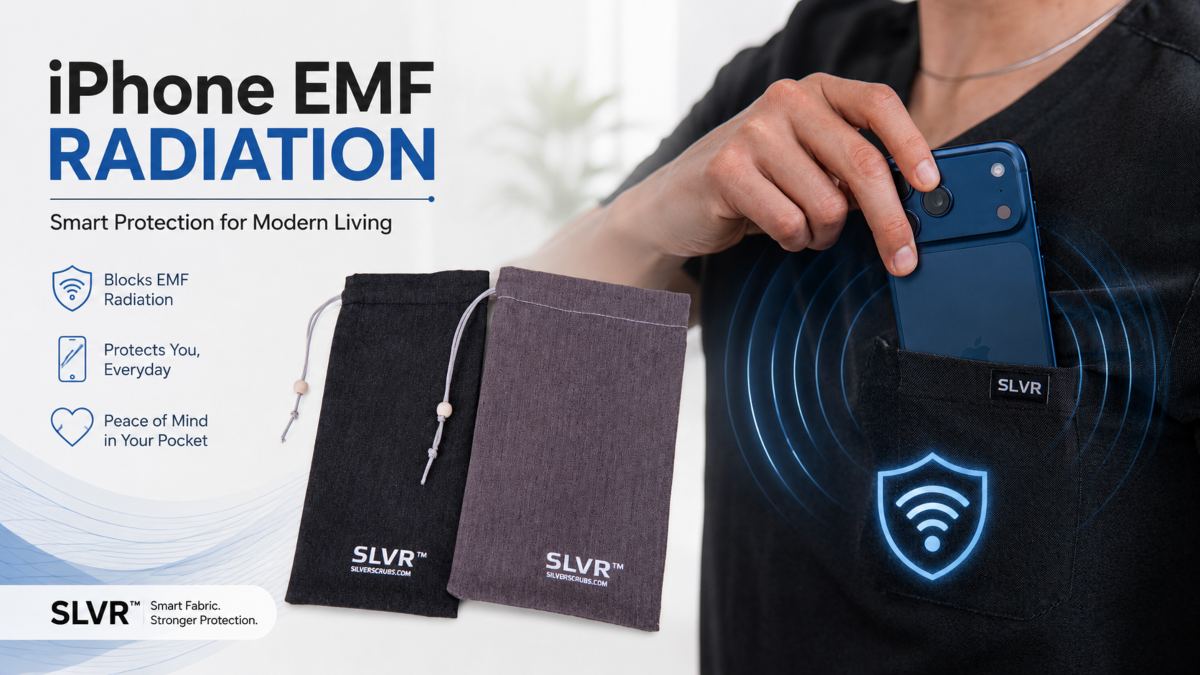
For those who want an additional layer of control, silver-fiber shielding fabric is designed to block wireless EMF and 5G radiation by creating a physical barrier around the device or the body. This type of EMF blocking material works on the same physical principle as a Faraday cage for more on that concept, see does a Faraday cage block EMF.
A Faraday phone pouch, for example, is a signal-blocking accessory that can fully contain a phone’s wireless signal when needed, offering a straightforward option for anyone looking to reduce RF exposure in specific moments such as during sleep or while carrying the device in a bag. If you’re wondering whether these accessories are worth it, see our breakdown of do EMF blockers work.
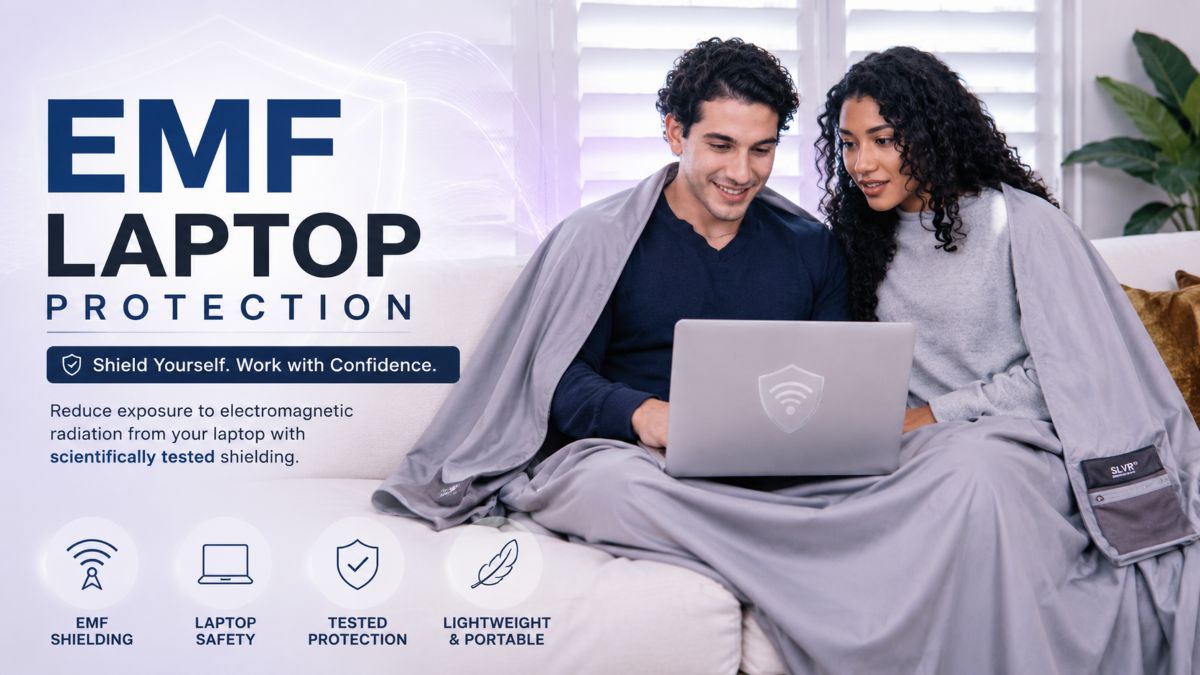
This same shielding approach extends beyond phone accessories. EMF protective clothing and EMF radiation protection clothing use the same silver-fiber shielding fabric woven directly into wearable pieces, including an EMF blocking beanie and EMF blocking hat for everyday wear, as well as an Signal Shielding baby blanket, EMF blocking large blanket, and EMF blocking X-Large blanket for use at home.
For those in medical or clinical settings looking to reduce RF exposure during long shifts, SilverScrubs® EMF blocking scrubs are built with the same shielding fabric. Options include a men’s Signal Shielding scrubs set, men’s scrub top only, men’s scrub pants only, a women’s Signal Shielding scrubs set, women’s scrub top only, and women’s scrub pants only, along with a coordinating black scrubs pants option. For anyone comparing fit and fabric feel across brands, our guides to the softest medical scrubs and the complete medical scrubs guide cover that in more depth.
Disclaimer: SLVR Wear ™ products are not medical devices and are not intended to diagnose, treat, cure, or prevent any disease.
Yes, a phone emits RF radiation when carried in a pocket, and this proximity means the body absorbs more of that signal than it would if the phone were kept at a greater distance. Since a phone in a pocket continues its normal background communication with the cell network, it emits RF energy the same way it would in a hand or bag the difference is simply how close it sits to the body during that process.
No, current evidence does not show 5G radiation to be more dangerous than 4G, since both operate within the same non-ionizing frequency range and are subject to the same FCC exposure limits. 5G networks do use some additional higher-frequency bands compared to 4G. However, non-ionizing radiation at these frequencies still lacks the energy needed to damage DNA directly, which is the property that makes ionizing radiation a distinct safety category altogether.
Standard phone cases, including most silicone, plastic, and leather cases, do not meaningfully block RF radiation, since these materials aren’t designed to interfere with wireless signals. Only cases or accessories built with specific shielding materials, such as silver-fiber fabric or conductive metal layers, are engineered to block or reduce RF transmission, and even then, effectiveness depends on the specific shielding material and how fully it encloses the device.
Cell phone radiation and microwave radiation both fall under the RF portion of the electromagnetic spectrum, but they operate at different frequencies and power levels. Microwave ovens use much higher power output concentrated at a specific frequency to heat food, while phones transmit at comparatively low power across a range of cellular frequencies.
Both are classified as non-ionizing radiation, but the vast difference in power output means a phone’s RF emissions and a microwave oven’s RF emissions aren’t functionally comparable in terms of intensity.