What Is RF Radiation? Frequency, Risks and Exposure
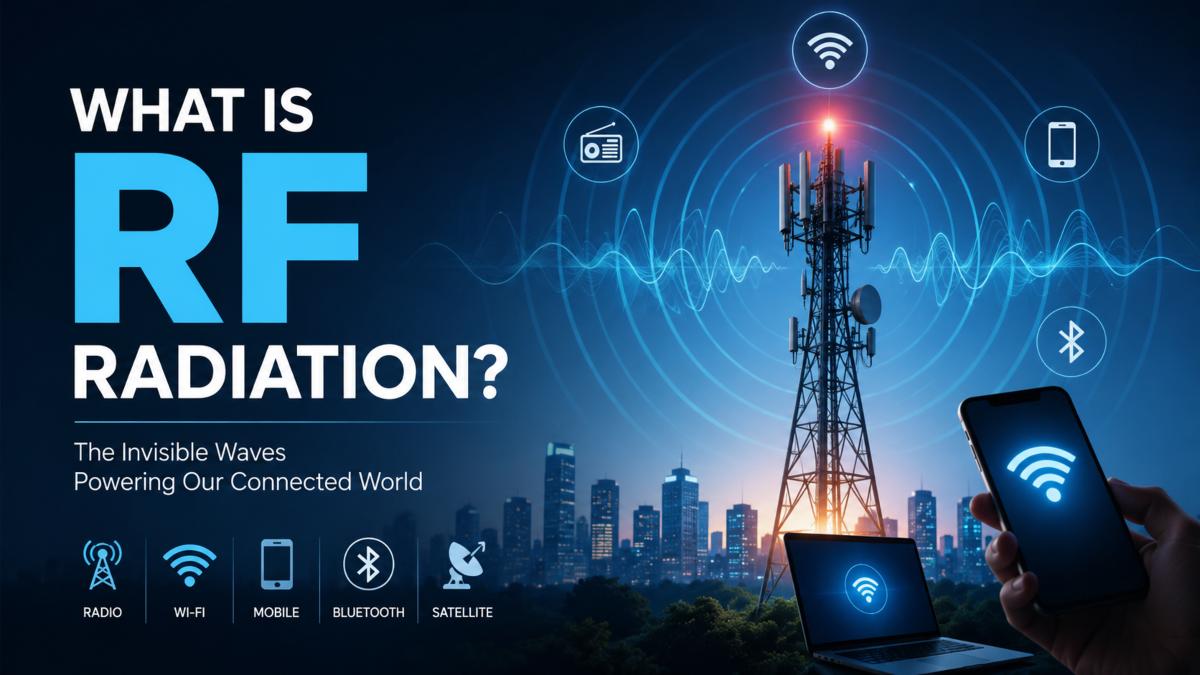
RF radiation is electromagnetic energy that travels in waves, spanning roughly 3 kilohertz to 300 gigahertz the band the FCC…
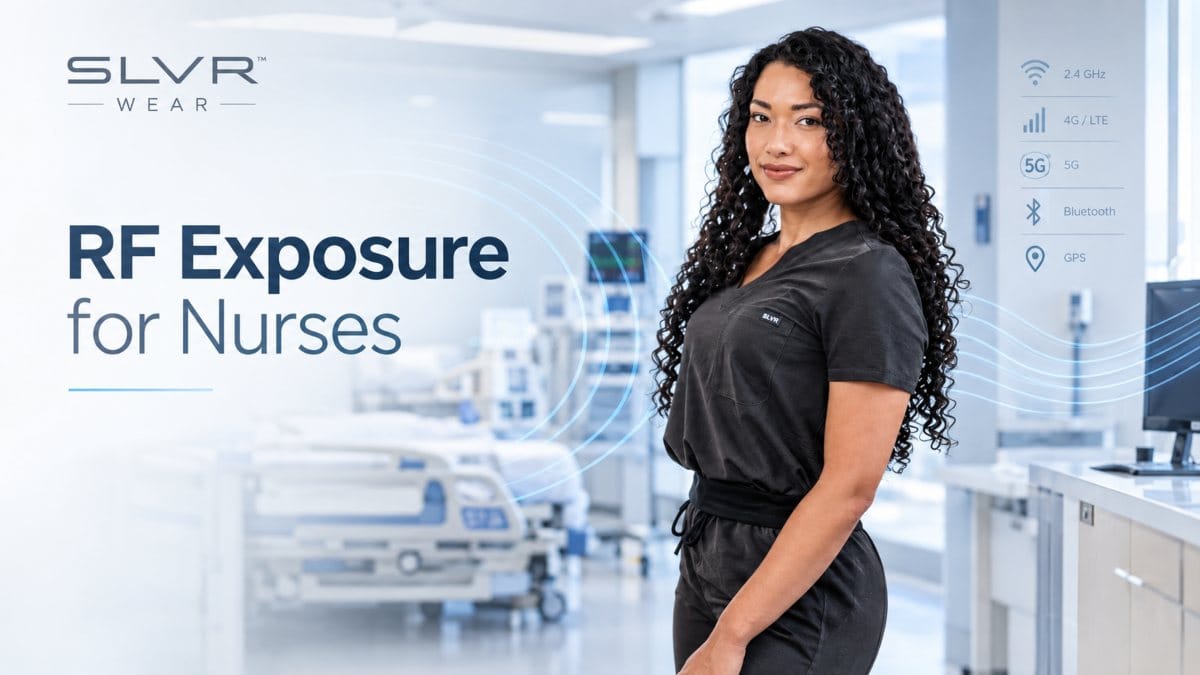
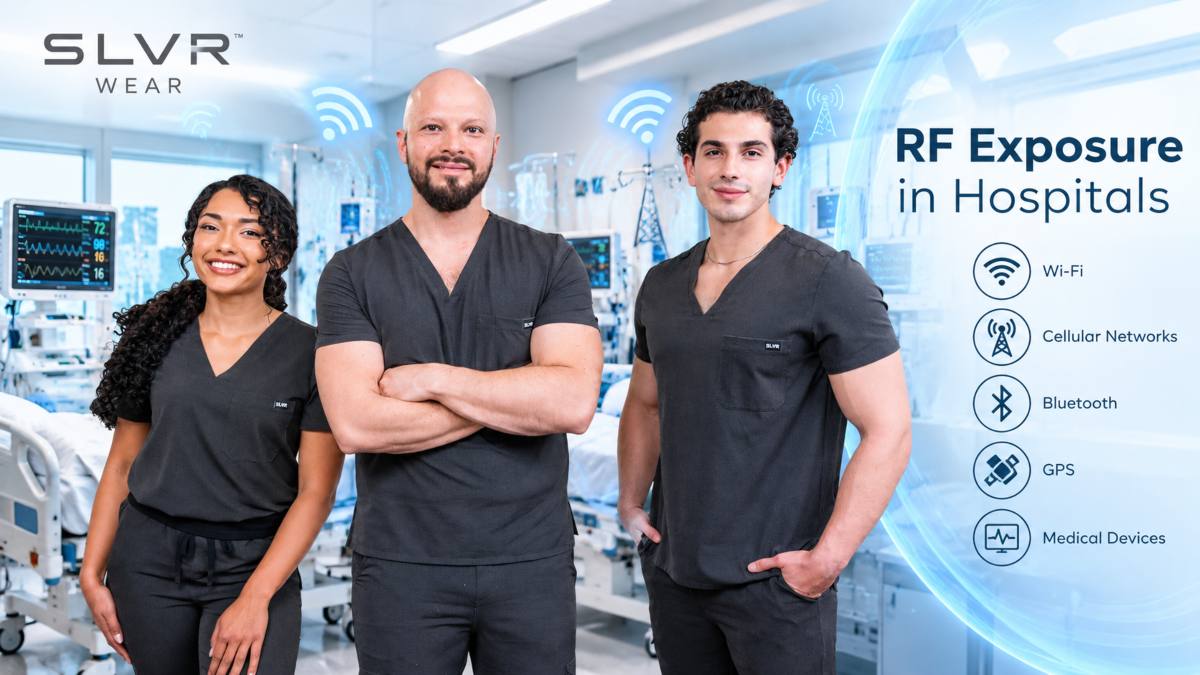
RF exposure for nurses comes from the wireless equipment that fills a modern hospital telemetry units, Wi-Fi-connected monitors, nurse call systems, and the personal devices staff carry through a twelve-hour shift. It’s a fair question, because nurses spend more consecutive hours in that wireless environment than almost anyone else in the building, including the patients passing through it.
Regulators actually treat occupational RF exposure differently than public exposure, setting workplace limits roughly five times higher than general-public limits because trained workers are expected to recognize RF radiation and manage their own exposure.
That gap is worth understanding before deciding whether and how to do anything about the RF you’re around at work. This guide narrows in on the nurse-specific side of a topic we cover more broadly in our look at RF exposure in hospitals where that exposure actually comes from, how it’s measured against those limits, and what practical options exist if you’d rather reduce it than accept it.
RF exposure for nurses comes from three overlapping layers: the medical equipment built into the unit, the network infrastructure running the building, and the personal devices staff carry. None of these sources are unique to healthcare they’re the same radio-frequency signals used in Wi-Fi, Bluetooth, and cellular networks everywhere but a hospital floor concentrates far more of them in a smaller space than most other workplaces. A modern U.S. hospital room typically runs 10 to 15 connected medical devices per bed, and a nurse moving between rooms during a shift passes through that density repeatedly, all shift long.
Telemetry monitors, infusion pumps, and vital-sign trackers transmit patient data wirelessly to a central station, meaning each one is a low-power RF source running continuously at the bedside. These devices operate on tightly regulated frequency bands reserved for medical telemetry, so they don’t interfere with or get interfered with by other hospital equipment. For a nurse, this is the most constant layer of RF exposure on the floor, since it’s present in nearly every patient room and runs for the full shift.
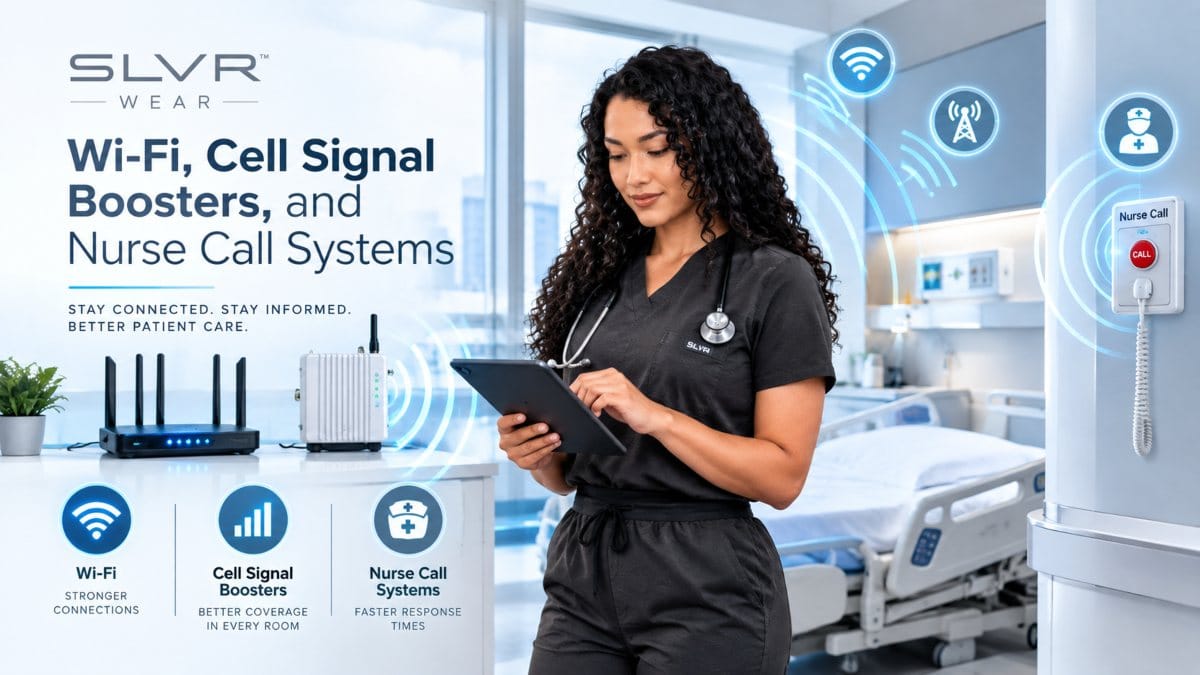
Layered on top of bedside equipment is the building’s own wireless backbone: Wi-Fi access points spaced throughout the unit, nurse call systems that page staff wirelessly, and in larger facilities in-building cell signal boosters that improve reception in areas thick concrete and equipment would otherwise block. Hospital Wi-Fi networks are often more tightly managed than a typical office’s, and it’s worth understanding why hospital Wi-Fi is restricted the way it is before assuming it works like a home network. Access points are usually mounted in hallways and nursing stations rather than patient rooms, so exposure here depends heavily on where a nurse spends most of her time between rooms.
 Personal Devices (Phones, Smartwatches) on Long Shifts
The RF source nurses have the most control over is the one closest to them: a phone in a scrub pocket, a smartwatch on the wrist, or a badge-based communication device worn all shift.
It’s a fair question whether phones actually emit meaningful RF radiation in daily use, and iPhone users specifically can check how iPhone RF radiation is measured and reported. Unlike fixed hospital equipment, these travel with the nurse for the full 12 hours, and because they’re worn against the body rather than mounted on a wall or bed rail, proximity not just signal strength is what makes this layer worth paying attention to.
Some nurses consider whether turning off 5G on an iPhone or switching to airplane mode between checks meaningfully lowers exposure during downtime, and the same proximity logic applies to a laptop used for charting at the nurses’ station, where laptop RF exposure follows a similar pattern.
No dedicated federal study measures RF exposure specifically for nurses on hospital floors, so the honest answer is that nurse-specific numbers don’t exist yet. What does exist is measurement data from comparably wireless-dense indoor environments schools and offices running the same Wi-Fi frequencies hospitals use and that data consistently shows RF levels well under the regulatory limit, not near it.
The FCC sets two tiers of RF limits: a stricter one for the general public and a looser one for trained occupational settings, with the occupational limit set roughly five times higher than the public limit, because continuous exposure below the general population limits isn’t considered hazardous.
Independent compliance measurements inside Wi-Fi-equipped buildings back up how much margin that leaves: a 2015 FCC compliance survey of two schools found indoor RF levels ranging from about 0.05% to 1.0% of the FCC’s general public limit meaning the strongest reading was still roughly 100 times below the threshold.
A separate Industry Canada study measuring directly next to active Wi-Fi access points found peak instantaneous exposure around 10% of the applicable limit at 20 centimeters, dropping to levels thousands of times below the limit at a normal working distance of a few meters. For context, this margin is much smaller than what most people think about with safe distance from power lines a hospital unit isn’t a school or office. Still, it runs the same class of wireless infrastructure, so these figures are a reasonable proxy until healthcare-specific measurements exist.
Even without a formula to calculate an individual nurse’s dose, two variables clearly move the number up or down: shift length and unit type. A twelve-hour shift in a telemetry-heavy unit like cardiac or ICU puts a nurse in closer, more constant proximity to bedside wireless monitors than a shift on a lower-acuity med-surg floor with fewer connected devices per room.
Time near a nurse’s station where Wi-Fi access points and signal boosters are usually concentrated adds another variable that a fixed, per-hour exposure number can’t capture. None of this changes the fact that measured levels in comparable environments run far under regulatory limits; it just means “how much” depends more on where you stand and for how long than on any single hospital-wide average.
No regulatory body currently requires or recommends RF protection for nurses because RF levels measured in hospital-type wireless environments fall well within established exposure limits. Which means “need” is really a personal-comfort question, not a compliance one. Whether an individual nurse chooses to reduce her exposure anyway comes down to preference, proximity to wireless equipment, and peace of mind, not a regulatory mandate.
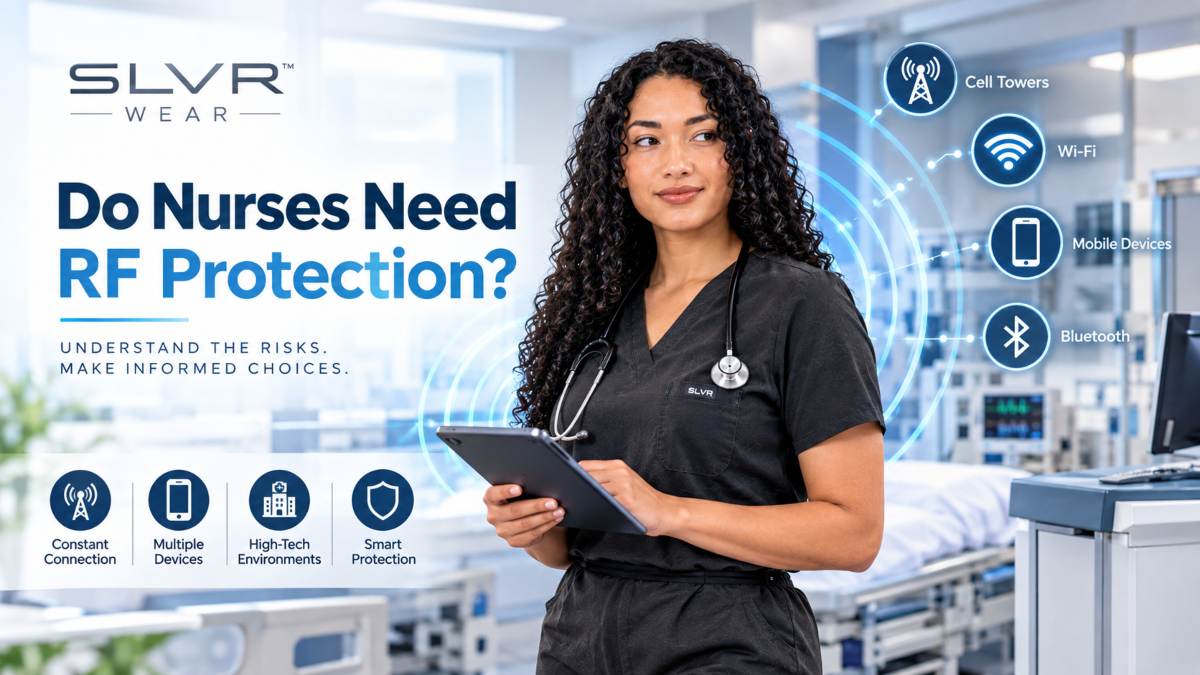 When It’s Worth Considering
RF protection tends to matter most to nurses who spend long stretches close to multiple active wireless sources at once a telemetry-dense unit, a nurses’ station packed with access points, or a personal phone carried against the body for a full twelve-hour shift. It’s also a common consideration for nurses navigating RF exposure during pregnancy, or for anyone who simply prefers to minimize their day-to-day RF exposure as a matter of personal choice.
The same instinct leads people to look into reducing RF exposure at home, just applied to a hospital shift instead. None of this reflects a documented workplace hazard; it reflects the fact that some people would rather reduce exposure where it’s easy to do so, even when levels are already within accepted limits.
The international body that sets the underlying RF safety guidelines, ICNIRP, builds a substantial safety margin into its limits reportedly a safety factor of roughly 50 for general public exposure and both ICNIRP and the World Health Organization have concluded that RF exposure below those guideline levels does not appear to carry any known health consequence. The FCC and OSHA echo that position in the occupational limits referenced earlier in this guide.
This consensus isn’t universal a small number of independent researchers have argued the guidelines don’t fully account for long-term or non-thermal effects but no major regulatory or public health agency has changed its guidance on that basis. For nurses weighing whether to consider RF blockers as a category, the practical takeaway is that regulators aren’t asking hospitals to add RF protection to the job; any decision to further reduce exposure is an individual one.
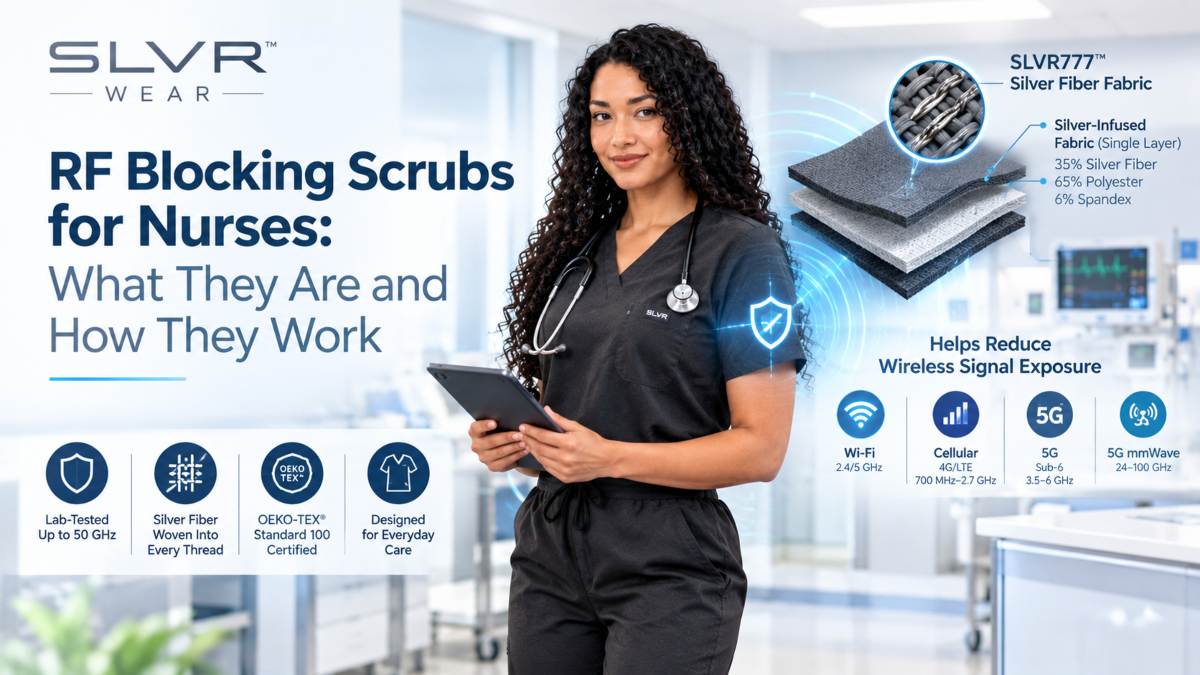
RF blocking scrubs for nurses are medical scrubs woven with conductive silver fiber, designed to reduce a wearer’s exposure to wireless RF and 5G signals during the shift they’re worn. They work on the same principle as Faraday fabric a conductive layer that reflects and disperses radio-frequency energy before it reaches the body built directly into the fabric a nurse is already required to wear, rather than added as a separate accessory.
 How Silver-Fiber Fabric Blocks RF Signals
The shielding effect comes from silver threads woven directly into the textile, not coated onto the surface afterward, so the fabric keeps its conductive properties wash after wash rather than losing them the first time it’s laundered. Silver isn’t the only material capable of this people often ask whether aluminum foil blocks RF or whether copper blocks RF but silver fiber woven into a wearable textile solves the durability problem those materials run into when worn as clothing. For a broader look at how different RF blocking materials compare, that’s covered separately. SilverScrubs use a 35% silver fiber blend (with polyester and spandex making up the rest for stretch and durability), and that layer does the shielding.
SilverScrubs are lab-tested to 50 GHz, with results showing up to 99.91% RF blockage at that frequency figures verified in the full lab report, not a manufacturer estimate. Testing to 50 GHz matters because it covers the frequency range used by Wi-Fi, Bluetooth, and current 5G networks the same sources covered earlier in this guide rather than an older, narrower band that wouldn’t reflect a modern hospital’s wireless environment. The fabric itself is also OEKO-TEX® Standard 100 certified, meaning the yarn has been independently tested free of harmful substances, and the current design is the result of roughly two years of fabric R&D rather than an off-the-shelf conductive textile.
SilverScrubs are built for nurses who’ve already decided they’d rather reduce their RF exposure than not the same personal-preference decision covered in the previous section and want that reduction built into a garment they’re wearing for work anyway, without changing their routine. As with any SLVR Wear product, SilverScrubs are not medical devices and are not intended to diagnose, treat, cure, or prevent any disease they’re a shielding fabric choice, not a clinical intervention.
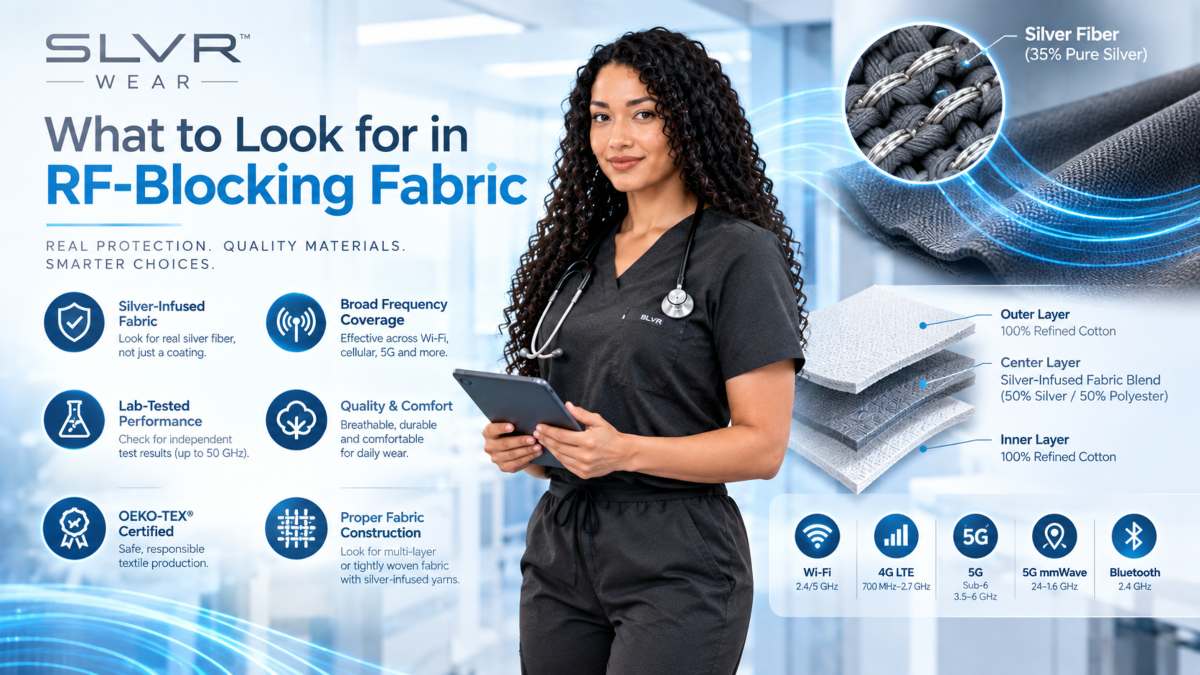
The best scrubs for RF exposure are built with conductive fiber woven into the fabric itself, tested across a frequency range that covers Wi-Fi and 5G, and durable enough to keep shielding after regular hospital laundering not scrubs with a coating or claim added after the fact. For nurses comparing scrub options more generally, it’s worth starting with a complete guide to medical scrubs before narrowing to shielding.
The single biggest differentiator is whether the conductive material is woven into the yarn or applied as a surface coating, because a coating sits on top of the fabric and wears off with washing. At the same time, woven fiber is structurally part of the textile and doesn’t degrade the same way.
Look for a stated fiber percentage rather than a vague “silver-infused” claim SilverScrubs, for example, use a 35% silver fiber blend. It’s also worth checking what frequency range a fabric was actually tested at: a fabric tested to 50 GHz is a meaningfully higher bar than one tested to a lower ceiling.
Certification matters too: OEKO-TEX® Standard 100 certification confirms the yarn has been independently tested free of harmful substances, which is a separate but important check when a fabric is worn against skin for twelve-hour shifts.
 Care and Durability Considerations
Because woven silver fiber is structural rather than surface-level, it’s built to withstand the same machine-washing routine as any other pair of scrubs. Fit and stretch matter just as much as the shielding claim a 4-way stretch blend that moves with a nurse through a full shift is what makes RF-blocking scrubs practical to wear daily. Color stability is worth checking too, since repeated hospital-grade washing is where lower-quality fabrics visibly break down first, long before any shielding property would.
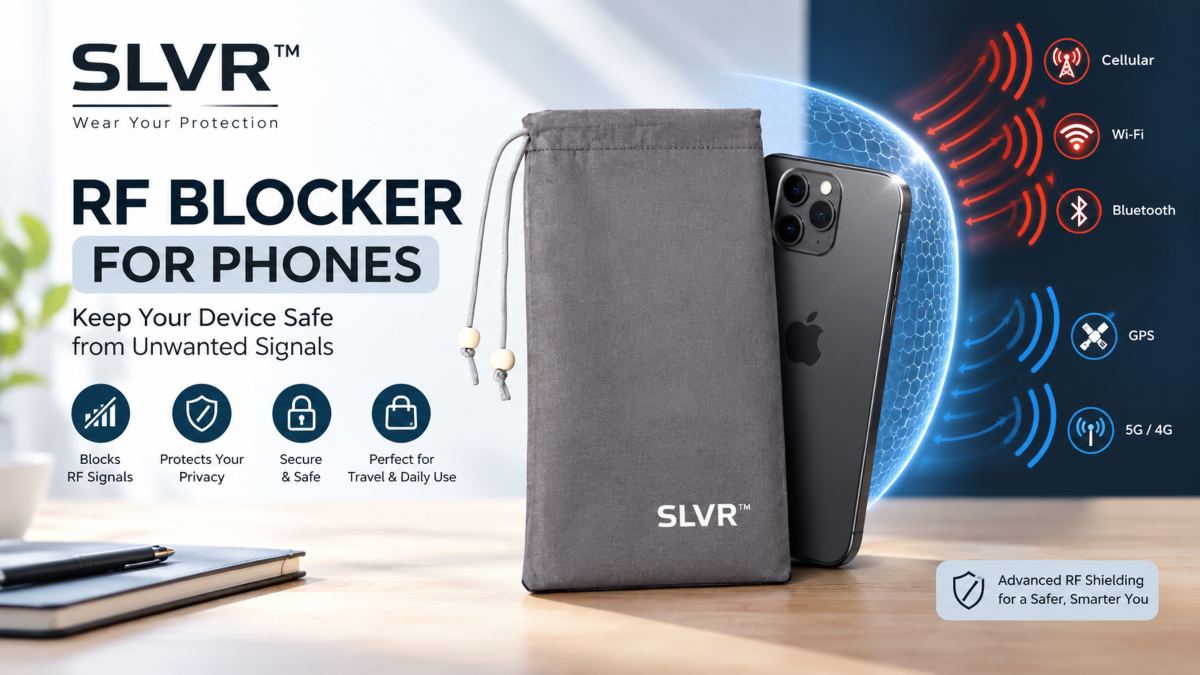
Scrubs cover a nurse’s shift, but the same shielding fabric is available across other everyday products for RF-conscious nurses. The Faraday phone pouch is a direct extension of the personal-device consideration covered earlier a way to shield a phone carried in a scrub pocket rather than just the fabric around it.
For nurses who bring devices home, the signal-shielding beanie and signal-shielding hat apply the same silver-fiber approach to everyday wear off-shift. Nurses who are also parents may be interested in the signal shielding baby blanket, while the large and X-large signal-shielding blankets extend the same fabric to home use at scale.
RF exposure for nurses is real, constant, and based on current regulatory limits and independent indoor measurements not something requiring protective equipment to stay safe on shift. The practical decision isn’t whether hospitals are compliant; it’s whether an individual nurse wants to reduce her own exposure further as a matter of personal preference, given how much time she spends near wireless equipment during a twelve-hour shift. For nurses who’d rather not leave that to chance, RF-blocking scrubs offer a passive way to build that reduction into a garment already required for work, without adding a step to the day..
Yes, Wi-Fi is one of the primary RF sources in any hospital, but “meaningful” is relative indoor Wi-Fi measurements in comparable wireless-dense buildings have shown levels around 0.05% to 1.0% of the FCC’s general public limit. It counts as a real, constant source of RF exposure; it doesn’t approach any current safety limit.
No, the same FCC, OSHA, and ICNIRP frequency and power limits apply regardless of building type. What differs in a hospital is device density, not the underlying rules.
RF-shielding fabric works passively, reflecting and dispersing signals rather than transmitting anything itself. That said, hospitals set their own equipment and uniform policies, so any nurse considering RF-blocking scrubs should first confirm there are no facility-specific restrictions.
RF exposure is typically measured as power density using a calibrated RF meter or spectrum analyzer. For devices used close to or against the body, like phones, exposure is measured instead as Specific Absorption Rate (SAR).