iPhone EMF Radiation Explained | SAR by Model and Guide
Every iPhone emits EMF radiation in the form of radiofrequency (RF) signals from its Wi-Fi, cellular, and Bluetooth antennas, and…
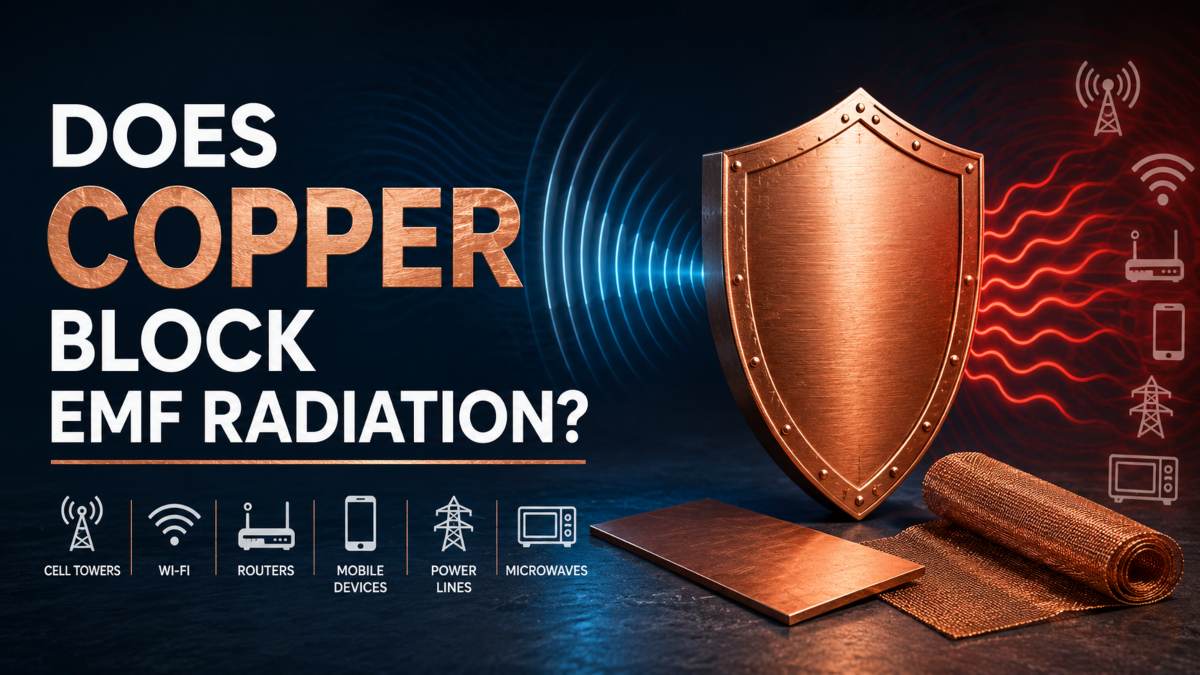
Yes, copper blocks electromagnetic fields, but how well depends on the type of field and frequency involved. Copper is one of the most conductive metals available, with an electrical conductivity of roughly 58 million siemens per meter, which is why it’s a standard material in RF shielding, EMF blocking material design, and Faraday cage construction. That same conductivity makes copper excellent at blocking high-frequency electric fields and radio waves, but far less effective at blocking low-frequency magnetic fields a distinction most copper shielding claims entirely skip.
This guide breaks down exactly Does Copper Block EMF, where it falls short, and how that translates into real-world shielding from foil and mesh to jewelry and wearable products.
Copper functions as an EMF shield by using its high electrical conductivity to intercept electromagnetic energy before it passes through. When an electromagnetic wave hits a conductive surface like copper, the free electrons in the metal respond to the field and generate an opposing current, which reflects and absorbs much of the incoming energy rather than letting it pass through. This is the same basic principle behind Faraday cages, RF-shielded enclosures, and Faraday fabric construction copper isn’t blocking EMF through some special property unique to the metal, it’s doing so because it conducts electricity extremely efficiently.
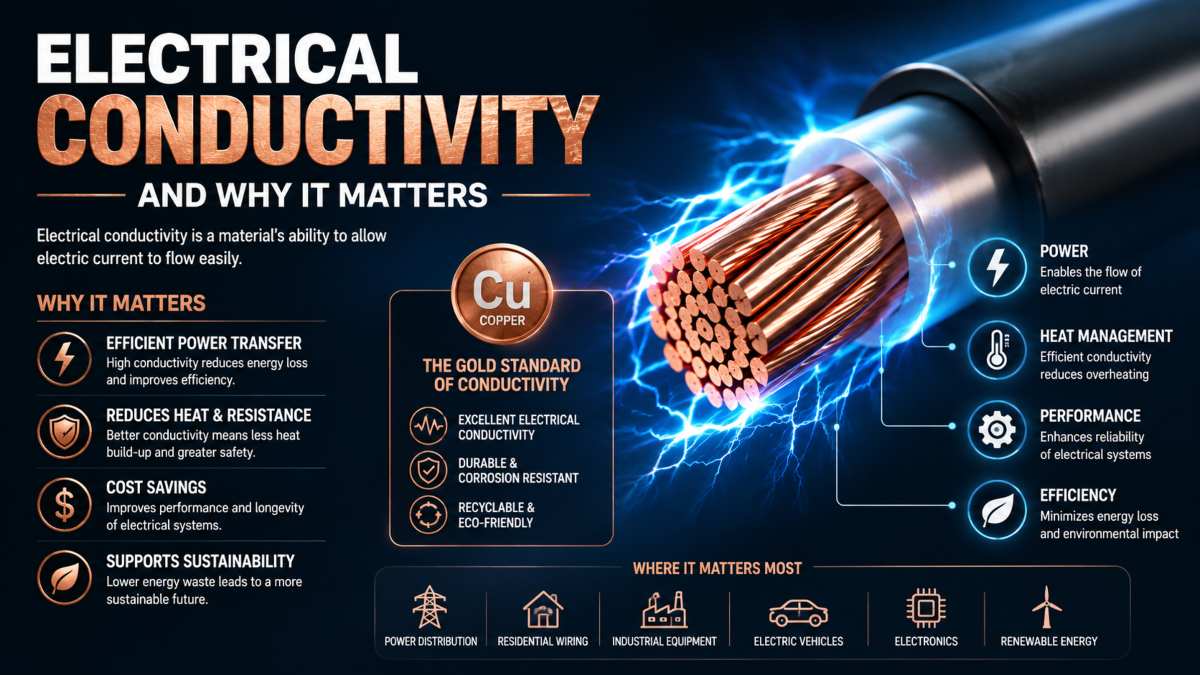
Conductivity is the single factor that determines how well a metal performs as an EMF shield, and copper ranks near the top of the list at approximately 58 million siemens per meter second only to silver among practical shielding materials. The higher a metal’s conductivity, the more effectively it can generate surface currents that reflect electromagnetic waves, which is why copper appears so consistently in shielding tape, RF gaskets, and grounded enclosures. This property is frequency-dependent, though: conductivity alone doesn’t guarantee full-spectrum shielding, since a material’s real-world performance also depends on thickness, continuity, and proper grounding.
 Copper vs Other Shielding Metals
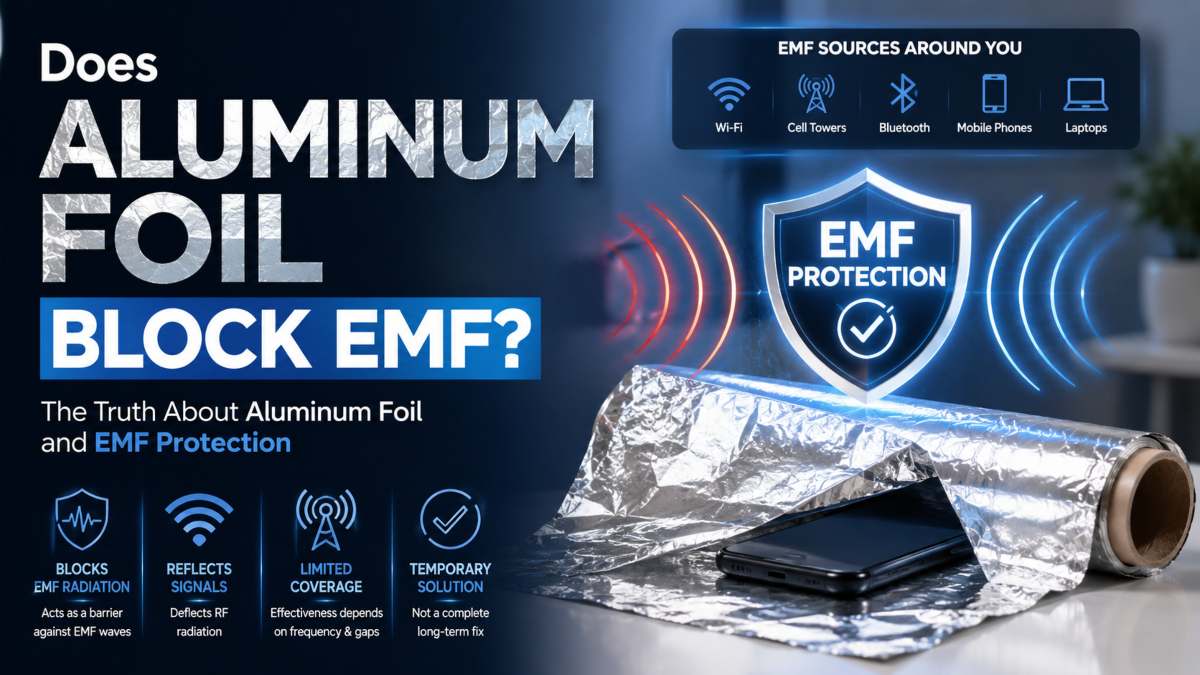
Copper sits in a specific performance tier among shielding metals, each suited to different parts of the electromagnetic spectrum. Silver has slightly higher conductivity than copper and performs marginally better at the same thickness, but at a significantly higher material cost, which is why copper remains the more practical choice for most shielding applications. Aluminum is lighter & cheaper than copper but less conductive see does aluminum foil block EMF for how it compares in practice while steel and mu-metal are chosen specifically for low-frequency magnetic shielding, a job copper is not well suited for on its own.
In practice, the “best” metal isn’t universal; it depends on which frequency range and which type of field (electric or magnetic) the application needs to address.
Copper blocks electric fields and high-frequency radiation very effectively, but it does poorly at blocking low-frequency magnetic fields. This split matters because “EMF” encompasses both types of fields, and a copper shield that performs well against one can perform poorly against the other which is the source of most confusion (and most overstated claims) around copper-shielding products.
Low-frequency magnetic fields the kind produced by power lines, household wiring, and appliance motors pass through copper with very little resistance because copper is not a magnetic material. Effective magnetic shielding relies on a material’s magnetic permeability, or its ability to redirect magnetic field lines through itself, and copper’s permeability is close to that of space. Materials such as mu-metal or grain-oriented steel, which have permeabilities thousands of times higher than copper, are used specifically for this reason.
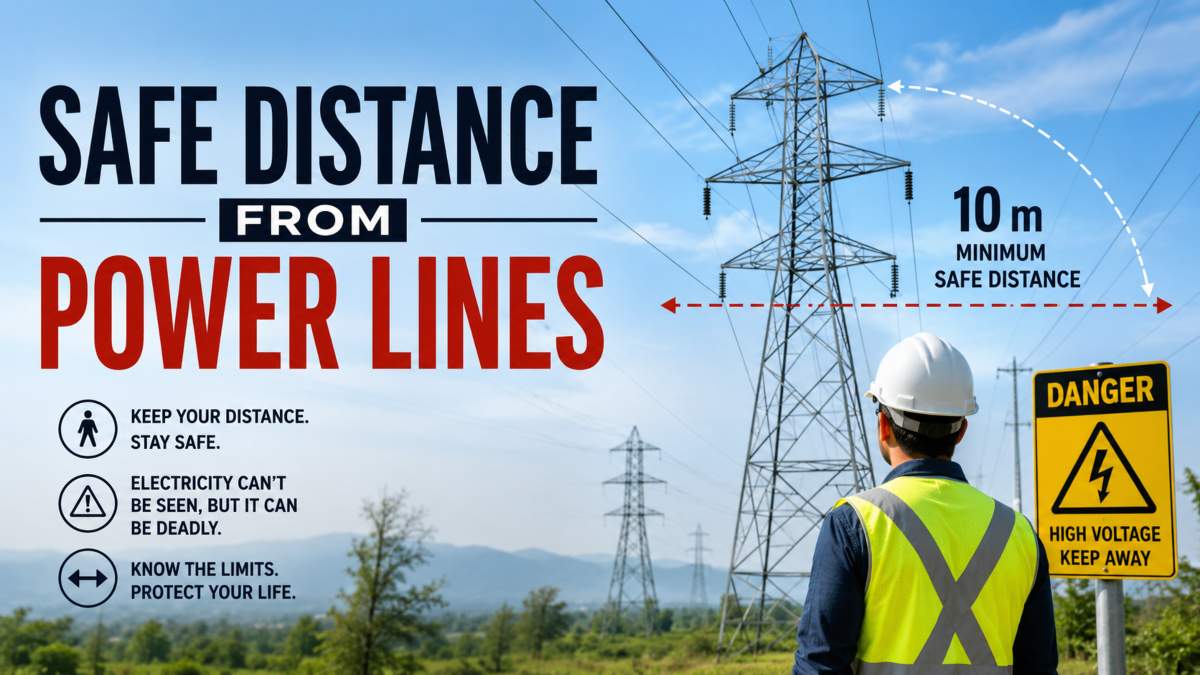
A copper enclosure can still reduce magnetic field strength somewhat through induced eddy currents. Still, the effect is modest compared to its performance against electric and RF fields. It typically requires a much thicker layer of copper to achieve even that which is why maintaining a safe distance from power lines remains the more reliable strategy against this type of field.
Copper performs at its best against higher-frequency electromagnetic energy, including the RF and microwave ranges used by Wi-Fi, cellular signals, and Bluetooth. At these frequencies, copper’s high conductivity allows it to reflect and absorb the vast majority of incoming radiation at relatively shallow depths, thanks to the skin effect, in which high-frequency current concentrates near the surface of a conductor rather than passing through it.
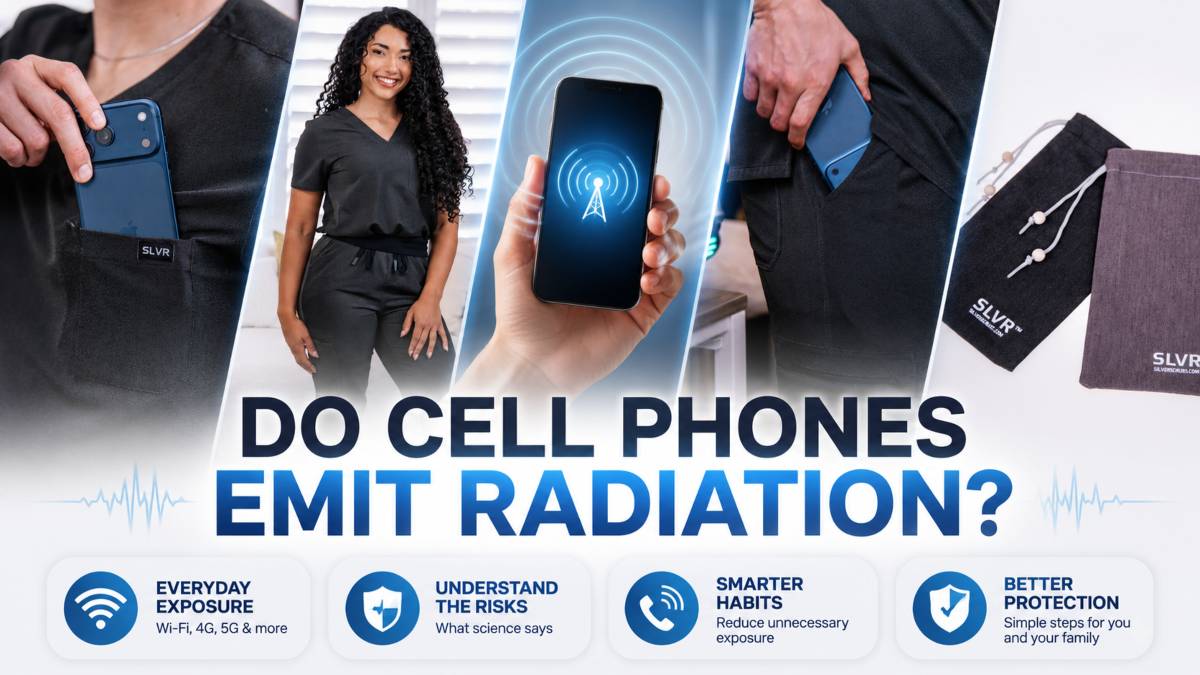
Tested copper shielding materials commonly demonstrate attenuation levels of 60–90 dB or more in the RF range depending on thickness and construction a substantial reduction. However, actual performance always depends on the specific product, its grounding, and any gaps or seams in the shielding layer. This is the same frequency range at play when people ask whether cell phones emit radiation.
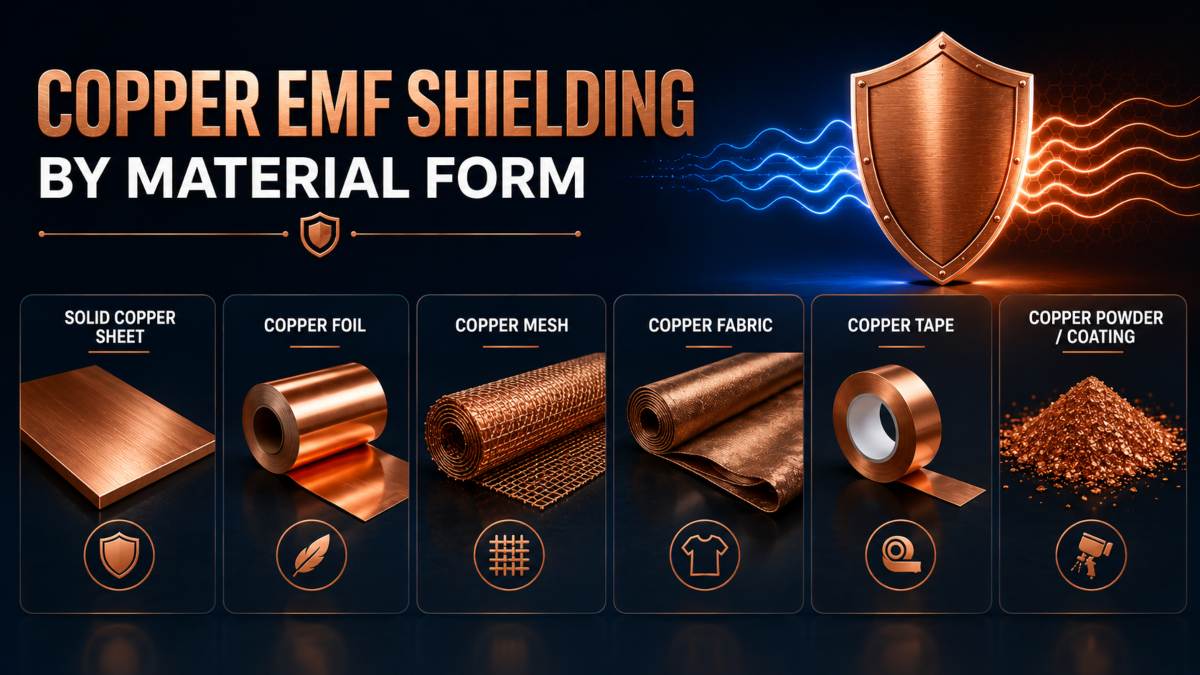
Copper EMF shielding comes in several physical forms foil, sheet, mesh, and thin-film and the form factor has almost as much impact on real-world performance as the metal itself. Each format trades off flexibility, durability, ventilation, and ease of installation differently, which is why the “right” copper shielding product depends heavily on the application rather than on copper content alone.
 Copper Foil and Sheet Shielding
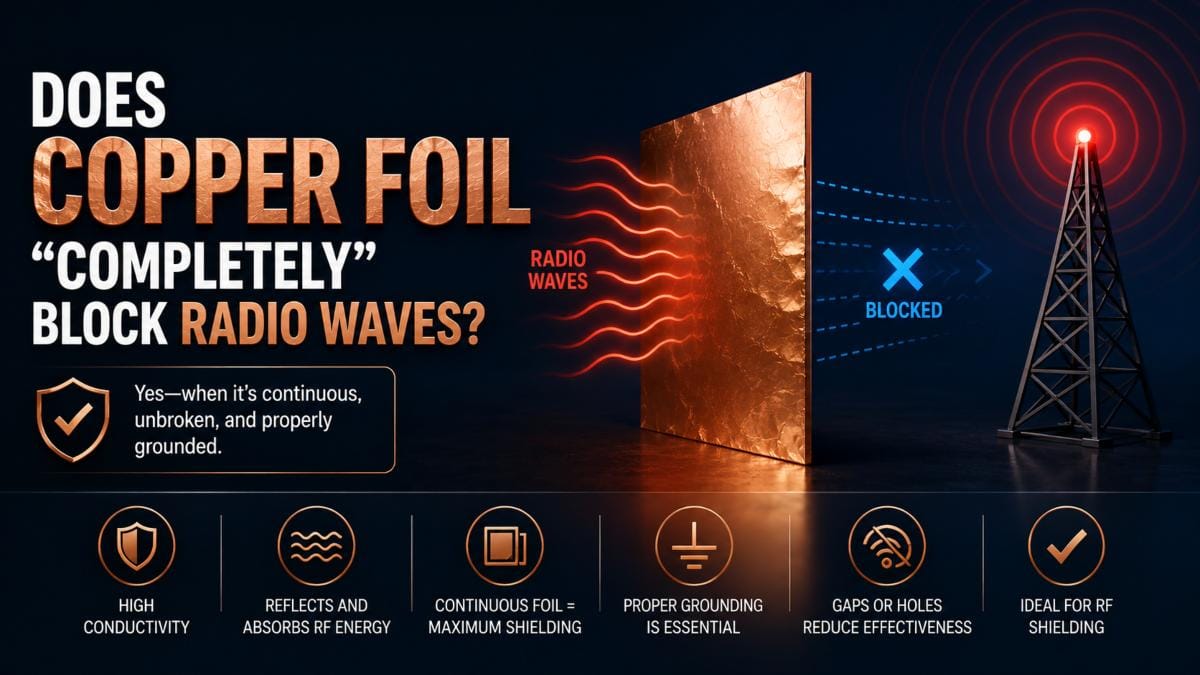
Copper foil and sheet are the most direct form of copper shielding, applied as a continuous conductive barrier over a surface or built into an enclosure. Because foil and sheet have no gaps by design, they can achieve some of the highest attenuation levels of any copper shielding format commonly cited in the 60–90+ dB range for RF frequencies provided the material is applied without seams, tears, or ungrounded edges.
The tradeoff is rigidity and installation complexity: foil has to be applied cleanly and often grounded to a reference point to perform as tested, and any break in continuity a seam, a screw hole, a gap at an edge creates a leak point that can significantly reduce shielding effectiveness at that spot.
Copper mesh shields using the same conductive principle as solid foil but with a woven, perforated structure instead of a continuous surface. This makes mesh useful in applications where airflow, visibility, or flexibility matter window screens, tent fabric, or garment integration but the holes in the weave mean mesh is inherently more permeable to electromagnetic energy than solid foil, particularly as wavelength approaches the size of the mesh openings.
As a rule of thumb, mesh shielding is most effective when the hole size is small relative to the wavelength being blocked, which is why fine-weave copper mesh performs well against higher-frequency signals like Wi-Fi and cellular but loses effectiveness against longer wavelengths. Grounding a copper mesh installation is typically necessary to get its rated performance rather than a partial, unpredictable reduction.
Copper film refers to very thin conductive layers, often laminated onto a fabric, plastic, or polymer substrate, used primarily in electronics and EMI (electromagnetic interference) suppression rather than large-scale personal shielding. This format is common in device casings, cable shielding, and flexible circuit applications, where a thin copper layer must block interference without adding significant bulk or weight. Copper film’s shielding effectiveness scales with thickness even at the micron level, so manufacturers balance film thickness against flexibility and cost depending on the frequency range the application needs to suppress thinner films generally perform well against higher frequencies but require added thickness to meaningfully affect lower-frequency interference.
Copper shielding is genuinely effective, but several claims circulating online overstate what it can do in practice. The two most common that copper foil “completely” blocks radio waves and that copper mesh works without any additional setup both need context to be accurate.
Copper foil does not completely block radio waves in real-world use, even though it can come close under controlled laboratory conditions. Solid, seamless copper foil can attenuate RF signals by 60–90+ dB in testing a reduction of over 99.9% of signal strength but that figure assumes a continuous, gap-free layer with no seams, holes, or ungrounded edges. In practice, installations rarely achieve lab-perfect continuity: a single unshielded seam, a screw penetration, or a gap where two pieces of foil meet can act as a leak point that lets a disproportionate amount of energy through, regardless of how effective the surrounding material is. “Completely blocks” is a claim about ideal test conditions, not a guarantee about any given installation.
 Grounding Requirements for Copper Mesh
Copper mesh generally needs to be properly grounded to perform at its rated shielding level, rather than working as an effective shield on its own. An ungrounded copper mesh can still reflect some incoming energy. Still, grounding provides induced currents with a path for dissipation, allowing the mesh to consistently attenuate the field rather than re-radiate a portion of the energy it intercepts. This is a common gap between marketed and actual performance: a mesh product tested and rated in a grounded lab setup will not deliver the same attenuation if installed without a ground connection, so any real shielding effectiveness figure should specify whether it was measured with a ground connection or not.
Copper shielding appears in a wide range of real-world applications, from securing electrical panels to wearable products marketed for personal EMF exposure. How well it performs in each case depends on the same variables covered above frequency, continuity, and grounding which means the practical results vary significantly by application.
Copper foil or mesh is sometimes applied around a breaker box or electrical panel to reduce localized EMF from the wiring and switching components inside. Because breaker boxes primarily emit low-frequency magnetic fields from AC, copper’s limited effectiveness against that frequency range means foil applied to the outside of a panel will have a modest effect at best, not a large one a more meaningful reduction typically comes from increasing physical distance from the panel, similar to the guidance around safe distance from power lines, rather than shielding it.
Copper jewelry, such as bracelets or pendants marketed for EMF protection, cannot function as meaningful shielding because effective shielding requires a continuous conductive barrier that surrounds or covers the area being protected something a small piece of jewelry structurally cannot provide. A copper bracelet may be conductive, but conductivity alone doesn’t shield anything unless the material forms an enclosure or barrier between the body and the field source; a few square inches of copper on a wrist has no meaningful effect on the electromagnetic field reaching the rest of the body. Jewelry-format copper products should be evaluated as accessories, not as shielding devices, regardless of how they’re marketed.
Copper-infused or copper-lined hats are marketed toward people who identify as electromagnetically sensitive. Still, their the same physical constraints limit their shielding value as any partial-coverage copper product: a hat covers only the scalp, leaves the rest of the body fully exposed, and like copper generally is far more effective against high-frequency RF signals than against the low-frequency magnetic fields many EMF-sensitive individuals are most concerned about. A copper hat may reduce RF exposure reaching the covered area of the head to some degree. Still, it does not create a shielded environment, and any claims about symptom relief or health outcomes go beyond what copper’s physical shielding properties can support. For a full-coverage alternative, see SLVR Wear ™ Signal Shielding Hat.
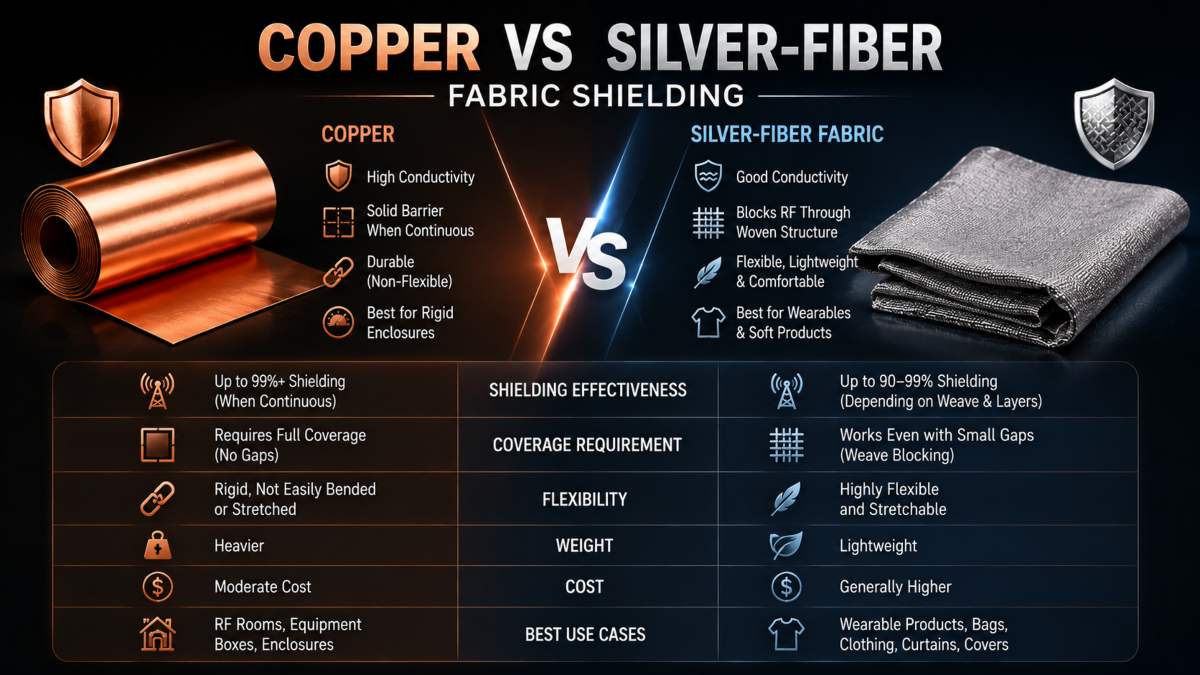
Copper and silver-fiber fabric both use conductive metal to shield EMF, but they differ in form factor copper is typically applied as a rigid or semi-rigid layer. In contrast, silver-fiber is woven directly into fabric. The better choice depends less on which metal is “stronger” and more on what the shielding needs to do: cover a fixed surface, or move with a person throughout the day.
 Where Copper Excels
Copper is the better option when the goal is shielding a fixed space or object rather than a person in motion. Its rigidity is an advantage in these cases: a copper-lined enclosure, panel, or room can form a continuous, sealed barrier that yields the highest attenuation figures, since the material stays in place and doesn’t flex, stretch, or develop gaps the way a wearable fabric would with repeated use. For stationary applications device enclosures, room shielding, cable wrapping copper’s high conductivity and installation stability make it a practical first choice.
Fact: shielding effectiveness depends on maintaining a continuous conductive layer, and rigid materials like copper foil are prone to cracking, seam gaps, and coating wear when flexed repeatedly exactly the conditions a garment is subjected to during normal daily movement and washing.
Exposure context: for anyone looking to reduce exposure to wireless EMF sources while going about a normal day at a desk, in transit, around household Wi-Fi a shielding layer that has to move, bend, and be washed repeatedly needs a different construction than one that stays fixed in place.
Option: a woven metal-fiber fabric, in which the conductive material is integrated into the yarn itself rather than coated or layered on top, is built specifically to keep its conductive structure intact through stretching and washing the two conditions that most often compromise foil- or film-based copper shielding over time.
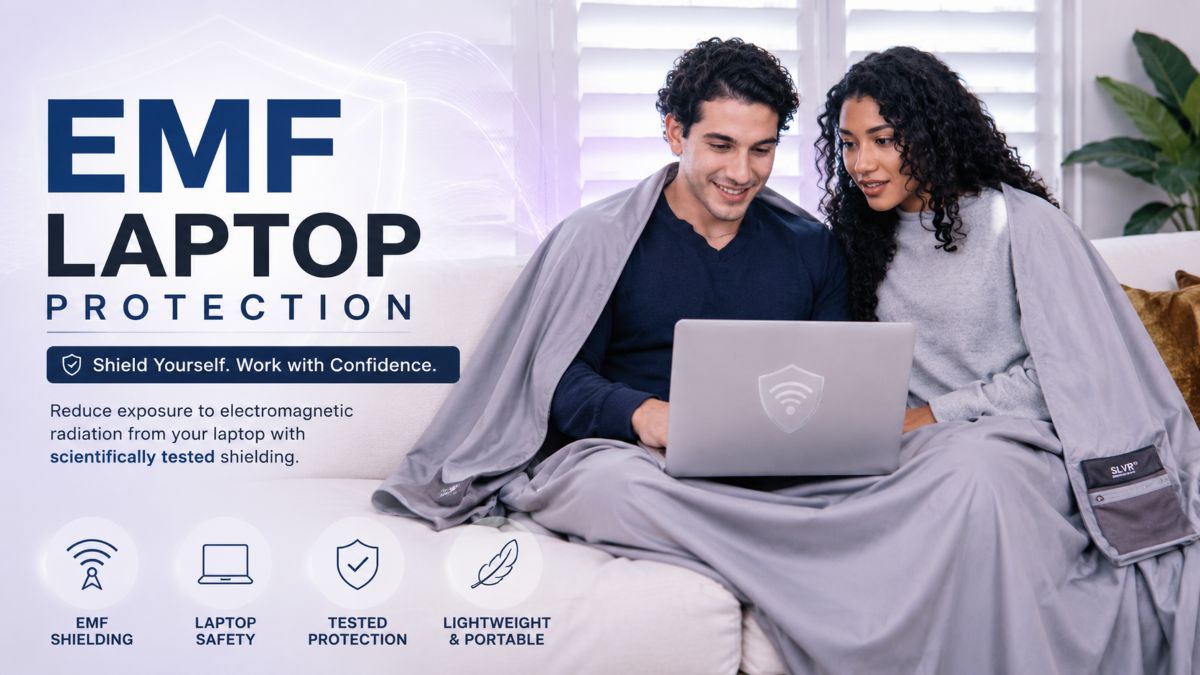
Product: SLVR Wear ™ SilverScrubs are built on this principle, using a 35% silver-fiber fabric woven into a 4-way stretch, machine-washable textile designed to maintain its shielding properties through everyday wear. For more on the fabric and construction behind these garments, see the complete guide to medical scrubs an option worth considering for anyone whose exposure concerns are tied to daily movement rather than a fixed space
Copper can effectively block 5G signals when applied as a continuous, grounded layer, since 5G operates in frequency ranges both sub-6 GHz and higher millimeter-wave bands where copper’s conductivity is high. A solid copper barrier without seams or gaps can substantially attenuate these signals. Still, partial-coverage copper products, like jewelry or small mesh patches, won’t meaningfully reduce 5G exposure the way a full enclosure or panel can.
Copper shields high-frequency electromagnetic energy including RF, Wi-Fi, cellular, and microwave frequencies far more effectively than low-frequency magnetic fields. Its performance generally improves as frequency increases, thanks to the skin effect, which concentrates current near the material’s surface; this is why copper is standard in RF shielding but a poor standalone choice for blocking magnetic fields from sources like power lines or appliance motors.
Copper jewelry is not effective for EMF shielding because meaningful shielding requires a continuous conductive barrier covering the area being protected, and a small piece of jewelry can’t provide that. The metal itself is conductive, but conductivity without adequate coverage and structure doesn’t translate into a measurable reduction in EMF exposure reaching the body the same coverage principle discussed in iPhone EMF radiation.
Copper shielding performs best when grounded, since grounding provides a path for currents induced by an incoming electromagnetic field to dissipate rather than re-radiate back into the environment. An ungrounded copper shield can still reflect some energy, but its attenuation is typically lower and less predictable than a grounded installation tested under the same conditions.
Disclaimer: SLVR Wear ™ products are not medical devices and are not intended to diagnose, treat, cure, or prevent any disease.