iPhone EMF Radiation Explained | SAR by Model and Guide
Every iPhone emits EMF radiation in the form of radiofrequency (RF) signals from its Wi-Fi, cellular, and Bluetooth antennas, and…
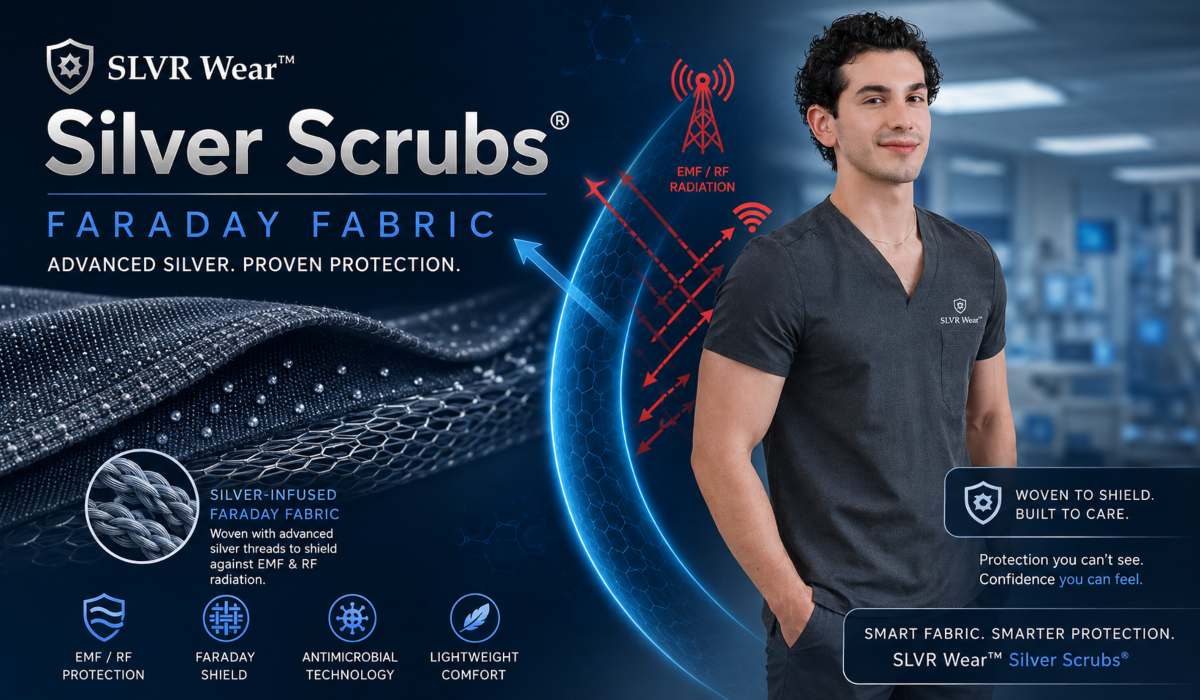
Faraday fabric is a textile woven with or embedded with conductive metal fibers typically silver, copper, or nickel that block or redirect electromagnetic fields and wireless signals, operating on the same principle as a metal Faraday cage. The concept dates back to 1836, when physicist Michael Faraday first demonstrated that an enclosure of conductive material could block external electric fields from reaching whatever sat inside it. Today, that same principle is woven into flexible textiles rather than solid metal enclosures making it possible to wear, carry, or drape shielding material instead of building a cage around yourself.
The result is a fabric that looks and feels like ordinary cloth but behaves like a conductor when it comes to EMF Blocking Material and RF exposure which raises three questions almost everyone asks next: what is it actually made of, does it really work, and what is it used for. This guide answers all three, along with how to tell effective shielding fabric from fabric that just claims to be.
Faraday fabric is a textile engineered with conductive fibers usually silver, copper, or nickel woven directly into the material to block or redirect electromagnetic fields and radio signals. Unlike a rigid metal box, it stays flexible and wearable, which is why it shows up in clothing, blankets, phone pouches, and bags rather than just industrial shielding rooms.
What makes it “Faraday” fabric specifically is the conductive layer itself. Ordinary cotton or polyester can’t block a signal no matter how tightly it’s woven, because the fibers don’t conduct electricity. Once metal fiber is introduced even a relatively small percentage by weight the fabric gains the ability to interact with electromagnetic waves the same way a solid conductor does.
 The Faraday Cage Principle, Explained Simply
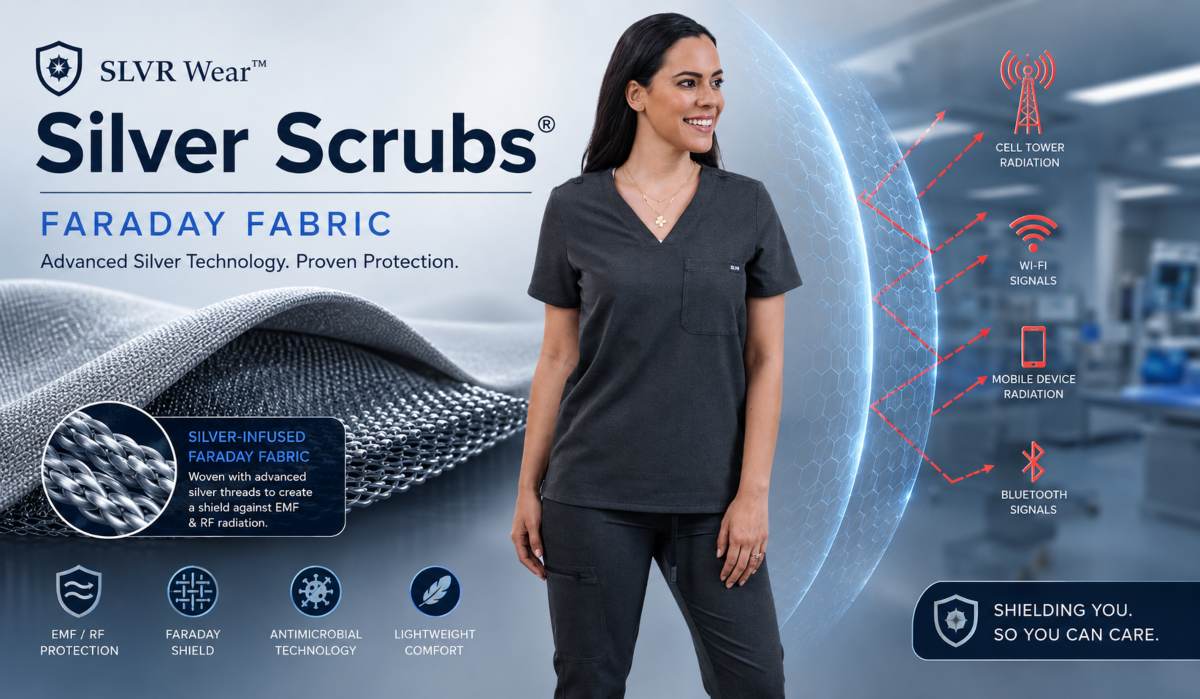
The Faraday cage principle, first demonstrated by physicist Michael Faraday in 1836, shows that an enclosure made of conductive material blocks external electric fields from reaching whatever is inside it. Incoming electromagnetic energy is redistributed across the conductive surface rather than passing through, which is why the inside of the enclosure remains shielded even though nothing about it looks physically sealed.
Faraday fabric applies that same principle at the textile level. Instead of solid metal walls, a mesh of conductive fibers running through the fabric performs the redistribution meaning a piece of cloth can create the same shielding effect as a metal container, just in a form soft enough to fold, wear, or wrap around something.
These three terms describe the same underlying science at different scales, not three different technologies. A Faraday cage is the broad concept any conductive enclosure that blocks electromagnetic fields, whether that’s a metal box, a car, or an elevator. Faraday material is the general category of substances capable of producing that effect, which includes solid metals, metal meshes, and conductive coatings. Faraday fabric is simply Faraday material engineered into a woven textile form.
So “faraday fabric” and “faraday material” often get used interchangeably in casual searches. Still, fabric is technically the flexible, wearable subset of the broader material category the version built for clothing, pouches, and soft goods rather than rigid enclosures.
Faraday fabric is made by combining a base textile usually polyester, nylon, or a cotton blend with a conductive metal component, most commonly silver, copper, or nickel. The metal fiber is what gives the fabric its shielding property; the base textile is what keeps it soft, flexible, and wearable rather than stiff like a screen or mesh.
Silver, copper, and nickel are the three metals most commonly used in shielding fabric, and each is chosen for its electrical conductivity rather than any other property. Silver is the most conductive metal that’s practical for textile use, which is why it shows up in higher-end shielding fabric despite costing more than copper or nickel. Copper conducts nearly as well at a lower price point but can oxidize over time, which is why it’s often blended or coated rather than used alone. Nickel is typically added for durability and corrosion resistance rather than for conductivity, and it often appears as a coating on copper or polyester fiber rather than as the primary conductive material.
The fiber can be introduced two ways: as a metal thread spun directly into the yarn before weaving, or as a metallic coating applied to the surface of finished fabric. Both approaches create a conductive layer, but the manufacturing method affects how the fabric performs over time.
Woven shielding fabric has the conductive metal fiber spun into the yarn itself, so the conductivity runs through the entire thickness of the material rather than sitting on top of it. Coated shielding fabric, by contrast, starts as an ordinary textile that gets a thin metallic layer applied afterward similar to how a coating is sprayed or laminated onto a surface.
The practical difference shows up in durability. A coated layer sits on the surface, so repeated washing, folding, or abrasion can wear it down over time, gradually reducing its conductivity. Woven fiber, being integrated into the yarn structure itself, tends to hold up better through normal wear because there’s no surface layer to flake or rub off.
Mesh density how tightly the conductive fibers are woven together is one of the primary factors that determines how effectively a fabric blocks electromagnetic signals. A denser weave means less physical gap between conductive fibers, which gives electromagnetic waves fewer openings to pass through. A looser weave leaves larger gaps, allowing more signal to leak through even if the fiber itself is highly conductive.
This is also why two fabrics using the same metal fiber can perform very differently weave tightness, fiber thickness, and the percentage of conductive material by weight all factor into the final result, which is why independent lab testing rather than the fiber type alone is the reliable way to verify a fabric’s actual shielding performance.
Faraday fabric works by using its conductive metal fibers to intercept incoming electromagnetic waves and redistribute that energy across the fabric’s surface instead of letting it pass through. When a wireless signal hits the fabric, the conductive layer reflects and absorbs a portion of that energy, so significantly less of it reaches the other side.
This is a physical, not electronic, process the fabric doesn’t need power or any active component to work. It relies entirely on the conductive metal fiber responding to the electromagnetic field as any conductor does, which is what makes it possible to build shielding directly into passive items like clothing, blankets, and pouches rather than into devices.
 The Science of EMF/RF Signal Attenuation
Attenuation is the technical term for how much a shielding material reduces the strength of a signal passing through it, and it’s the standard measurement used to evaluate whether a fabric actually performs as claimed. When an electromagnetic wave meets a conductive surface, the free electrons in the metal fiber respond to the field and generate an opposing current, which cancels out much of the original signal before it can pass through to the other side.
The amount of attenuation a given fabric achieves depends on several variables working together: the type of metal fiber used, the weave density, the fabric thickness, and the signal frequency. This is why attenuation is always expressed as a measured result from lab tested at a specific frequency range, rather than a fixed property of “faraday fabric” as a category two shielding fabrics can use the same metal and still attenuate signals very differently.
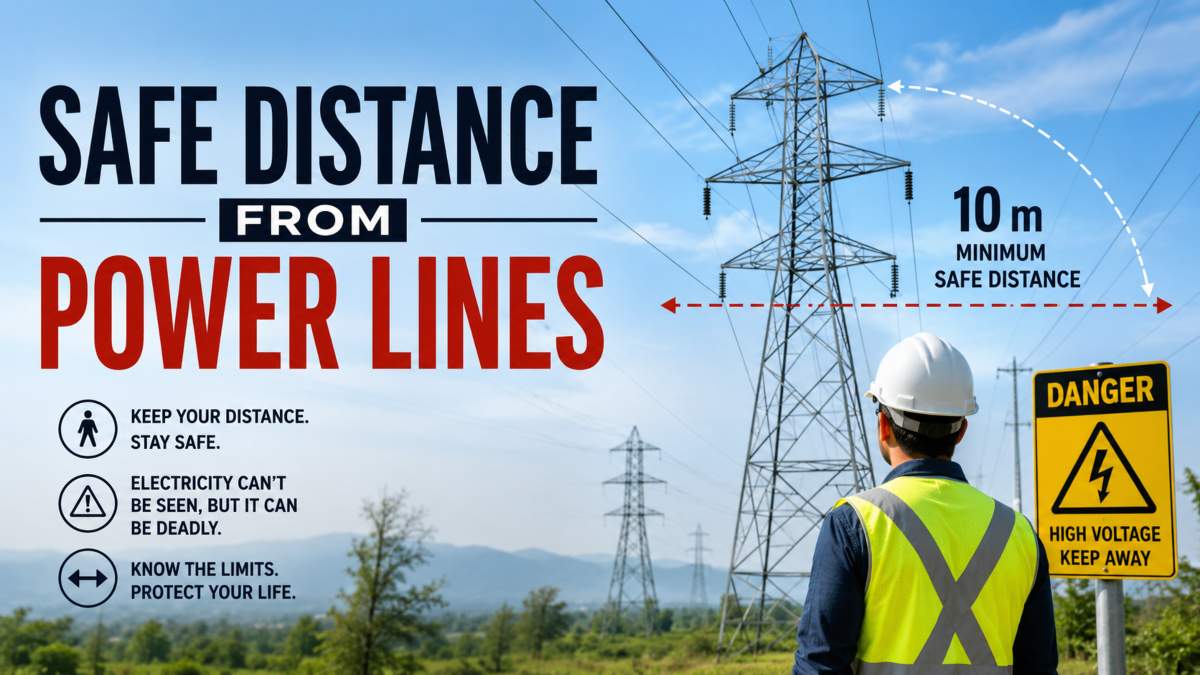
Faraday fabric can be engineered and tested to block signals across a range of frequencies, from lower-frequency electromagnetic fields including those near safe distance from power lines up through higher-frequency RF bands used by cellular networks, Wi-Fi, and Bluetooth. Because attenuation performance varies by frequency, a fabric’s blocking ability at one frequency doesn’t automatically apply at another which is why shielding fabrics are typically tested and rated across a specific frequency range rather than given one blanket “blocks everything” claim.
This frequency-specific nature is also why lab-verified testing matters more than marketing language when evaluating any shielding fabric. A textile that performs well at lower frequencies may perform very differently at the higher frequencies used by modern 5G networks. Hence, the only reliable way to know a fabric’s real-world effectiveness is to look at what frequency range it was actually tested against.
Yes, properly constructed Faraday fabric does block a measurable portion of electromagnetic fields and radio frequency signals, but the actual degree of effectiveness varies significantly between products. The science behind it is well established, but “does it work” is really two separate questions: does the underlying principle work (yes, reliably), and does a specific fabric perform as advertised (only lab testing can answer that).
This distinction matters because shielding fabric exists on a spectrum. A dense, well-constructed conductive weave can meaningfully reduce signal strength, while a thin or loosely woven fabric marketed the same way may block very little. The fiber type and construction determine the outcome not the label “faraday fabric” itself.
Independent lab testing is the only reliable way to confirm whether a specific shielding fabric performs as claimed, since attenuation results depend entirely on that fabric’s construction, fiber content, and weave density. Reputable manufacturers test their fabric against a defined frequency range and publish the resulting attenuation data typically expressed as a percentage of signal blocked or a decibel reduction rather than relying on general claims about the material category.
When evaluating any faraday fabric product, the presence of a linked, third-party lab report is a stronger signal of real performance than marketing language alone. A fabric that’s confident in its results will show the data; one that only says “blocks EMF” without supporting tests hasn’t demonstrated anything measurable.
The biggest misconception is treating “faraday fabric” as a single, uniform product with a single fixed blocking ability in reality, performance varies widely based on metal type, weave density, and fabric thickness, so two products carrying the same label can perform very differently in practice. A second common misconception is assuming shielding fabric blocks all electromagnetic frequencies equally; because attenuation is frequency-dependent, a fabric tested and rated for one frequency range shouldn’t be assumed to perform the same way outside that range.
A third misconception is that thicker or heavier fabric automatically means better shielding. While thickness can play a role, weave density and fiber conductivity typically matter more than raw material weight which is part of why lab-verified attenuation data is a more accurate indicator of real-world performance than a fabric’s look or feel.
Faraday shielding materials come in several distinct forms, each built around the same conductive principle but suited to different uses depending on flexibility, durability, and the level of shielding required. The three most common types encountered in consumer and protective products are mesh fabric, silver-fiber fabric, and EMP-rated shielding cloth each with its own construction and best-fit application.
Faraday mesh fabric is built from a visibly open, net-like weave of conductive metal fiber rather than a tightly closed textile, which gives it shielding capability while remaining highly breathable and lightweight. Because the openings in a mesh are larger than in a dense weave, mesh fabric generally trades some attenuation performance for airflow and flexibility making it a common choice for applications like tents, netting, and shielding enclosures where ventilation matters as much as blocking ability.
The tradeoff between mesh openness and shielding strength is a direct application of mesh density principles: tighter mesh blocks more, looser mesh breathes better, and the right balance depends on what the product is designed to do.
Silver-fiber shielding fabric uses silver the most electrically conductive metal practical for textile use woven directly into the yarn to create a soft, flexible fabric with strong shielding performance relative to its weight. Because silver conducts more efficiently than copper or nickel, silver-fiber fabric can often achieve comparable attenuation with a thinner, lighter construction, which is part of why it’s a common choice for wearable shielding products like clothing and blankets where comfort and drape matter.
Silver fiber woven into textile in this way functions purely as a conductive shielding material its role in the fabric is limited to electromagnetic performance, not any other property sometimes associated with silver.
EMP-rated shielding cloth is a heavier-duty category of conductive fabric specifically constructed and tested to withstand the much higher-intensity electromagnetic pulse associated with EMP events, rather than the everyday RF signals from phones and Wi-Fi. Because an EMP pulse carries far more energy across a broader frequency range than routine wireless signals, cloth rated for EMP protection typically uses denser weaves, multiple conductive layers, or heavier-gauge metal fiber than fabric designed for everyday EMF exposure.
This distinction matters when comparing products: a fabric effective at reducing everyday wireless signal exposure isn’t automatically rated for EMP-level protection, and vice versa EMP-rated cloth is often heavier and less flexible than fabric optimized for everyday wearability.
Faraday fabric is used anywhere someone wants to reduce exposure to wireless signals without carrying a rigid metal enclosure most commonly in clothing, phone pouches, and bedroom textiles. Because the fabric is soft and flexible rather than solid metal, it can be worn, folded, or draped, making it practical for everyday use rather than confined to labs or industrial settings.
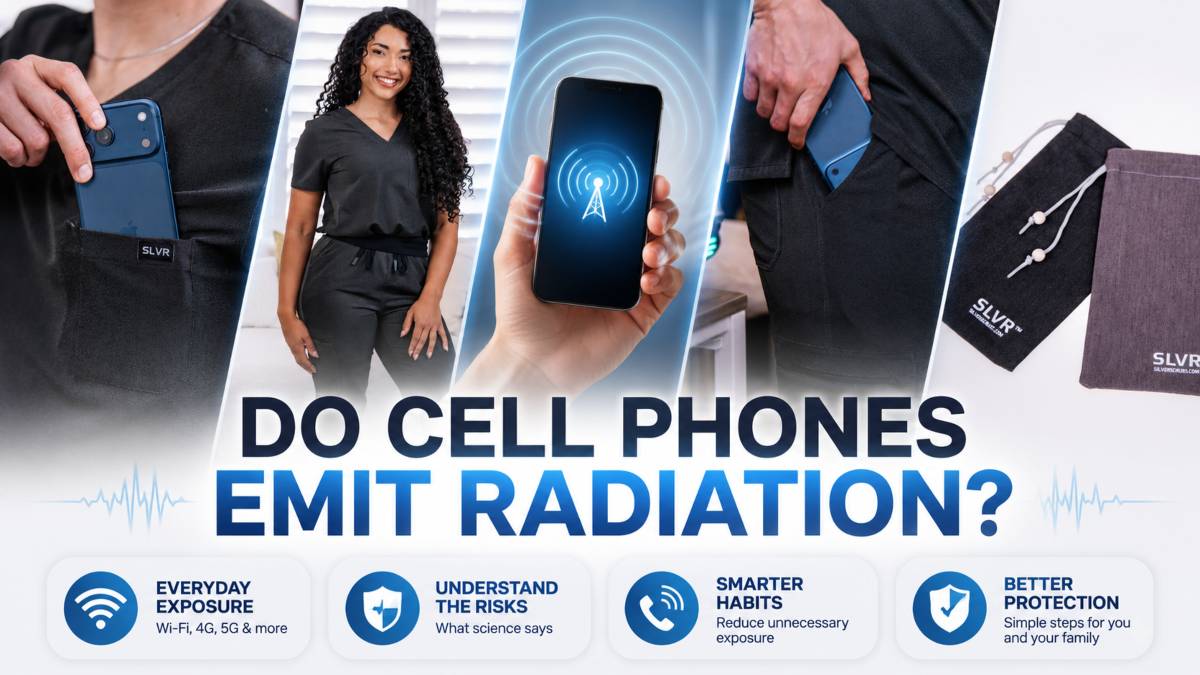
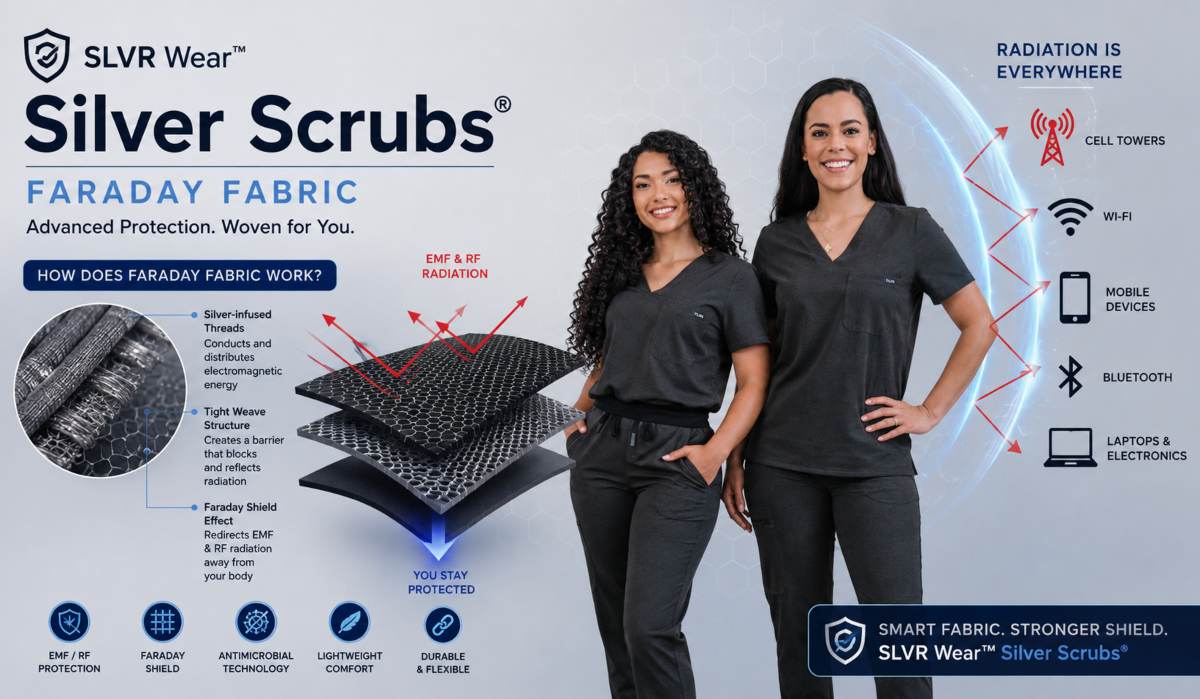
Faraday clothing applies shielding fabric to everyday garments scrubs, hats, beanies, and similar item so the wearer carries a layer of conductive material against or near the body throughout the day. This category has grown alongside general interest in wireless signal exposure, particularly among people who spend long hours near wireless devices or wireless-enabled equipment, including anyone wondering whether a laptop emits radiation at close range or whether cell phones emit radiation throughout the day.
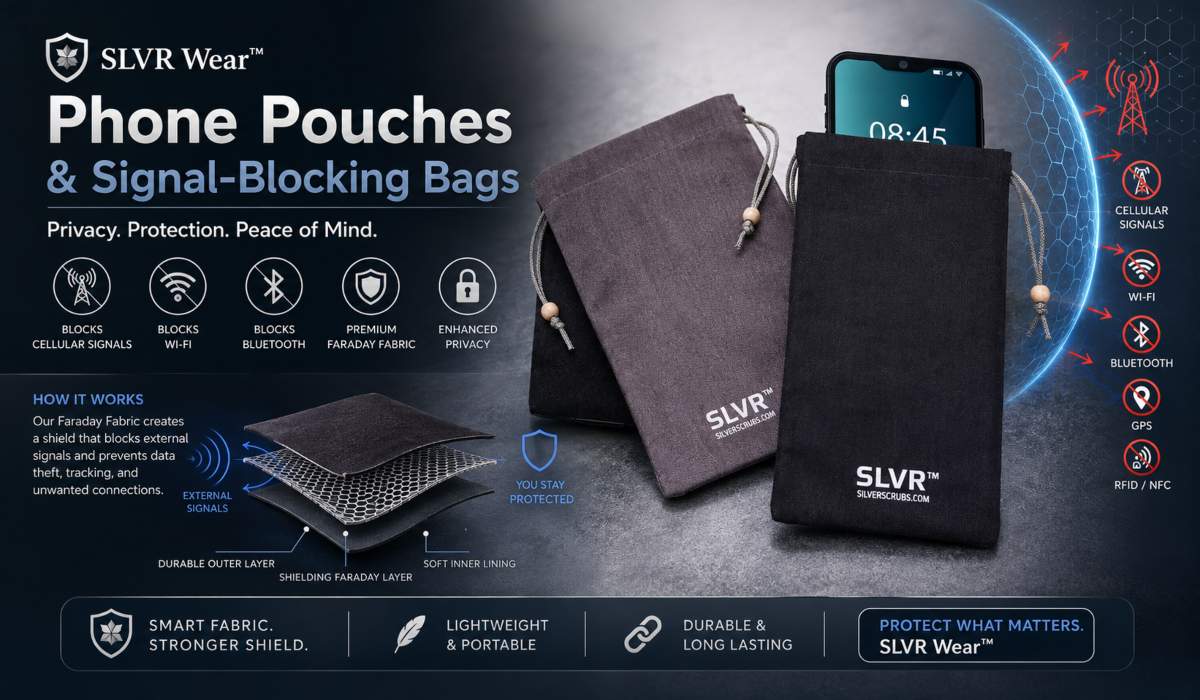
Phone pouches and signal-blocking bags use faraday fabric to line an enclosed pocket where a phone or other device is placed, blocking it from sending or receiving wireless signals while enclosed. This makes them a common tool for anyone wanting to fully disconnect a device from cellular, Wi-Fi, GPS, and Bluetooth signals without powering it off since a pouch physically blocks the signal path regardless of the device’s own settings, which is a meaningful difference from simply switching a phone to airplane mode. This principle applies whether the device is an iPhone or any other cellular device. The SLVR Wear Faraday Phone Pouch is built around this same shielding fabric.
 Home and Bedroom EMF Reduction
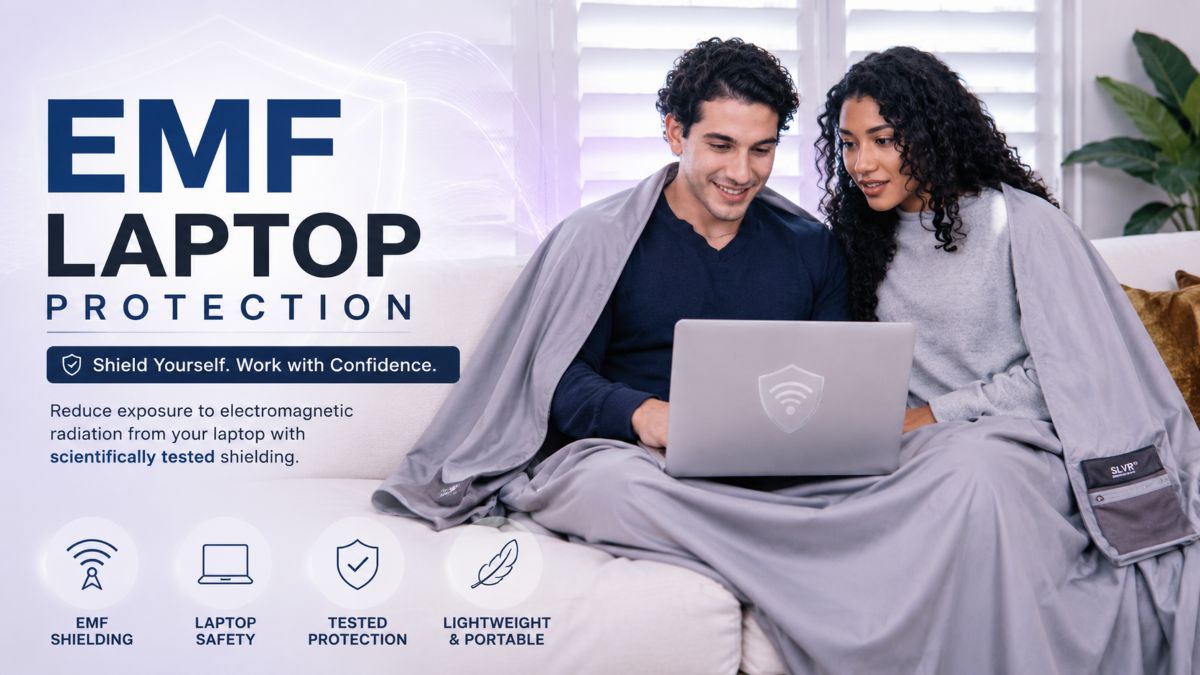
Faraday fabric also appears in home textiles such as blankets and canopies for people looking to reduce EMF exposure in the home, particularly in the bedroom. A blanket made with conductive fiber works the same way as any other faraday fabric application the metal fiber woven through the material intercepts and redistributes signal energy rather than letting it pass through freely. SLVR Wear ™ offers this construction across its Signal Shielding Baby Blanket, Large, and X-Large Blankets.
Choosing the best faraday fabric comes down to three verifiable factors: what percentage of conductive fiber it contains, whether it’s been independently lab tested, and whether it carries any recognized textile certification. Marketing claims alone can’t confirm shielding performance only documented specifications and test data can, which is why comparing fabrics means comparing paperwork as much as comparing feel or price.
Fiber percentage is the clearest starting point, since it tells you how much of the fabric by weight is actual conductive metal rather than base textile a fabric listing its silver, copper, or nickel content as a specific percentage is giving you a verifiable spec, while a fabric that only says “infused with metal fiber” without a number is not. Lab testing is the second factor, and the most important one: a fabric’s real attenuation performance can only be confirmed by independent testing at a defined frequency range, so a linked or available lab report is a stronger indicator of quality than any description on a product page.
Certification adds a third layer of confidence, particularly around the safety and consistency of the base textile itself. A certification like OEKO-TEX® Standard 100 confirms the fabric has been tested for harmful substances, which speaks to the textile’s safety profile rather than its shielding performance useful information, but a separate consideration from attenuation data.
Faraday fabric cost is driven primarily by the type and percentage of conductive metal fiber used, with silver-fiber fabric generally commanding a higher price than copper or nickel-based alternatives because silver is the more expensive and more conductive of the three metals. Construction method also affects cost fabric with metal fiber woven directly into the yarn typically costs more to produce than fabric with a metallic surface coating, reflecting the more involved manufacturing process and the fiber’s improved durability over time.
Higher fiber percentage, denser weave, and third-party lab verification all add to production costs, which is part of why lower-priced shielding fabric on the market often uses a lighter fiber percentage or a coated rather than woven construction. When comparing price across products, the fiber percentage and construction method are more useful indicators of what you’re actually paying for than price alone.
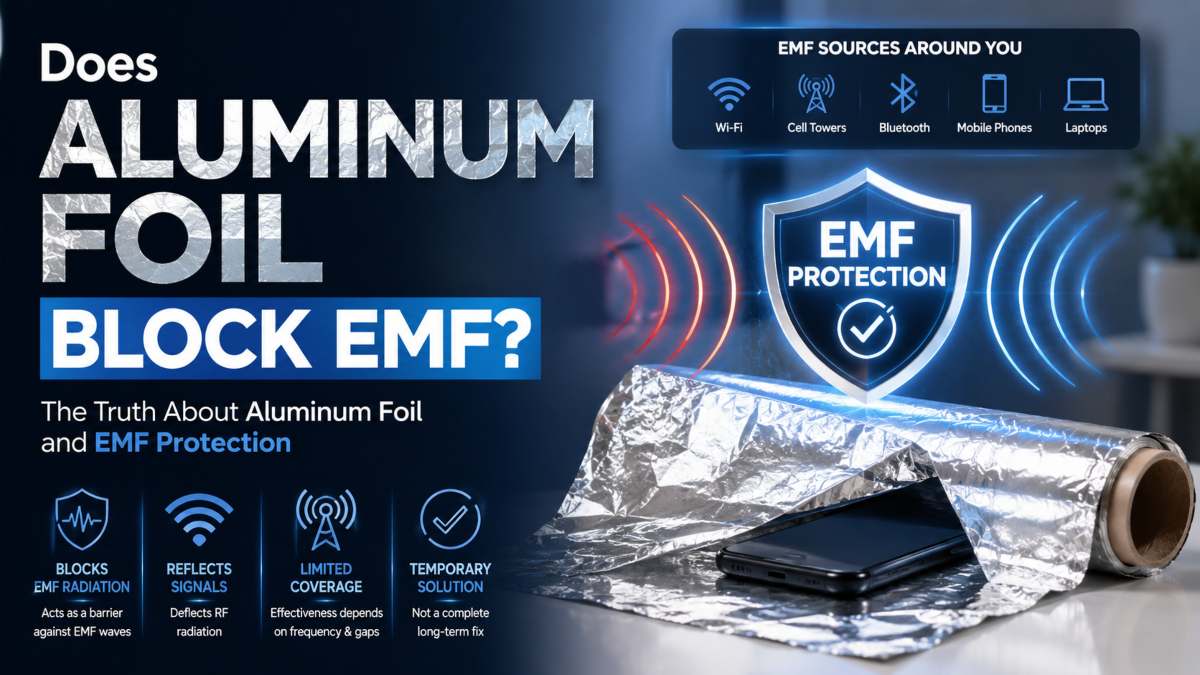
Technically, yes layering household materials like aluminum foil or metallic mesh can produce a basic Faraday effect, but this isn’t the same as faraday fabric in any practical or reliable sense. DIY approaches can block some signal under controlled conditions, but they fall far short of the consistency, durability, and verified performance of professionally manufactured shielding textiles.
The core problem with homemade faraday fabric is consistency. Aluminum foil and similar household conductors tear, crease, and develop gaps easily, and even small breaks in the conductive layer create openings for signal to pass through undermining the shielding effect in ways that aren’t visible to the naked eye. Professionally woven shielding textiles avoid this because the conductive fiber is integrated throughout the entire weave structure rather than applied as a single fragile layer, so minor wear or flexing doesn’t create the same signal leak points.
The second problem is that DIY materials lack a means of verifying their performance. A professionally produced fabric can be lab-tested over a defined frequency range to confirm exactly how much attenuation it achieves, whereas a homemade foil layer lacks such data. There’s no way to know whether it’s blocking a meaningful amount of signal or very little, since performance depends heavily on how tightly and evenly the material is applied. This lack of verification is the main reason DIY shielding is treated as a demonstration of the underlying principle rather than as a dependable, repeatable solution, as manufactured Faraday fabric is.
Durability is the third gap. Foil and similar improvised materials degrade quickly with handling, folding, or washing, while woven shielding fabric particularly fiber spun directly into the yarn rather than surface-applied is built to hold up under normal daily use, which is part of why manufactured shielding textiles remain the standard for anyone who needs consistent, long-term performance rather than a one-time test.
Faraday fabric is a textile woven with or embedded with conductive metal fibers typically silver, copper, or nickel that block or redirect electromagnetic fields and wireless signals. It works on the same principle as a rigid Faraday cage, but built into a soft, flexible textile rather than a solid enclosure.
Faraday fabric combines a base textile, such as polyester or nylon, with a conductive metal component most often silver, copper, or nickel either spun directly into the yarn or applied as a surface coating. The metal content is what gives the fabric its shielding property; the base textile keeps it soft and wearable.
Yes, properly constructed faraday fabric measurably reduces electromagnetic and RF signal strength, though the degree of effectiveness varies by product. Performance depends on the metal fiber type, weave density, and fabric thickness, which is why independent lab testing — not the “faraday fabric” label alone is the only reliable way to confirm how well a specific fabric performs.
Faraday fabric works by using conductive metal fibers to intercept incoming electromagnetic waves and redistribute that energy across the fabric’s surface rather than letting it pass through. This is a passive process that requires no power source, relying entirely on the fiber’s natural conductivity.
Faraday fabric can be engineered and tested to block a range of frequencies, from lower electromagnetic fields — including those measured near power lines — up through the higher RF bands used by cellular networks, Wi-Fi, and Bluetooth. Because attenuation is frequency-dependent, a fabric’s performance at one frequency doesn’t automatically apply to another which is why shielding fabrics are tested and rated for specific frequency ranges rather than given one blanket claim.
A Faraday cage is the broad concept of any conductive enclosure that blocks electromagnetic fields, while faraday fabric is that same principle engineered into a flexible, woven textile. Faraday material is the general category covering both—fabric is simply the wearable soft-goods subset of it.
Basic household materials like aluminum foil can produce a rough Faraday effect, but they lack the consistency, durability, and verified performance of professionally woven shielding textiles. Small tears or gaps in DIY materials create openings for signal to pass through in ways that aren’t visible, making homemade shielding unreliable compared to manufactured fabric.
Disclaimer: SLVR Wear ™ products are not medical devices and are not intended to diagnose, treat, cure, or prevent any disease.