Medical Scrubs: Complete Buying Guide 2026 | SLVR Wear ™
Medical scrubs are lightweight, durable garments worn by healthcare professionals including nurses, physicians, dentists, and technicians—in clinical settings. In 2026,…
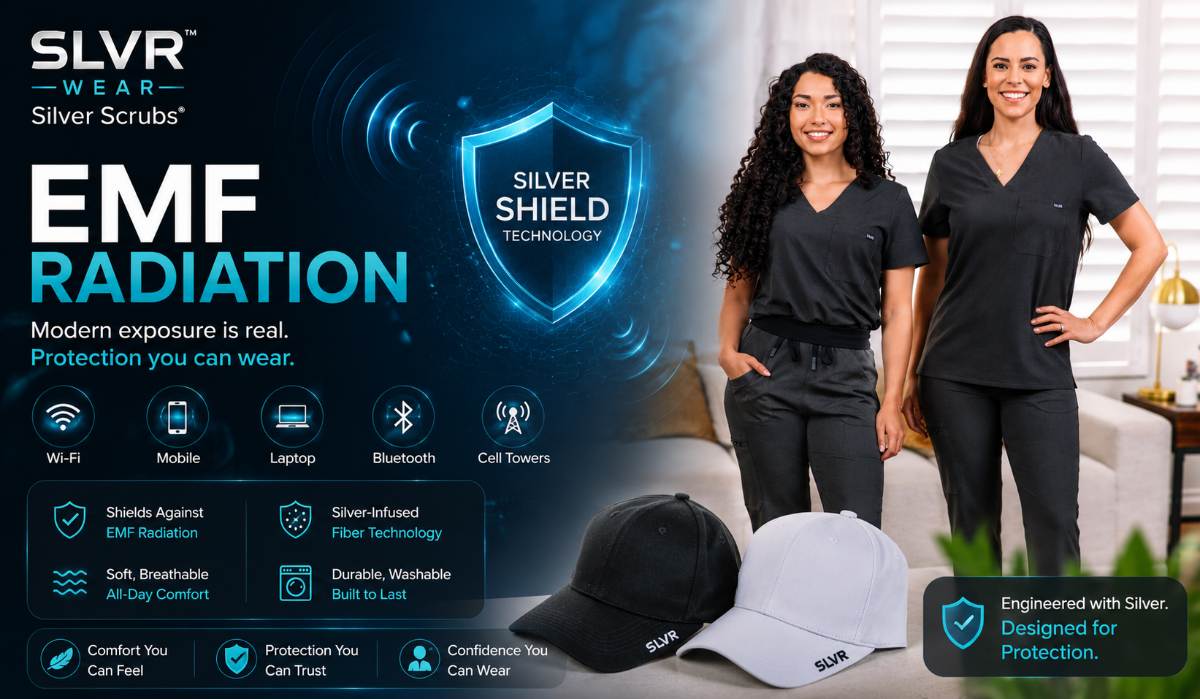
EMF radiation refers to the energy that radiates from any device or wire carrying electricity, including phones, Wi-Fi routers, power lines, and household appliances. It’s an umbrella term covering a wide range of electromagnetic fields, most of which fall into the “non-ionizing” category meaning they don’t carry enough energy to damage DNA the way X-rays or gamma rays do.
Despite being part of daily life for over a century, EMF radiation remains one of the most searched and misunderstood topics in home health and wellness. Some sources, such as cell towers and Wi-Fi, emit radiofrequency (RF) energy continuously but at levels regulators consider well below any threshold of concern. Other sources, like power lines and induction stoves, produce extremely low-frequency (ELF) fields that behave very differently from RF signals, even though both get grouped under the same “EMF” label.
This guide breaks down what EMF radiation actually is, where it comes from in a typical home, what current research says about exposure and safety, how to measure it yourself, and the most practical ways to reduce your exposure if you’re concerned. Along the way, we’ll separate evidence-backed information from common myths because while EMF radiation is a real, measurable phenomenon, not every claim about it holds up to scrutiny.
EMF radiation is the electromagnetic energy emitted whenever electricity flows or wireless signals are transmitted, produced by everything from phone chargers to cell towers. EMF stands for “electromagnetic field,” and the radiation part simply describes how that field propagates outward from its source.
Every electronic device emits EMF because moving electric charges generate both electric and magnetic fields. These combined fields radiate outward in waves, which is why the phenomenon is called “EMF radiation” even though it has nothing to do with nuclear or radioactive material. The strength of these fields drops off quickly with distance, which is why proximity matters more than most people realize when it comes to exposure.
EMF and radiation are related but not identical terms EMF radiation is one specific category within the much broader field of radiation. “Radiation” as a general term includes anything that emits energy as it travels, from sunlight to microwaves to gamma rays from radioactive decay. EMF radiation refers specifically to the electromagnetic fields generated by electrical and wireless devices.
The confusion usually stems from the word “radiation” itself, which many people associate with nuclear radiation or radioactive contamination. EMF radiation from a phone or router operates on a completely different part of the electromagnetic spectrum. It works through a different mechanism than the ionizing radiation used in medical imaging or produced by nuclear material. They share a name and some underlying physics, but the type of energy involved and its interactions with the human body are fundamentally different.
The most important distinction in EMF radiation is whether it’s ionizing or non-ionizing, and the vast majority of everyday EMF exposure falls into the non-ionizing category. Ionizing radiation carries enough energy to strip electrons from atoms and molecules, which can damage DNA this is the type of radiation produced by X-rays, gamma rays, and nuclear material.
Non-ionizing radiation, by contrast, doesn’t carry enough energy to break molecular bonds. This category includes the radiofrequency (RF) energy from Wi-Fi, Bluetooth, and cell phones, as well as the extremely low-frequency (ELF) fields produced by power lines and household wiring. According to the World Health Organization, radiofrequency EMFs have been classified as “possibly carcinogenic to humans” (Group 2B) the same category as substances like aloe vera extract and pickled vegetables reflecting limited evidence rather than established harm. This is the classification that anchors most ongoing research and regulatory guidance on everyday EMF exposure.
The EMF spectrum spans an enormous range of frequencies, from the near-zero-hertz fields around power lines to the gigahertz frequencies used by 5G networks, with everyday exposure concentrated at the lower-energy end. Frequency is measured in hertz (Hz), representing how many times a wave oscillates per second, and it’s the primary factor that determines how an EMF behaves and how it’s classified.
At the low end of the spectrum are ELF fields (below 300 Hz), generated by AC power sources such as electrical wiring, appliances, and power lines. Moving up the spectrum, RF fields (3 kHz to 300 GHz) cover the range used by Wi-Fi, Bluetooth, cell signals, and 5G. Visible light, ultraviolet, X-rays, and gamma rays have progressively higher frequencies, marking the point at which radiation becomes ionizing. A typical home’s EMF exposure is dominated by ELF fields from wiring and appliances, plus RF fields from wireless devices both well below the threshold for ionizing effects.
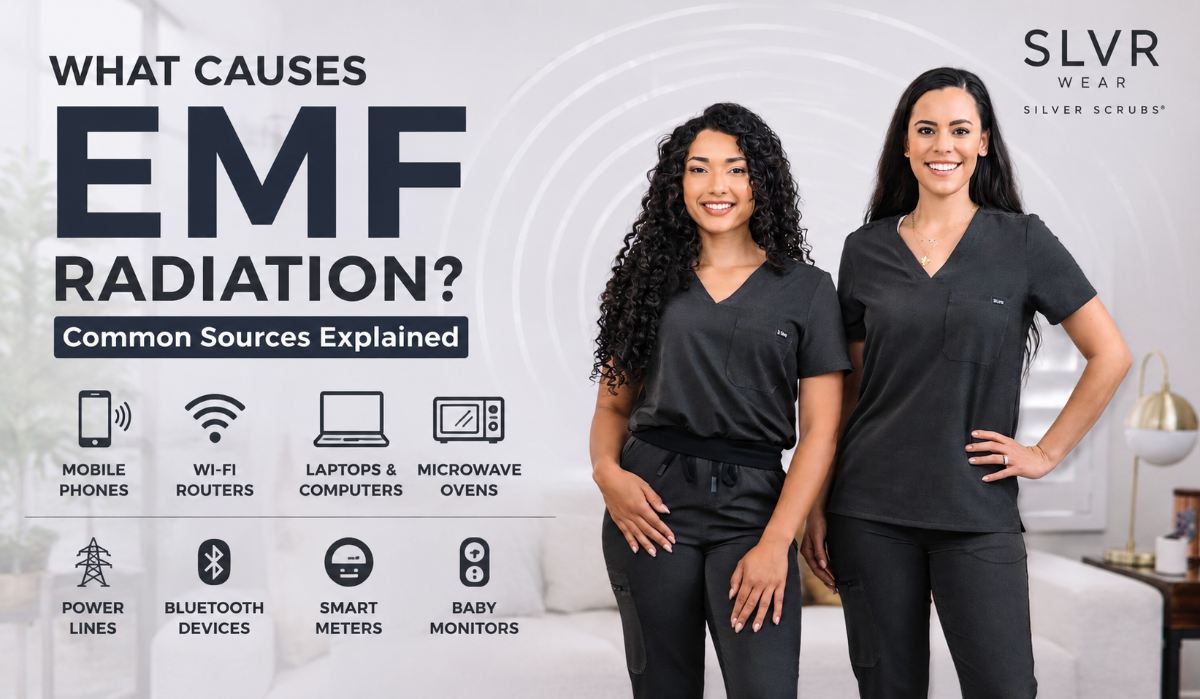
EMF radiation is produced by any device that uses electricity or transmits a wireless signal, meaning most modern homes contain dozens of EMF sources running simultaneously. These sources fall into two broad categories: devices that emit radiofrequency (RF) energy to communicate wirelessly, and devices that produce extremely low-frequency (ELF) fields simply by drawing electrical current.
 Cell Phones, Tablets, and Smart Devices
Cell phones, tablets, and similar smart devices emit RF radiation continuously while connected to a network, with output increasing when signal strength is weak or during active use, such as calls and streaming. These devices communicate with cell towers and Wi-Fi networks via radio waves, and the antenna’s transmission power adjusts automatically based on the strength of the connection.
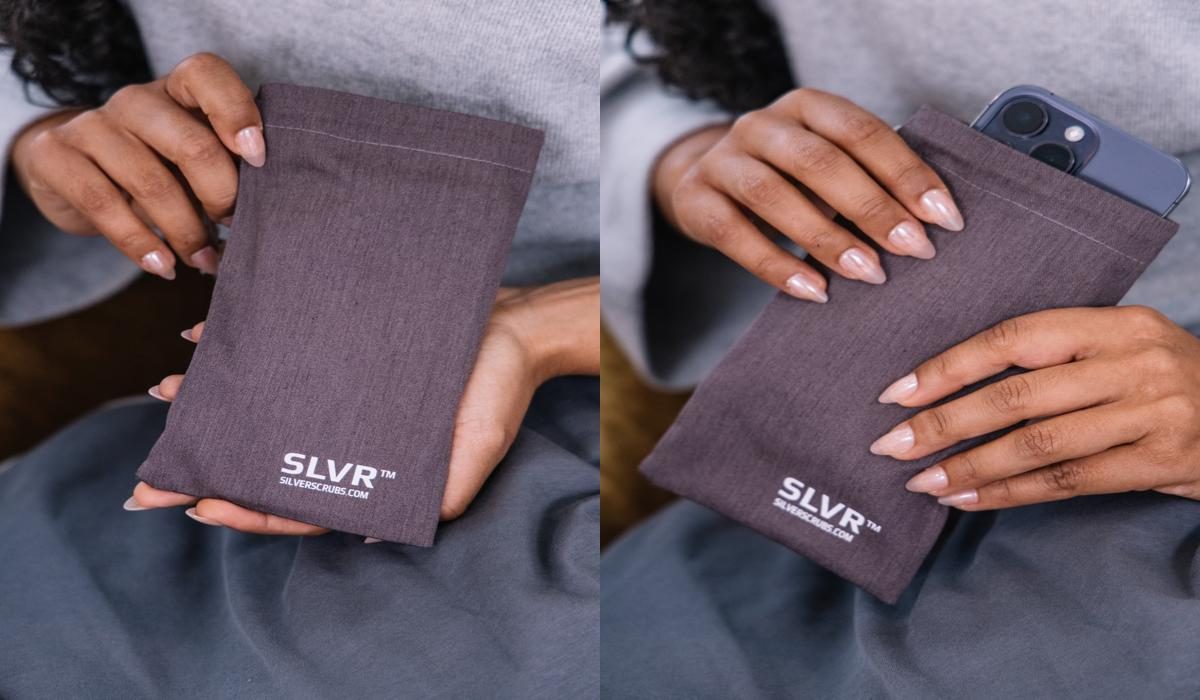
Because phones are typically held close to the body or kept within arm’s reach for most of the day, they are among the most consistent sources of personal RF exposure. Exposure is highest during active data transmission making calls, sending texts, or streaming video and drops significantly when a device is idle or in airplane mode, since airplane mode disables the radios responsible for cellular, Wi-Fi, and Bluetooth signals. If you’re looking for ways to limit this exposure, a Faraday phone pouch fully blocks signals while the device is stored inside.
Wi-Fi routers, Bluetooth devices, and 5G infrastructure all emit RF radiation as part of their normal wireless function, with 5G operating across a wider range of frequencies than previous cellular generations. A Wi-Fi router continuously transmits to maintain connections with every device on the network, making it one of the few EMF sources in a home that operate around the clock.
5G networks use both lower-frequency bands similar to 4G and newer millimeter-wave (mmWave) frequencies, which travel shorter distances and require more cell sites placed closer together. Bluetooth, by comparison, operates at much lower power levels than Wi-Fi or cellular signals, typically transmitting at a fraction of the output of a phone’s cellular antenna due to its short intended range.
Cell towers, smart meters, and power lines are external infrastructure sources of EMF radiation. While they operate at higher power than personal devices, exposure at typical distances from a home is generally far lower than exposure from devices held against the body. Cell towers transmit RF signals over a wide area, but because signal strength decreases sharply with distance, ground-level exposure near a tower is usually a small fraction of the levels measured directly next to a transmitting phone.
Smart meters send periodic data bursts to utility companies, typically for only a few seconds at a time throughout the day, resulting in average exposure levels well below those of continuous-use devices. Power lines, meanwhile, produce ELF magnetic fields proportional to the electrical current flowing through them fields that diminish rapidly with distance and are generally only elevated in very close proximity to high-voltage lines.
Wearables like smartwatches, fitness trackers, and ring-style sleep trackers emit low-level EMF radiation through Bluetooth and, in some cases, Wi-Fi or cellular connections used to sync data. Devices such as the Oura Ring, Whoop band, Fitbit, and Garmin watches primarily use Bluetooth Low Energy (BLE), a protocol specifically designed to minimize power consumption and signal output.
Because these devices are worn directly on the skin for extended periods often including overnight during sleep they’re frequently a focus of EMF-related questions, even though their transmission power is typically much lower than a phone’s. Many wearables also use airplane mode or “sync only” settings that limit wireless transmission to brief intervals rather than continuous connectivity.
Baby monitors, smart cribs, and nursery monitoring devices like the Owlet and Snoo emit EMF radiation through the wireless signals they use to transmit audio, video, or vital-sign data to a connected app or receiver. Video monitors generally use Wi-Fi or a dedicated wireless frequency to stream a continuous feed, while wearable baby monitors like the Owlet sock use Bluetooth or similar short-range protocols to send data periodically.
Because these devices are often placed close to a sleeping infant, they often prompt more questions about EMF exposure than other nursery items. Positioning a monitor’s transmitter several feet from the crib, where physically practical, naturally reduces the field strength reaching the baby due to the rapid drop-off in signal strength with distance. Some parents also add a layer of shielding in the crib area with an EMF blocking baby blanket for additional peace of mind.
Household appliances such as air fryers, induction stoves, and air purifiers generate EMF radiation primarily as ELF magnetic fields produced by their motors, heating elements, or internal electronics. Induction stoves are a notable example because they use electromagnetic fields directly to heat cookware, which means measurable fields can be present at the cooktop surface during operation.
Air fryers and air purifiers produce EMF primarily through their motors and internal circuitry, as do other small appliances with electric motors, such as blenders or vacuum cleaners. As with most ELF sources, field strength from these appliances drops off quickly with distance, so exposure is generally highest only when standing directly in front of or very close to the appliance while it’s running.
Solar panel systems and electric vehicles produce EMF radiation primarily through the inverters and electrical components that convert and manage power, rather than through the panels or batteries themselves. Solar inverters, which convert DC electricity from panels into AC electricity for home use, generate ELF fields similar to other electrical equipment, with field strength concentrated near the inverter unit itself.
Electric vehicles generate EMF primarily from the high-voltage battery pack, motor, and charging system, with fields measurable inside the cabin during operation and especially during charging. Research published by the World Health Organization and various transportation safety bodies has generally found that EMF levels inside EVs fall within the same regulatory limits as other electrical environments. However, the topic remains an area of ongoing study as EV adoption grows.
EMF radiation at the levels typically encountered in homes and from personal devices has not been conclusively shown to cause harm. However, research is ongoing and some classifications reflect a “possible” rather than confirmed risk. The scientific consensus clearly distinguishes between the high-energy ionizing radiation known to cause cellular damage and the non-ionizing EMF radiation produced by everyday electronics, which operates through entirely different mechanisms.
Current research has not established a confirmed causal link between everyday EMF radiation exposure and cancer, though the topic remains an active area of study. In 2011, the International Agency for Research on Cancer (IARC), part of the World Health Organization, classified radiofrequency EMFs as “possibly carcinogenic to humans” (Group 2B) a category reserved for substances with limited evidence of a link, sitting well below classifications for known or probable carcinogens.
This classification was based primarily on an observed association between heavy cell phone use and one type of brain tumor in some studies. However, other large studies have not found the same association. Major health bodies, including the U.S. National Cancer Institute and the WHO, continue to monitor emerging research. As of now no large-scale study has demonstrated a clear, consistent causal relationship between typical RF exposure and cancer risk.
 EMF Radiation and Sleep, Fertility, and Long-Term Health
Research into EMF radiation’s effects on sleep, fertility, and other long-term health outcomes has produced mixed and inconclusive results, with most major reviews finding no consistent evidence of harm at typical exposure levels. Some smaller studies have examined whether RF exposure from devices kept near the body overnight affects sleep quality. Still, findings have not been consistently replicated to establish a clear effect.
Similarly, studies examining EMF exposure and fertility particularly when phones are kept in pockets or laptops are on laps have produced mixed results, with some suggesting potential associations and others finding none. Long-term health monitoring of populations with high EMF exposure, such as people living near broadcast towers, has generally not identified the elevated health risks that early hypotheses proposed. The overall picture from major health organizations is one of continued monitoring rather than established cause for concern at typical exposure levels.
Regulatory bodies define safe EMF exposure levels through exposure limits set to remain well below the threshold at which biological effects have been observed, and devices sold in most countries are required to comply with these limits. In the United States, the Federal Communications Commission (FCC) sets limits on RF exposure from devices like phones, measured as Specific Absorption Rate (SAR), which quantifies the amount of RF energy absorbed by body tissue.
These limits are typically set with a substantial safety margin below the level at which any heating effect the primary established biological effect of RF exposure has been observed in research. For ELF fields from power lines and appliances, organizations such as the International Commission on Non-Ionizing Radiation Protection (ICNIRP) publish reference levels that are also set well below thresholds associated with any known effects. A device operating within these established limits is considered to be operating within accepted safety guidelines based on current scientific understanding.
Established physics and measurable data support some claims about EMF radiation, while others extend well beyond what current evidence supports making it useful to separate the two. It’s factually accurate that all electronic devices emit some form of EMF, that field strength decreases with distance, and that regulatory bodies set and enforce exposure limits based on ongoing research.
Claims that extend beyond current evidence include assertions that specific symptoms like headaches, fatigue, or “brain fog” are definitively caused by everyday EMF exposure, or that specific objects like crystals can “absorb” or “neutralize” EMF fields in a measurable way claims not supported by the physics of how EMF fields behave. The most evidence-based approach is to treat EMF radiation as a real, measurable phenomenon worth understanding, while remaining skeptical of claims that go beyond what controlled research has actually demonstrated.
EMF radiation can be measured at home using a dedicated EMF meter or a smartphone app designed to detect electromagnetic fields, both of which provide real-time readouts of field strength. These tools allow anyone to identify which devices and areas of a home produce the highest EMF levels, turning an invisible phenomenon into something measurable and actionable.
Choosing the right EMF radiation meter depends mainly on whether you want to measure radiofrequency (RF) fields, extremely low-frequency (ELF) fields, or both, since most affordable meters specialize in one type. RF meters detect wireless signals from Wi-Fi, cell towers, and Bluetooth devices. In contrast, ELF meters detect magnetic fields from wiring, appliances, and power lines and a smaller number of meters combine both functions.
Smartphone apps that claim to measure EMF typically rely on the phone’s existing sensors, such as the magnetometer used for compass functions, which means they can provide a general sense of magnetic field changes but are less precise than dedicated RF meters. For most home assessments, a basic combination meter in the moderate price range provides sufficient accuracy to identify relative differences between rooms and devices, even if it doesn’t match the precision of professional-grade equipment used in research settings.
Testing a home for EMF exposure involves systematically measuring each room with a meter, starting with areas where time is spent most, such as bedrooms and home offices. Begin by taking a baseline reading in the center of the room with all devices in their normal operating state, then move closer to individual devices like routers, chargers, and appliances to identify localized hotspots.
For bedrooms specifically, check the area immediately around the bed, including any devices on nightstands, since proximity during sleep means even modest field strength differences can matter for someone tracking exposure. Repeat this process near the electrical panel, any smart meters, and major appliances like refrigerators or induction stoves, since these tend to produce the most noticeable ELF readings in a typical home. Comparing readings with devices on versus off or unplugged helps isolate which specific sources contribute most to a space’s overall EMF profile.
Interpreting EMF meter readings requires understanding the unit of measurement displayed, since RF meters typically display power density in microwatts per square meter (μW/m²) or magnetic field strength in milligauss. In contrast, ELF meters usually display milligauss (mG) directly. Most consumer meters include color-coded indicators or reference ranges to help contextualize whether a reading is considered low, moderate, or elevated relative to common guideline values.
For ELF magnetic fields, readings below roughly 1 to 2 milligauss are generally considered typical for normal household environments, with some guidelines recommending lower long-term exposure where practical, particularly in sleeping areas. For RF readings, comparing values near a device to the same location with the device off or in airplane mode provides the clearest picture of how much that specific device contributes since a reading near a router will naturally be higher than the same spot once the router is powered down, reflecting normal operation rather than a malfunction.
EMF radiation exposure can be reduced through a combination of distance, timing, and material shielding, with distance being the single most effective factor since field strength drops off rapidly the farther you are from a source. Reducing exposure doesn’t require eliminating technology it typically involves small adjustments to how and where devices are used. For those interested in clothing-based approaches, EMF radiation protection clothing provides an additional layer of shielding throughout the day.
The most effective daily habits for lowering EMF exposure involve increasing distance between the body and active wireless devices, particularly during sleep and other extended periods of close contact. Keeping phones off the body during calls by using the speaker or headphones, charging devices outside the bedroom overnight, and placing Wi-Fi routers away from frequently occupied spaces like beds and desks all reduce the time spent in proximity to active RF sources.
Other practical steps include turning off Wi-Fi routers at night if internet access isn’t needed, using wired connections (like ethernet cables) where practical instead of relying on Wi-Fi, and switching devices to airplane mode when wireless connectivity isn’t actively required. These habits collectively reduce both the duration and proximity of exposure, which are the two factors that most directly influence cumulative RF exposure over time. For nighttime routines, an EMF protection blanket placed over the bedding area can provide shielding while you sleep.
EMF blocker stickers and crystals marketed as absorbing or neutralizing EMF radiation are not supported by the physics of electromagnetic fields, and independent testing has generally found no measurable effect on a device’s emissions. A small sticker placed on the back of a phone has no mechanism to block or redirect RF signals, since blocking RF radiation requires a conductive material that fully surrounds the signal source.
Crystals, similarly, do not have documented electromagnetic shielding properties under standard physics, regardless of marketing claims about their composition. What does have a measurable effect on EMF exposure is shielding made from conductive materials such as certain metals or metal-infused fabrics that physically block or attenuate electromagnetic fields through established principles of electromagnetic shielding, the same principles used in items like Faraday bags and shielded cables. To understand what actually works, see our breakdown of what blocks EMF radiation.
Faraday materials work by using a conductive layer typically a metal or metal-fiber fabric that reflects or absorbs electromagnetic fields, preventing them from passing through to the other side. This principle, known as a Faraday cage, has been understood and applied in physics for nearly two centuries and is the basis for shielding used in everything from electronics testing labs to signal-blocking pouches.
EMF-blocking fabrics typically incorporate a percentage of conductive fiber, often silver or copper, woven into the textile, which gives the material its shielding properties while remaining flexible enough for everyday items like blankets, pouches, or clothing. The effectiveness of these materials depends on factors like the percentage and type of conductive fiber, the weave density, and whether the material fully encloses the device or area a phone placed inside a fully enclosed Faraday pouch will see a much more significant signal reduction than a fabric simply draped over a single side of a device. Learn more about how this technology is constructed in our guide to EMF blocking fabric.
For larger-scale shielding around the bed, an EMF-blocking large blanket or an EMF-blocking x-large blanket can cover more surface area, depending on your needs. Beyond blankets, everyday accessories like an EMF-blocking beanie or an EMF-blocking hat use the same silver-fiber shielding principles in wearable form.
Airplane mode stops EMF radiation from a device’s cellular, Wi-Fi, and Bluetooth radios by disabling the transmitters that generate those signals, effectively eliminating RF emissions from those functions. When a phone is switched to airplane mode, it stops actively searching for and communicating with cell towers and Wi-Fi networks, which are the primary sources of RF emissions from the device.
It’s worth noting that airplane mode doesn’t affect ELF fields generated by the device’s internal electronics or battery while the device is powered on. However, these fields are generally much weaker than RF emissions. Airplane mode also doesn’t eliminate emissions from other devices in the environment a phone in airplane mode no longer transmits its own RF signal. However, it doesn’t shield the user from a Wi-Fi router, cell tower, or other devices still operating nearby. For a more complete solution when full signal blocking is needed, check out the best EMF blockers for phones.
EMF radiation stands for “electromagnetic field radiation,” referring to the energy that radiates outward from any source that generates an electric or magnetic field. This includes everything from household wiring and appliances to wireless devices like phones and routers, all of which produce electromagnetic fields as part of their normal operation.
5G is one specific source of EMF radiation, not a synonym for it EMF radiation is the broad category. In contrast, 5G refers to a particular generation of cellular technology that operates using radiofrequency EMFs. 5G networks use a combination of frequency bands, including some higher frequencies not used by earlier cellular generations. Still, the radiation they emit falls within the same non-ionizing RF category as 4G, Wi-Fi, and Bluetooth.
How far EMF radiation travels depends heavily on the type of field and the source’s power, with field strength decreasing significantly with increasing distance from the source. ELF magnetic fields from household wiring and appliances typically become indistinguishable from background levels within a few feet. At the same time, RF signals from higher-power sources like cell towers can travel much farther, though they weaken progressively the farther they travel.
A safe EMF radiation level is generally defined by regulatory limits set by bodies such as the FCC and ICNIRP, which establish maximum exposure thresholds with substantial safety margins below levels at which any biological effect has been observed. For ELF magnetic fields, readings below roughly 1 to 2 milligauss are commonly considered typical for household environments. At the same time, RF safety is generally assessed by comparing device emissions against established Specific Absorption Rate (SAR) limits.
Whether EMF radiation blockers work depends entirely on what they’re made of and how they’re used stickers, crystals, and similar novelty items have no demonstrated shielding effect. At the same time, materials incorporating conductive metal fibers, such as silver or copper, can attenuate RF signals by up to 30 dB through established Faraday shielding principles. The key factor is whether the material is genuinely conductive and whether it sufficiently surrounds the source or device, since shielding effectiveness drops sharply with gaps or incomplete coverage. If you work in healthcare and want shielding built into your daily wardrobe, our Silver Scrubs ® EMF blocking scrubs combine silver-fiber fabric with everyday medical apparel.