Medical Scrubs: Complete Buying Guide 2026 | SLVR Wear ™
Medical scrubs are lightweight, durable garments worn by healthcare professionals including nurses, physicians, dentists, and technicians—in clinical settings. In 2026,…
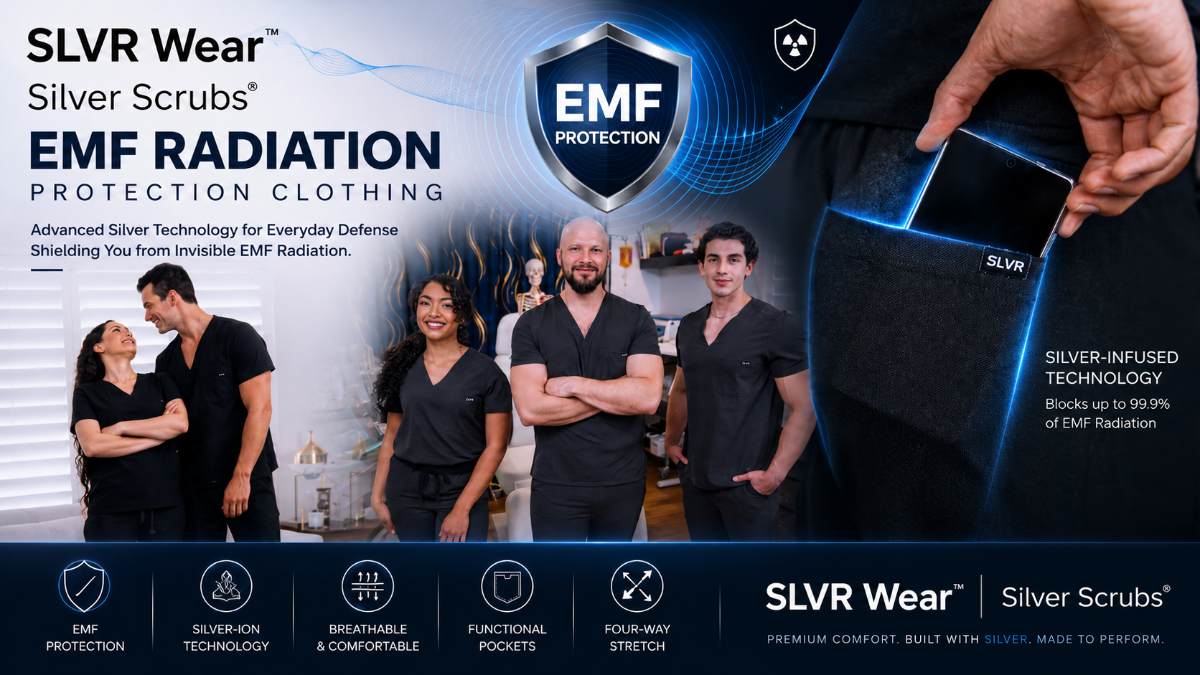
EMF radiation protection clothing is apparel woven with conductive metal fibers most commonly silver that intercept and redirect electromagnetic frequencies before they reach the body. Unlike sprays, coatings, or clip-on devices, the protection is built into the fabric itself, thread by thread, and it works the same way a Faraday cage does: by creating a conductive mesh that blocks wireless signals rather than absorbing or neutralizing them.
If you’ve started researching this category, you’ve probably already noticed how crowded and contradictory it is. Products make bold claims. Testing data is scarce or hidden behind marketing language. Some items are genuinely lab-tested to measurable standards; others are not tested at all. This guide cuts through that noise. It explains how silver-fiber shielding actually works, what the test data mean, which product types exist, and what separates a credible EMF protection garment from one that simply looks the part.
EMF radiation is electromagnetic energy emitted by wireless devices and infrastructure as a natural byproduct of signal transmission. It surrounds most people continuously at work, at home, and in transit because the devices producing it are now embedded in nearly every environment. Protection matters because reducing exposure is the only practical way to manage contact with these signals, and fabric-level shielding is currently the most consistent method available to do so throughout a full day.
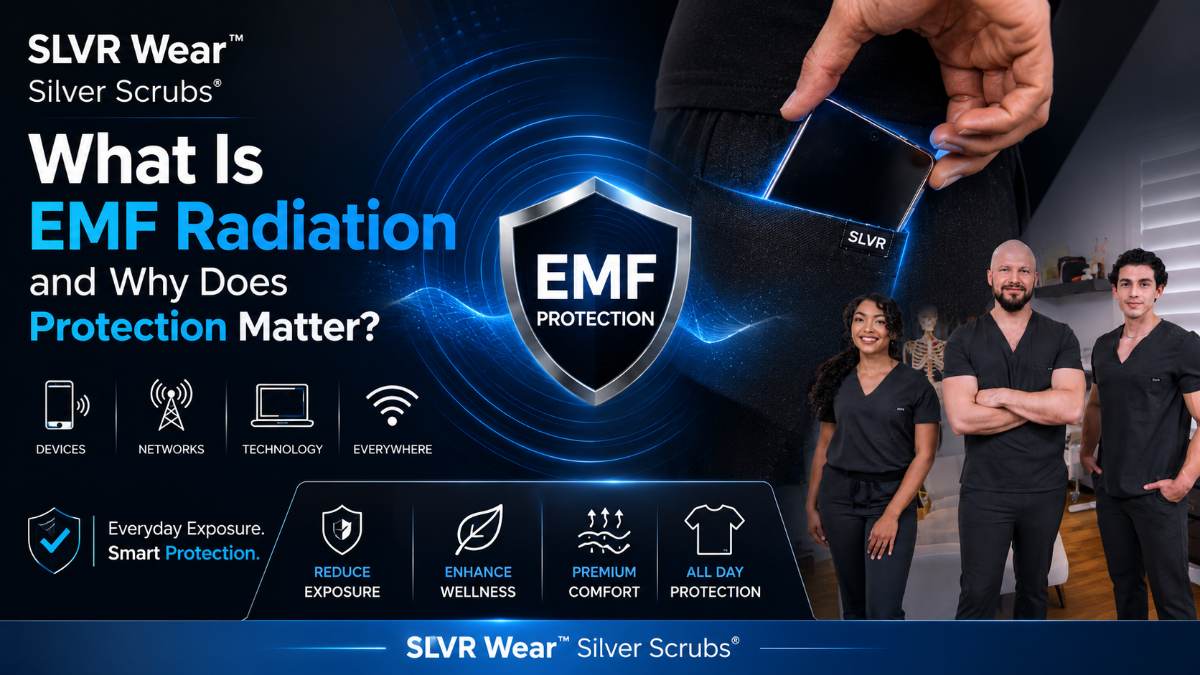 The Electromagnetic Spectrum Explained Wi-Fi, 5G, Bluetooth, and Millimeter-Wave Frequencies
Electromagnetic frequencies exist on a continuous spectrum, organized by how rapidly the waves oscillate measured in hertz (Hz). The frequencies relevant to everyday wireless exposure sit in the radiofrequency (RF) range, running from roughly 2.4 GHz for standard Wi-Fi and Bluetooth up through 6 GHz for Wi-Fi 6E, and into the millimeter-wave band above 24 GHz where 5G infrastructure increasingly operates.
Each wireless standard occupies a specific slice of that spectrum. Most homes and offices continuously broadcast Wi-Fi at 2.4 GHz and 5 GHz frequencies. Bluetooth operates within the 2.4 GHz frequency band and is commonly found in devices such as smartphones, earbuds, keyboards, and wearables. In contrast, 5G technology varies based on the carrier and the type of infrastructure used. It operates over a broad range, from sub-6 GHz bands, which work similarly to 4G, to millimeter-wave frequencies exceeding 24 GHz. The latter offers high bandwidth over short distances, especially in densely populated urban areas.
What this means practically is that genuine EMF protection clothing clothing needs to cover a broad frequency range to be effective in modern environments. A fabric tested only at legacy frequencies provides no meaningful shielding against millimeter-wave 5 G signals. The relevant performance benchmark for current wireless infrastructure extends to at least 50 GHz the upper boundary of the millimeter-wave consumer range.
Exposure reduction, in the context of EMF shielding clothing, means decreasing the amount of electromagnetic radiation that reaches the skin and underlying tissues beneath the garment during normal daily activities. It is a physical, measurable outcome not a vague wellness concept expressed as shielding effectiveness: the percentage of incoming signal the fabric intercepts rather than transmits.
This is an important distinction. EMF radiation protection clothing does not eliminate all EMF in an environment. It does not create a field around the wearer or affect signals at a distance. It reduces the body surface area exposed by the garment at the frequencies for which the fabric has been tested to block. The protection is localized, directional, and entirely dependent on the fabric’s physical properties which is why what the fabric is made of and how it has been tested matter more than any marketing claim attached to it.
For everyday wear, this translates directly: a garment covering the torso, arms, or head reduces the wireless signal reaching that area while it is worn. A healthcare worker in silver scrubs for an eight-hour shift has meaningfully different cumulative exposure than one wearing standard fabric assuming the shielding fabric has been verified at the relevant frequencies.
EMF shielding fabric works through electrical conductivity. When electromagnetic waves encounter a conductive material, the free electrons in that material respond to the oscillating electric field of the wave they move in a way that generates an opposing field, effectively canceling the incoming signal. This is the principle behind a Faraday cage, and it is the same principle at work in silver-fiber shielding fabric, just expressed at the thread level rather than the structural level.
Silver is the most electrically conductive element on the periodic table, making it the preferred material for effective EMF shielding textiles. When silver fiber is woven directly into a fabric not sprayed on, not applied as a coating, but integrated thread by thread into the textile structure the resulting mesh creates a continuous conductive layer throughout the garment. That layer intercepts electromagnetic signals and redirects their energy rather than allowing them to pass through to the wearer.
The chemistry of silver is entirely separate from this mechanism. Conductivity is a physical property of the metal’s electron structure, and it is what makes silver effective as a shielding material. This is the only reason silver belongs in a conversation about EMF protection clothing its electrical conductivity, and nothing else.
EMF radiation protection clothing works by weaving electrically conductive fibers primarily silver directly into the textile structure, creating a continuous mesh that intercepts electromagnetic signals and prevents them from penetrating the body. The mechanism is physical, not chemical, and its effectiveness is measurable: a properly constructed silver-fiber garment tested under controlled laboratory conditions can block the overwhelming majority of incoming wireless signal across a broad frequency range.
The physics behind EMF-blocking fabric starts with a property called electrical conductivity the ability of a material to allow electrons to move freely through its structure. Silver is the element with the highest electrical conductivity, meaning its electrons respond almost instantaneously to the oscillating electric field of an electromagnetic wave.
When a wireless signal encounters a conductive material, those free-moving electrons shift in response to the wave’s electric field. That movement generates its own opposing electromagnetic field, which cancels the incoming signal rather than allowing it to pass through. This is the operating principle of a Faraday cage a conductive enclosure that blocks electromagnetic fields and silver-fiber fabric replicates it at the thread level. Each conductive fiber forms part of an interconnected mesh, and the mesh as a whole behaves like a wearable Faraday cage.
The density of silver fiber in the fabric determines the effectiveness of that mesh. A garment built with 35% pure silver fiber woven throughout the textile rather than concentrated at the surface or applied after the fact creates a shielding layer that is consistent across the entire fabric, including after repeated washing.
Not all silver-containing fabrics are built the same way, and the construction method determines both the shielding performance and the longevity of that performance over time.
A silver coating is applied to the surface of an existing fabric after it has been manufactured. The silver sits on top of the textile fibers rather than being integrated into them. Surface coatings can deliver measurable shielding effectiveness when new, but they are vulnerable to degradation washing, abrasion, and normal wear gradually remove the conductive layer, reducing performance with each cycle. A coated fabric that tests well on day one may test significantly worse after thirty washes.
A silver spray follows the same logic at an even more superficial level. Conductive sprays are sometimes marketed as a way to add EMF protection to existing garments, but the silver concentration achievable through spraying is low, the distribution is uneven, and the durability is minimal. For any application requiring consistent, verified shielding, a spray is not a credible solution.
Woven silver fiber is structurally different from both. When silver is spun into thread and woven into the fabric during manufacturing, it becomes part of the textile’s physical structure. It cannot be washed out because it is not a surface treatment it is the fabric. The conductive mesh is three-dimensional, consistent across the garment, and present for the lifespan of the textile. This is the construction method that makes lab-verified shielding claims meaningful and durable.
Lab testing for EMF shielding fabric measures two things: how much of an incoming electromagnetic signal the fabric blocks, and across what range of frequencies it maintains that performance. Both numbers matter, and neither is meaningful without the other.
Shielding effectiveness is expressed as a percentage or in decibels (dB) of attenuation the reduction in signal strength after passing through the fabric. A fabric that blocks 99% of incoming signal at a given frequency is performing meaningfully differently from one that blocks 80%, even though both could be described loosely as “shielding” fabric. Third-party lab verification is the only way to confirm these figures with confidence; manufacturer claims without accompanying documentation are not a substitute.
Frequency range is equally important because shielding performance is not uniform across the spectrum. A fabric may perform exceptionally at 2.4 GHz the frequency of standard Wi-Fi while providing significantly reduced protection at 28 GHz or above, where 5G millimeter-wave signals operate. A lab report that only documents performance at legacy frequencies tells you nothing about how the fabric behaves in a current wireless environment. Meaningful testing must span the full range of frequencies used in everyday applications.
The combination of these two measurements what percentage of signal is blocked, and at which frequencies is what separates a substantiated shielding claim from an unverified one.
A fabric tested to 50 GHz covers the full range of wireless frequencies present in contemporary consumer and occupational environments. That upper boundary is significant: standard Wi-Fi operates at 2.4 and 5 GHz, Wi-Fi 6E extends to 6 GHz, and 5G millimeter-wave deployments the highest-frequency consumer wireless infrastructure currently in operation occupy bands between 24 GHz and 47 GHz in most markets. Testing to 50 GHz confirms that shielding performance has been verified across the entire range, not just the lower frequencies where older textiles were evaluated.
This matters practically because the wireless environment has changed. A garment whose lab testing predates 5G millimeter-wave infrastructure was never evaluated at the frequencies it now encounters daily in dense urban and clinical settings. Frequency coverage in the lab report is not a technical detail it is the baseline for knowing whether the protection claimed is relevant to the signals actually present.
Silver Scrubs® by SLVR Wear ™ are lab-tested to 50 GHz under the international military-grade shielding standard GJB 5792A-2021, with third-party verified results available on the SLVR Wear ™ lab results. The 50 GHz test boundary was chosen specifically to ensure coverage extends through the full millimeter-wave 5G range. So the shielding performance documented in that report reflects real-world wireless environments rather than legacy test conditions.
EMF radiation protection products span several categories clothing, blankets, hats, phone pouches, laptop accessories, and raw shielding fabric each designed to reduce exposure in a specific context. The underlying mechanism is the same across all of them: a conductive material, most reliably silver fiber, intercepts electromagnetic signals before they reach the body. What differs is the form factor, the coverage area, and the extent to which each product type has been tested.
EMF protection clothing is the broadest and most practical category because it addresses continuous, full-day exposure across the body areas it covers. A garment worn for eight hours in a wireless-dense environment a hospital floor, a technology office, a clinical setting provides sustained shielding for the duration of wear in a way that a single device or accessory cannot replicate.
Within this category, the construction quality and silver content vary significantly between products. Garments built with silver fiber woven into the textile at the manufacturing stage rather than treated or coated after the fact deliver consistent, wash-durable shielding. The percentage of silver fiber in the fabric directly affects conductivity and therefore shielding effectiveness; a garment with 35% pure silver fiber woven throughout produces a materially different conductive mesh than one with trace silver content applied as a surface treatment.
Medical scrubs are a particularly practical application of EMF-blocking fabric. Healthcare workers spend extended shifts surrounded by wireless monitoring equipment, telemetry systems, mobile devices, and increasingly, 5G-connected infrastructure. Silver Scrubs® by SLVR Wear ™ are purpose-built for this environment silver-fiber shielding woven into a professional scrub designed for all-day clinical wear, tested to 50 GHz and verified by third-party lab documentation.
Everyday EMF protection clothing t-shirts, base layers, and casualwear incorporating silver-fiber shielding follows the same construction principles. The relevant questions for any garment in this category are the same: what is the silver fiber content, how was it integrated into the fabric, at what frequencies was it tested, and is the lab data available to verify the claims made.
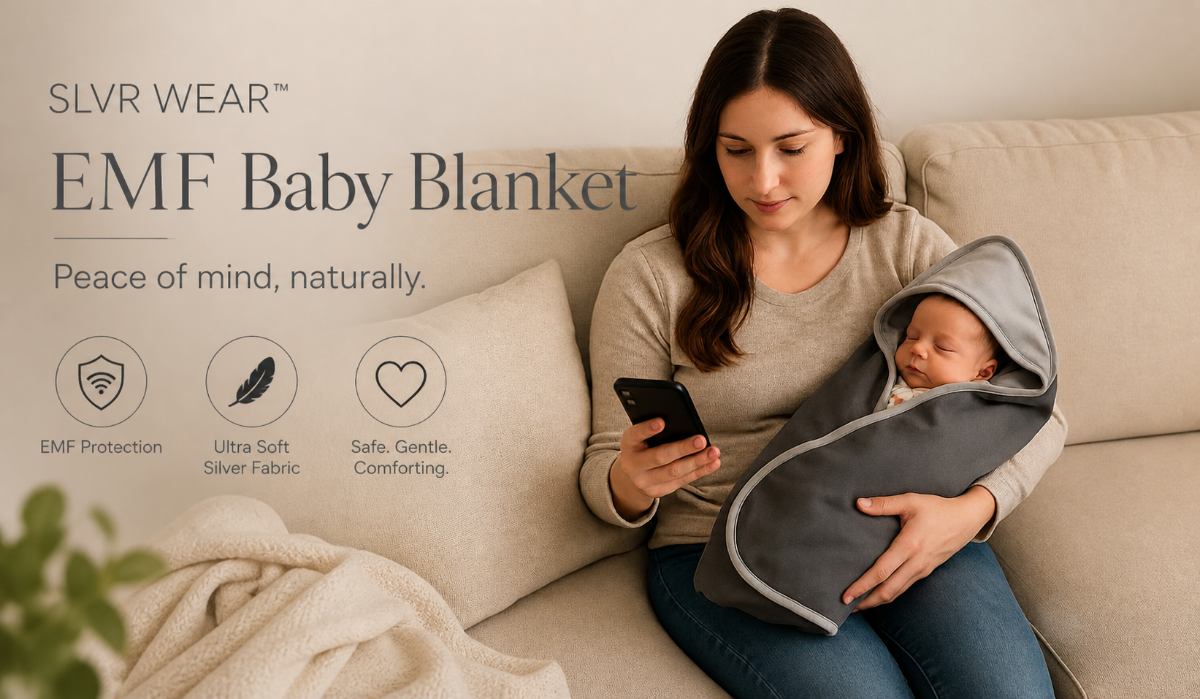
An EMF radiation protection blanket is a shielding textile designed for stationary use most commonly for reducing exposure during sleep, rest, or extended periods of device use. The shielding mechanism is identical to that of protective clothing: conductive silver fiber woven into the fabric intercepts electromagnetic signals across the coverage area.
The practical value of a shielding blanket depends almost entirely on the quality of the textile it is made from. The same construction distinctions that apply to clothing apply here woven silver fiber outperforms surface coatings, and verified silver content outperforms marketing language. A blanket description of “EMF shielding” without accompanying lab documentation or a disclosed silver fiber percentage provides no verifiable basis for that claim.
When assessing the best EMF protection blanket, it’s essential to consider several key factors: the content and percentage of silver fiber, the frequency range covered in any lab testing, whether the shielding material is woven into the fabric or applied as a treatment, and the durability of the material after washing. A blanket that degrades after several wash cycles offers diminishing protection over time regardless of its initial performance.
SLVR Wear ™ EMF shielding blanket uses the same silver-fiber textile construction as the Silver Scrubs line OEKO-TEX® Standard 100-certified yarn, woven thread by thread, and tested free of harmful substances.
An EMF radiation protection hat or cap uses silver-fiber shielding fabric to reduce exposure to wireless signals on the head. The form factor is straightforward: a garment constructed from a conductive textile covers the scalp and, depending on the design, extends to the ears and the back of the neck.
As with all shielding apparel, the meaningful variable is the fabric itself. A hat made from verified silver-fiber shielding textile provides a measurable reduction in signal exposure to the areas it covers. A product marketed as “EMF protection” without disclosing its material composition or lab testing provides no reliable basis for that claim.
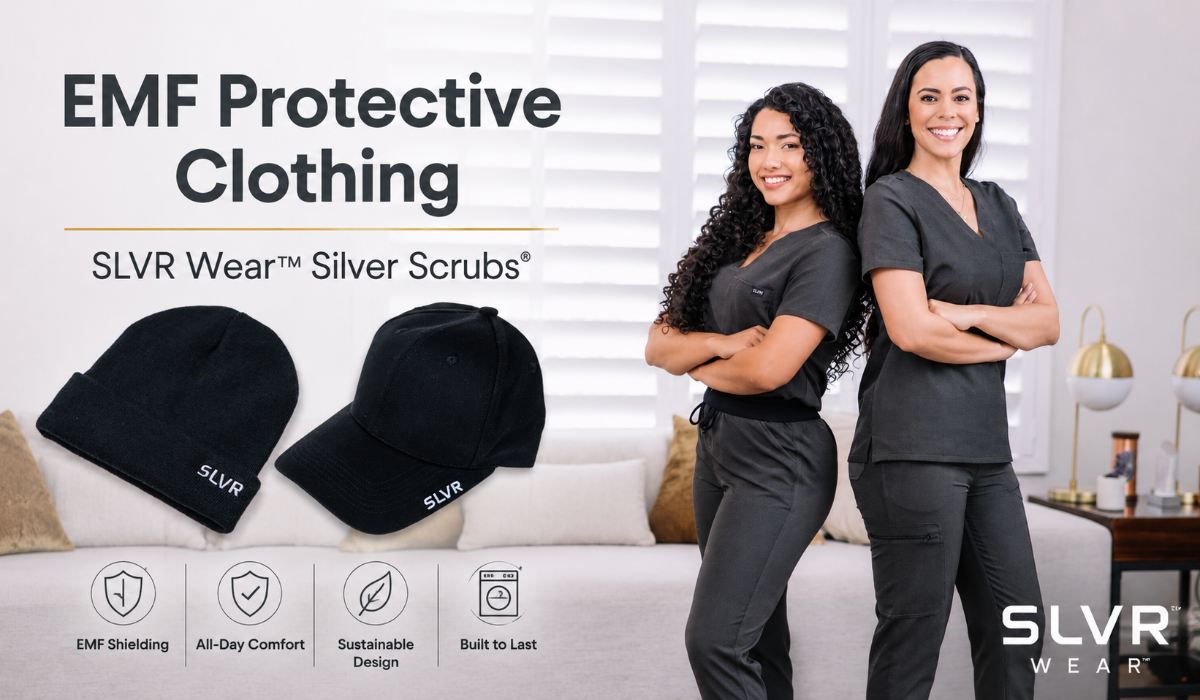
Hats and caps are a practical shielding option for outdoor environments urban streetscapes, transit systems, and outdoor venues where 5G infrastructure is densest where a discrete, wearable form of protection is preferable to a full garment. SLVR Wear ™ EMF-blocking beanie is constructed from silver-fiber shielding fabric, using the same OEKO-TEX®-certified yarn across the product line, providing head coverage in a low-profile, everyday form factor.
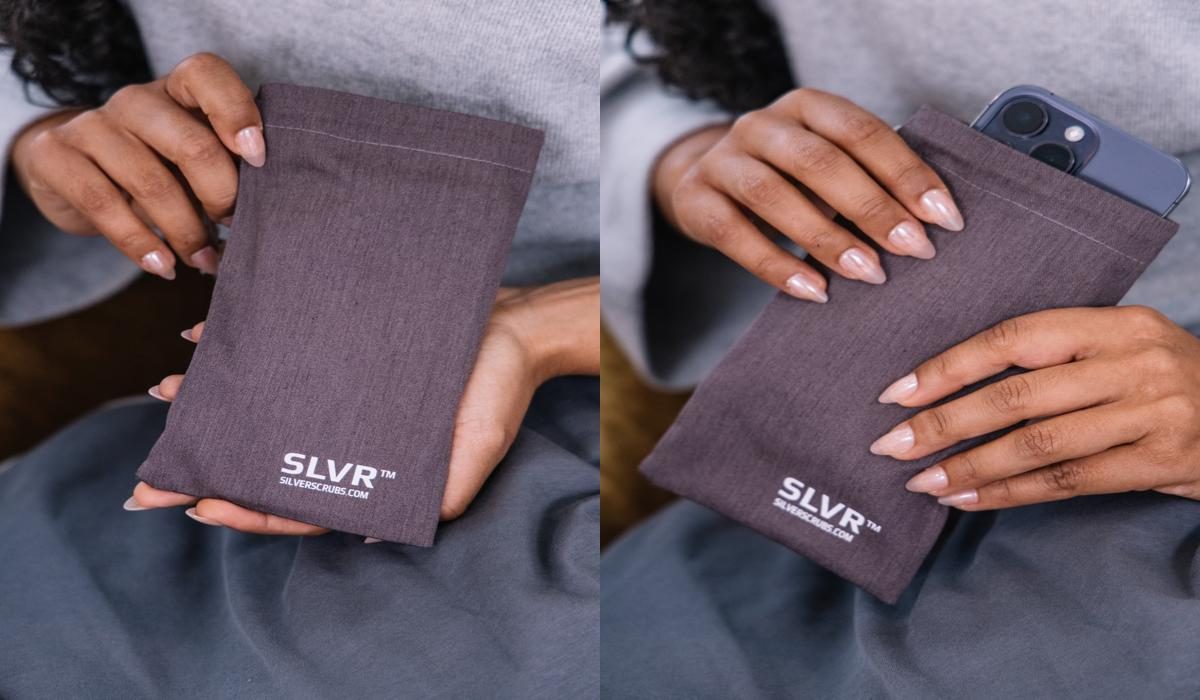
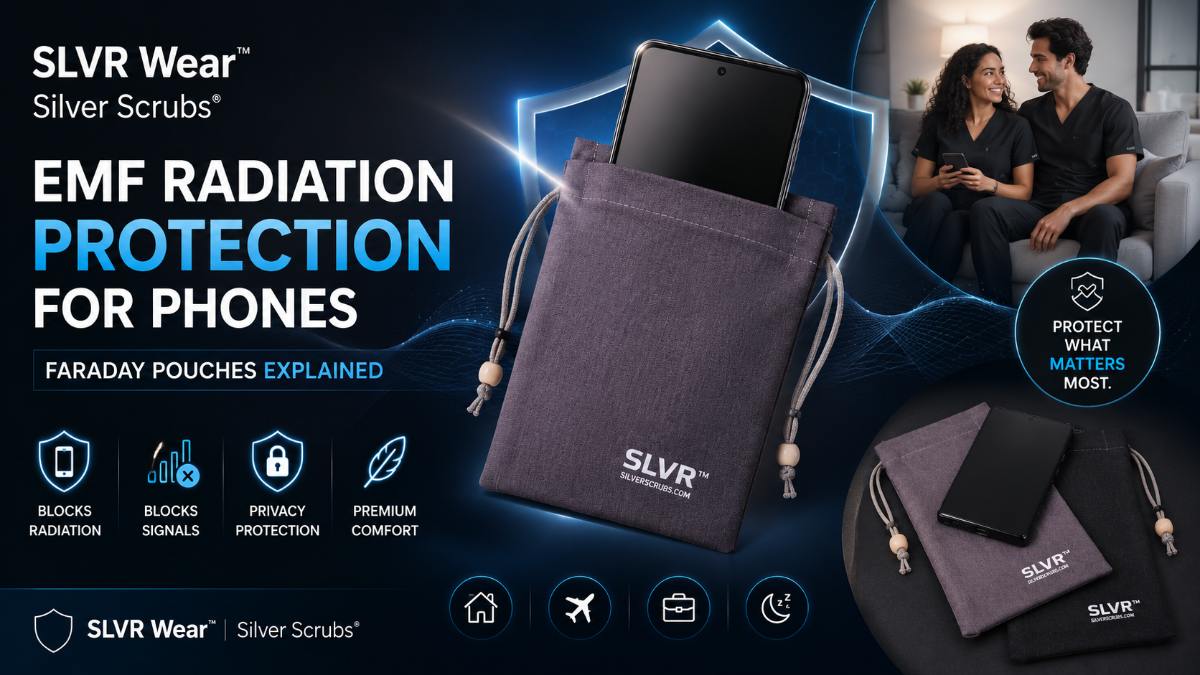
A Faraday pouch is a signal-blocking enclosure for a mobile device. When a phone is placed inside a Faraday pouch and the pouch is sealed, the conductive lining intercepts all incoming and outgoing wireless signals cellular, Wi-Fi, Bluetooth, and GPS. The phone cannot receive calls, connect to networks, or transmit location data while enclosed. Signal blocking is complete and immediate; it does not require the device to be powered off.
The operating principle is identical to that of shielding fabric: the conductive material in the pouch lining creates a Faraday cage that prevents electromagnetic signals from passing through. The difference from clothing is that a Faraday pouch is designed to achieve complete signal isolation for a specific device rather than partial exposure reduction across the body surface.
Faraday pouches are used to prevent passive data transmission from devices carried in pockets or bags, to reduce wireless signal exposure from a phone stored close to the body, and to prevent location tracking during transit or in sensitive environments. For the best EMF blocker for phone, SLVR Wear ™ phone pouch blocks cellular, Wi-Fi, Bluetooth, and GPS signals.
 Laptop EMF Radiation Protection Sleeves vs Shielding Pads
Laptop EMF radiation protection products fall into two functional categories: shielding pads placed between the device and the body, and shielding sleeves or cases that enclose the device during storage and transport.
A shielding pad is designed for active use it sits between a laptop and the lap or desk surface, reducing the wireless signal emitted downward toward the user’s body during operation. The effectiveness of a shielding pad depends on the conductive material used in its construction and the frequency range for which it has been tested. Pads built with verified silver-fiber shielding textile provide a measurable barrier; pads relying on foam cores, generic fabrics, or undisclosed materials provide no reliable shielding.
A shielding sleeve or case is designed primarily for transport and storage. It reduces signal exposure from a device carried in a bag and prevents passive wireless transmission from the device while enclosed. It is not designed to be used while the laptop is open and operating, since the device is enclosed and inaccessible during use.
For anyone who regularly works with a laptop on their lap for extended periods, a tested shielding pad is the more practically relevant product. The same material quality standards apply: disclosed silver fiber content, woven construction rather than coating, and available lab documentation for the frequency ranges covered.
EMF shielding fabric sold by the sheet or yard is the raw conductive textile used to manufacture shielding garments and accessories, made available for custom or DIY applications. It allows shielding material to be cut, sewn, or applied to specific surfaces window treatments, wall panels, furniture covers, or custom garments where off-the-shelf products don’t fit the use case.
The same evaluation criteria apply to fabric purchased by the sheet as to finished products: silver fiber content, construction method, frequency range tested, and whether lab documentation accompanies the material. A shielding sheet described by silver percentage and tested frequency range is a verifiable product; one described only in marketing terms is not.
Home applications for shielding fabric include window panels designed to reduce wireless signal penetration into a room, desk and workstation surfaces, and custom-fitted covers for routers or smart meters where reducing localized signal radiation is the goal. The material functions identically to its use in finished garments the conductive mesh intercepts signals regardless of whether it has been cut and sewn into a specific form.
For home use, the SLVR777 ™ fabric provides material specifications and guidance on construction, including silver fiber content and applicable frequency coverage for the textile used across the product line.
Choosing EMF radiation protection clothing that’s actually tested comes down to one question: can the seller provide a third-party lab report documenting shielding effectiveness at specific frequencies? If the answer is yes, everything else in the evaluation becomes straightforward. If the answer is no or if the documentation is a certificate without underlying test data the product’s shielding claims are unverified regardless of how they are presented.
Certifications in the EMF shielding textile space serve two distinct purposes, and it is important not to conflate them. One type of certification speaks to what the fabric does not contain harmful substances, restricted chemicals, heavy metals. The other type speaks to what the fabric does how effectively it blocks electromagnetic signals at measurable frequencies.
OEKO-TEX® Standard 100 is the most widely recognized certification of the first type. It verifies that every component of a textile fibers, dyes, finishes, and accessories has been tested against a list of over 100 harmful substances and found to comply with human-ecological safety requirements. For a garment worn against the skin for extended periods, this matters. OEKO-TEX® Standard 100 certified yarn means the silver fiber and surrounding textile have been independently verified as safe for direct skin contact. It says nothing about shielding performance, but it is a meaningful signal of material integrity.
Shielding performance is documented through electromagnetic compatibility (EMC) testing conducted in accordance with recognized international standards. The relevant standard for high-performance shielding textiles is GJB 5792A-2021, a military-grade measurement protocol that evaluates shielding effectiveness across a broad frequency range including millimeter-wave bands. A lab report issued under this standard provides frequency-by-frequency attenuation data the actual numbers, not a summary statement that can be independently reviewed and verified.
Together, these two categories of certification answer different questions. OEKO-TEX® confirms the garment is safe to wear. A GJB 5792A-2021-compliant lab report confirms that the garment actually shields. A credible EMF protection clothing product should be able to produce both.
Shielding effectiveness percentage is a measure of how much of an incoming electromagnetic signal a fabric blocks at a given frequency. A fabric rated at 99% shielding effectiveness at a specific frequency allows 1% of the incoming signal to pass through. Expressed in decibels, this figure appears as attenuation a 20 dB attenuation means the signal passing through the fabric is reduced to one-hundredth of its original power.
When reading a lab report on EMF shielding fabric, look for four things. First, the testing standard the report should reference a recognized protocol, such as GJB 5792A-2021, rather than an internal or proprietary method. Second, the frequency range tested the report should document performance across a spectrum that includes current wireless frequencies and extends at least into the millimeter-wave range. Third, the attenuation values at each tested frequency these are the actual shielding effectiveness numbers and will vary across the spectrum; peak performance at one frequency does not imply uniform performance at all frequencies. Fourth, the testing body the lab issuing the report should be an independent third party, not the manufacturer.
A reported figure like “up to 99.91% EMF blockage at peak frequency” is meaningful when it appears in a third-party lab report that documents the frequency at which that peak was measured and shows the full attenuation curve across the tested range. The same figure presented without supporting documentation is a marketing claim, not a verified specification.
Before purchasing any EMF radiation protection clothing, three questions cut through most of the noise in this category.
A specific percentage 35% silver fiber, for example is a verifiable material specification. A vague reference to “silver-infused” or “silver-treated” fabric without a disclosed percentage is not. The construction method matters equally: woven silver fiber is durable and consistent; a surface coating or spray is not.
The lab report should be accessible on the product page, linked from the site, or provided on request not referenced in marketing copy without a path to the actual documentation. The frequency range in the report should extend to at least the millimeter-wave band to be relevant to current 5G environments.
OEKO-TEX® Standard 100 certification of the yarn confirms the material’s safety. An international testing standard on the shielding performance confirms functional effectiveness. Certifications that don’t specify what they measure or that cannot be traced to a certifying body provide no meaningful assurance.
These three questions will reliably distinguish products with substantiated claims from those that rely solely on marketing language.
The EMF protection category includes a significant number of products that make shielding claims without supporting testing data. Recognizing the patterns that signal an unverified product is as useful as knowing what to look for in a credible one.
The clearest warning sign is a shielding effectiveness claim a percentage, a decibel rating, a frequency range with no accompanying lab report. In a category where measurement is straightforward and third-party testing is accessible, the absence of documentation is not an oversight. A product that cannot provide lab data to support its core performance claim should be treated as unverified.
Language designed to imply shielding without making a testable claim is a second signal. Phrases like “may help reduce exposure,” “designed to support protection,” or “promotes a shielding environment” are constructed to suggest effectiveness while committing to nothing measurable. Credible shielding claims are specific: a frequency range, an attenuation value, a testing standard, a certifying lab.
Pseudo-scientific framing is a third category to avoid entirely. Products described as using “quantum” technology, “energy field balancing,” “negative ion emission,” or “neutralizing” properties are not describing electromagnetic shielding. These are marketing constructs with no basis in the physics of how conductive materials interact with electromagnetic frequencies. A fabric either has the conductivity to intercept a signal or it does not there is no mechanism by which quantum particles or energy harmonization affects that outcome.
Finally, shielding claims applied to products with no disclosed material composition no silver percentage, no fiber specification, no construction detail provide no basis for evaluation. Silver content and construction method are not proprietary secrets; they are the specifications that determine whether a product performs. A seller unwilling to disclose them is a seller whose claims cannot be assessed.
Protecting yourself from EMF radiation starts with identifying where your highest-density exposure occurs and applying shielding there first. For most people, that means three environments: the workplace, the home, and daily transit each with a different exposure profile and a different practical approach.
Occupational environments tend to produce the most concentrated and sustained EMF exposure most people encounter. A hospital floor runs continuous wireless telemetry, mobile device infrastructure, Wi-Fi across multiple bands, and increasingly, 5G-connected monitoring and communication systems all operating simultaneously across a shared space for the full duration of a shift. Technology offices, data centers, broadcasting facilities, and research environments present comparable signal densities for different reasons.
The practical response to sustained occupational exposure is garment-level shielding, because a garment is the only shielding method that travels with the wearer across an entire shift without requiring any adjustment, device management, or active operation. EMF-blocking scrubs address this directly: a silver-fiber garment worn for an eight-hour clinical shift provides continuous shielding to the body surface it covers for every hour of that shift, across every wireless environment encountered.
For healthcare workers specifically, the practical value compounds with the nature of the role. Clinical staff move constantly between patient rooms, nursing stations, imaging suites, and procedure areas each with its own wireless infrastructure density. A shielding garment that performs consistently across the full frequency range present in those environments, including millimeter-wave 5G, is the only form of protection that keeps pace with that movement.
Silver Scrubs® by SLVR Wear ™ were developed specifically for this occupational context professional medical scrubs with 35% pure silver fiber woven into the fabric, tested to 50 GHz, and built for the durability requirements of clinical workwear.
The home wireless environment has expanded significantly over the past decade. A contemporary household typically runs a Wi-Fi router broadcasting across multiple bands, several smart devices maintaining continuous wireless connections, Bluetooth peripherals across multiple rooms, and, increasingly, smart meters and 5G-enabled appliances operating as part of that infrastructure. The cumulative signal density in a modern home is meaningfully higher than it was during earlier generations of wireless technology.
Practical home EMF protection focuses on the highest-density sources and the areas of longest stationary exposure. A router, for example, broadcasts continuously and is typically located in a central living area positioning a router farther from frequently occupied spaces reduces exposure in proportion to that distance, since signal strength decreases with distance from the source. For areas where distance isn’t practical, shielding fabric used as a desk surface, a window treatment, or a device cover reduces signal penetration into the specific area it covers.
Sleep environments represent the longest single period of stationary exposure in most people’s daily routine. An EMF shielding blanket used during sleep reduces exposure to wireless signals across the body surface it covers for the full duration of rest. Combining a shielding blanket with keeping a smartphone outside the bedroom or stored in a Faraday pouch overnight addresses the two most practical sources of nighttime wireless exposure simultaneously.
The principle across all home applications is the same: identify the highest-density sources, address the areas of longest stationary exposure, and apply shielding at the points where it produces the most consistent reduction in daily cumulative exposure.
Mobile environments commutes, urban transit, outdoor public spaces present a different exposure profile from fixed locations. The signal sources are varied and shifting: cellular towers across multiple bands, public Wi-Fi infrastructure, Bluetooth beacons, and in dense urban areas, active 5G millimeter-wave installations at street level. Exposure in transit is less sustained than occupational exposure but often higher in peak density, particularly in areas with concentrated 5G infrastructure.
Portable shielding addresses this through form factors designed for mobility. A Faraday phone pouch blocks wireless signals from a carried device for as long as it remains sealed cellular, Wi-Fi, Bluetooth, and GPS signals are all blocked, meaning the device neither receives nor emits wireless signals while enclosed. For a phone carried in a pocket or bag against the body, this is the most direct available way to reduce close-proximity device exposure during transit.
An EMF radiation protection hat extends shielding to the head in outdoor and transit environments where overhead and lateral signal sources are densest. In urban areas with active millimeter-wave 5G infrastructure mounted at street level and on transit infrastructure, head coverage addresses a real and specific exposure pathway that a body garment alone does not cover.
The combination of a Faraday pouch for the carried device and a silver-fiber hat for head coverage addresses the two most practically significant exposure points in a mobile environment the device carried closest to the body, and the head in proximity to high-density urban wireless infrastructure.
5G infrastructure operates across a wider frequency range than any previous wireless generation. That range has direct implications for what EMF radiation protection clothing and accessories need to cover to be effective in current environments.
Sub-6 GHz 5G the most widely deployed tier of the technology operates on frequencies broadly similar to existing 4G and Wi-Fi infrastructure, and most silver-fiber shielding textiles tested to legacy standards cover this range. Millimeter-wave 5G is the more significant variable. Deployed at frequencies between 24 GHz and 47 GHz in most active markets, millimeter-wave 5G offers the highest bandwidth and the highest signal density of any consumer wireless technology currently in use. It is also the frequency range that older shielding textiles those tested only to 10 GHz or below were never evaluated against.
This is why the upper boundary of a shielding fabric’s tested frequency range is not a technical footnote. A fabric tested only to 10 GHz has demonstrated performance comparable to legacy wireless infrastructure. It has no verified performance data for millimeter-wave 5G because it was never tested at those frequencies. Whether it shields at 28 GHz or 39 GHz is unknown not confirmed negative, but genuinely unverified.
Testing to 50 GHz closes that gap. It confirms that shielding performance has been measured across the full range of frequencies present in current wireless environments from standard Wi-Fi at 2.4 GHz through millimeter-wave 5G at the upper boundary of active consumer deployment. For anyone choosing EMF radiation protection clothing or accessories with current wireless infrastructure in mind, the tested frequency ceiling in the available lab documentation is the single most practically relevant specification to check.
Yes, EMF protection clothing works when it is built from woven silver fiber and tested under a recognized laboratory standard. The mechanism is physical: silver fiber creates a conductive mesh that intercepts electromagnetic signals before they reach the body, operating on the same principle as a Faraday cage. The critical variable is documentation a garment with third-party lab data showing attenuation values at specific frequencies is a verified product; one without it is not.
Silver-fiber shielding fabric blocks electromagnetic frequencies across the range for which it has been lab-tested. For current wireless environments, that means from 2.4 GHz standard Wi-Fi and Bluetooth through 6 GHz for Wi-Fi 6E, and into the millimeter-wave band where 5G operates. A fabric tested to 50 GHz has documented shielding performance across this entire range.
EMF shielding clothing made from OEKO-TEX® Standard 100 certified yarn is safe for direct skin contact and extended daily wear. The certification independently verifies that every component of the textile fibers, dyes, and finishes is free of harmful substances. Silver fiber is biocompatible and has been used in medical textiles for decades.
Silver-fiber shielding fabric is machine washable and maintains its shielding properties through regular laundering because the conductive fiber is woven into the textile rather than applied as a coating. Wash on a gentle cycle in cold or warm water with a mild detergent avoid bleach, fabric softener, and optical brighteners, as these degrade conductivity over time. Tumble dry on low or hang to dry.
EMF shielding is a measurable physical process conductive silver fiber intercepts electromagnetic signals and prevents transmission, exactly as a Faraday cage does, with attenuation values documentable by a third-party lab. EMF neutralizing is a marketing concept with no basis in electromagnetic physics; no mechanism exists by which a sticker, pendant, or quantum device alters the behavior of electromagnetic waves. If a product uses neutralizing, harmonizing, or balancing language instead of lab data, the claim is unverifiable by design.